Software
Houzz Logo Print
lincann

Organic garden needs help !

10 years ago

I am located in zone 6b and with the weather starting to warm, I'd like to get some lacinato kale and sugar snap peas planted in the next couple of days.

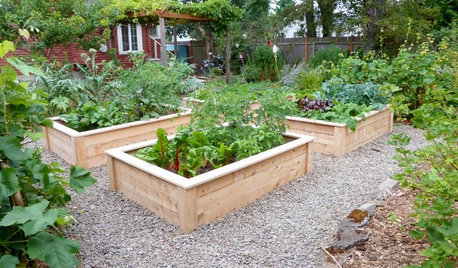
I grow in two raised beds with soil created years ago from compost and potting mix and amended regularly since with homemade compost, grass, mulched leaves, soybean and alfalfa meals, etc.

The problem is with the soil test from last fall, but I'm not sure what to do about the problem. This is how it reads:

pH is 7.6 (buffer pH 7.0),

'very high' P at 419 and 'medium high' K at 252.

Calcium 8577 with note saying: "Soil pH is too high to calculate CEC. Calcium carbonate at high pH causes errors in the calculations.

Magnesium 883

Zinc 36.8.

Organic matter was 13%

The county agent recommendation was to add Nitrogen at 3 lbs per 1,000 sq ft, no P and 1-2 lbs of K.

It was also suggested to add powdered sulfur to reduce the pH down to 6.5.

Given all this info, I'm thinking I will turn under some soybean meal a few inches away from the rows of kale to add nitrogen. But other than that I'm at a loss.

Q 1: What kind of sulfur and K should I use now that planting season is here that would be effective and safe in my organic beds.

Q 2: How did organic soil end up with P & K numbers that look like they've been synthetically treated???

Thanks in advance for your help ! annie

Comments (7)

  • 10 years ago

    It probably is not necessary to add the Nitrogen, it is quite common for soil test results to state to add 2 or 3 pounds of N per 1,000 square feet even though they do not test for N.

    Soil pH. Neutral is 7.0 so a 7.6 reading, while a bit high, is not a real big problem. Most all plants like growing with a soil pH in the 6.0 to 7.0 range because that is where most all nutrients are most readily available. Any powdered sulfur for gardens is what you would want to use although it is not very likely that will do much to lower the soils pH this growing season since it does take time to work.

    Adequate soil nutrients fall in these ranges:

    Phosphorus (P) 25 to 85 ppm

    Potash (K) 200 to 400 pm

    Calcium (Ca) 1500 to 4000 ppm

    Magnesium (Mg) 300 to 800 ppm

    More important is the ratio of the nutrients to each other, somewhere between 2 and 8 to 1 seems to be okay. Organic material will add a lot of nutrients to soil and too much organic matter in soil can cause an increase in available nutrients. Optimal levels of organic matter in soil seem to be in the 6 to 8 percent range.

    I would not add anything to increase the nitrogen or any more organic matter .

    kimmq is kimmsr

  • 10 years ago

    Thanks very much, Kimmq. Your explanation made sense and things feel much more manageable. I'm heading out to the garden to plant the first veggies of the season !

  • 10 years ago

    I'll disagree about adding the N - it is almost always deficient as it is the least stable and most mobile of all the plant nutrients and can vary widely with changes in temperature, climate and even time of day. As to the high ranges for the other nutrients, that is likely a factor of the heavy use of compost, which can certainly swing P and K to the higher levels.

    The pH is high but not excessively so - you can apply the sulfur now but it does take time to lower pH. You can kill two birds with one stone by using cottonseed meal in place of the soy meal - cottonseed meal is a natural acidifier and a decent source of N as well. I doubt I would worry much about K - at a "mid high" range currently, it really doesn't need any supplementation.

  • 10 years ago

    Thanks, gardengal8. I had pretty much decided to add nitrogen following a record-rainfall year and plants that seem to have lost the vigor they once had. The' acidic plus' of using cottonseed meal just brings it all together. Have used other meals for years, but never that one. Have a call into the feed store and look forward to hearing that I can pick it up this weekend ! Thanks.

  • 10 years ago

    this is the type of soil that, if you dig a clump, dry it, pulverize it, and cover with vinegar, it will bubble. Translation: the pH can not be fixed. All you can do is put in a lot of OM to make sure organic acids are making nutrients available to you. The huge P must be because someone fertilized recklessly with chemicals, for years. That may give you problems with iron. If you have such problems (chlorosis), foliar spray is your ticket, while you double your organic matter burial.

    Anyhow, the greens will grow well in that soil and the peas will be decent. I know because I have a pH of 7.6 and grow lacinato every year (and peas some years). Greens will in fact like a handful of nitrogen to be scattered on the ground when it is cool and/or a rain is expected, and they have true leaves and are growing actively. Due to the huge P fraction, you will not get a normal micro-flora.

  • 10 years ago

    glib - As kimmq stated, the OM is already very high. In fact, it is lowest in these two raised beds. In a test taken from soil from an in-ground bed two years ago, the OM was found to be nearly 25 %. Only reason I can think of is decades of mulched leaves, decaying mulch and in the past 10 years liberal amounts of alfalfa and soybean meals. And yes, there was a time many years ago when I thought it smart to apply NPK . . . before I knew better.