

Architect changed price mid-design; what are my options?
We are trying to build a near-passive house (passivehaus) home. As many of you know, architects cost 10-15% of the build cost of a home... so for our 500k home, you know what kind of money we are talking about. Luckily we hired him based on a 'fixed price' contract whereby we get the construction documents for a fixed price.
We have been asking for changes to the plans for about 6 months. The architect has ignored these change requests (and other times simply said "we'll deal with that later") and continued to moved on to other 'phases' of his design process such that we are now in a 'phase' that doesn't allow anything but minor, insignificant changes. (this is after his first few designs were 400k over budget...)
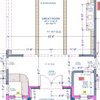
At our last meeting, we brought up a (relatively simple) change that would solve a lot these lingering issues. Effectively a 80 square foot bump-out off the exterior kitchen door that would serve as a mud room rather than coming directly into the kitchen. He said that idea 'hurt his architectural pride' and said he wouldn't do it; leaning on the fact we were no longer in the 'design' phase. Saying that it would cost additional monies to have it designed. We disagreed vehemently on this point due to the fact we'd been asking about some of these issues since we WERE in the design phase.
We've already given him about 90% of his fees; we'd been paying monthly as work progressed.
Today I receive an obviously-lawyer-written letter from him indicating that the price for completion of the construction drawings as we want them is going to increase (significantly) and that he will now have sole input/veto power over anything he doesn't like... or that I can cancel my contract and not receive a refund (and then have no rights to the plans).
From his side, the contract is cut into phases (and priced that way too). He is offering to do move the money allocated for the last phase into the 'design' phase.
What recourse do I have?
I'm honestly floored that a supposedly reputable architect could possible tell me one price, then after I'm almost done paying for it all (and a year of living in my parents basement with newborn twins and a 2-year-old goes by while we whittle the design) change the price and say "pay the new price or walk away with nothing". The fact I could pay 40 grand and not end up with ANY plans (because I don't have rights to reproduce or modify the ones he's given me so far - even though my builder says the plans I have look 'done' [sans the mudroom] ).
The long term lesson here is avoid architects... but short-term, I need to know how to get a house out of this.
Help?
Comments (38)
 PRO10 years ago
I'm very sorry to hear about your situation. Have you had a sit-down, "let's settle this and move on" meeting?
 10 years agolast modified: 10 years ago
Ummm.. Call a lawyer asap! Such BS he's putting you through. If he doesn't refund I would take his butt to court. That's a lot of money. Keep us updated
Related Professionals
Quincy Architects & Building Designers · Richmond Architects & Building Designers · North Adams Architects & Building Designers · Lima Architects & Building Designers · Emporia Design-Build Firms · Manhattan Design-Build Firms · Dayton Design-Build Firms · Bemidji Design-Build Firms · Ithaca Design-Build Firms · Napa Design-Build Firms · Montgomery Home Builders · Laredo Home Builders · Greenfield Home Builders · Hobbs Home Builders · Victoria Home Builders PRO10 years ago
There are approximately 225,429 architects in the United States; you should not judge them all by your singular experience.
Ask your architect to explain the difference between the services his initial price was based on and the services he is basing the additional costs on. If it can't be resolved, contact an attorney. Unfortunately, after getting the attorney involved, you may discover how inexpensive architects are.
 10 years agolast modified: 10 years ago
What do you suppose his side of the story would be? He obviously didnt earn a good reputation because he has ripped people off over and over again. Not saying you are in the wrong, I'm just wondering if there's more here than meets the eye.
- 10 years ago
ugh, that is terrible, I feel for you! (It's also one of the reasons why we didn't use one for our >500k build...)
I would do a quick chat with your own lawyer and offer to 'settle' in exchange for copies of the current drawings and express permission to take them else for the purpose of 'substantial modification', since that's what you asked for.
I wouldn't bother trying to get the desired changes done through him - he's already being a boor and has no respect for clients.
My (uneducated, probably unfounded) guess is that he had no clue how detailed passivhaus was, and little sense of how much things ACTUALLY cost, and now he's trying to pay his bills by copping out early.  10 years ago
"He obviously isn't reputable because he has ripped people off over and over again."
Where did that come from cmoncophd?- 10 years ago
Smile, pay him out for the existing plans and then modify to your hearts desire. Let him try and take you to court for whatever minor changes you may make in the course of the build...
- 10 years agolast modified: 10 years ago
Everything depends on the owner-architect contract.
For example, AIA B141 provides the following protections for the owner:
Termination by the Client - For the Client’s Convenience and Without Cause. The client may terminate the project or the architect’s services at any time for convenience and without cause, upon written notice. (B141-1997, clause 1.3.8.5)
Termination by the Client - For the Architect’s Substantial Nonperformance. The client may terminate the agreement at any time, upon written notice, if the architect fails substantially to perform any of the requirements of the agreement through no fault of the client. (1.3.8.4) Examples of an architect’s substantial nonperformance are not given in the agreement but might but might be: missing important deadlines, failing to follow the program or other client instructions, failure to meet the client’s budget, or failure to keep the client informed of important matters.
Written Notice
All required notices must be given by the architect to the client, or by the client to the architect, in writing and must be given at least seven days in advance of the action that will be taken. (1.3.8.1, 1.3.8.3, 1.3.8.4, and 1.3.8.5) Any notices to be given should be carefully drawn.The Client’s Continuing Use of the Documents
B141 grants the client a nonexclusive license to reproduce the architect’s drawings, specifications, and other instruments of service solely for the purposes of constructing the building and maintaining it thereafter. This license is valid only if the client has paid for the architect’s services and has otherwise complied with the agreement.This license is terminated when the agreement is terminated. The client is obligated, within seven days of the termination, to return all originals and copies of instruments of service to the architect.
However, if the architect is adjudged in default under the agreement, then the client has the right to hire other similarly qualified design professionals to reproduce and use the instruments of service to complete and maintain the building. (1.3.2.2)
- PRO10 years ago
"...We have been asking for changes to the plans for about 6 months...." If I may ask, did you make any changes to your requirements and plans-in-progress before this while working with your architect?
- 10 years ago
Joe, Very sorry to hear of the grief this architect has put you through!
I definitely disagree with posters who want you to lawyer up right away--that will definitely cost you money you want to put into the house instead. You don't want to be right, or to 'win', you want your problems solved. I would try to work it out, or find a way to settle up as amicably as possible given the stressful situation. Nicely but calmly let him know how unhappy you are (though I am sure you've already done this!)-- don't get adversarial, that is usually not going to get your problems solved, which is what you want.
What does the architect say if you calmly ask him the question Mark Bischak is recommending --why the change in price? What is accounting for that?
If you have been asking for changes all along that he deferred and now says he can't really address, what is his explanation for that? Rather than 'solving' the problem you need addressed (by the bump out you want for mudroom off kitchen) have you asked the architect how *he* thinks the problems can be solved? That's his job, does he think he's done it, or is he saying he can't do it except by very costly changes now? Does he just ignore the very idea that your needs aren't being satisfied here?
The change in price does not sound at all reasonable--but I am also wondering why he doesn't seem to be responsive to your design needs, or whether he thinks he has done that.
I wouldn't say avoid architects is the moral, though I understand how frustrated you are in your current predicament! There are good ones out there--I am first time working with one and I can say that 1) I definitely have not paid him 90% before being well satisfied-- in fact I keep wondering when I will get a bill as I am surprised how he's deferred there; 2) he is responsive and we have a very good working relationship. It is taking a lot of time, that I agree. But so it goes.
I hope that you can get your design issues resolved--if he really said that you'd deal with it later, is he now denying having said or implied that? Was it clear to all of you that you had moved past a 'design changes are possible' phase? Or was only really clear on his end, and he misled you (even if inadvertently)? What does he say to these types of questions?
Good luck! I'd say try not to lawyer up right away--I can't think that would get you the best outcome for your own interests, even if the guy is being totally unreasonable and unprofessional and is totally at fault. If there's any possible way to get him to do what you want (and have him think it is all his own idea, that is key), that's what you need. Instead of trying to get him to just do the bump out, can you ask him 'how can we solve this (design challenge)'-- challenge him professionally? All best. Sounds very stressful, and I don't envy you.
Joe Federer
Original Author10 years agolast modified: 10 years agoTo answer some questions:
The question I have (and it's not addressed in the contract I signed with the architect) is if I have rights to modify/build the plans if I cancel 'with cause'. (I believe this would constitute cause -- either not doing what we ask OR attempting to change the contract with us)
@Mark Bischak --
You are right, I shouldn't judge all. I'm just frustrated because I was warned this could happen and I shouldn't hire an architect because of reasons X, Y, and Z.... and all X, Y, and Z have come to pass. ... and he's been horrible all along. Exactly the person you warn people about -- wanting to build HIS house HIS way based on HIS ego and ignoring the budget (some designs were over our contracted budget by 379k!) rather than doing what his clients want.
@cmoncophd --
His side of the story would be that we are asking for a large change late in the project; well past the point where 'large changes' can occur. He also feels that he's given us more than he planned on with design time and that we've overrun his allocated time. If the first mentioning of these issues was now, I would agree with him. However, these request have been on the docet since day 1 (over a year ago) and some of these specific issues have been mentioned for over 6 months... well into the timeframe where 'big changes' could have occured. (I also argue this is not a big change) Further, the contract for the construction documents is a fixed cost... so the amount of time he has into it is irrelevant. (imho)
@lookintomyeyes83
He's actually dont' a few passivehaus projects in the past (that's one of the reasons we picked him ... in addition to a fixed price structure so we knew there wouldn't be overages).
@Jonnygun
I'm not entirely sure I can modify the existing plans... even if I fully pay out the contract. I'm not sure I have 'rights' to do that. It doesnt' seem well spelled out in the contract other than to stay he retains Intellectual Property rights... and I get 'ownership'. What does 'ownership' mean in light of him claiming copyright? It does say in the contract that I get "limited rights to use the materials solely for hte purpose of the project described...". Does anyone know? It seems contradictory/ambiguous at best.
@JDS
That is helpful... are all american Architects bound by the AIA if their contrat doesn't otherwise specify? The termination clause in the contract we signed is extremely short and doesn't cover anything other than to say I need to give notice and that "All provisioins of this agreement allocated responsibilty or liabilty between [cleint and architect] shale survive the completion of th services hereunder and/or the termination of this agreement." I have no idea what that means... help?
@ Virgil
We laid our our requirements (including the desires this small chagne would address) early on (over a year ago). We've mentioned how they were missing in basically every iteration of the design all the way through.
Joe Federer
Original Author10 years ago@lapsangetea
He has a lawyer already doing the communication on his side. I feel like going in without one is a recipe to get my words twisted and get f'd over. No?
The rest of your post is good and valid. I will take it into advisement... and if I have time, answer your questions. (for now, I have other things to do)- 10 years agolast modified: 10 years ago
The only role the AIA plays is to write a standard contract.
I think the architect contract clauses about use of the drawings are meant to be similar to the standard AIA contract. Your contract says you have the right to use the drawings for one project and he retains the copyright which is standard. What is not clear is what happens if the contract is terminated.
It appears to me that the architect is not happy with the time he and his staff have spent on the project; in order words he's not making as much as he had expected. Moving you from one phase to the next was an attempt to limit what he sees as his losses. If you signed off on each phase you will have a difficult time proving he didn't meet the contract terms but he might be exposed to a claim of delay.
Unless a lawyer was mentioned by name in the letter a lawyer is not technically involved yet. You shouldn't mention a lawyer unless your lawyer tells you to. But be careful what you say and write to him.
Its definitely wise to negotiate but I suspect he knows what he is doing and it will be expensive for you but probably cheaper and less stressful than going to court.
I've been an architect a long time but I've never heard of this kind of treatment of a client. Perhaps he doesn't do many houses.
 10 years ago
We laid our our requirements (including the desires this small chagne would address) early on (over a year ago). We've mentioned how they were missing in basically every iteration of the design all the way through.
Did you lay it out in writing and/or emails or even text messages so you have your claims backed up?
- PRO10 years agolast modified: 10 years ago
I agree that, under the frustrating circumstances for you, the best course of action is to request a face to face meeting for the purpose of resolving how to constructively move forward, complete the construction documents and let you move on with your project, plans and specifications in hand. Asking "how do we best resolve these issues and move forward for completion of the construction documents" is the best (and cheapest) strategy for you, IMO! As JDS has said, I've never heard of this kind of treatment of a client. Good luck on your project.
- 10 years ago
On a commercial project I have seen a similar instance where the architect no longer wanted to work with the client to finish the drawings, but the drawings were not the clients property to take to another architect and have it finished. In the end the architect handed over the drawings to the client and the client signed paperwork that the architect was not responsible for the drawings past that date. The architect was not happy doing so, but his lawyer advised him it was the affordable solution. Another architect finished what he started and the building was built. Best of luck to you and hope you find a resolution as well.
- 10 years agolast modified: 10 years ago
Before I give you advice a few important things to understand. I am also making some assumptions on exactly what a significant fee increase is. If we are talking a couple of thousand dollars then just pay the guy and be done.
First, it is important to understand and accept that at this point there is no good solution. There are bad, less bad and really bad outcomes and nothing else. From this point on everything is a compromise and so you need to establish new goals.
Next, there are three competing issues that you must rank to get an acceptable outcome. They are cost, time and performance. I don't agree with the people who say that it will simply be cheaper to pay the guy, I suspect they really don't understand how these things go but they may well. This is probably a $5,000 case so if you end up with $5,001 in savings you come out ahead.
Finally, you must understand how the legal system really works. Too many people think the legal system is about being right, it simply is not. Getting positive results out of the legal system involves getting the most acceptable result for the money you are willing to spend. It is quixotic to chase justice in the legal system.. Remember that most of these cases are battles of attrition and economic signals, rarely do they even see a court. I personally would skip the silly back and forth between attorneys sue him fast so you can get into mediation fast and be done with it, but you definitely should not listen to me on that one, listen to your attorney.
Remember if he has other services to provide, such as project oversight, a legal action may be counter to your best interest. Also be dispassionate about it, at this point it is about money, time and house plans only.
 10 years agolast modified: 10 years ago
@JDS
That is helpful... are all american Architects bound by the AIA if their contrat doesn't otherwise specify?
____
As a retired lawyer - NO NO and NO again.
Your contract is controlled by what is written in and, I something crucial is omitted, the commercial law and case law of your state.
Have him and his lawyer and you all and your lawyer sit down and negotiate a settlement.
And yeah if you have kept taking up time asking for changes that have to be considered (whether or not they could be done) and then wanting a NOT-small-change addition in a bump-out, you probably have used up more time than he planned in his bid for the job.
By the way it is standard in the construction industry to charge for changes - they were not part of the bid for the job.
You need to deal with it and get a formal written settlement of the dispute.
Have to tell you that if gets into litigation you can kiss the new house goodbye as you will easily spend $150,000 -300,000 on legal fees to litigate.
- 10 years ago
Ann your fee estimates are always ridiculously overstated, and I mean absolutely incredibly overstated. A non-commercial contract dispute doesn't even approach that bottom figure. For that matter small commercial contracts rarely cost that much. Not to mention that a large percentage get resolved long before making it to litigation.
By the way it is standard in the construction industry to charge for changes - they were not part of the bid for the job.
An architect is a professional service provider as are accountants and attorneys and are not simply part of the construction industry. The courts are far more likely to be guided by a standard setting body than they are construction industry standards.
- PRO10 years agolast modified: 10 years ago
"As many of you know, architects cost 10-15% of the build cost of a home..."
I did not know architects fees are that high.
- PRO10 years ago
I agree with bry911 that there are no "good" solutions to the situation at this point, only the "best", or "least bad" solution of a situation gone very bad. This is one of those situations where it's important to think clearly about what one really wants to accomplish and achieve. If completion of the plans and construction are important, work constructively to that end. Good luck on your project!
- PRO10 years ago
None of us have seen the owner-architect agreement for services and know nothing about the scope of basic services, fee for services, fees for additional services, what constitutes a "change" in scope, payment and termination provisions and other critical elements. We know nothing of the conduct of the project, the discussions and decisions which may have taken place, the number and rate of any changes and the why/how of what has brought the situation to the point described by the OP. All we know is what the OP has described in this thread. The type of architectural compensation and the rate/amount of compensation varies substantially across the U.S. and Canada, between urban, suburban and rural regions and markets, and varies based on the project complexity, the personalities involved and the scope of services desired and/or required by local jurisdictions. Since it's very possible that legal proceedings may take place, the prudent action here should be to neither favor nor disfavor any party in the discussion without direct knowledge of the facts.
- 10 years agolast modified: 10 years ago
None of us have seen the owner-architect agreement for services and know nothing about the scope of basic services, fee for services, fees for additional services, what constitutes a "change" in scope, payment and termination provisions and other critical elements.
According to the OP we know "architects cost 10-15% of the build cost of a home... so for our 500k home, you know what kind of money we are talking about," so we can extrapolate the architect's fee for a $500,000 home is somewhere between $50,000 and $75,000. While we can't know details of the project and other things written into the contract, I think we are safe offering opinions on a client's expectations and what services are reasonable for an architect to provide at that price point. I think it is reasonable to say that a flat fee of that amount for a $500,000 single family home would allow for extra time, and maybe even some hand holding.
While we are just hearing one side of the story, I am confident that the architect's side has some other information and justifications, I feel strongly that for that kind of money the architect should be held to a high standard of customer satisfaction.
- PRO10 years ago
byt11, you have just demonstrated my point about the wisdom of prudence in this thread, and not having our comments used in mediation or litigation:
"...While we are just hearing one side of the story, I am confident that the architect's side has some other information and justifications..."
Exactly!
"...I feel strongly that for that kind of money the architect should be held to a high standard of customer satisfaction..."
And you have no idea of what the architect may have or may not have done in the area of professional services and customer satisfaction, nor do you have any idea of what the OP may or may not have done relative to the terms of the owner-architect agreement and human relations.
All we really know, if we are to believe the OP, is that there is a substantial disagreement for which the OP has come to an Internet-hosted forum to voice concern and ask for ideas about recourse.
The real value of this forum is to share common design and construction experiences. Contractual agreements, disputes and recourse are really beyond the scope such a forum, unless folks want to become directly involved themselves.
The best way to become an additional participant in a dispute is to involve oneself, especially with no knowledge of the facts.
- 10 years agolast modified: 10 years ago
you have just demonstrated my point about the wisdom of prudence in this thread, and not having our comments used in mediation or litigation:
The comments in this thread are not going to be used in either mediation or litigation. That is way beyond overly cautious. People without first hand knowledge of the particulars of the contract and how it was handled cannot be used. The architects who coment could be asked to participate as an expert witness but could refuse and could not be subpoenaed.
The best way to become an additional participant in a dispute is to involve oneself, especially with no knowledge of the facts.
The opinions given on this thread are no different from the opinions given througout these forums and the internet in general. In fact, you have far less culpability for the opinions expressed on this thread than you do for suggesting changes to home design and building suggestions.
This has already been tested many times in the courts and been laughed at. Even professional law advice boards can't be held liable for the advice they give. We have no duty to the OP without that there is no detrimental reliance, and we have no standing in the suit nor can standing be created with the expression of any opinion or knowledge.
And you have no idea of what the architect may have or may not have done in the area of professional services and customer satisfaction
A limitation of this format is that we take the posts from someone asking for advice to be accurate. If the OP's post is accurate and he has a fixed price contract, and the architect moved things to different phases of the process with a false promise to amend the plans then the architect is wrong. I don't care what kind of service he has given, whether he bent over backwards, or even if he has lost hundreds of thousands of dollars doing this plan. He made a bad business deal and just like all the other upstanding people who get stuck in bad deals you honor the deal and learn your lesson. Of course, the OP could be lying but any OP could be lying and the advice would be just as flawed.
The real value of this forum is to share common design and construction experiences. Contractual agreements, disputes and recourse are really beyond the scope such a forum, unless folks want to become directly involved themselves.
The real value of this forum is whatever value people derive from it. Period. You don't get to set my benefit or anyone else's. Do you not think that any of the posts in this thread have been helpful?
- 10 years ago
bry1
No they are not. only the delusional think they can go into litigation with expert witnesses, depositions etc and do it for $25K.
No truly competent litigator would touch that contract dispute for under a $75,000 retainer and bill at about $200 -250 an hour.
Do the math.
A 3 day trial -just the trial and not the early stage depositions, expert witnesses, discovery process, and preliminary motions - is going to run $100,00ish for the witness prep, the trial prep (trial book, preparing exhibits, case law research for last minute stuff) and actual trial time (assuming 1 lawyer and 1 paralegal.) The discovery process will add another $50 -100K
ANd if the other side appeals..... there goes another $50-100K
I have DONE commercial litigation -including construction and building cases
Have you?
This ain't pig ;n chicken small claims court darlin'
- PRO10 years ago
I think the only posts in this thread that have any use are those which suggest to the OP that s/he meet with the architect to constructively work out a mutually agreeable solution to move forward.
- PRO10 years agolast modified: 10 years ago
You paid him 90% of a total - job is not completed and YOU are not in the building phase? Are you for real? Seriously. You should never pay more than 50%. What possible interest he has for 10% of the pay to complete the drawing, get them approved and been involved with the contractors for the duration of the project for only 10%? Seriously.
Send him Notice of Breach of Contract (nuclear option): stating you paid him for the job, as best as you could tell nothing usable was produced, job is not completed as agreed. Demand the job MUST be completed as agreed.
[If all of it is a simple bump out, one can revise the plans.]
In the letter state that you received his letter with the suggested amendments to the original contract. As you are aware "The rules of the contracts are simple: an offer, acceptance and consideration. Same is applicable for an amendment to the contract." Therefore state that you will accept new rules for his consideration of 50% of the total amount already paid to him. Otherwise you respectfully reject the amendment.
Tell him his has 30 days to re-mediate the breach and submit final plans as agreed. As far as I can tell you did nothing wrong. If he refuses to make a change - settle for his plans. Nothing obligates you to build to his exact specs.
Use a carrot as well, tell him that the situation is unacceptable for you, but you are willing to go back to the table and negotiate mutually agreeable resolution. Litigation will cost him money too, and could damage reputation. The mutually agreeable settlement is always better.
- 10 years agolast modified: 10 years ago
Yes Ann I have many times been involved in construction and building cases. I ran capital asset development for a corporation with a presence in more than 30 countries and every metropolitan area. I have been involved in litigation in most states. And I am the guy who wrote the checks and decided when to settle, and I call B.S. on your numbers. There are peer reviewed published averages, including commercial cases the average cost is only $64k. Leaving off the fact that more than 91% are settled at mediation for less than 25% of that cost.
Also lets not forget that the OP could file a lawsuit in hopes of forcing a settlement and decide at any time to drop the lawsuit and abide by the original agreement. This is what happens in most lawsuits.
- 10 years ago
Without two reasonable parties, this is all too common with fixed price contracts, in any industry. Spelled out perfectly, by the op stating: "Further, the contract for the construction documents is a fixed cost... so the amount of time he has into it is irrelevant." The op also concedes that "He [architect] also feels that he's given us more than he planned on with design time and that we've overrun his allocated time." (ding ding ding, winner winner chicken dinner)
With this line of thinking, any purchaser of services (agreed upon with a fixed price contract) is free to literally run the the service provider ragged with revisions and changes until kingdom comes. This isn't logical, acceptable or practical in any way.
At some point in time, any reasonable person will push away from the table and declare that enough is enough. This is my feeling of what your architect has done.
- 10 years agolast modified: 10 years ago
I stand by my original advice to be dispassionate and to keep your ultimate goal in mind, there is no winning from here on, there is only a loss that you are comfortable with.
As for legal advice, don't listen to me, or Virgil and especially not Ann. You have an attorney for a reason, it sounds like your attorney is someone who will have your best interest at heart, listen to them. At the end of the day we are a bunch of internet strangers who have not read the contract, who probably don't practice in your area and generally know nothing about your case. I have not advised litigation and will not, but you seriously limit your options if you let a bunch of strangers talk you out of a real and powerful option.
Your attorney can advise you when to sue and when to quit.
- 10 years agolast modified: 10 years ago
At some point in time, any reasonable person will push away from the table and declare that enough is enough. This is my feeling of what your architect has done.
I agree completely, but he can't keep the money. If you agree you can do X for Y amount without reservation and later decide to terminate the relationship because there was no meeting of the minds on what X was. You can only charge the fair value of usable product, which in this case would be zero without a release of the plans.
- PRO10 years ago
Continues to amaze me, bry911, how you can be so confident about what the architect can and cannot do, without having access to the owner-architect agreement and with zero knowledge of the specific terms and conditions.
I suspect cmoncophd has identified the base issue between the two parties, and if the architect is an experienced practitioner who regularly uses a fixed fee agreement, then the architect most likely has some provisions in the agreement to deal with the rare folks who abuse reasonable time limits for services. I certainly would and any prudent architect would too.
This may be why the OP came here looking for advice about resolution, after already retaining counsel.
- 10 years agolast modified: 10 years ago
Virgil you accuse me of making assumptions and turn around and make assumptions. I am not stating what the architect can or can't do, I am stating what is typically enforceable in a contract, if those fees were not specifically spelled out in the contract at the signing, it doesn't even matter if he put something in there saying that you get X amount of hours and effort for the money. You have to specifically spell out what overages will be, and Casey is correct, any attempt to negotiate those fees after the signing of the contract is an addendum to the contract. From a contract law perspective the court would then step in and decide the value of the services rendered and the rights of each party. The courts don't use an efforts expended model, they use a fair value of the product model. If the OP ends up with nothing then the OP will have to pay nothing to the architect. Now, of course, this is in a perfect world where the attorney fees are zero, so often what you can do is whatever you can get away with.
Now it is entirely possible that this clause exists in the contract, but it stands to reason that if these fees were negotiated before the contract was signed, the OP would have mentioned it. All of these posts are subject to the GIGO rule - Garbage In, Garbage Out. I give advice on the questions the OP asks under the assumption that all relevant information is provided. All advice is subject to that, I think it goes without saying. But since you seem to need it spelled out, all advice on these and any boards are opinions on the facts presented to community, if you are building a home in Miami but fail to mention it is Miami, Oklahoma the advice you get will probably be wrong. Just as you if you fail to mention a clause in the contract that spells out exactly how much you will have to pay if you go over the allotted time.
- PRO10 years ago
Bry911, you continually make statements about what the architect can and cannot do: "...I agree completely, but he can't keep the money...You can only charge the fair value of usable product, which in this case would be zero without a release of the plans..."
None of us know what either the architect or the client can or cannot do. We are not privy to the terms and conditions of the written agreement, nor to any verbal conversations or written meeting summaries where various agreements may have been reached or where disagreements may have been noted.
This is another of those threads where no one can determine the accuracy and completeness of the OP's postings, no matter how well intentioned, nor can we realistically assess the situation.
The best we can offer is to suggest the client and the architect get together for a mutually agreeable solution to the situation and move on.
- 10 years agolast modified: 10 years ago
Virgil (and the people who liked his post) you misunderstood what I was saying. I never said anything about the contract between the OP and his architect. You are taking what I said to cmoncophd as a response to the OP. Which it was not. He gives an example of an architect (not necessarily the OP's architect) terminating a contract because the work was unreasonable (then assumes this is what the OP's architect has done).
With this line of thinking, any purchaser of services (agreed upon with a fixed price contract) is free to literally run the the service provider ragged with revisions and changes until kingdom comes. This isn't logical, acceptable or practical in any way.
At some point in time, any reasonable person will push away from the table and declare that enough is enough. This is my feeling of what your architect has done.
My response was to him. I read this as him saying that regardless of the contract you can't expect a person to do an unreasonable amount of work. This is simply incorrect, the parties of a contract are obligated to foresee difficulties and plan for them, courts don't care about fairness. The courts have said that $1 is sufficient consideration to secure the transfer of any value. They have also said that a contract for $1 carries the same obligations as the same contract for $1,000,000 (a very few courts (Texas) say that consideration can't simply be token or nominal, but that doesn't apply here).
I was commenting on the fact that no one, architect or other, can void a contract that they agreed to just because they didn't properly foresee the amount of work involved. It doesn't matter how ludicrously unfair it is. If you read my posts you will clearly see I was talking about fairness of a contract rather than the specifics of this contract.
This had nothing to do with the OP's situation, only to cmoncophd's take on it. The architect in my post was the architect in his post that was fed up with the amount of work he agreed to.










Joe FedererOriginal Author