

Repotting Mania
Today was sunny and nice, so I decided to buy some new succulents at City Planter (independent plant store in Philly). They were having a sale, so I ended up buying four.
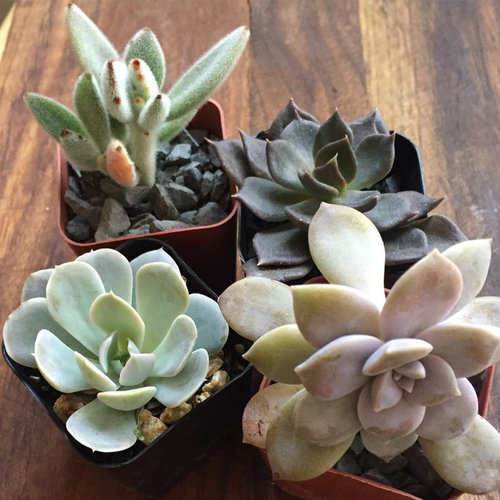
I know the upper left one is kalanchoe tomentosa, and the bottom right one is a graptoveria "debbie", but I'm not sure about the other rosettes. Are they also graptoverias?
Under the black stone was a peaty soil, so I decided to transplant them...as well as most of my other succulents and house plants.
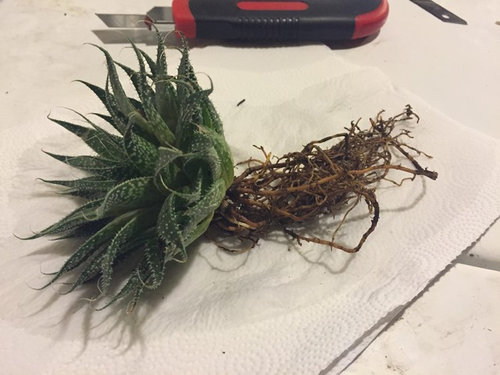
aloe aristata
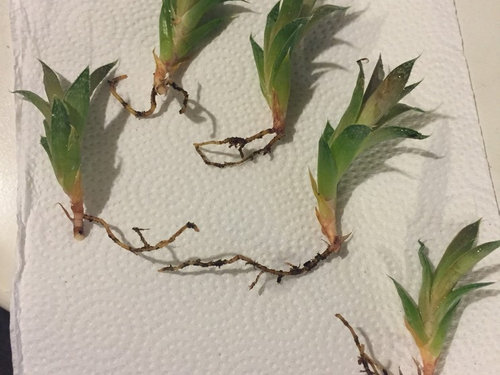
So many big pups with roots! I will pot them in a few days. I forgot to dust the cut end with cinnamon...oops.
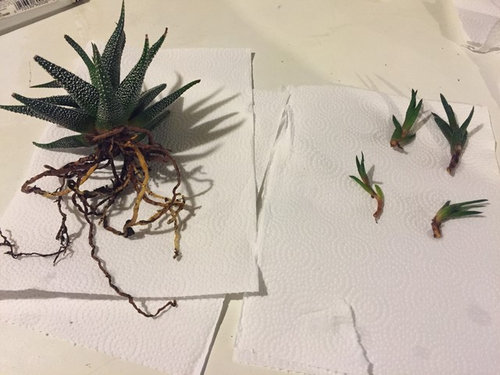
haworthia of some kind and it's removed pups--no roots on these, they're a bit smaller than the aristata
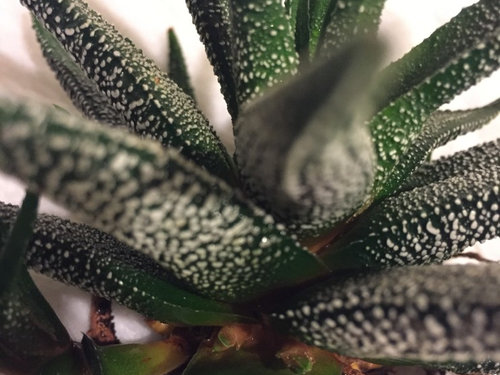
the start of more pups
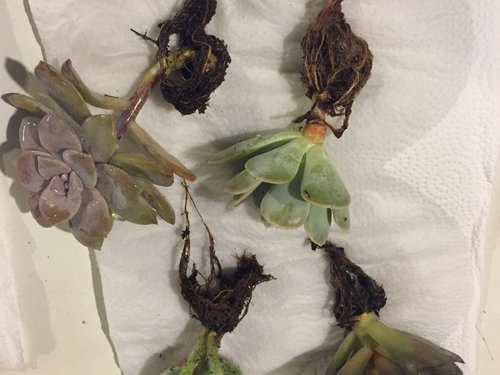
I ended up washing their roots a little bit more to get most of the peat off
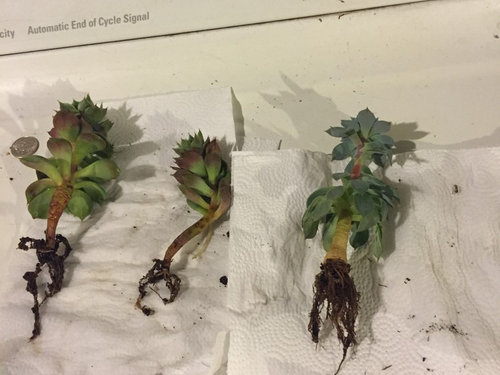
Some badly etiolated guys--both are echeverias, I think
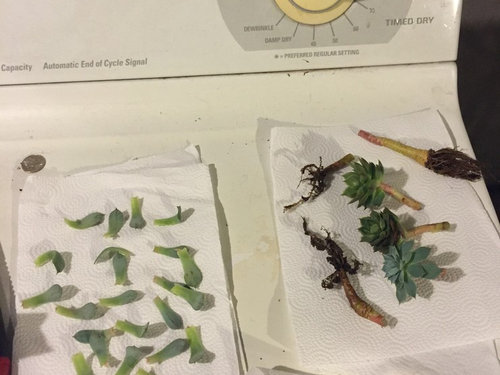
I beheaded them, dusted the cuts with cinnamon, repotted the stump ends w/ roots, and dabbed some wood glue on those cut ends (read today that wood glue helps to stop stump shriveling). So many leaves, two even had planlets growing off of them already while still on the stem.
I don't have any "finished" pictures, maybe I will post tomorrow. I will try to post pictures of the repotted pups and also updates on the cuttings/stumps.
Have a good weekend everyone,
Krista
Comments (25)
 10 years ago
Top right of the first picture looks like Echeveria "Black Prince". Nice work with repotting, I'm sure they'll be much happier.
 10 years ago
1st photo, upper right: Echeveria 'Black Prince'
Haworthia pups (at least 2 of them) look little small - it is often recommended to let them grow bigger before separating.
Related Professionals
Norfolk Landscape Architects & Landscape Designers · Jonesboro Landscape Contractors · Nashville Landscape Contractors · Austin Landscape Contractors · Beaumont Landscape Contractors · Magnolia General Contractors · Cumberland General Contractors · Clarksville General Contractors · Mankato General Contractors · Providence General Contractors · Platteville General Contractors · Carlsbad General Contractors · Las Vegas General Contractors · Coeur d'Alene General Contractors · Provo General ContractorsKrista Shaffer (Philly 7b)
Original Author10 years agoYes, Rina, I sort of regret cutting the Haworthia pups, but in the moment I was very excited! We'll see what happens I guess.
- 10 years ago
Krista, as you said - repotting mania, right :)
They may survive, and grow into nice plants. I have even smaller one (broken off when the pot fell :( and it has bit of green - I don't know if it will survive or not (one of the right is not doing anything):
Good luck and post their progress pls.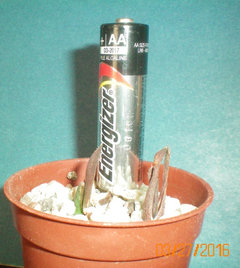
 10 years agolast modified: 10 years ago
Yes, that time of year for me too. The small haworthias offsets - Just don't over pot them. Biggest danger is too much water and not enough root growth. Small individual pots, light airy material (perlite, bark chips, gravelly sand) and water when dry is probably least risky till they grow up. Happy growing. :]
Krista Shaffer (Philly 7b)
Original Author10 years agoHere are some updated photos:
The rosettes seem to be doing okay...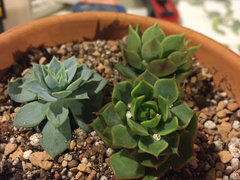
Some of the extra leaves I pulled off of the stems. They might not do anything, but it's worth a try,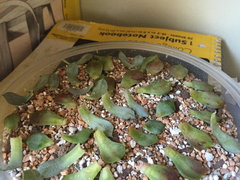
Some successful plantlets that started growing by themselves either in their original pots or while still on the stem. One is even growing roots.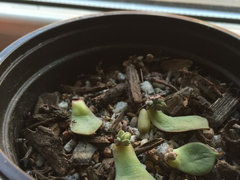
The stumps. The shriveled one, hasn't gotten any worse, so I'm going to just let it go. They aren't doing too much yet, but they are still firm so I still have some hope.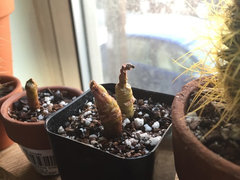
The pups are planted in small cups with holes in the bottom. I thought they were plastic, but once I started to drill, I realized it was thin, glazed porcelain.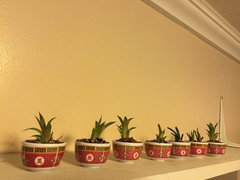
Krista Shaffer (Philly 7b)
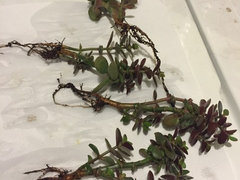
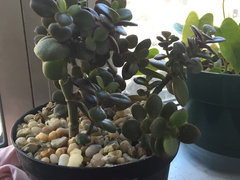
Original Author10 years agoI also repotted a jade. It's from Ikea, and my boyfriend has had it for over a year, but he had it in some MG Cactus mix. I'm surprised the roots aren't bigger, but maybe it's from being in inappropriate soil. I took two of the biggest off-shoots for myself (I want to bonsai them), but my boyfriend wants to keep the plant unpruned for now. It's starting to get a little etiolated, but it's been inside all winter. I think Mid April is the last frost date, so it will be outside for the next 6 months or so.
- 10 years ago
Rina,
this made me laugh... yesterday I took a photo of a plant with a battery in the shot for scale. My 4year old son found the battery and asked me why I had it. I told him I put it in my plant for a photo. He looked at me oddly and said "You put a battery in your plant???!!!!" Try explaining the concept of scale to a little person!
 10 years ago
Hey Krista! Great find! Lovely plants you got there.
On thing I've learnt about Echeverias are that when these plants have very less root like yours will take a while to struggle to maintain its best form if you unroot/repot them, especially into a gritter mix, because they need to grow more feeder roots to absorb water. Having said that, try to use the bottom water method to encourage the roots to dig deeper instead of watering from the top. Once you think they are established enough, they can go outside, take heavy flushing or even fertilizing.
If they have weak roots, give them time to regenerate and don't rush them.
For your propagation tray (if it has drainage holes), try to wet the bottom of the mix with water, or keep a humidity tray with water. Keep it moist by refilling the next day after you see the tray dries up. This method worked really well for me in my nursery corner. Bright light is good but not really necessary. Some warmth also encourages rooting. You soon become a very busy mom of 40-50 pups growing at hand. When you see baby rootlets, you can start watering from the top, and re-water when the mix is dry. I usually leave the humidity tray until the plantlets developed strong roots and a sturdy rosette before I transfer them into individual pots.
Your jade is looking quite impressive too! Great job on the potting! Have fun and enjoy the frosty Spring.
- 10 years agolast modified: 10 years ago
Bernard, that's an interesting approach. I think that's what's going on when the leaflets fall on the ground. They get sprayed with water that then soaks into the ground and leaflets follow suit with roots.
Works for everything except echei lauii. Rots from the ground up for me as well as water sitting in centers.Krista, like you, I'm potting up some plants and moving others out of community containers into their own pots for better control of growth.
This echi, a NID plant is convalescing. It stood out in the garden center because of its lovely powder grey blue leaves. The pic on the right is before it disappeared. One day it was gone and I assumed it had rotted with the rains. I found it 2 months later on the ground, I was heartbroken because I thought I had lost it for good. It's taken a lot of unintended neglect and it's still hanging in there.
Hoping it recovers. Here's hoping with our newer experience, we can support the growth of our plants to spectacular results. :]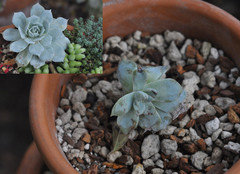
- 10 years ago
Azt - Laui are a real difficult species to cultivate. I believe they do best with a more sheltered environment behind the windows with all my other variegates. Laui also don't propagate as much as Agavodies. So far, I've experienced 0% success rate at rooting them. Now I just give up and wait for them to offset.
I hope your Eche recovers. They are usually pretty resilient when they have enough roots growing.
And I'm sorry to say this but about 80% of my plants planted in the first batch of the gritty mix (mostly eche) have all died during the winter, they were all in terra cotta pots. When it was too dry their roots wilt, when it's too wet it doesn't dry fast enough and I had 1 rotted due to overwatering. I water mostly once a week, or twice if I remembers them - sadly most of my plants die due to dry rot or thirst.
- 10 years ago
Thanks Bernard. My lauiis are in full morning to mid afternoon sun and look pretty good. I water twice a week now because they are in tiny pots. Roots are indeed the key to watering. My other succulents are in half gritty and half bark chips. I see how important the size of the container is in regards to mix and amount of roots. Seems that the plants with pots almost same size as circumference of the plant rosette are doing best in my garden.
Krista Shaffer (Philly 7b)
Original Author10 years agoBernard--There were flurries this morning here in Philly! Definitely wasn't expecting that. I didn't know that repotting Echis into gritty soil was detrimental to their roots. None of them look unhealthy, so I'm hoping they will do okay long term. I haven't drilled holes in the leaf propagation tray, just misting every now and then. They were from low on the plant's stem, so I'm not holding my breath on them turning into pups.
azt- Your echi looks so sad :( I hope it recovers!- 10 years ago
Krista
Rotting Echies into gritty mix is NOT detrimental to their roots. Putting them in gritty mix and not watering them enough IS, however. Gritty mix usually requires more frequent watering than the peat based soils many of us started out with. To combat this a bit, I only use small plastic pots, which stay damp longer than clay pots. For larger plants, clay pots work well.
Bernard,sorry you had so many losses. Switching to gritty takes a bit of adjustment in terms of watering. But, now you can shop for more plants!
- 10 years agolast modified: 10 years ago
Krista - I have since modified my mix. Now my mix do not contain any bark, they might work well if you can control the moisture, but from my experience I find it hard to water them when it turns hydrophobic and I don't have enough time to soak all my plants in water as my collection expands.
So adding to what Breton has said, it isn't exactly detrimental for echeverias, but you just have to be cautious of not keeping them too dry. I've also experienced a fair share of overwatering and rotting them in the 1-1-1 gritty mix too. The best way is to stick a skewer into the soil to make sure it's completely dry before you water again.
Breton - We all live and learn, now I stick to my modified mix without bark, much easier to control and it has since worked with my watering habits. How is your Portulaca Molokeniensis doing? Mine had sprouts a few months ago, then the mealy came back, and eventually the plant died from rot maybe because I overloaded it with Imidacloprid acid.
- 10 years ago
Yes, I have been watering it more, and I put it in a slightly warmer location. I suspect the time of year has a lot to do with it leafing out now too. It's leafing out in spots that didn't have leaves when I bought it, fully-leafed (or so I thought). Still a bit scraggly looking, but it is coming along nicely. I am also keeping an eye out for thrips on it, I have found a few so far, but not sure they are causing any harm yet. It will get sprayed when I can take it outdoors for an afternoon. I may put it in a more moisture-retentive soil.
Krista Shaffer (Philly 7b)
Original Author10 years agoThe stumps were moved outside today. Hopefully it will encourage more growth.
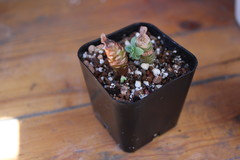
This guy is being stubborn. Still nice and firm though. We'll see.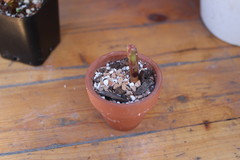
These guys are still hanging in there, not sure if there has been any new growth yet...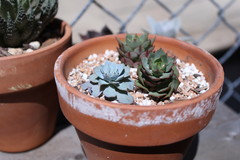
Krista Shaffer (Philly 7b)
Original Author10 years agoAre these leaves ready for potting?
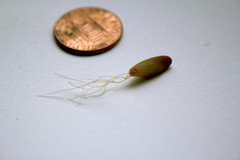
^I think this one might be.
^ This one, not sure.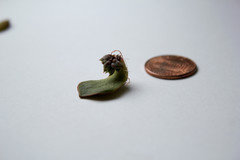
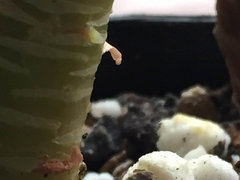
Was going to repot in a finer gritty mix.





postpunkgirl