Software
Houzz Logo Print
elizkdav

Diseased Daphnes in Portland, OR?

10 years ago
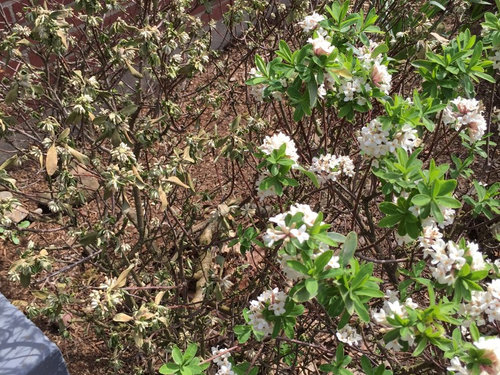
Hello, we recently bought a house with two well-established Daphne plants out front, facing west. Based on the former owner's landscaping plans left to us and the current size, they probably were put in 8 years ago. These daphnes are the type that bloom from spring through summer, well into fall, with fragrant, tiny white flowers. This fall, our first, they were healthy and fragrant. We had a mild winter, just one snow, zero hard freezes. We left it alone since moving in, no pruning, no extra watering, no fertilizing. This spring, I noticed one plant had a dead middle area. It has begun blooming around that dead area, and now I'm noticing new dead sections after blooming. The other daphne is also showing signs of change, with one section starting to die off. Do I prune off those dead areas and see what happens? Is there a treatment anyone suggests? Do I just leave it alone? Thanks for any advice!

Comments (18)

  • 10 years ago

    I would prune out the dead stuff, it won't come back to life


    elizkdav thanked buyorsell888
  • PRO
    10 years ago

    Perhaps the planned move busied the previous owner and these plants were not watered last summer, an extremely hot spell. Plus the nearby brick wall.

    elizkdav thanked User
  • 10 years ago

    The dead part does line up with the area affected by the overhang.

    elizkdav thanked Embothrium
  • 10 years ago

    The original dead section was on the opposite side of the house, though, next to the lawn. And it thrived all year up until about mid-February, so I'm not sure about the lack of water/hot spell theory. With the sudden spread, I'm curious if anyone thinks this could be fungus or an invasive group of critters? I cut a piece from the original dead spot, and there was no green to be seen. A cutting from the most recent areas showing concern still had green. I'll start to prune the dead stuff tomorrow and keep watch for other thoughts/suggestions.

  • 10 years ago

    Symptoms of drought stress sometimes don't show up immediately - the older, larger and more established the plant, the longer it typically takes for this stress to become apparent. It would not be at all out of line for the daphne to now be showing signs of lack of sufficient watering last summer. Spring, when the plant is pushing new growth (or not, in the case of dead portions!!), is usually when drought stress from the previous season becomes apparent.

    There is also the possibility of DSDS or Daphne Sudden Death Syndrome, which is attributed to one or more disease pathogens (mostly fungal but a few viral as well). This can affect portions of the plant as well as causing rapid failure of the entire plant. All you can do with this is to remove the dead portions (sterilize your pruners!!) and hope for the best.

    elizkdav thanked gardengal48 (PNW Z8/9)
  • 10 years ago

    I've got dead branches all over my yard from drought stress from last summer....I tried but between job and car accident injury, I was not able to keep up with watering. Most of it is just showing up now...


    elizkdav thanked buyorsell888
  • 10 years ago

    According to a thesis prepared for UBC, there are multiple causes, primarily the fungal organisms Rhizoctonia, Phytophthora, Pythium, and Thielaviopsis, with the latter possibly the primary culprit. The dissertation went on to conclude that Armillaria and Botrytis do affect the plant but generally breed in leaves
    accumulated at the base and are not directly responsible for DSDS. And Australian researchers have concluded that there are at least 10 different viral pathogens that affect daphne but have not reached any conclusions as how directly they may contribute to this problem.

    elizkdav thanked gardengal48 (PNW Z8/9)
  • 10 years ago

    Another thing that probably is the main cause of this plants death is being planted against a concrete foundation of a brick house, and along side a concrete sidewalk. That much concrete will make the soil basic with so much lime from the concrete nearby. Many forest plants such as daphne can't handle it so it makes them more suseptble to diseases and drought. One reason it is recommended not to grow plants near concrete foundations, especially acid loving plants. I would follow the advice above, and remove the dead material. After that, if you still want to save the plant, add some sulfur based fertilizer, aluminum sulfate if you want quicker response.

    elizkdav thanked johnaberdeen
  • 10 years ago

    Daphnes actually prefer a neutral to slightly alkaline pH - I'm not sure being planted close to a foundation or concrete walkway is really the issue at stake in this case.

    elizkdav thanked gardengal48 (PNW Z8/9)
  • 10 years ago

    http://homeguides.sfgate.com/soil-requirements-daphne-26102.html

    http://landscaping.about.com/od/shrubsbushes/p/daphne_plants.htm

    The above links say daphne are acid loving, and my experience also shows this along with fairly quick draining soils needed for good health. Also my last Master Gardening class talked and showed pictures of plants that looked just like these plants growning near the foundation of brick and concrete foundations. The recommended treatment by WSU was soil amendments to bring it down to more acidic conditions.

    elizkdav thanked johnaberdeen
  • 10 years ago

    And I can show you a dozen or so other sources which state that most daphnes prefer a neutral to lightly alkaline soil....and most are lot more horticulturally oriented than Home Guides, which is filled with inaccuracies in most of its articles (ditto landscape.com, which really should be removed from the Internet with the amount of erroneous info they dispense!) . Regardless, x transatlantica cultivars like this one tend to be less picky about pH than most other daphnes, so again, I seriously doubt that is the issue with this plant. But good drainage is key to their success as is sufficient soil moisture during dry periods.

    elizkdav thanked gardengal48 (PNW Z8/9)
  • 10 years ago

    I didn't find a dozen sites stating the level of ph requirements for Daphne. I did find some that said neutral to low levels of basic soil. I couldn't find anything at either Washington State University or Oregon State University about their ph requirements. Both schools seem very lacking in the number of ornamental shrubs they deal with. The only thing I found was a video from WSU about not putting plants near concrete foundations because the ph level could get very basic and damaging over time.

    The below link talked about phytophthora crown rot, but nothing about ph requirements of this species. Something that might be what is going on with this poster's plants. Without a closer detailed picture it is almost impossible to dianoze the problem. But from what I can see it looks like a drought problem with the roots covered by the soffit not getting watered from the rain and/or the owners not watering them by the hose. Last summer was very dry, which killed or damaged many plants, some just now showing it.

    http://horticulture.oregonstate.edu/content/phytophthora-crown-rot-rock-daphne

    Daphne does very well in our very acidic forest soils in the PNW, so much so that there is even one species that is on Washington State's weed list. Also even if the plants likes neutral to very lightly basic soils, the concrete with its lime over time can make the soil so basic that it can damage such a plant.

    Sorry gardengal I got your hackles up.

    elizkdav thanked johnaberdeen
  • 10 years ago

    Didn't mean to come across as touchy.....sorry :-)

    Since daphnes originate from a lot of different areas of the globe and grow under a variety of conditions, it might make the most sense to say they seem not to be overly fussy about specific soil conditions except for nearly all species requiring good drainage.

    And fwiw, even strongly acid loving plants planted adjacent to a concrete foundation or walkway are unlikely to die from that exposure. They will certainly struggle because they are being denied nutrients - stunted growth, discolored foliage, perhaps even a lack of flowering - but it is seldom ever the cause of wholesale die back (like in the photo) or death. The plant just struggles on.

    And yes, Daphne laureola is PITA. There are stands of it all over my new (6 weeks since moving ) garden. And gardeners unfamiliar with the plant seem to think it is something valuable rather than a noxious weed. I encounter it frequently in the gardens I visit as a consultant and the homeowners are always surprised when I tell them they should pull them out. Most mistake it for a rhododendron, which it resembles superficially.

    elizkdav thanked gardengal48 (PNW Z8/9)
  • 10 years ago

    I have a six foot across D. odora and a three foot D. Carol Mackie right next to new (five years) concrete front stoop and sidewalk.....the D. odora survived the construction and has thrived. It grows so big I have to constantly prune it back. I seriously doubt the OP's daphne is reacting to the foundation/bricks.

    elizkdav thanked buyorsell888
  • 10 years ago

    Daphne laureola (spurge laurel) is decimating Garry oak forests in BC. It was all over my yard too when we moved in - 10 years later I am still pulling up the persistent little seedlings that sprout every spring. My neighbours also grow it as an ornamental. (sigh)

    elizkdav thanked Kaillean (zone 8, Vancouver)
  • 10 years ago

    Thanks, everyone. I have trimmed out the diseased sections and it's been doing fine in that week or so of time. No additional areas so far. Going to add some good compost, cover the now-exposed roots, turn some water on when the heat starts coming (we inherited a yard with a great irrigation/watering system) and hope for the best. Like I said, they're at a minimum 8 years old, so the placement shouldn't be an issue at this point. I appreciate all of the advice!

  • 10 years ago

    Not an expert here, but the one thing I remember about daphne is reading many years ago that it BENEFITS from being planted next to concrete......