Software
Houzz Logo Print
etta_turnerterrell

Nitrogen

10 years ago

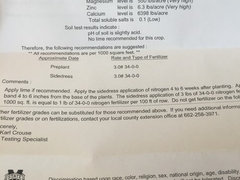
I did a soil test and got a ph of 6.5, said it was slightly acid. Their recomendation was I needed to fertilize with 34-0-0

the only thing I can find close to that is indoor orcaid food. I've read manure and my mother n law has horses so I can get that but how much per squar food so I need? Will that be a fast way to get nitrogen or is that somtging that will take awhile to get in the soil. I want to start planting in a couple of weeks.. What would you recommend for fast way to add nitrogen to soil (2 12x4 raised beds

Comments (21)

  • 10 years ago

    I have some blood meal, but it's 12-0-0 they recommended 34-0-0 before planting and 4 weeks after should I go with the Urea even though it's more nitrogen or just double up on blood meal?

  • 10 years ago
    last modified: 10 years ago

    Was this a lab soil test? Kind of surprising to find one still doing N testing as most don't as Jack said. At any rate the 34-0-0 recommendation is just a guideline and too much to add this close to planting. Shoot for half that.

    Agree that now isn't the time to be adding manure unless she has a stockpile of it that has aged for several months. Personally I'd check with any local feed and farm stores you may have to see what is available and what you can get to add now. Blood or alfalfa meat is approx. 1 lb. per 100 sq. feet. You have 48 sq feet so 1/2 lb is all you need for both beds.

    Personally, since you need so little, I'd pick up a couple of small bags of rabbit food alfalfa pellets at Walmart or a pet food store and add about 12-16 oz. of it to each bed and mix it in. That will get you plenty of N to begin with.

    Dave

    Etta T thanked digdirt2
  • 10 years ago

    I too am surprised about their recommendation for 34-0-0. That's pretty concentrated nitrogen fertilizer even for lawns, and there is a risk of fertilizer burn. You can get the same effect adding more of the cheaper, lower nitrogen content stuff. Adding composted manure will greatly improve soil quality and also add some nitrogen.

    Have you grown stuff in this soil before? Do you see obvious signs of nitrogen deficiency?

    Etta T thanked daninthedirt (USDA 9a, HZ9, CentTX, Sunset z30, Cfa)
  • 10 years ago
    last modified: 10 years ago

    I think Etta has 2 48 sq. ft. beds so would need 1/2 lb. per bed if using the meals.

    After planting you can monitor the plants and if they show signs of N deficiency you can always add more. Just remember that too much can burn plants especially when using fast acting N fertilizers like urea.

    Etta T thanked LoneJack Zn 6a, KC
  • 10 years ago

    This is what they mailed me back.

  • 10 years ago

    Then this close to planting you don't need to add anything. Too risky. And you sure don't want to use manure with those high and very high ratings. Stockpile some of it for mixing into the beds this fall.

    They recommend 4-6 weeks pre-planting to add only 3 lbs of 34-0-0. Too late now. Plus they don't know how small your beds are. You are right Jack 2 beds so only 98 sq. feet total. 3 lbs is a very small amount for even a normal size garden so your beds need minimal.

    If any of your plants show signs of N deficiency later on you can always side dress with a tiny bit of the blood meal you have.

    Dave

    Etta T thanked digdirt2
  • 10 years ago
    last modified: 10 years ago

    Just to round out the advice... signs of N deficiency are usually first seen as pale green color in the top-most leaves, eventually spreading throughout the plant, and culminating with very yellow lower leaves as the plant takes N from older sections and moves it to growing tips. In your first years it can be difficult to diagnose because there are normally no comparisons, all your plants will have the same color. If you do a container of a variety, or take one plant in the garden bed and give it extra N, then you can more readily compare color potentials. Every different variety has its own optimal coloring, so unless you know what it supposed to look like, it can be difficult to know what 'pale' is for that plant.

    In general, leafy greens require more N than fruiting plants. Foliage and biomass growth are where plants tend to appreciate higher N levels. Most lettuces are not a rich green color though; while broccoli, kale, mustard... are often (depending on variety - not always lol) very deep green and can be good indicators of N availability. Tomatoes can use average amounts of N overall - a good amount at the beginning, then needing less as they switch over to fruit production. If you look down over the top of a tomato plant, the color should be fairly uniform. If you see an even pale green color when compared to the next older set of leaves, you might be needing a little N. But, don't write this in stone because other deficiencies can start the same way. It's just a sign to look for as you learn.

    As the others said, with those levels, if you need anything, it would only be N, and then, they may not have tested for it at all. You may not need it. For the reasons mentioned above, every test recommends N. it's a standard.

    Are you going to mulch? If so, with what?

    Etta T thanked rgreen48
  • 10 years ago

    I was planning to do with grass clippings but need to read up on how to do that haha don't know if I'm suppose to use fresh cut grass or few days old cut grass, cover the area completely or just around plant (I have issues with having to read and ask question to do something right lol) I am sure I need nitrogen due to the bad results I got last years garden. The squash plants were very puny didn't produce at all... I give up on the garden 1/4 way in because I got over run with squash bugs and nothing was doing good... Even peppers didn't do good

  • 10 years ago

    Puny unproductive plants could point to a lot of problems. Might be premature to blame it on nitrogen. Is the soil structure any good? Is it very clayey or sandy? Is there plenty of humus/organic material in it? What amendments have you ever added to it? Dropping grass around vegetable plants doesn't do them any good, except maybe as a mulch to hold in water and cut down on weeds. But grass clippings aren't going to do much for soil fertility unless they are dug in, ideally after being composted.

  • 10 years ago

    I'm sorry. You did say they were raised beds. So they aren't just necessarily native soil. What did you fill them with?

  • 10 years ago
    last modified: 10 years ago

    My advice is not to toss a bunch of grass clippings on as your only mulch. Grass clippings are a great source of organic matter, but there is a huge learning curve when using them as mulch (especially by themselves.)

    Grass clippings, when not mixed with other ingredients, tend to mat into an impermeable layer. That means they will cause water to bead off and not penetrate into the soil.

    This isn't to say they are a bad addition to a mulch (they are in fact very good,) but it helps to mix them with other things. You can use leaves, hay, straw, kitchen scraps, wood chips (used on the surface, not mixed into the soil), etc... any other OM source.

    If you do use the grass clippings by themselves, use only 1/2" - 1" layer at a time. Any more than that and they can cause issues. If you and your neighbors don't mind, you can let your grass and weeds get tall (but before it goes to seed,) then use a weed eater, a sickle, or a swing blade (my favorite) - not 'sling blade' lol - to make your own seedless hay. The taller grass and weeds makes a great mulch, and grass clippings can be easily mixed in or layered throughout.

    Grass clippings will add N to your soil, but they will also gas-off. Depending on your climate, they can take quite a while to break down, but your soil will appreciate the additions in the next year.

    Etta T thanked rgreen48
  • 10 years ago

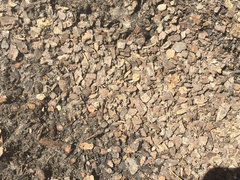
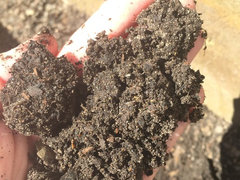
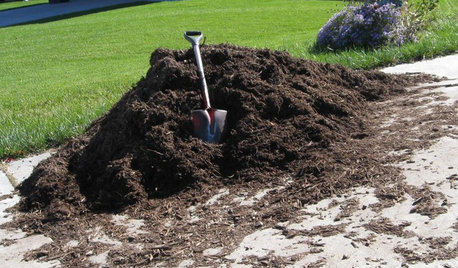
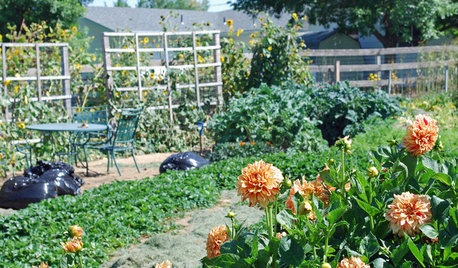
    I had the coop bring a load of their premixed soil? It's got bark it's got sand it drains good it hold water good does mush after big rain but stays damp for days. That's why I got test I thought they would tell me what was in it (I don't know much lol) and what it needed. The first year I did put some blood meal it in and fertilized it with just a 10-10-10 the garden did great.. The next year we didn't do anything with it and it grew up with grass/weeds. Hubby got it tilled up for me and I replanted next year (last year). I didn't add anything to it just planted (first mistake I guess?). Nothing would grow much I planted 3 squash plants 2 never even made it more than a seedling. Okra I think did ok, cucumber and peppers did bad,. Here is a pic of the soil, undesturbed soil is first and me just grabbing a hand ful is 2nd. Very loose and easy to dig threw even with hands

  • 10 years ago

    Oh thanks I didn't know you had to mix them with somtging.... Maybe instead of grass what about a bail of hay?

  • 10 years ago

    Ok we got lots of issues going here so as already mentioned, last years garden problems in no way proves the need for nitrogen. Could be many other causes and lack of N would be minor compared to some of the others.

    But if you feel you need to add some N this late you are going to have to do it VERY gradually and in small amounts at a time. It is just too close to planting to get carried away with it now without creating problems.

    Agree with rgreen about the grass clippings. They have unique issues and a learning curve when it comes to using them as mulch. So if you can get some old hay that has weathered, great. But no fresh cut. If you can get straw, even better. I don't know where you live (you really need to add that to your profile and posts) so it may be far too early to be putting down any mulch right now. The soil has to warm well first.

    Learn about how to do side-dressing of crops and find out if your MIL has some well composted manure. From the pics and the soil test, your soil is low in organic matter but that can be added as you go along. And it appears quite sandy so give some though to starting your own compost pile.

    But with the phos and K readings on your test do NOT use any 10-10-10.

    Dave

    Etta T thanked digdirt2
  • 10 years ago
    last modified: 10 years ago

    Hay is good. The caveats (yep, can't get away from them) is that hay may have weed seeds, and unless you know the source, it may have been sprayed with herbicides. If you get clean hay (old hay - often found for free - works well also,) and apply it 4" - 8" thick, weed seeds have a tough time taking root and getting necessary sunlight. You could then mix in your grass clippings and have an excellent mulch.

    Etta T thanked rgreen48
  • 10 years ago
    last modified: 10 years ago

    Live in central Mississippi, if I can figure out how to add my info with my phone app I will. Thank Yall so much for the help... I really am trying and so wish my grandparents were still around to help lol. I planted some coleus and another plant in a pot over a week ago and the coleus has started turning yellow the other plant (just green thick leaves) looks ok but neither have grown an inch. I put a little blood meal in them this morning so I guess they will be my guinnee pigs, I can get a 3 gal buck and test it out with some of my seedling (I have to many anyways) one bucket with out blood meal and one with? MIL has both newer and old manure, would it be to late to add that now? I will for sure add stuff at the end of the fall...

  • 10 years ago

    It is done on your profile page here. Click on your name to go to your profile, click on My Houzz in top right corner, click on edit my profile, click on advanced settings on the left and scroll down to zone and location and fill it in, click save. It is then automatically added to your user name on every post.

    Slow growth and yellowing, especially with coleus is often over-watering. Try that. Keep in mind that blood meal can burn plant roots so use in very small amounts.

    After garden is planted get some of her old manure and use it in the bare areas (paths). Just scuff it in around but not right next to the plants. It will supply some nutrients and also be improving the soil for next year. Then then fall mix in 3-4 inches of it in the whole bed for next year.

    Dave

    Etta T thanked digdirt2
  • 10 years ago
    last modified: 10 years ago

    personally, soil ph 6.5 is fine and probably the best ph for a range of plants.. most vegetable plants are perfectly ok with a ph between 6.0-7.5. rainwater is also naturally on the acidic side and we all know how well plants thrive in the natural rainforest..

    Etta T thanked stevie
  • 10 years ago
    last modified: 10 years ago

    One more question guys with those levels should my garden be good all season or should I do more than very little nitrogen anytime? Phosphorus ? Anything? I realize not anytime soon but don't know how quick (besides the nitrogen) leaches out

  • 10 years ago

    Nitrogen is really the only nutrient that is volatile. The rest are slow moving and long-term stable. The micronutrients may need some additions now and then but your plants tell you when.

    But very few plants go season long without some supplemental feedings of some kind unless one has exceptionally high levels of rich organic matter in the soil and an active soil food web. Your beds will take time and improvement to reach that goal. Next year will be better than this year and the year after even better as long as you keep adding organic amendments to the soil.

    Small raised beds are like containers in many ways and nutrients can leach out of them with watering and N gasses out into the air. So as others have said above you have to learn to read plant symptoms of nutrient need and supply them as needed throughout the season.

    Dave

    Etta T thanked digdirt2