Software
Houzz Logo Print
teach2blossom

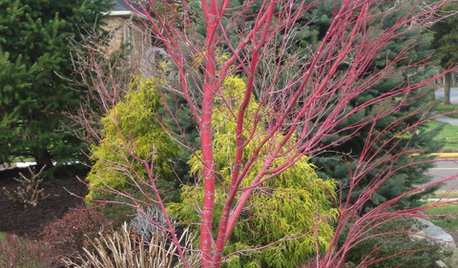
Coral Bark Japanese Maple Reseeding Problem

10 years ago

I have a Coral Bark Japanese Maple which I planted about eight years ago and is thriving beautifully. However, for some reason, this year it reseeded itself so I had literally thousands of tiny seedlings sprouting in the bed around it, even into other beds around the yard. I was thinking of planting another variety of Japanese Maple in the front yard, but don't want this problem there also. Is this a problem with all Japanese Maple varieties? Is there anything I can do to prevent the reseeding?

Comments (14)

  • 10 years ago

    All Japanese maples have an ability to produce seed and that seed can be extremely viable, resulting with all the little baby 'starts' you see. Actually, a good many types of maples display this same tendency to seed freely, our native bigleaf maple being right there at the top of the list.

    There is really nothing to be done about this except to tolerate it - you can't stop the tree from flowering. The seedlings are very easy to pull up or even rake away - just a bit of a PITA to deal with.

  • 10 years ago

    You cannot sell a seedling grown maple as a coral bark ('Sango Kaku'). Any seedling grown Japanese maple is just a generic Acer palmatum regardless of the tree it came from or what it looks like. Named forms are only propagated by grafting (or less commonly but more frequently now in the EU, from cuttings).

    And excuse me for saying so, but attaching a price tag to a seedling that pops up spontaneously and often in great abundance is a bit like trying to sell Himalayan blackberry starts. Or Daphne laureola. The things are there for the taking and it hardly seems fair/ethical to charge for them.

  • 10 years ago
    last modified: 10 years ago

    Unless one waters enough to keep the surface soil moist all summer or there is some other compensating factor present (such as the shade and humidity provided by a solid canopy of taller trees) the sheets of maple seedlings that appear in spring here tend to vanish later. Even in the woods nearly all of each year's crop of native big-leaf maples doesn't make it. An exception is Norway maple, in a few local wooded public spaces that species has been demonstrating a pretty high seedling survival rate - as it does elsewhere in the northern US. One Seattle ravine must have had something like a million of them coming along until volunteers started pulling them out - they were present over much of the site, inches apart from one another, and not dying off.

  • 10 years ago
    last modified: 10 years ago

    GardenGal - just looked at one of the tags my neighbour makes up for her seedlings -- She says Acer Palmatum (from coral bark seed). So it's all fine. She's also choosy and only sells ones that are starting to show some coral colour which they seem to do quite young. She also sells seedlings from her red japanese maple, variety unknown, and these are more reliable than the coral barks, which I agree she gets few that are true.

    The rest of your comment is just silly. Lots of bonsai vendors sell jap maple seeds. Garden stores charge all the time for things people could just easily gather seed for or collect cuttings from on their own. Like creeping buttercup or vinca or ivy or flowering currant.

    How many people do you know (aside from keen gardeners) who would go to the trouble of starting a jap maple from seed? (it's not that easy.) Most people are happy to pay $3-5 for a little tree that will look nice even if its just a boring old palmatum.

  • 10 years ago
    last modified: 10 years ago

    This years maple seedlings are sprouting at an alarming rate. Conditions for fertilization and germination in our area must have been perfect. We've lived and gardened on this plot for 16 years and never have we seen so many. Thousands over all. In the nooks and crannies of a stacked brick wall, in every bed, in the grass and of course in the woods. We water the garden areas regularly during the summer and the woods has a thick canopy. I'll be pulling the ones in the bed, mowing the ones in the grass and curious to see how many survive in the woods. In some places it looks like grass sprouting it is so thick.

    We also have some basic Japanese maples that seed a bit here and there and I have potted some up and planted them around our place. They are doing great and have really nice fall color.

  • 10 years ago

    GardeningGal, she could charge for the pot, potting soil, and her labor getting the plant into the pot. Nurseries do that all the time. I once complained to a well known mail order nursery about prices going up ten times since I started ordering plants back in the late 1980's while my wage only went up 2 times, not from Cost of Living increases but promotions. I use to be able to buy 30 to 40 plants and with shipping keep the total cost under $100. Now I am lucky to buy 4 plants and keep the total cost under $100. His answer was that the cost of soil and pots brought the price up. So Teach2blossom would be justified in charging for those things and a little for her plant. Besides, local nurseries do sell Himalayan Blackberries. They just call them by their cultivar names. I bought a thornless cultivar which in a couple years reverted back to a thorny plant, which I removed.

  • 10 years ago

    Sorry, but not any nurseries I am aware of sell Himalayan blackberries - these are a Class C noxious weed in the state of Washington. Cultivated blackberries, including the thornless varieties, are a different species of plant altogether, Rubus fruticosus, (rather than Rubus armeniacus or the Himalayan blackberry).

    And yes, you can pot up anything and sell it to someone. That doesn't mean it is a) an appropriate plant to sell (eg. the blackberries) or b) that it is worth what the seller is asking or that the same plant could not be just as easily gathered from your own or a neighbor's or friend's garden for free.And just an FYI, but maples are very easy to grow from seed, especially if you allow Mother Nature to do all the work!

  • 10 years ago

    It still remains that garden stores charge all the time for things we could all easily obtain or grow ourselves. So do grocery stores for that matter. It's called convenience. Lol. Nothing "unethical" about it.

  • 10 years ago

    I say pot some up and sell away....those who are offended by that need not come over to buy. I personally would be delighted to buy potted plants/seedlings from one of my neighbors and help them out with a little extra spending money and get myself a nice maple seedling in the process. Much nicer than driving to the big bix center. I bet in future I would be more far more likely to remember the tree I bought from a friendly neighbor than something I bought at the store and like it all the better for that.

    Once Spring hits, my neighbors' kids sometimes set up a little flower stand (basically a card table) with some cut flowers to people going to the nearby cemetery (we live near the entrance). They did not plant the flowers, the previous owners of that house were avid gardeners, yet I have seen many touching interactions with the kids and the people who stop to buy them for their departed loved ones....it makes the flowers all the more meaningful than something bought at the store and seems to really brighten up the visitors who are often melancholy. It's also a nice rite of Spring for me to see and I will be sorry when the kids will all too soon grow up and no longer want to sell flowers from their driveway (and yes, I do buy their cut flowers from them when they are out there, though I have plenty of my own...we both get something out of the bargain!)

  • 10 years ago

    mjginportland, what a positive outlook on the subject. Gardengal is grammarly incorrect when she said you "cannot" sell seedlings as such. May not is the correct term she should have used if the plant is a patented or trademarked plant. Even then, as a well known nursery owner told me, if you can grow it from seed you can sell it, but can't use the trademarked name.

    Also when I bought the thornless blackberry in 1981 it was sold to me as a thornless Himalayan blackberry. It looked like a Himalayan blackberry with the five compound leaflets and the shape of the panicle of flowers. It also started throwing up thorn canes which caused me to get rid of it. But then at that date the hypocritical weed board didn't have the police powers it has now, nor the following of feeble minded solders "Tilting at Windmills" without scientific thought of what they are doing.

  • 10 years ago
    last modified: 10 years ago

    Overzealous regulation and hysterical public alarm* is not the problem, certain plants gobbling up millions of acres of land is the problem. There are lots of serious nuisance plants like Norway maple that the nursery industry is still being allowed to crank out.

    *I am sure that in fact many think the holly, laurels, ivy, cotoneaster, common hawthorn, Himalayan blackberry, Bohemian knotweed and yes butterfly bush infesting local open space is a natural part of the scene - when they think about them at all

  • 10 years ago
    last modified: 10 years ago

    I don't have much respect for the Weed Board. While I was working we had a lady, a retired NOAA scientist, rehabing the stream that crossed our property. She was removing non-native plants and replacing them with native. She didn't cut down the sweet cherry, because they were too big. She told me that she tried to get English holly and sweet cherry included as noxious weeds. They told her they wouldn't do that since both species are grown commercially in Washington State. The board's mission statement use to include, "protect native plants" but they don't include it any longer probably because of that. The sweet cherry, Prunus avium, does one thing that none of the other plants on the weed list does, it hybridizes with our native cherry, Prunus emarginata the bitter cherry. Another commercial crop, the apple, should also be on the noxious weed list since it hybridizes with our native crab apple, Malus fusca. Since the weed boards doesn't seem to care about native plants they will never list those two species nor come onto people's property to ripe them from the ground, Only money counts not science, Hypocrites!

  • 10 years ago
    last modified: 10 years ago

    Malus x dawsoniana is not generally abundant and Prunus x pugetensis is functionally sterile, with fruits seldom being seen. Those Puget cherries that do rather often come up where the two parents are crossing do occupy some space - but at least they do not generate numbers of seedlings that go on to occupy much larger areas.