Software
Houzz Logo Print
navyguy778

New to organic gardening. Need Help

10 years ago

I just moved in to a new house in N California and the previous owners left behind a beautiful raised bed organic vegetable garden. Problem is I have no earthly idea how to even start to utilize it. I am willing to put in the work and some money to get it productive but I'm afraid that without advice I'd be wasting my time. Any advice would be welcome and appreciated. Thanks

Comments (50)

  • 10 years ago

    Have you ever gardened before or is the entire process new to you? Getting the area ready for planting is easy - just weed thoroughly and if the soil looks very fine and dry and/or sandy, add some compost, which can be purchased bagged just about anywhere. After that, plant whatever you like!

    And please do not take this the wrong way as the title is slightly patronizing, but get a copy of Vegetable Gardening for Dummies (sold on Amazon and any bookstores). Although unfortunately named, all the Dummies books are excellent basic texts for whatever activity they address. Here's a brief synopsis from the veggie book: Vegetable Gardening Cheat Sheet.

    navyguy778 thanked gardengal48 (PNW Z8/9)
  • 10 years ago

    Ive uploaded photos of my garden but they ended up in my idea book. I'm not sure if you all can access it

  • 10 years ago

    Organic gardening is about making the soil into a good healthy soil that will grow strong and healthy plants. that means looking closely at the soil to see what it needs and includes periodic soil tests for soil pH and major nutrient levels. That also means digging into the soil to see how much organic matter is in that soil, how well that soil drains, what kind of life is in that soil, what that soil smells like. The soil is the most important part of the garden. Perhaps these simple soil tests may be of some help as well.

    1) Soil test for organic
    material. From that soil sample put enough of the rest to make a 4 inch level in
    a clear 1 quart jar, with a tight fitting lid. Fill that jar with water and
    replace the lid, tightly. Shake the jar vigorously and then let it stand for 24
    hours. Your soil will settle out according to soil particle size and weight.
    For example, a good loam will have about 1-3/4 inch (about 45%) of sand on the
    bottom. about 1 inch (about 25%) of silt next, about 1 inch (25%) of clay above
    that, and about 1/4 inch (about 5%) of organic matter on the top.

    2) Drainage. Dig a hole
    1 foot square and 1 foot deep and fill that with water. After that water drains
    away refill the hole with more water and time how long it takes that to drain
    away. Anything less than 2 hours and your soil drains’ too quickly and needs
    more organic matter to slow that drainage down. Anything over 6 hours and the
    soil drains too slowly and needs lots of organic matter to speed it up.

    3) Tilth. Take a handful
    of your slightly damp soil and squeeze it tightly. When the pressure is
    released the soil should hold together in that clump, but when poked with a
    finger that clump should fall apart.

    4) Smell. What does your
    soil smell like? A pleasant, rich earthy odor? Putrid, offensive, repugnant
    odor? The more organic matter in your soil the more active the soil bacteria
    will be and the nicer your soil will smell, to a point. Too much organic matter
    can be bad as well.

    5) Life. How many
    earthworms per shovel full were there? 5 or more indicates a pretty healthy soil. Fewer than 5,
    according to the Natural Resources Conservation Service, indicates a soil that
    is not healthy.

    Plants growing in a good healthy soil will be less susceptible to problems from insect pests and plant diseases.

    kimmq is kimmsr

  • 10 years ago
    last modified: 10 years ago

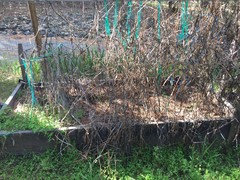
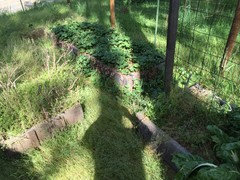
    The pictures in your ideas book are quite hard to interpret. You seem to have a strawberry bed in full flower as well as one with a lot of last years debris and plant supports left on it. There's also one which seems to be covered in weeds. So a first step would be to do some good old fashioned low tech clear up so you can see more clearly what you have. Don't go spending money until you have a clearer idea of what's there. Clear the beds and the paths before you start thinking about plants and amendments. And perhaps you could post pictures of each individual bed in this thread so people don't have to jump back and forth and describe which bit of the picture they are talking about.

  • 10 years ago

  • 10 years ago

  • 10 years ago

  • 10 years ago

    Thank you all for your comments and help. I guess job 1 would be to clear out the beds but I'm such a newb that I'm not sure what should stay and what should go. Am I a lost cause? Please keep the comments coming. Thanks again

  • 10 years ago

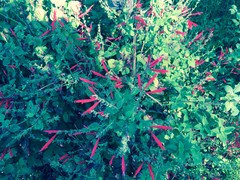
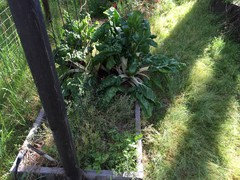
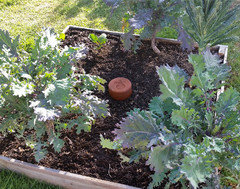
    The top picture shows an ornamental Salvia, maybe Pineapple Sage. you can eat the flowers but it's not really a food crop so you might want to move it to another bed for simplicity. The last picture shows Swiss chard. it is beginning to bolt but is perfectly edible at present. You could eat it now and then pull the roots and clear the bed.

    It may be an optical illusion but the beds look quite narrow with a lot of paths to maintain. In due course you might want to change the bed size. But I wouldn't do it immediately. Get on top of the beds you have first.

    navyguy778 thanked floral_uk z.8/9 SW UK
  • 10 years ago
    last modified: 10 years ago

    I agree with Job #1 :-) What you choose to keep is up to you.

    The first photo shows a type of salvia, most likely a form a pineapple sage, Salvia elegans. This is more of an herb rather than a true edible - the fragrant foliage is used to flavor fruit salads and drinks, much like mint. Keep or not. There might be other herbs in this area.....better photos could confirm (herbs tend to be planted together rather than mixed throughout a veggie garden)

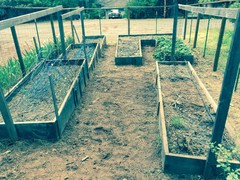
    The second shows just dead plant material and some weeds. Clear out completely.

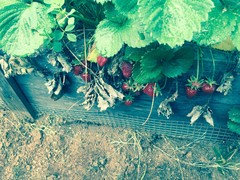
    The third focuses on a bed of strawberries, which is looking pretty good and in bloom. These you want to keep. You might just need a bit of weeding and mulching here, as with the other beds showing (just weeds, grasses and dead plants - remove completely).

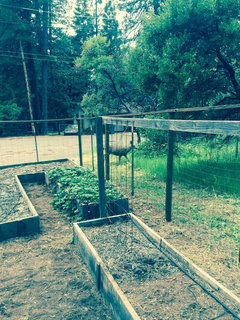
    The final one (with the trellis) has a still growing chard plant or two. The leaves on these should be perfectly edible if not too old. Keep if you like chard; otherwise you can weed out in prep for planting something you prefer.

    I would also cut back (and keep cut back) any grasses or weeds surrounding the beds. It is very easy for these pesty plants to infiltrate the planting beds and create a weedy mess. Lining the pathways with cardboard, wood chips or bark mulch will help to control.

    That should get you started - report back with other questions :-))

  • 10 years ago

    Thank you so much for your advice. I will get started on it this weekend and send more photos as I progress.. Please. Please.... Continue to follow this post. I won't waste your time and maybe you can take comfort in the possibility that you helped one more person become a better, healthier and happier being. Thanks


  • 10 years ago

    Can someone tell me what this is?

  • 10 years ago

    ??????

  • 10 years ago

    ????????

  • 10 years ago

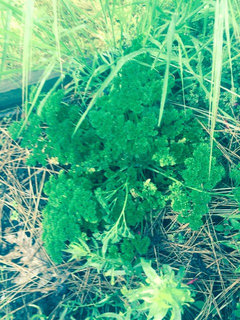
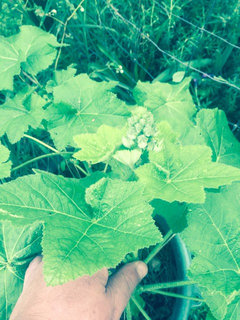
    First photo is parsley. Not sure about #2 - looks rather malva-ish or possibly tellima (where are you located??)

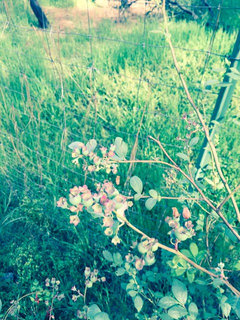
    #3 is a blueberry.

  • 10 years ago

    The first picture in the latest set is Parsley, 2nd is Hollyhock and 3rd is Blueberry. Beyond the parsley and behind the clump of grass (which needs to be pulled) is foliage which might be Thyme. Rub and sniff for confirmation.

    Both your parsley and your chard are biennials which means they grow one year, survive the winter and go to seed and die the following year. Yours are both on their 2nd year so start eating them asap.

    While you are getting the plants in the beds identified start clearing/mowing the paths. They are full of annual weed which will drop seed into your beds.

  • 10 years ago
    last modified: 10 years ago

    quote: "The soil is the most important part of the garden."

    Some would say that climate is far more important.

  • 10 years ago

    Some might.........but climate appropriate plants are easier to come by than good garden soil. And most of us who garden organically understand the importance of a fertile, biologically active and well draining soil. It is difficult to be a successful gardener (organic or not) without it!

  • 10 years ago

    I have two easy and highly productive entry points into organic gardening for you to consider.

    #1, EarthBoxes. Easy peasy, set them up and add water. They are efficient engineered systems and all you have to do is follow their instructions. Here are some tomatoes that I grew through Winter in EB:


    #2, Square foot gardening. No need for soil tests and other rigmarole. Get the latest book and simply follow the instructions. It's a fast read and you'll be up to speed in short order. You can start in your existing beds and see how it works for you. Here's one of my 4'x4' square foot kale beds from last year. It's slightly modified as I placed an olla in the middle of the bed to conserve water.

  • 10 years ago

    It makes no difference what your climate is if you do not have a good healthy soil to grow strong and healthy plants. I correspond with organic growers all over the world, many different climates, and they all confirm that what is needed isw a good healthy soil to grow strong and healthy plants.

    kimmq is kimmsr

  • 10 years ago

    Th OP has inherited a set of ready-made raised beds, so I don't really see any need for them to spend money on new earth boxes and start from scratch. At the moment s/he is still at the stage of identifying plants and weeds, learning about soil and carrying out basic maintenance. In the strawberry bed there should be fruit to pick very soon which should be encouraging. And if just one bed is cleared of weeds, seeds could be planted for some easy vegetables almost straight away.

  • 10 years ago
    last modified: 10 years ago

    MrClint ... the question is "How to best use the existing raised beds" not how to start an organic garden.

    NavyGuy Ask your friends ... someone will be able to come ID the plants for you. For now, remove anything that is clearly dead.

    I responded on the pictures in the IDEA book.

    Remove all the grass - pull it from the beds and cover the paths with cardboard to smother it. I hope it's not Bermuda. You appear to have lots of mint - that can be invasive - so smell the plants near the red-flowered thing (that looks like a Zauchneria or something worth keeping) and see if they smell like mint.

    After that, make sure there is a watering system that is reliable and decide what you want to grow. The leafy vegetables are easiest: spinach, lettuce and chard.

  • 10 years ago

    FYI to the above....all the plants have been ID'd and while mint could be present, it is not showing up clearly in any of the photos.

    Also, the growing season in NoCal starts very early and it is likely getting a bit late for many of the cool season crops. For a very simple start and one that doesn't require much, if any, experience to follow, visit your local garden center and see what veggie starts (not seeds) they have available for planting now. I would think you could easily and safely plant out things like tomatoes, peppers, beans and most cucurbits (squashes and relatives) right now and wait until late summer for cool season veggies to grow on through fall.

    But the first order of business is cleaning out the dead plants, the weeds and the grasses both in the beds and in the pathways between. And then determine if your soil needs some attention.

  • 10 years ago

    I agree that I can't see any mint.

    I don't know the local climate at all so maybe my idea about seeds would be too late - but what about beans or zucchini - is it too late for those? Certainly clearing a bed and putting in some tomatoes would be fun and give a felling of getting started for very little outlay.

    At the moment the garden needn't cost you anything much beyond some seeds and plants. (Assuming you have a few basic tools already).

  • 10 years ago

    Hi folks, please read the title of this topic:

    "New to organic gardening. Need Help" and the following calls for help:

    "I have no earthly idea how to even start to utilize it."

    "Any advice would be welcome and appreciated."

    My two suggestions are completely on topic and I'd like to add a third. Those beds aren't going anywhere. Clean them up and mulch them until you figure out what to do and how to do it. Or with square foot gardening as I suggested, you can start from scratch with one of the beds, add your Mel's Mix and you're off to the races. With EarthBoxes, beginners and busy people can have lush and productive organic gardens with a lot less effort and with a lot less of a learning curve. Starting with success is going to hook you in the hobby. more than anything else.

  • 10 years ago

    It makes no difference what your climate is if you do not have a good
    healthy soil to grow strong and healthy plants.


    No matter how healthy your soil may be, you're not going to be a successful orange grower in Michigan.


  • 10 years ago

    Well, that depends. If people can grow lemons and oranges in Nebraska we in Michigan can as well.

    http://harvestpublicmedia.org/content/watch-visit-nebraska-greenhouse-grows-lemons-and-oranges#.VxS1H_krJD8

    kimmq is kimmsr

  • 10 years ago

    Oh... you've moved the goalpost over there.

    I don't even need to click that link as the word "greenhouse" in the address.

  • 10 years ago

    I did not "move the goalposts". The citrus fruits need protection from cold temperatures but still need a good healthy soil to grow in.

    Eliot Coleman grows, and sells, organic produce year round in Maine and tells you how in his book "The Four Season Garden".

    One of our super stores has contracted with a grower near Kalamazoo to supply produce year around for stores in about 6 states. But that grower still needs a good healthy soil to produce that produce.

    kimmq is kimmsr

  • 10 years ago
    last modified: 10 years ago

    Maybe you're more familiar with the term "special pleading"?

    "The citrus fruits need protection from cold temperatures..."

    Exactly. That means growing them in the proper macroclimate or altering the mesoclimate to ensure protection form the cold. Either way, without first providing the more important climate, the soil conditions are irrelevant.

    I never said that soil wasn't important to the garden, only that it wasn't the most important.


  • 10 years ago

    This discussion has deteriorated into the inane :-)

    If you think about it logically for just a moment, climate only limits what can or can't be grown in a specific location. OTOH, soil affects anything grown in that location, properly climate adapted or not. Even native plants - that have no issues with any of the vagaries of local climates - will struggle and fail to thrive is the soil is not to their liking.

    Sorry but climate is not at all the most important consideration in a cultivated garden. In fact, given the huge assortment of climate adapted plants available to gardeners just about anywhere, it is typically only of minor importance. Whereas, the lack of a healthy, fertile and well draining soil will limit the growth of ANY plant type. This is far and away a more limiting gardening restriction: limiting the growth of some plants by virtue of an unsuitable climate versus limiting the growth of any plant by virtue of a poor soil situation. Soils win hands down!!

  • 10 years ago

    Plants have a number of needs and as a result there are several limiting factors. We can control or alter these inputs to varying degrees. Plants grown hydroponically need a substrate to anchor them down. They do swimmingly (pun intended) without soil. :)

  • 10 years ago

    Having a "huge assortment of climate adapted plants available to gardeners just about anywhere" only means that someone has already addressed the climate question. The garden center in Yuma Arizona is likely to offer different plants that the garden center in Bangor Maine, and that's not because of any difference in soils.

    When a plant can't grow in a given area because of the climate, then the soil qualities are totally irrelevant.


  • 10 years ago

    I wonder how the OP is getting on with clearing their beds?

  • 10 years ago

    floral, that was my thought. I don't expect this discussion is very helpful or encouraging to the OP.

  • 10 years ago

    "I don't expect this discussion is very helpful or encouraging to the OP."

    dirtguy50 SW MO z6a(6a), I think the OP was given some solid suggestions. Without follow up comments or questions there is no way of knowing how any of them were taken. It's an open forum and grownups should know by now how to filter out noise. I'm certain we all have media outlets, co-workers, forum posters, etc, that we have learned to simply ignore. Likewise someone is sure to come along and criticize without actually adding anything to the conversation. ;)

  • 10 years ago

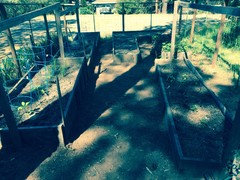
    Hello. I'm finally finished with clearing out my garden.

  • 10 years ago

    Q

  • 10 years ago

    I'm sorry I didn't respond to anyone's helpful advice. I was called out of country for work but when I got back I went straight to work and a week later it's all clear. I'm ready for the next step.

  • 10 years ago

    My strawberries are ready for harvest. Yay!!!

  • 10 years ago

    Please identify

  • 10 years ago

    Very nice work - you did a thorough job!! Your strawberries look delicious - too early for them to be ripe up here but soon - and your mystery plant appears to be a hollyhock.

    navyguy778 thanked gardengal48 (PNW Z8/9)
  • 10 years ago

    looks like you have some Blueberries coming along too. Have fun and good luck.

    (Good job you have a fence with the deer so cheeky.)

    navyguy778 thanked floral_uk z.8/9 SW UK
  • 10 years ago

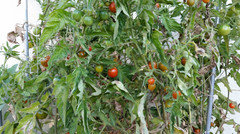
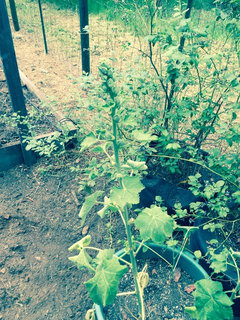
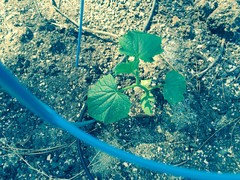
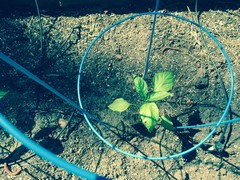
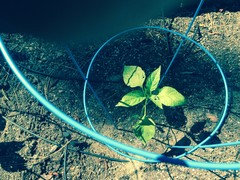
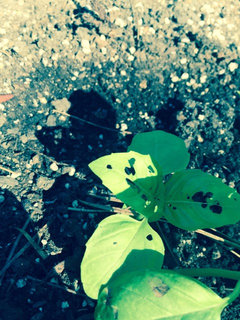
    Update on my garden. I planted some starts. Tomato, cukes, sweet and hot peppers. They've been in the ground almost a week and they look healthy and are growing but I am noticing holes in the leaves. Although I check on them several times a day I have never seen anything eating on them. Do any of y

    ou know what could be causing this? Thanks

  • 10 years ago

  • 10 years ago

  • 10 years ago

    A photo of the after picture of my garden

  • 10 years ago

    My last photos were a little too far away to see clearly so I thought I'd take better ones. Please advise.

  • 10 years ago

    'Although I check on them several times a day ...'

    Try looking at night with a flashlight. If the holes remain few don't worry too much. Home grown veggies are frequently less cosmetically perfect than store bought. But then they are also less loaded with sprays.

    navyguy778 thanked floral_uk z.8/9 SW UK
Sponsored
Buckeye Basements, Inc.
Average rating: 5 out of 5 stars40 Reviews
Central Ohio's Basement Finishing ExpertsBest Of Houzz '13-'21