Software
Houzz Logo Print
peter_dube72

Need help with raised garden bed.

10 years ago

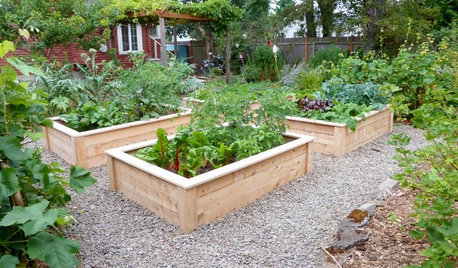
Next spring I am planning on doing a raised garden made of concrete blocks(8w x 8h x 16L). I was planning on a 8'x5' plot 16" high. I was going up till up the plot about 6", lay cardboard down, use top soil and the top 6" use a Miracle-grow, compost and perlite mix. Could I get some suggestions and direction on if this is the right way to go? I plan on just doing a few tomato, cucumber, pepper, corn and cabbage.

Comments (8)

  • 10 years ago

    The biggest problem I see is the narrowest part of the bed is 5 feet. Unless you are tall with long arms, it is pretty difficult to reach the center of the bed. Most recommend maximum 4 feet wide. I like my beds 3 feet wide. I built a strawberry bed that was 8 ft by 4 ft and hated reaching in to harvest the berries. I only did that one year. the 8 ft by 4 ft bed was not bad for corn or a similar tall growing crop but anything short means a long reach usually on the knees to keep from breaking my back.

  • 10 years ago

    Thanks yolos! Ya, I'm not tall and have T-Rex arms so 4 feet it is. I guess I could do 2 4x4 plots with a 4ft space in between.

  • 10 years ago

    I live is south Georgia by Valdosta and have clay just 8 inch's or so down. Could I just go 1 layer of brick and dig down until I hit clay?

  • 10 years ago

    sure you can, Pete
    I have some 'bed frames' that are only 10 or 12" wooden frames to hold the soil in place, I have some 'raised rows' with the soil just raked up on the beds often enough to create beds slightly above the walkways and I have hip high raised beds
    all of it works, the big question is how well does it work for what purpose and what is your purpose
    my 'real raised beds' are easy on my back and allowed me to hide a lot of course yard waste in their bottoms, whole trees in pieces rott in my raised beds and for several years continually supply my plants with nutrients

  • 10 years ago

    I've got a buddy who does his gardens out of old milk crates, lines them with landscaping fabric, can move around and design your garden all you want with those. his garden always turns out amazing.

  • 10 years ago

    Agree to wide... Mine is 12x4 and I plant 2 rows in each bed but I still don't like the 4' wide and wish I had did 2' or 3' and just planted one row in each bed.. Especialy for tomatos and such..

  • 10 years ago

    Hi Pete. I live in South Carolina with similar soil and climate. I use raised beds 3 feet wide. No structures for the sides. Just plain dirt. If you are going to construct a bed with materials, I suggest you use boards, even though they eventually rot. Seasoned wood may last 5-6 years though. The reason is, when you use 8 x 8 x 16 blocks, you are wasting a full 8 inches of "reach" no matter which side of the bed you work from. This forces you to have a 4 foot wide bed just to have only 32 inches of working soil and it's still too wide to reach the middle easily.

    I have mostly 3 foot wide beds with 2 foot paths between (32 of these beds!) but I also have 3 large beds that are 4 feet wide. I much prefer the 3 foot beds, and use the 4 foot wide beds only for crops I don't plant to have to work much with, like beans and melons.

    On your clay question: I've been working with others on gardening with clay for many years. The best ideas are, if you are going to be gardening there for many years, lay out your beds and then, before you put down block/boards or prepare the top soil, move it actually off the bed or otherwise little-by-little, DOUBLE DIG the soil such that you are tilling the clay beneath. Now, before you put the top soil back, dig in some gypsum (buy it fairly cheaply at Lowes). This does many things for your soil, but the most important thing it does is it actually helps loosen the clay particles and invite in air and water. Yep, even in hardpan clay subsoil, it will do this. Plus, it also provides calcium in quantities that your plants need. Plus it will raise the pH, which most certainly will be very low in that clay, such that the aluminum that is also down there would be poisoning the roots that try to go there.

    Why improve the subsoil? Because if it is healthy, your plants will also send roots down that deep, and be able to get water and nutrients even in a drought when you happen to not be watering enough. And this is something you only do the first time. Never again will you be working the subsoil like this. So it's actually way more important to work with your subsoil than even to build walls around your beds. This is about nutrients and functionality, not esthetics. A little hard work (a tiller will help) and some money put into gypsum will go a long way toward making your garden productive in the future.

    If all you want is a fun project, just build some beds. If you want a really productive garden that will use less amendments and less water and produce healthier food for a long time though, consider working the sub soil and adding gypsum. Even if you don't ever work the subsoil like I recommend, it pays to add gypsum into your top soil because it slowly leaches downward and will somewhat help your subsoil anyway, eventually!

    More on gypsum for clay soil

    Cheers,


Sponsored
Peabody Landscape Group
Average rating: 3.5 out of 5 stars8 Reviews
Columbus' Reliable Landscape Design & Contracting