Software
Houzz Logo Print
etta_turnerterrell

To fertilizeing

10 years ago
I thought I he discussed somthing close to this before but can't find it... But anyways... 2 part question... My soil test from the agricultural dept said all my stuff is high to very high and only suggested nitrogen to be added. Upon suggestion I added very little bone meal to my 2 raised beds with this soil in it. I also put 3 - 40# bags of compost in them. I am also adding hay to it as a mulch them. The lady told me at nursery not to add any other fertilizer this whole season but with blood meal (from reviewing soil test) saying everything will say high for a few years? Is this correct... Is there anything I should add to it threw out this season... (I'm taking it fertilizer and feeding is the same thing). If not and I should feed threw out this season what "store bought" food?


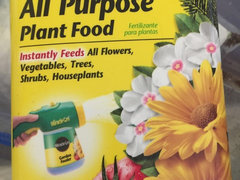
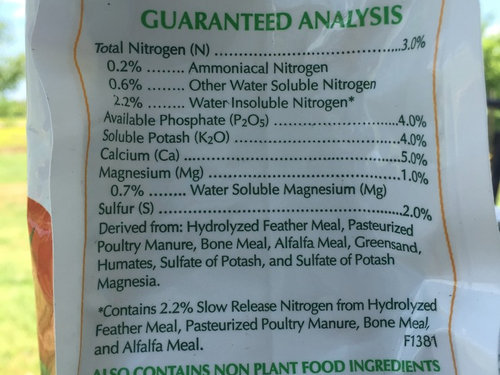
ok 2nd part of question,. I also have containers 5 - 20 gal... I added some of the compost from garden (the one with soil test) then bags of compost from lowes and then MG potting mix and mixed it all together. (This is a trial). Also some buckets with just plain MG potting mix in them. Upon planting cucumbers, cantaloupe and peppers should I ferlize them? I have MG all purpose fertilizer or I also have this


And how often to add to containers? Or should I buy something else.


Comments (6)

  • 10 years ago
    last modified: 10 years ago

    For containers I would use a soluble fertilizer. Garden-tone is a good product, but I think everything they have is granular (I could be wrong.) Granular fertilizers, as it says on that bag, are slow release. You could put a little in your containers, but as it takes a while to be available to plants, really unless you reuse the soil (keeping it out of the rain all winter, ot tossing it into your garden beds for next season) there are better products for container use.

    Soluble fertilizers are usually sold as concentrated liquids, or what look like (usually blue-colored) 'salt' crystals. Miracle grow is a common soluble fertilizer, but there are many brands. Basically you just add water, and use as directed (or a little less than directed.)

  • 10 years ago

    Fertilizing plants in containers and fertilizing those in the ground are two totally different things but yes, both need some source of supplemental feeding throughout the season in most cases. Containers require them on a regular basis since they leach out of the container everytime you water. The smaller the container the more often they must be replaced.

    Have you tried using the search tool here to pull up all the discussions already here about these topics? And all your past posts are available from your profile page here.

    "Upon suggestion I added very little bone meal to my 2 raised beds with this soil in it."

    Why, if the soil tested as already high in phosphorus, would you add more?

    "I also put 3 - 40# bags of compost in them. I am also adding hay to it
    as a mulch them. The lady told me at nursery not to add any other
    fertilizer this whole season ..

    Sorry but I don't agree with that at all. Neither compost nor mulch are fertilizers. They are soil amendments, a soil improver. And the amount of improvement all depends on the ratio of compost to the amount of soil in the bed.

    While compost can provide some supplemental nutrients over time, that is a secondary effect of it and happens only if there is an active soil food web in the bed to digest the compost. In a years-long established bed with a good ratio of compost to soil that soil food web exists and compost can be an effective source of most nutrients through mush of the season, IF that compost is constantly refreshed. But that soil food web doesn't exist in a new garden bed or long unused gardens like yours or in containers.

    "but with blood meal (from reviewing soil
    test) saying everything will say high for a few years?"

    I don't understand this part at all. Blood meal is a source of nitrogen and nitrogen rapidly dissipates and certainly doesn't last all season. As for the other components of the soil test - P and K and micros, in most cases they are all slow to move through the soil and yes in most cases remain stable for years. But that in no way means the plants have access to them. That all depends on the soil pH. So in many cases supplements need to be provided throughout the season.

    Bottom line - it takes a very well-established and maintained garden bedthat has been well cared for with multiple additions of high quality compost a number of years to provide everything plants need throughout the growing season. Otherwise the gardener has to provide them.

    And containers need nutritional supplements regularly and frequently. The type of supplements you use is your choice but as it discussed on the forums here almost daily, liquid supplements, either organic or synthetic, properly applied are more effective in containers than are dry granular fertilizers.

    Dave

  • Etta T thanked digdirt2
  • 10 years ago

    Sorry Dave I meant blood meal not bone... This is the MG I have it is as you say blue crystals... So this will work in containers? Of so how often should I apply? At 1/2 strength to containers?


    Ok if since what's she is saying is wrong about not adding any more Fertlizer to the beds,. What do I need to put in them and how often? (What would you put in yours)

    i don't understand all this about active soil food webs.. I'm new to gardening and am doing good just to understand the P-P-k lol

    The ph is fine 6.5 (before adding compost if that matters) you say "supplements need to be provided" what supplements (name of product at store) do I need to add?

    Thanks for the help and yes I went to my old post and found nothing.


  • 10 years ago
    last modified: 10 years ago

    Yes, that MG will work just fine in containers. See on the top left, it says 'Water Soluble'. It is instantly available to plants. In contrast, 'slow release' (and other terms) mean that the nutrients either need to be 'broken down' over time, or that they are in a form that requires chemical reactions (basically the same thing, but 'broken-down' can mean 'decompose'.) In soils, the most active catalysts are acids of different sorts. There are also caustics, but let's not go there. Acids do exactly what you imagine they do... they dissolve substances. Upon dissolving, along with staying in an elemental state, they mix with all the other things being dissolved and form new compounds.

    Some acids are found right there in the soil, some are in the stomachs of teeny, tiny creatures (or big creatures like people and cows) and some are given off by plant roots and fungi. This is the 'soil web'. The web of life that symbiotically feeds and nourishes itself. A cow eats grass, the stomach acids break down the grass into compounds and elements, the cow uses some, and the rest comes out as manure. The plants use the elements in the manure to grow new grass - Symbiosis (well, not really, but the idea is that they both help each other.)

    Now imagine that is going on in the soil with literally millions of life forms - the soil web of life. Fungi and bacteria do a lot of the heavy lifting in the soil web.

    Not to get into the chemistry, but different elements are more 'stable' than others in their basic forms. Others have to be 'attached' to other elements. Toss some pure potassium in water and watch the show (no seriously... google it and watch a youtube vid.) Potassium therefore, is always attached to something else. Some compounds formed through these bonds are more easily used by plants, some require acids to break them down.

    Ok, so, I'm not sure about that box of MG, read the label but most of it is meant to be mixed at 1 tbsp. per gal. of water and applied every 1 - 2 weeks. I mix a basic batch and dilute it further in the watering can and mix it as I need it. You may not like this answer, but there is no hard and fast formula about when to fertilize with soluble fertilizers beyond... when they need it. It depends on too many factors. If the pots are out in the rain, they'll need more frequent applications. If the plant grows huge... more frequent applications. You get the idea... many variables. Your best bet is to just do it lol, and learn as you go.

    Ok, I'm sure I missed something, but there you go. Oh, and although there are some aspects of a soil web in containers, it's not nearly... not even remotely close to as active as the ground.

    Edit: somewhere on that box it should say what the 'Guaranteed Analysis', or at least what the NPK is... that will be a determining factor whether it is good for veggies. However, the all-purpose usually will be just fine. As time goes on you'll learn that there are 'better' products, but save that until you have more experience.

    Etta T thanked rgreen48