Software
Houzz Logo Print
kharmapill

Need help selecting economical, durable finishes

10 years ago
last modified: 10 years ago

Hello! My husband and I are estimating the cost to construct a new custom residence on a hill country lot in Central Texas. Our architect has suggested numerous materials, but we're not sure which items are the best value, and our dream is beginning to feel out of reach. Can you help us make economical yet durable and low-maintenance selections or suggest alternative materials? If you have any cost information, that would be very helpful too.

1. Exterior Cladding

a) Corrugated Metal

b) Cedar

c) Cypress

d) Hardie Board

e) Stucco


2. Deck Material

a) Wood

b) Synthetic or composite wood -- is it worth it?


3. Roof

a) Standing Seam Metal Roof

b) Corrugated Metal - any positive reviews?


4. Doors and Windows

a) Fiberglass

b) Aluminum Clad Wood


5. Ceiling

a) In Great Room, there will be a vaulted ceiling; we'd love to have a wooden ceiling but the cost is likely too high - any ideas for a statement ceiling on a budget?


6. Countertops

a) Granite

b) Marble

c) Silestone


7. Cabinets

a) Maple

b) Painted


Any other suggestions for keeping the costs down? Rectangular building shape? Less windows? Thank you so much for your time!

Comments (12)

  • 10 years ago

    A smaller simple house with less fancy finishes is the best way to keep costs down below $200 a square. You just have to learn to be happy with that. Or buy an existing house and renovate.

    kharmapill thanked User
  • 10 years ago
    last modified: 10 years ago

    Seriously? You're trying to keep the cost down and you present us with granite, marble, and Silestone for countertops?

    And maple or painted cabinets? Not IKEA? Not Home Depot? Why not, if money is a concern? And that is a dead serious question.

    This is a job for your architect. He's the one who should be giving you options, with prices. That's his job. And you have to put in the hard work of researching prices in your area, especially the labor for each option.

    You're building a new custom home, designed by an architect, and you want people here to do all this work for you for free? Really?

  • 10 years ago

    Sorry, I meant no offense. And I should have specified that we'd like to keep costs around $150-$170 per square foot for a 1,400 sf home. I thought someone might have some suggestions for me on pricing based on their experiences.

    I should also clarify that we're trying to license the drawings from an architect to save money and these are the finish options for the aesthetic we like. We haven't retained an architect yet. We're just new to this and trying to see what might give us the best value. Thanks.

  • 10 years ago
    last modified: 10 years ago

    Only the architect can tell you the prices of material/labor, etc. in your area.

    He can also tell you whether $150-$170/sf is realistic for new construction in your area. It is NOT where I live ($350/sf and up in downtown Philly).

    kharmapill thanked tatts
  • PRO
    10 years ago

    In home building, a true custom build will always land you at the highest "average price per square foot" range, regardless of the materials. There is more time and resources involved with designing, managing, and installing a home when every project design is unique, so the cost will be higher to the homeowner. Looking for a developer or spec home builder who allows for limited changes to their plans (i.e. finish materials), will get you into a more conservative range.

    Remodeling and renovating is also a "custom" process so this will also stretch to the top of your budget and beyond.

    Based on the materials you were inquiring about, I would focus on making conservative choices for floor, cabinetry, appliances, tile, and windows/doors. These will be some of your highest %-age of cost for finishes. If helpful, here are some recommendations based on you first questions. Though please note, that installation costs (and even material costs) are specific to each market. Cost of living will drive professional installer costs and manufacturers change adjust the sale price of products to as high as that specific market can bear. It is best to look for an architect that can present previous projects with their actual budgets as a guide to what is possible and then select a builder who can be brought into the team early on to provide accurate budgeting.

    1. Cladding - Hardie Fiber Cement
    2. Composite is initially more expensive (materials and labor) but totally worth it...but consider adding the deck as a later-on project to reduce costs now
    3. We have done any corrugated metal roofing so I couldn't speak to that.
    4. Fiberglass is a great choice, but not as many manufacturers offering it. Consider researching less expensive vinyl construction windows (if feasible in your market)
    5. Leave it alone for now...this can always be added later. 1, 2, or 3 (depending on the width) stunning chandeliers hung at the top of the vaulted ceiling can be enough of statement :)
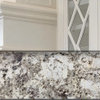
    6. Granite, Yes you will have to seal it every year or so, but you will have more options available at a lower price point than manufactured quartz (Silestone, Cambria, etc) and I would rule out marble from the get-go.
    7. Cabinetry...focus more on cabinet line here. A manufacturer with less options available will mean a lower cost. The more customization and features you can tweak / add, that cabinet line will have a much higher price point. Don't give up on all plywood construction or solid hardwood just yet either. Wolf Classic Cabinets or Aristokraft Cabinets have options that fit into a very conservative budget.

    Good luck!

    Greg

    Project Developer at Hammer Design Build Remodel

    kharmapill thanked Hammer Design Build Remodel
  • 10 years ago

    COUNTERS: Marble is supposed to have antibacterial properties that other stones don't, but I don't find many very attractive so we went with Granite. (The one marble I do love is called "Rain Forest," which comes in Green and Brown. Google it.)

    We just had Lowe's put in "Waterfall" Granite for us - both kitchen countertops and a bath vanity. They are usually featuring a few granites at 10% off for a time. Ask if they will honor a 10% off Lowe's coupon, and whether they would be so kind as to honor it for the entire amount since you're spending a lot with them (they let us do it). We put granite in a huge kitchen and on one very large bath vanity for less than $10,000, though we did not do the backsplashes as we wanted tile. (In retrospect, the granite would have been a smarter choice cost-wise unless you use subway tiles of stone.) If you need a Lowe's 10% off coupon email me and I'll tell you how to get one easily: susan.mcmonagle@gmail.com.

    I will let others speak to the other cost issues; I don't feel I am well enough informed to help. I presume Amazon would have an excellent book, however.

    - Susan

    kharmapill thanked Susan McMonagle
  • 10 years ago

    Thank you all for the helpful pointers! I really appreciate learning from the pros!

  • 10 years ago
    Another big factor that one should consider is the lifespan of a given material the high upfront costs may be justified if they last for ever and have limited maintenance costs.

    as has been noted, the costs vary from one geographical location to another.
    those costs involve the actual material as well as the skilled labor to do the installation.

    in respect to exterior cladding and roofing materials, you have to consider future replacement costs and insurance costs.

    Another consideration is how long you plan to stay in the home and the real estate market in the area.

    I have property in west Texas where the real estate market is depressed and construction costs for a new home substantially exceed the purchase price of an existing home.

    your per square foot allowance seems really low.
    kharmapill thanked Kelley Dockrey
  • 10 years ago

    I live in Dayton, Ohio and my daughter lives in a very affluent area in Virginia near Dulles International Airport. Since she lives in what is called the suburbs of D.C., everything that is built in her area costs about 3 times what we would pay for the same building in Dayton, Ohio. Almost all of the houses in her area start at half a million dollars and go up well over 1 or 2 million!

    kharmapill thanked Bev
  • 10 years ago
    last modified: 10 years ago

    One other piece of advice. Haunt Home depot and Lowe's for clearance items, check out second hand stores. Re-store, that's from Habitat for Humanity sells some great stuff. Re-purpose, re-cycle , re-use. Flea markets are good for more than just old furniture and records . You can sometimes find contractors sell things they overbought. Also used house parts, like doors and cabinets. Take your time to spend wisely. FYI everyone building costs in Texas are a lot lower than most of the states.

    kharmapill thanked User
  • PRO
    10 years ago

    A simple plan -- rectangle with simple roof forms, will be the least expensive to build, and will cost less to condition.


    Once you have a plan, it's easy to get pricing for the shell. That is, the house, minus finishes, windows, doors, cabinets etc.

    Then review your budget, and allocate your remaining funds to what remains.

    Your choices listed above are all higher end items, and there are quality but lower cost options available.


    kharmapill thanked PPF.
Sponsored
Daniel Home
Average rating: 4.8 out of 5 stars20 Reviews
Premier Interior Design Team Transforming Spaces in Franklin Co, Ohio