Software
Houzz Logo Print
thegalactic2000

Lawn care newb needs help!

10 years ago
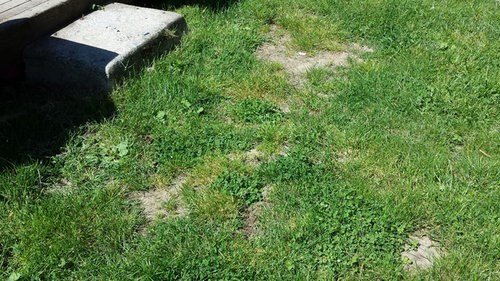
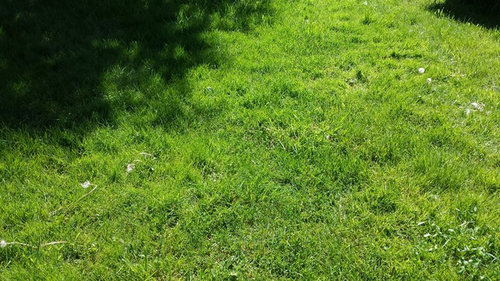
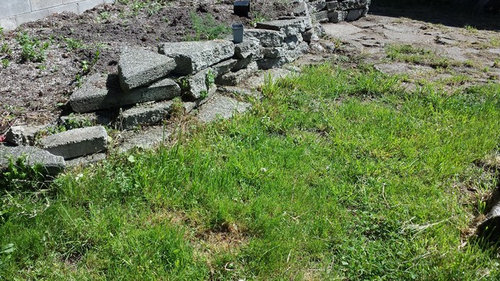
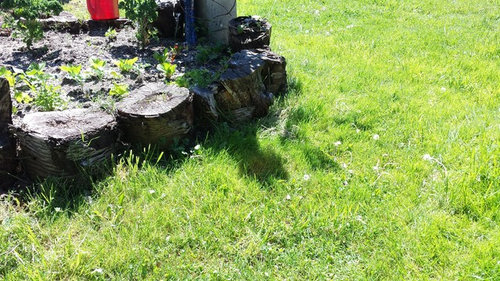
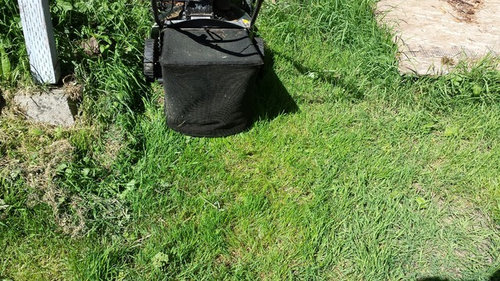
Hi guys. Moved into our current house about six months ago and I'm trying to get the lawn and garden in shape, but I'm pretty much a neophyte when it comes to this stuff. The pictures are about a week or two after treating with Bayer all in one weed killer plus crab grass, which I applied with a pump up sprayer. The dandelions seem to be dying, but there's still a lot of stuff in there. I'm wondering how often it's advised to apply something like that, and also just in general what you guys who know what you're doing suggest how I should approach things.


Thanks!! :)


Comments (2)

  • 10 years ago
    last modified: 10 years ago

    Weed killer/herbicide should be used per instructions when applied to the whole lawn. If spot spaying, little harm results from multiple applications.

    First thing to do is determine the type of grass and weeds that you have. here

    Second, adopt proper maintenance procedures. dchall has posted multiple times a good guide. Search dchall and proper mowing, watering and fertilization.

    Come back with your questions.

    Rick Rickerson thanked User
  • 10 years ago

    Basics of Lawn Care

    After reading numerous books and magazines on lawn care, caring for lawns at seven houses in my life, and reading numerous forums where real people write in to discuss their successes and failures, I have decided to side with the real people and dispense with the book and magazine authors. I don't know what star their planet rotates around but it's not mine. With that in mind, here is the collected wisdom of the Internet savvy homeowners and lawn care professionals summarized in a few words. If you follow the advice here you will have conquered at least 50% of all lawn problems. Once you have these three elements mastered, then you can worry about weeds (if you have any), dog spots, and striping your lawn. But if you are not doing these three things, they will be the first three things suggested for you to correct.

    1. Watering
    Water deeply and infrequently. Deeply means at least an inch in every zone, all at once. Infrequently means monthly during the cool months and no more than weekly during the hottest part of summer. Do not spread this out and water for 10 minutes every day. If your grass looks dry before the month/week is up, water longer next time. If that does not work, then you might have to water more than once per week during the summer's hottest period. Deep watering grows deep, drought resistant roots. Infrequent watering allows the top layer of soil to dry completely which kills off many shallow rooted weeds.

    You will have to learn to judge when to water your own lawn. If you live in El Paso your watering will be different than if you live in Vermont. Adjust your watering to your type of grass, temperature, humidity, wind, and soil type. It is worth noting that this technique is used successfully by professionals in Phoenix, so...just sayin.' The other factors make a difference. If you normally water 1 inch per week and you get 1/2 inch of rain, then adjust and water only 1/2 inch that week.

    2. Mowing
    Every week mulch mow at the highest setting on your mower. Most grasses are the most dense when mowed tall. However, bermuda, centipede, and bent grasses will become the most dense when they are mowed at the lowest setting on your mower. In fact there are special mowers that can mow these grasses down to 1/16 inch. Dense grass shades out weeds, keeps the soil cooler, and uses less water than thin grass. Tall grass can feed the deep roots you developed in #1 above. Tall grass does not grow faster than short grass nor does it look shaggy sooner. Once all your grass is at the same height, tall grass just looks plush.

    3. Fertilizing
    Fertilize regularly. I fertilize 5 times per year using organic fertilizer. Which fertilizer you use is much less important than numbers 1 and 2 above. Follow the directions on the bag and do not overdo it (unless you use organics in which case you may overdo it without fear of hurting anything).

    At this point you do not have to worry about weed and feed products - remember at this point you are just trying to grow grass, not perfect it. Besides once you are doing these three things correctly, your weed problems should go away without herbicide.

    But I really like to emphasize watering as being very important, so I wrote the following.

    Watering: Deep and infrequent is the mantra for watering. This is for all turf grass all over the place. Deep means 1 inch all at one time. Put some cat food or tuna cans around the yard, and time how long it takes your sprinkler(s) to fill all the cans. Memorize that time. That will be the time you water from now on. My hose, sprinkler and water pressure takes 8 full hours to fill the cans. Your time will likely be less. I like gentle watering. As for watering frequency, that depends on the temperature. With temps in the 90s, deep water once per week. With temps in the 80s, deep water once every 2 weeks. With temps in the 70s, deep water once every 3 weeks. With temps below 70, deep water once a month. Note that you have to keep up with quickly changing temps in the spring and fall. This deep and infrequent schedule works in Phoenix and in Vermont, so it should work for you. The reason for deep and infrequent is to grow deeper, more drought resistant roots and to allow the soil to dry completely at the surface for several days before watering again. If it rains, reset your calendar to account for the rainfall.