Software
Houzz Logo Print
sylviagrace

Rooting Poplar(?) Sprigs?

10 years ago
last modified: 10 years ago
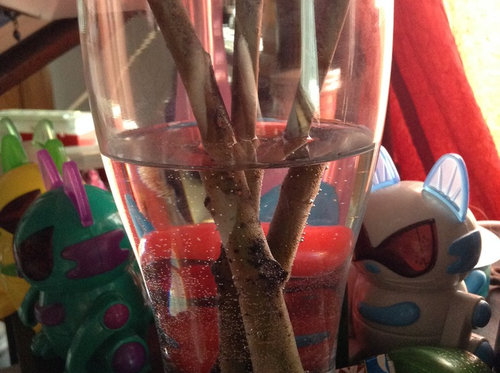
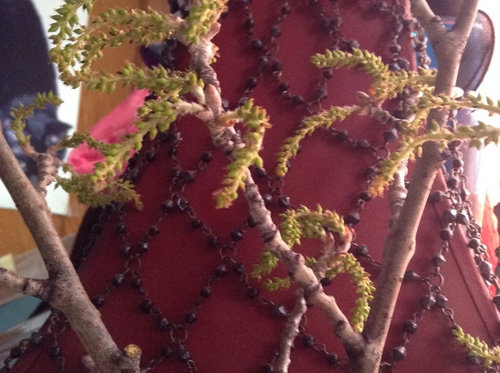
The sidewalks in my neighborhood are lined with various types of trees, all about 100 feet tall if I had to guess. Spring snow hasn't been nice to them this year! One of the cottonwoods across the street (which appears to have had an issue with rot) got completely uprooted and fell over, while the surviving trees all lost at least one large branch. My trees, which look like white or grey poplars but I'm not 100% sure, aren't in the best of shape to begin with so I was sad to see that one of their casualties was a big, perfectly healthy branch. Something compelled me to snap off three sprigs (is that the right word?) from the branch and put them in a vase even though it's allergy season. I'm wondering if there's any chance I can get them to develop roots? I'm including a picture of their vase (it may have too much water, and I probably should have taken off some of the bark at the bottom). Thanks in advance! :)

(No leaves yet, just baby fluff bombs, as I've always called them :P)

Comments (15)

  • 10 years ago

    I have a poplar plantation...and every single tree is naked for almost the entire length of the trunk apart from the very top of the canopy. Although these are grown plantation style, on 6m centres, it is true that all the poplar tribe will lose branches at the drop of a hat (or a flurry of snow). However, nothing roots as easily...but do try to find the newest branches near the base of the tree - juvenile wood is the most likely to contain the meristem cells which change into root cells. Older top growth will also root...but this can be a tricky time to try - far better to go for hardwood cuttings at the start of autumn long before any sap starts to move. Even so, as with salix, poplar is an easy genus to root - although I am not at all experienced at rooting woody plants in water. I feel you might have more success transferring the twigs to a moist soil medium now rather than adding extra stress with the often difficult transition from water to a solid medium when fragile roots have already formed.

  • 10 years ago
    last modified: 10 years ago
    I'm rooting poplars this spring as well, even if mine are p. balsamifera. I put them in soil just as Campanula wrote above, and keep it moist and cool in the shadow outside. I think that is more effective but I don't know for sure

  • 10 years ago

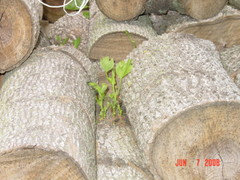
    Not really pertinent, but I have personally witnessed poplar firewood continue to put out new growth after lying in a woodpile for months.

    It really wants to live!


  • 10 years ago

    A lot of life in those logs. Horse chestnut will do the same, they will make a mess in your woodshed with shoots everywhere until you split them

  • 10 years ago
    Impressive! I've seen that happen in the wild but never in a firewood stack. That would be a good subject for a motivational poster.

    What kind of soil and container sizes would give my twigs the best chance, and is there anything else I could do (peeling away a bit of bark is one possibility I can think of) that might help? This was totally unplanned, I saw the branch on the ground and said "Why not?" :)

    Also, does it look like my trees are in fact poplars? Probably a silly question, but I have virtually zero experience with outdoor plants except for appreciating their beauty.

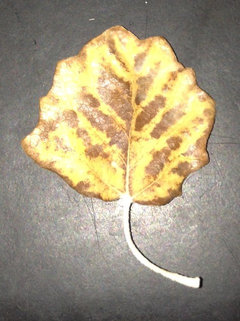
    Speaking of beauty, I attached a picture of a leaf I saved from one of these trees a year or two ago. The ratio of brown to yellow and the symmetry are unusual, normally the leaves are mostly one color when they fall.
  • 10 years ago

    Looks like Populus alba or a hybrid with that as one parent.

    Cellulose-the main component along with lignin, of wood-is in reality a very complex form of sugar. That's stored energy, folks. And unlike an animal, which pretty much dies when it dies, each cell of a plant, especially a woody plant, must expire on its own. I've watched large logs in our wood dump sprout sprouts forever. It is not a rare occurrence.

  • 10 years ago
    last modified: 10 years ago

    populous alba is a favourite landscape tree in my location - absolutely recognisable with that almost luminous white underside to the leaves which shimmers on the ends of those long petioles (although it is true, I am coming to love this previously unfamiliar genus).

    I have a circle of felled trees around a firepit and even now, 3 years on, they will throw new growth...and will also do that thing of regrowing (and re-rooting) as a row of new branches from a felled horizontal log - phoenix trees.

    I like to root hardwood cuttings in the ground because I am idle and can dispense with watering but I also use those deep rose pots which hold at least 5litres of potting medium so that the cutting can be planted to a depth of around 8inches. The potting medium for hardwood cuttings is less crucial than seedlings - and in your case, Sylvia, you can make use of the soil around the base of the original tree (which will also have sympathetic micro-life - bacteria and fungi - even a trowel full in an inert potting mix will kickstart the soil associations so essential for plant health. Yep, there may be weed seedlings in garden soil which germinate but easily plucked from the surface of the pot.

  • 10 years ago

    They are never planted in urban (much less garden) situations here in the UK - they are purely a wildling in wetlands such as the Norfolk Broads...while black poplars have practically vanished...but from a distance in late May/June, huge white clouds of massive gueldar roses (viburnum opulus) and white poplar look like surreal snowfields of white in waves of green - truly a well named tree.

  • 10 years ago

    I don't know why, but white poplar is almost never seen over here, even if other species of poplar are quite common. I don't even know what kind of poplar they are, but there is about ten distinguishable species that I use to see. Some are really nice, other are just awful with trunk shoots and dead branches.

  • 10 years ago

    I don't know what variety poplar we have around here but it is everywhere. I judge it solely on it's value as firewood and it burns very fast and hot, so I don't care for it at all- some of my least favorite wood.

  • 10 years ago

    if i had been trying to root them .. i would have gone with about pencil thickness ... yours are kind of stubby ....


    but they are poplar ...


    they could also have been stuck straight in the ground ...


    ken

  • 10 years ago

    Sometimes whole branches break off, fall in the river, float downstream and start growing in a river bed somewhere so I don't think large size is a problem

  • 10 years ago

    Camp, I live near to the Oneida Indian Reservation-the Wisconsin group, not the main band back in NY. And for some reason, white poplars seem to have some affinity-or is it the other way around-for tribal members of yesteryear. Lots of big old clonal clumps out in the country just west of Green Bay. Kinda cool, even if considered by many as a "trash tree".

  • 10 years ago

    I can understand the disdain many feel for those fast growing hybrids...but both black and white poplar have definitely gained a place in my affection. Mind, even the hybrids have uses - right now, they have their fresh bronze foliage, looking positively autumnal. I found an interesting site from a US building association, using poplar to build an entire house, while black poplar has a history as long as oak for building cruck barns. I think it has even been reassessed for thermal value in firewood...and it is a wood known to cause no taint to foods, hence the use in fruit packing, lollipop sticks etc. Takes stain brilliantly, turns well and splits cleanly with a long straight grain. All good stuff.

    I am loving to hear of symbolic associations based on culture - my eldest son is called rowan because of the many folkloric affiliations with this tree, which, along with yew, is universally regarded as a beneficial (white magic) tree.

    Mostly though, this is what I have so I am inclined to make the most of it.