Software
Houzz Logo Print
hzdeleted_15990686

Disease? -- Replace to Treat

10 years ago
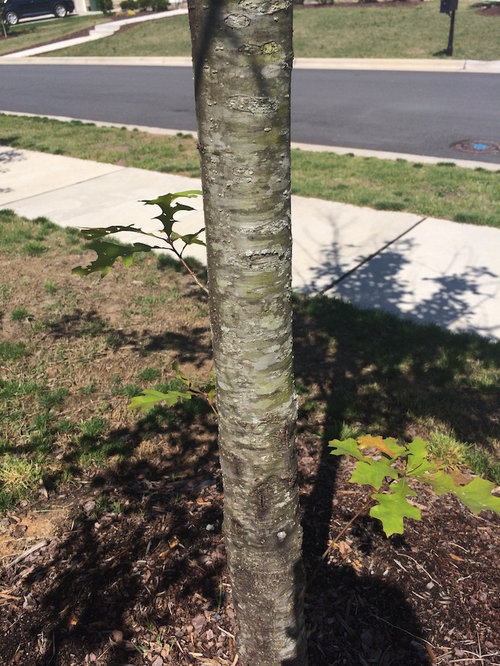
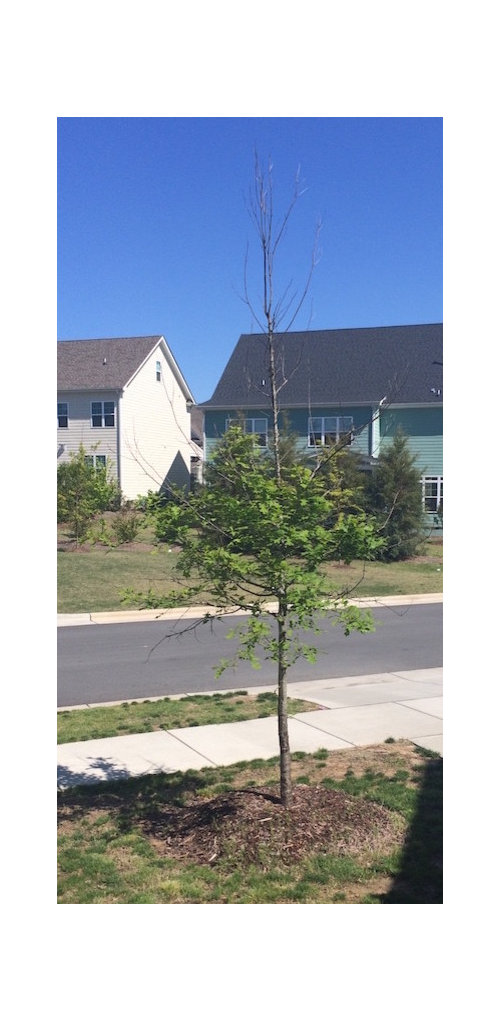
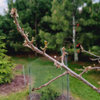
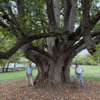
I have a few oak trees that are 1 year old. One of them is not doing well, they other next to it is doing just fine. I am wondering if its a vascular disease or fungus. Depending on the verdict what are my options, should I rip it out and put a different tree in its place? It is a relatively small front yard, but I would like something like a dwarf weeping tree. I have attached a few pictures below of the trunk and the overall tree.

Thanks in advance for the help!

-Ron


Comments (15)

  • 10 years ago

    Almost certainly not pathogen-related. Almost all tree performance problems are environmental in nature. and for a relatively new transplant, we simply do not always know what happened. But again, almost surely NOT vascular plugging, etc.

    User thanked wisconsitom
  • 10 years ago

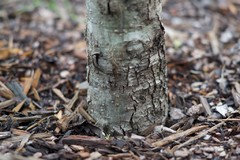
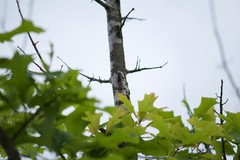
    SOMETHING has gone wrong. Any wounds or trunk deformities near the stop in foliage? Can ya post a picture of where the trunk meets the ground?

    My vote right now is to see how it does while deciding what you'd replace it with in the fall.

    User thanked Toronado3800 Zone 6 St Louis
  • 10 years ago

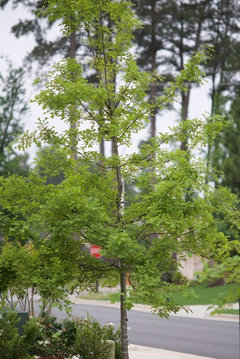
    Thanks for the replies, I have attached a picture of the bottom of the trunk as well as where the leaves are gone. I also included a picture of the same type of tree, planted at the same time by the builder 20 feet away.


  • 10 years ago

    I can get more detailed pictures as well (macro) shots if needed. Thanks again for the help!

  • 10 years ago

    i would prune out the dead ... and give it a year or 3.. too see what happens ... with some follow up pruning to start it in the right direction in the years to come ...


    of course.. i have 5 acres .. and wouldnt look at it again for a year, after the pruning ...


    if this thing is out the front window.. and going to bug the bee gee bees out of you .. with your type A personality ... be done with it ...


    and replace it with a tree about half the size ... i suspect this was a large transplant .. not properly planted.. perhaps ball and burlapped, and the digging of such hurt the root mass [though you never know that because you cant see the roots] .. etc ..


    smaller transplants have a way of being much less stressed... getting settled in and moving.. and can usually outgrow a much larger transplant.. in 5 to 10 years ... instant gratification in the tree world often doesnt work out ...


    ken

    User thanked ken_adrian Adrian MI cold Z5
  • 10 years ago

    Yes, very large jump-start transplants... and it is right out front... Considering this is next to the driveway are there any good tree recommendations anyone can provide in terms of footprint and growth size? Something with a little different color than the oak next to it would be nice. Thinking a weeping cherry or Japanese maple?

  • 10 years ago

    I don't see where the roots flare. I would pull away mulch and soil around the trunk if you can. Then taper the mound so water drains away from the trunk.

    Here is a planting guide:

    http://extension.psu.edu/publications/uj253


    User thanked kimpa zone 9b N. Florida.
  • 10 years ago

    Interesting, here in NC, everyone creates the mound so the water pools against the trunk... thanks for the link! -- Should I trim all the dead branches off including the upper trunk?

  • 10 years ago

    Most trees are that way here too. Mounds are way too high and narrow. Trees grow roots near the surface of the soil too and it doesn't make good sense to plant them that way. Also people keep pileing mulch every year and smother the roots. Two to three inches is plenty.

    I always cut off dead wood because it looks better that way. Also cutting it can increase air circulation. But be sure the wood is dead before you cut. And only work on them and plants in general when their foliage is dry. Wet helps spread disease.


  • PRO
    10 years ago

    before you tear the whole thing out prune off the dead branches and get those suckers off of the trunk. this is also not the ideal place for oaks, they grow slowly but they get massive. if it dies you may want to replace it with something like a crepe myrtle or a eastern redbud

    User thanked Caldwell Home & Garden
  • 10 years ago
    last modified: 10 years ago

    What counts as slowly? I have a Quercus coccinea which puts on 2 plus foot a year? Quercus palustris does similar here.

    Metasequoia is faster here as are Liriodendron tulipifera and a couple of our native lowland trees.....generic Acer rubrum seems about the same to me as the two oaks I mentioned....

  • 10 years ago
    I will prune all the dead branches today. As far as growth, is there risk of driveway or foundation damage? It's roughly 15 feet from the house.
  • 10 years ago

    Looking at Japanese Maple, Dogwood, or Eastern Redbud -- any reason to choose one over the other, things to look out for considering this specific location?

  • 10 years ago

    Ron, a member has confused your thread with an irrelevant idea. We're trying to help you make decisions on what to do with this tree. Opinions on what species should be planted in that location, whether sensible or not, have no bearing on this. So let's stay focused. I agree with others that if you're willing to look at this thing for a while in its present condition, then do indeed remove dead stuff and see how the tree sorts things out. It doesn't always turn out satisfactorily, but trees have surprising vigor, and even one in this conditions could one day be just fine.

Sponsored
High Point Cabinets
Average rating: 5 out of 5 stars21 Reviews
Columbus' Experienced Custom Cabinet Builder | 4x Best of Houzz Winner