Software
Houzz Logo Print
steven_pinto41

Staking Tomatoes

10 years ago
last modified: 10 years ago
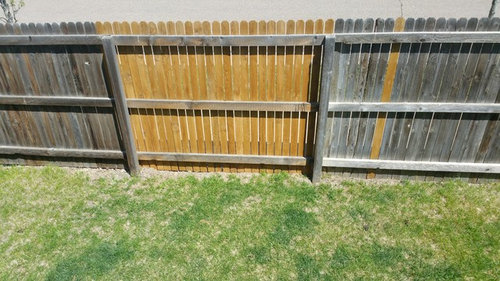
I have some indeterminate tomato plants that are about 2 feet high. They're currently indoors. I wanted to transplant them outside along a fence in 22" diameter, 18.5" tall containers. Originally, I was going to use the stake-a-cage method (http://oldworldgardenfarms.com/2013/01/15/how-to-build-the-ultimate-tomato-cage-for-under-2-the-stake-a-cage/) , but since it's along a fence, should I just staple a trellis against the wooden fence and use that? Here's a picture of my fence. It's 6' tall. I'm thinking a Trellis would work if I staple it onto the vertical posts so that I can use the space between the trellis and fence to weave the plants through. If it works out, I'll put a permanent raised bed along the fence. I'm in Colorado and it can get windy here at times. I was also looking into the Texas Tomato Cage, but it's expensive. Given it's my first year gardening, I'm looking for recommendations on how to best set this up along my fence.

Thanks.

Comments (33)

  • 10 years ago

    Using a trellis on the fence give you an extra 2 feet of height at least over the stake a cages, especially important considering that container plants are already starting a foot or two off the ground to begin with.

  • 10 years ago

    I think how you stake depends partly on why you are growing in containers. I like that with containers I can rearrange my plants throughout the growing season, so attaching the plants to one trellis wouldn't work for that. Instead, I put three stakes in each container and use twine to make cages.

  • 10 years ago

    I think you could use the fence but you might get fungal problems because tomatoes have a lot of foliage and there will be hardly any air circulation against the fence. I would sink two big posts at both ends of your row and use the Florida weave system.

    The big question is, "why are you growing indeterminate tomatoes in containers when you could just plant them in the ground?"

  • 10 years ago

    I'm planting in containers because it's my first year, and I didn't want to put the time into the garden without knowing whether I can do a good job growing vegetables. If things work out this year, I'll build a raised garden bed next year. I also think the ability to move it around will be good. We get a lot of wind in Co, so having it in containers will allow me to move it around out of the wind if needed. I can also move it to different locations in the yard to see where the best placement is. I'm leaning towards the stake-a-cage since that will allow me to use a trellis and have the ability to move it around. I think I'll need to make it taller than what the instructions suggest since I'm dealing with indeterminate tomatoes. Thanks for all the input.

  • 10 years ago

    Many intermediate will grow very tall, I used to clip tops at 9'. Had a simple staking made of some big bamboo posts and another of galvanized pipe. It was not movable since plants were in ground. Potted ones need lots of root space for that kind of growth my experience.


  • 10 years ago

    you don't need raised beds either. just grow them in the ground. Indeterminate tomatoes in pots can be a PITA because they get so big and grow so fast. When I was growing indeterminates, I used steel concrete reinforcing mesh for cages. They were 24" wide and 10 feet tall. The vines would grow all the way up and then all the way back down making the whole plant about 20 foot long.

  • 10 years ago
    I'm in Colorado. the soil is like clay, so I figured raised beds would mean less digging. I'll do more research on whether to do a raised bed for next year. Thanks
  • 10 years ago
    last modified: 10 years ago

    oh well if you are on heavy clay, that's different. You need to improve the soil a bit. Clay needs organic matter and mulch. I recommend that you try to lay 6-12 inches of shredded wood mulch down under where you plan on putting the containers. It'll help keep the weeds down and with the irrigation start loosening that soil. Seriously, you'll be amazed at what a foot of mulch under some vegetable containers will do to improve hard clay soil.

    I would also make sure to keep up on your pruning. Indeterminates can grow quickly and containers have a hard time supporting all that growth. So pinch often.

  • 10 years ago

    Excellent suggestion from Nil - that mulch will very slowly keep composting and you'll have great area to start with next year. If I could spend $$$ it would take, I would mulch my whole yard with at least 8" this year...

  • 10 years ago

    You might be able to find a tree trimmer that will drop of their mulch for free if you take a full load. You just need to be specific about no disease, bark beatles, brush clearance, poison oak, weeds. Or you can look for a landscape supply place that delivers shredded wood mulch.

    I would mulch the area this year even if I planned to make raised beds next year. It will give you a year headstart at improving the drainage. That's better than having hardpan clay under a raised bed.

  • 10 years ago

    Thanks for the tip. I didn't know that about the mulch. The initial plan (with little research) was to dig down a couple feet and put regular soil there, then a raised bed. I figured that would be enough for the roots to spread. Like I said, it's with little research. I'll definitely put the mulch down where I plan on building the garden next year (under the containers).

  • 10 years ago

    Nil, I got some couple of years ago just as you suggested, but moved recently and need much more...have to find tree trimmer in new area.

    plumpyfoo, it is not easy to 'replace' clay soil; digging smaller area and filling with different soil may create a 'bathtub' effect (depends on how heavy that clay is). I have done similar, borrowing some of the ideas from lasagna gardening: putting few layers of cardboard right on grass, topping it with thick layer of wood chips/mulch (from a tree trimmer) and thick layer of shredded leaves and pine needles (shredded together with a lawn mover). First year I kept pots on top of it, next I topped it with triple mix and compost...

  • 10 years ago

    It's very heavy clay. I'll look up lasagna gardening. Sounds like I have some work to do. Thanks.

  • 10 years ago

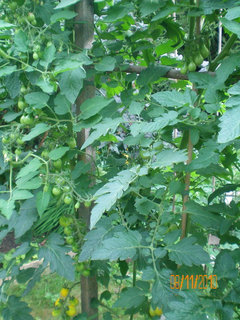
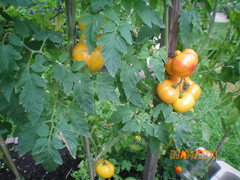
    Tomatoes look awesome - especially this early. Don't know how you did it, but pat yourself on the back.

  • 10 years ago

    I would avoid the cardboard. It interferes with water and gas movement through the soil.

  • 10 years ago

    If you want to improve clay soil, it's hard to beat heavy mulching, water, deep rooted cover crops, and time. Double digging is no longer recomended because it destroys soil structure. For veg you will want to start with a baseline soil test for nutrients and organic matter, and the jar test for soil structure. You'll get different opinions on whether you should till in organic matter into clay or not. I'd say it depends on what the soil test says about how much organic matter (OM) you have. You want about 5% by weight or 10% by volume. If the soil test says you have 1% till, if it says you have 4% then topdress and mulch.

    Look into planting a couple cover crops in the areas you want to turn into beds. Plants are very effective at getting OM deep into soil without digging. As the cover crop roots decompose they leave tiny channels in the clay for air and water to get in there loosening the clay. There is a lot of talk lately about using deep rooted radishes to break up clay soil, but you have to let them rot in the ground. It is my understanding that a bunch of rotting radishes produce an aroma not to be underestimated and only for rural locations.

  • 10 years ago

    Nil, you are quite right...This was my 'lazy way (too much work stripping the grass and digging very heavy clay) - use what you have and do it in a hurry ' approach. I would not use any cardboard under just a little of mulch on top. I water it first, most of the time put thin branch prunings over (helps air circulation), than put mulches on top. If I can, I add some partially finished compost, aged manure and/or grass clippings (dried, so they don't mat and become slime). The mulch was slightly/partially decomposed, sat in a huge pile for about 7mo before using, than almost a year under the pots. Whole mounding, when fresh, is easily about 2' high. It does settle some after slow composting. Putting triple mix and finished compost on top made great raised beds next season.

    I agree with cover crops too.

  • 10 years ago
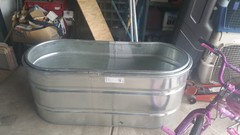
    I went to a neighbor's and she's growing her tomato's in these 125 gallon tanks. she plans on drilling holes in the bottom and I'd going to put 3 plants into each. I hadn't thought of this. any feedback?
  • 10 years ago

    I've seen an entire garden of those water troughs as raised beds and I love it! If you plan to leave them there permanently, I'd probably remove the entire bottom and replace with some chicken wire.

  • 10 years ago

    Here's what I decided. I'm going to do the lasagna garden. I'm in Colorado so it shouldn't be too hard getting all the items I need. I'll then transplant my tomatoes into different containers. I'll get one of the water troughs, 6 30 Gallon SmartPots fabric grow bags, and a couple of large 20+ Gallon pots. It'll be nice to test out the different options to see what works best. I'll put all the containers on top of the lasagna garden. I won't be using the lasagna garden until next summer so hopefully that'll be enough time for it to cook. Can I put a tarp or plywood above the lasagna garden while it's cooking? I saw somewhere someone putting a compost tarp on top of it. Also, I didn't see many lasagna garden items with mulch included. I have access to a lot of it, so does anyone know if that would be counted as one of the "browns"?

  • 10 years ago
    last modified: 10 years ago

    Mulch you have access to - is it fresh or partially or well composted? Just about anything could go into compost, some may take long time to decompose. You could even slice off layer of grass, turn it upside down and use as a layer - it will decompose (grass will not grow if upside down and covered with other layers). Real 'lasagna gardens' are made to be planted into immediately, so there is need for materials to be composted. But if not planted into right away, and planning on using it next season, there is more time for decomposition.

    Fresher the chips/mulch are, longer they take to decompose. Ones I had were in a pile for about 7 mo (they were chipped branches, up to about 3" diameter, from trees cut down on property); and they were put on very bottom.

    When making a compost heap, it is recommended to have some cover ready in case of extensive rains - compost heap needs to be moist but not soppy wet. I never covered it with anything, containers were put directly on top.

  • 10 years ago

    Thanks for the input. I don't know much about the mulch. Here's a link to the craigslist ad: http://denver.craigslist.org/zip/5565863307.html

    Here's a quick description. It doesn't mention how old the pile is, but I'll ask:

    "We have approx. 65 cubic yards of mulch, free for the taking. Mulch is from cottonwood trees taken down on our property, trees were never sprayed with any chemicals. Mulch is fine texture, perfect for any spring landscaping job you may have! Take all or some, mulch as is/where is."


  • 10 years ago
    last modified: 10 years ago

    I would just take all the wood chips. The lasagna method has issues depending on which recipe you use. You certainly have no need to waste money in peat. Cardboard is awful for air and gas exchange. Double digging ruins soil structure. Just use the free mulch. If you want it to break down faster mix in some grass cuttings. You don't need to cover it with anything, especially in arid CO.

    http://gardenprofessors.com/is-lasagna-gardening-really-worth-the-effort/

  • 10 years ago

    I read the article and it seems like they're just recommending putting 12" of wood chips and nothing else. Is that what you're recommending as well? Since I have about a year, do you think I should take advantage of the extra time and put more than 12"? How much good soil will this give me? I have indeterminate tomatoes so I want to make sure it has enough room for the roots. Are the chips from cottonwood trees okay?

    I also have access to manure. I know it should be dried and aged, but do you think I should also put that on as well, or just the wood chips? I like your solution because it seems very simple, but want to make sure I understand it. Thanks.

  • 10 years ago
    last modified: 10 years ago

    Yes, just put a foot of wood chip mulch down. The water and fertilizer from the tomatoes will help it breakdown. You don't need more than a foot but if you mix in a good amount "green" stuff (green in compost lingo just means stuff with a lot of nitrogen like grass clippings or manure. brown is carbon rich stuff like wood chips and leaves) your 12 inches will quickly become 4 inches because it's basically a compost pile. But a separate proper compost pile would be better.

    I would lay down 12 inches of mulch and put your tomatoes on it. Then I would take the manure you have access to and grass clippings etc and mix that with the rest of the mulch to make a proper compost pile that is greater than 3 foot by 3 foot. Place the compost pile in the area where you might expand the garden. The soil under that will be improved as well.

    Then you'll have two good spots and a bunch of organic matter when you start your garden next year.

  • 10 years ago
    last modified: 10 years ago

    It seems like people want to optimize everything and the more complex it is the better it must be. But most of the time it's just a waste of energy. Simple actions like a ton of mulch and a nice big compost pile are tried and true. It just requires patience or being so busy that you don't have time for all the fiddly stuff like layering up a lasagna bed. When I first got started I tried everything, lasagna, square foot, you name it. But when you have to pinch out a half dozen 10 foot high tomatoes and process 50 pounds of tomatoes, the idea of double digging some bed in the garden is not appealing. Making a compost pile over the area and just waiting, that's a little more appealing. Plus, there is legit science behind it, not just people selling books.

  • 10 years ago

    I know it sounds crazy that something so simple like a foot of mulch could have a major impact but it's the little insects, beetles, worms, and microorganisms that do all the work. All you are doing is setting up an environment where they can thrive. They'll eat some mulch and maybe tunnel a little home in the clay loosening it up and letting air and water in. One little insect burrow might not make much of a difference but tens of thousands will. Then factor in hundreds of different species and you have a construction crew down there numbering in the millions and they work for wood chips and water.

    Now if you just pile up wood chips in CO it won't go very fast because of a lack of rain. You need to feed your construction crew water too.

  • 10 years ago

    You may also want to go through the WSU garden myths page. The links are all PDFs though.

    https://puyallup.wsu.edu/lcs/

  • 10 years ago
    last modified: 10 years ago

    Nil, I am not advocating lasagna gardening, I just suggested something to improve clay soil. And as I said, I borrowed few ideas from lasagna gardening. I used what I had, and I didn't have tons of mulch available. Doing it way I described was fast, I didn't have to buy anything and in time it improved heavy clay soil. In the meantime, pots were sitting on top and exactly as you said - water/fertilizer drained below and helped decomposition. I do not throw any garden waste out, it all goes to compost heap. I do move my compost heap every now and then, as soil under becomes excellent. If one has so much mulch available, great. I don't think I suggested double digging either (I never double digged myself...)

  • 10 years ago

    This is a really good discussion. I would only add that whatever method of soil improvement is used is going to take a lot of time. Winter temps are cold enough in CO that you can not count on much, if any, microbial decompostion activity in the colder months. And you'll have to monitor moisture often since CO, like NV, is so darn arid. I run two compost heaps in my yard, one covered by a ventilated black plastic bin, one in a wood pallet container, and neither does much at all from Nov - Mar. I envy those in zones with warm enough winter temps that they get a full batch of compost once or even twice a year. Just doesn't happen here. So while the above methods will work, eventually, you may be surprised at how long it takes.

  • 10 years ago

    oh I wasn't referring to what you suggested rina.

  • 10 years ago

    Nil, thanks, I thought you were - even if you did, NP :) I agree that there are many myths there and also read all articles that you provided link to. Maybe I should explain that I used cardboard to smother grass - did not have time and even more, was not really willing, to dig the grass up in that hard clay soil. So cardboard was very helpful in that.

    aniajs

    There should be plenty of moisture since the pots with tomatoes will be sitting on top. I get some compost (def. not full batch) every year from my compost heap, in z5a. It depends on what goes in, and definitely how large it is. Kitchen scraps are added all winter long. And I try to add some manure even in fall (to help it keep warm :).

    It will take a while for decomposition, especially with lots of bark chips/mulch. Should it not be ready following season to plant in, OP has option of growing in containers again, and hopefully it will be ready year after.


Sponsored
Whisler Home Improvement
Average rating: 5 out of 5 stars9 Reviews
Franklin County's Committed Home Improvement Professionals