Software
Houzz Logo Print
net800

Help to evaluate window replacement

10 years ago
last modified: 10 years ago

Questions: is one inch gap around windows too large? Should it be sealed with foam or sturdier material such as cement/drywall/plywood?

Recently we had our old aluminum frame windows replaced with Simonton
vinyl windows. It is a retrofit. I noticed the gap between the vinyl window frame and the interior drywall is about 1 inch on both sides and top of the window (looking from inside the house). I took couple pictures before they put the plastic cover on (see photo). I show this to a friend who is in construction (but not certified for window replacement). He thinks the gap is too large and should be sealed with cement/drywall or plywood. I took this information to the guy who replace my window. He said due to aluminum casing, the gap is larger on the interior than exterior. He said the gap between vinyl frame and aluminum casing on the exterior wall is within code. Unfortunately I didn't see the exterior when they put the window on. So, I cannot confirm the exterior gap. The only thing he offer is to re-seal the gap with foam (using Touch N' Seal). I need help from forum experts to answer my question posted above.
Thanks in advance.
Chung.

Comments (29)

  • PRO
    10 years ago

    Not sure what "code" he is referring to in terms of window replacements, but without know what the exterior cladding is like and what the measurements called for, it is tough to comment intelligently on it.


    That all being said, that needs to be finished out better than just foam and some caulking. Probably need some interior stops or 1/4 round trim.

  • PRO
    10 years ago

    Good advice above. Impossible to comment on sizing without knowing all of the circumstances involved. I probably would've added some wood to build in the opening a little bit, but again, that is speculation without seeing it in person. A minimum, foaming that gap and adding some sort of interior trim to finish off the interior would be advisable.

  • 10 years ago

    Thank you for the quick reply. Excuse my ignorings, what are interior stops and 1/4 round trim? Can these be purchase at home depot? He insisted filling the gap with spray foam. Is "touch n seal" a good product to use? Currently the interior window frame is covered with plastic strips. There are caulking inside and out. So it looks nice.

  • 10 years ago

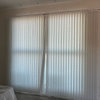
    That is how it looks now.

  • 10 years ago

    Here is another photo of inside the cover.

  • PRO
    10 years ago

    Looks like they used a quick trim attached vinyl. That is kind of the industry go to in these cases. I am less of a fan and HomeSealed is right that it probably should have been padded in a bit, but it isn't "wrong" if it isn't padded in. We just prefer it for a bit more robust attachment and securing to the walls.

  • 10 years ago

    Thanks for the insight. I tried to argue with the contactor that what is the point of getting double glass when the gaps are not insulated. He said it is the industrial standard. I just don't have the expertise to counter that; thus, seeking help here.

  • PRO
    10 years ago

    No arguing there. It should be insulated.

  • PRO
    10 years ago

    Upon zooming in, it looks like there is already some foam in there. Is your complaint just that the gap isn't filled completely with foam? If so, your contractor is correct that it doesn't necessarily need to be in most cases. The biggest thing is getting a sufficient amount to create an air seal. Given the size of the gap in this case I'd say adding more foam would be helpful, but to be honest, it is more for support in "locking" the unit in place as opposed to improving efficiency.

    I'd also agree that vinyl trim pieces to the interior are fine.

  • 10 years ago

    Thank you all for the comments. It is really helpful to hear from the experts. To homeseal, yes, my concern is not enough insulation. If what you see is enough insulation already, I won't ask him to spray more foams. Don't want to create unnecessary work.

  • PRO
    10 years ago
    last modified: 10 years ago

    Can't say for certain what is or is not enough, but if there are not shims in that opening supporting the window I'd personally like to see more foam added. Again, may not be needed for seal, but definitely for support.

  • 10 years ago

    Thanks. There are no shims on either side or top. I am Not sure there are shims on the bottom as I wasn't paying attention. I will try to forward this discussion to the contractor and see his explanation.

  • PRO
    10 years ago

    Good information in this thread. Spray in foam doesn’t need to fill the gap completely, but it does need to seal the gap completely.

  • 10 years ago

    It does seal the gap. From a layman's point, aren't the gaps the weakest link if not filled? We spent close to 10k to replace 8 windows and 1 sliding door to be energy efficient and noise reduction.

  • PRO
    10 years ago
    last modified: 10 years ago

    Air flow is the enemy of efficiency and sound mitigation. The foam seal helps with both. A minimal dead air space in there will not have much effect one way or the other. Again, the seal is paramount. If you were to use a thermal cam or even infrared thermometer on that area as is, and again when filled with foam, there won't be much difference.

  • PRO
    10 years ago

    +1. To clarify my previous comments, I was commenting on the idea that there was no foam seal. The foam, as stated by both Ultra Windows and by HomeSealed, just needs to seal the gap. Filling that large a gap to the brim would definitely result in over expansion and spill out.

  • 10 years ago

    I got it. I now understood seal but not fill. But to HomeSealed's point on filling foam in place of shims, should I insist on putting shims on the sides? He has to come out to fix couple other things in few weeks.

  • 10 years ago

    I live in California, do I need to put shims around windows?

  • PRO
    10 years ago

    Some support would be preferred, be it shims, foam, or a combination of both

  • 10 years ago

    OK. Thanks for all your help.

  • PRO
    10 years ago

    If was my house I would hit it again with foam, it would increase your value,ensure there no short spots , add some more support,but not much since window foam does not provide much. I would like t o have shims on the bottom at a minimum. Window foam has an r value of about 3.7 per inch, I say why make that gap the weak point when it is so easily accessible

  • 10 years ago

    Thank you Toddimn and Milworkman. I will then insist on putting shims. I was told 'touch n seal' that they use is minimal expansion foam.

  • PRO
    10 years ago
    last modified: 10 years ago

    Touch and seal is fine.

    I'd be careful about overstating the effect of enhanced R value of foam in a gap that is 1/2" wide. As I stated previously, the function there is to seal against air infiltration which would be the primary factor for energy loss in this case. Improving the r value to over 4 (which is about what the window is as well) in these small spaces is literally a drop in the ocean. To state that it will have any measureable effect on energy savings or the overall r value of the wall assembly sounds more like something a sales guy would say and has no factual basis.

    That said, again, it is certainly not hurting anything to fill it if the installer is willing to do it.... he may be happy to do it at this point given your dissatisfaction, my point is merely that it would not have been expected to him to do it in the first place, nor is it the most efficient way (cost vs benefit) of treating that space.

  • 10 years ago

    Thanks HomeSealed. I will insist to use shims or fill it up for the purpose of support per your earlier suggestion. Btw, the gap is 1" around windows if that makes any difference.

  • PRO
    10 years ago

    I think the calc could be made on a factual basis. 1" gap at let's say 200" x 10 Windows= about 14 square feet. 14 square feet at an r value of 1 or less vs 14 square feet at an r value of 12. I'm sure this adds up to something. If I was a better salesman I'd give you a number of have a balloon graph or something. I also like to see weight pocket covers seal with foam and both pulleys, this would require more than a perimeter seal. As I said if it was my house I would foam , and at this point it would be the easiest most economical way.

  • PRO
    10 years ago
    last modified: 10 years ago

    Good point Todd, it can be made on a factual basis. If you figure for 1500 sq ft of wall space and use R13 as an easy, round number, then use 1" of spray foam (R4) for 14 sq ft, that would come out to approximately R12.8 as a weighted average R value of the wall assembly. If you take into account other components of the wall assembly surrounding both spaces, that number gets even closer and probably moves back to 12.9-13. Either way, it would be rounded back to 13 anyway. As I said earlier, pretty much a non-factor, especially when the cost of the extra spray foam is figured in. If anything it would be more advisable to get the 1" of foam and fill the rest of the gap with fiberglass as far as energy loss is concerned.

    Regarding weight pockets, do you fill those solid with foam? By your logic above I'd assume that you must. That is a larger space than the gap in question... Nevermind that you will probably use 4 cans of foam per window and end up with an oozing mess on your hands... For reference, we fill them with fiberglass through the jamb access points (pulley holes and access panel(s)), and then foam the holes for seal. If someone is willing to pay for the additional work, we will remove the interior or exterior wood trim and flash & batt the chamber.

  • PRO
    10 years ago

    Fiberglass is not meant to be compressed and would be difficult to fit the irregular depths , therefore I'd still foam the gap in this case. I was talking about covering the weight pocket access door to seal where it is cut out to fit the jamb and the wholes left from the pulleys so air can not migrate through the those openings. Covering these gaps is pretty easy since there would not be a 1" gap to fill and if there was we would typically infill it with lumber so it was smaller. Filling weight pockets is an additional cost and I would use a different product for that.

  • PRO
    10 years ago

    Lol. We all know how fiberglass works. Perhaps you would like to share the tremendous difference in performance of compressed vs uncompressed in a 1" thickness application-- and in conjunction with foam...

    We can agree on sealing weight pockets, although I'm not sure how that is relevant to the topic at hand.

    Cheers Todd.