Software
Houzz Logo Print
mister_caledon

Techniques/advice for training plants onto trellis netting?

10 years ago
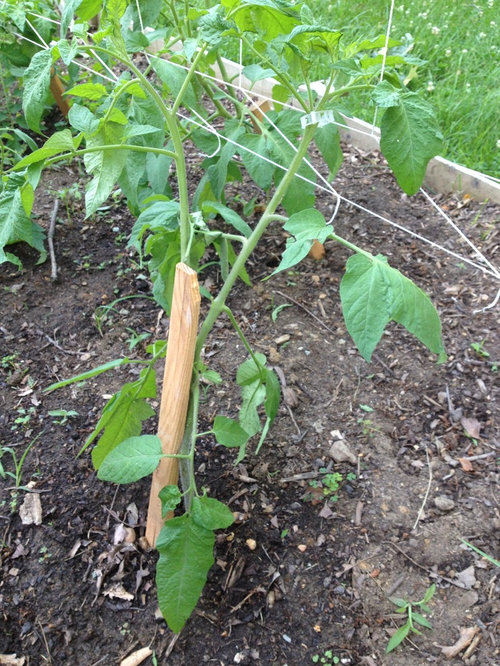
Hello all!

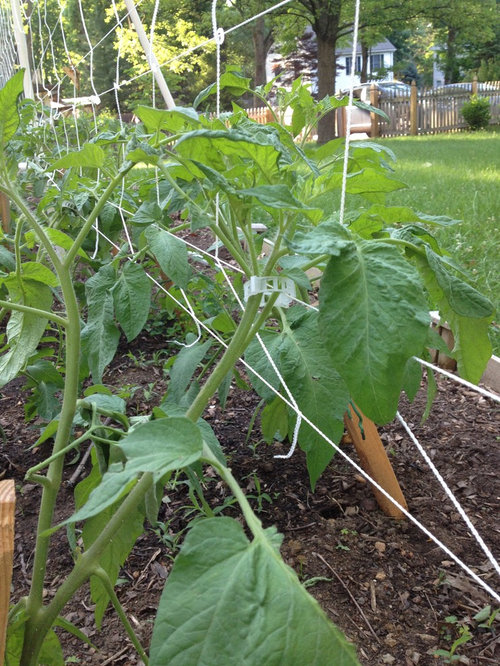
Since my last thread asking for advice, I've set up my new DIY PVC trellis, and plants have been in the ground for 4 weeks. I'm a first-timer at this, so can anyone offer advice on the best way to get these guys properly trained, secured, and climbing? Quick facts:

  • There's a single trellis running down the length of the bed, with two offset rows of plants on either side.
  • Each plant is sitting about 6-8" back from the plane of the trellis net, not immediately next to/beneath it.
  • Due to unforeseen measurement mistake, netting only comes down to about 10" off the ground. Netting openings are 7" square.
  • I have 200 plastic tomato clips at my disposal, a bunch of 14" wooden stakes, plus lots of garden twine and garden wire.

Here are two pics from this morning showing current situation: a Stump Of The World plant was gently nudged into a leaning position by means of the stake, and once it was tall enough I snapped it onto the bottom of the net with a tomato clip. Is the lean thing a bad idea? Should I prune this harder, like -- down to a single branch (the one currently secured with the clip), then let it branch out from there? Is the plant maybe still too young to take that kind of punishment? And, as it continues to grow up and out, what about branches that stretch out and away from the netting, could I try to secure those with a loop of twine? Any and all advice is welcome...!

Comments (10)

  • 10 years ago

    Agree there is no training with tomato plants - strictly tying or clipping. They aren't climbers.

    While you can move that string netting in much closer to the base of the plants. They need to be planted right up next to it. You are going to have quite a bit of sagging problem with that light weight netting - even a few pole beans can pull it down and break the string - so now is a good time to add extra stakes to it before the plant root fully develop.

    Dave

  • 10 years ago

    mister_caledon, can we see a few more pictures, from different angles?

  • 10 years ago

    Sorry I missed there were plants on both sides so you aren't going to be able to move it closer without finding something else to hold those on the other side. That is going to be a lot of weight on that netting.

    Dave

  • 10 years ago

    Appreciate the insight, guys. You're right, digdirt, there are plants on both sides, with the two rows offset from each other. That idea came from someone's advice in my previous thread but maybe I bungled that. I confess my DIY skills are such that I only wound up constructing one instead of two. If things start to look dire, I could always deploy stakes or the plain old tomato cages to mickey-mouse things along.

    I don't have the packaging for the netting anymore, but it wasn't marked as "light weight", and I'm certain there was something about being appropriate for tomatoes. Maybe I was a bit fooled by this?

    Seysonn - any pricing or example links on the wire mesh you mentioned?

    Daniel - I'll try to take another photo or two over the weekend maybe.

  • 10 years ago

    Another thought would be to leave the netting, drive a few 8' stakes and just Florida weave on the outside for added support..

  • 10 years ago

    Seysonn - any pricing or example links on the wire mesh you mentioned?

    ****

    Now that you have already planted out and have a system in place , I don't think you can add wire mesh. The common wire mesh used for trellising are Cattle Panel and CRW. But that is totally a different support system and requires a lot more investment in materials and work. JMO


    Sey


  • 10 years ago
    last modified: 10 years ago

    Agree with Sey that it is likely too late now to switch support to wire so you'll have to muddle through this season. But since you have the PVC frame work I'd look into adding more and stronger stings to it now. You can just weave them across the frame from side-to-side.

    " Maybe I was a bit fooled by this?"

    Yeah unfortunately another example of mis-leading marketing. Years past I have tried the same netting with both cukes and pole beans and both, once the weight of fruit is added, pull it right down. Thus my suggestion to add some more stakes down the row now, before the roots could be damaged, so if all else fails you'll have them to tie to.

    Dave

    PS: for next year, cattle panels around here cost anywhere for $16 to $25 depending on the size you want. Galvanized fencing ranges from $35-$75 depending on the length and width of the roll you want.

  • 10 years ago

    mister_caledon wrote: > You're right, digdirt, there are
    plants on both sides, with the two rows offset from each other. That idea came
    from someone's advice in my previous thread but maybe I bungled that.

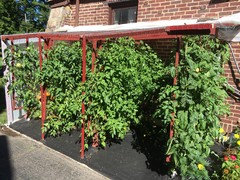
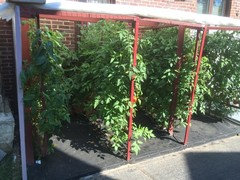
    I had frames with plants growing on both sides and everything was beautiful.


    > I don't have the packaging for the netting anymore, but
    it wasn't marked as "light weight", and I'm certain there was
    something about being appropriate for tomatoes. Maybe I was a bit fooled by
    this?

    I used this nylon net and if it’s tight it works like a charm.

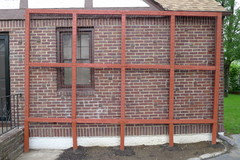
    I also used this wire fence for this large frame.


  • 10 years ago

    That ten inches is what you're fighting. When they get that tall, then you'll have some options. I use simple wiire ties for my veggies. You know, the paper coated wire ties you get by the gross from supermarket produce department. Free. Works terrific. Don't tie too tight, but tie securely. Vines that lean away from the trellis? Just lean 'em back and secure. Pruning? Um, why? As noted, tomatoes don't "climb". They reach. You help.

    I sure don't see any problems, though the netting does indeed look kinda lightweight. I just use chicken wire. The netting will probably hold, but it isn't clear from your pictures what you're using to hold the netting up. It's going to get real heavy up there.