Software
Houzz Logo Print
ilaine_gw

Cleaning scissors between pruning.

10 years ago

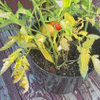
I use scissors to cut off leaves that are discolored or touching the ground .

How frequently should I clean them while doing this, and with what?

Dont want to spread pathogens.

Comments (30)

  • 10 years ago

    Can't say I have ever felt the need to clean my knife while pruning given that any pathogens are in the air and all over the plant already. I seriously doubt it would make any difference. But if you want to I suppose plain old rubbing alcohol would be as good as anything.

    Dave

  • 10 years ago

    I always used rubbing alcohol each and every time I moved to the next plant. Just in case. I wiped the scissors' blades with small pieces of paper towel.

  • 10 years ago

    The extension office told me to dip my scissors in a bleach/water solution every time I clip a diseased leaf off a plant (early blight) - 1 part bleach to 9 parts water.

  • 10 years ago

    With Dave here. The thought would never have crossed my mind. Most of the time I let my plants grow wild, but this year am running two plants with a single leader up an 8' pole. I just pinch suckers and shoots with my fingers.

  • 10 years ago

    I have never done that.

    I don't thin that it is necessary UNLESS your dealing with a serious viral plant disease. JMO

    Sey

  • 10 years ago
    last modified: 10 years ago

    For me it's better safe than sorry. For a few seconds of cleaning...

    Also, I don't trust too much seedlings bought at Home Depot or Lowe's. Or even nurseries. They can have diseases.

  • 10 years ago

    I think I may have read it on the Rose forum several years back that people would use disinfecting wipes (such as those meant to be used inside on counters and whatnot) to clean their pruners when moving onto a different plant.

    Rodney

  • 10 years ago

    Way to state it NC! But either bleach or alcohol will suffice. I also wear nitrile gloves when suckering, picking, etc. Some observers say it also keeps my hands cleaner.

  • 10 years ago

    > "One of the best ways to
    prevent the spread of fungus and other plant diseases is to prune out infected
    parts. However, once you make a cut in the diseased plant, fungus spores and
    other pathogens can cling to your cutters. Then, when you move on to prune a
    healthy plant you could end up transferring diseases via the infected shears." [Clean Clip Tips: Disinfect Your Tools to Prevent Disease (Dave’s Garden)]

    - How do you Sterilize Tools/Scissors? (houzz / GardenWeb)

    > "Make sure your pruning shears, or knife are SHARP and CLEAN
    to avoid any rough cuts, and any transfer of disease. You can use hydrogen
    peroxide as a sanitizer if working with diseased plants." [ Pruning Tomato Plants (Virtual Grange)]

    > "Remove and discard pruned branches somewhere away from your
    tomatoes and clean your pruning shears before you prune another plant by
    dipping them into a dilute solution of bleach water (2 capfuls bleach:1 gallon
    water)." [ Consider Pruning your Tomato Plants to get more Fruit Production (NC State University Cooperative Extension) ]


  • 10 years ago

    I just pull or pinch off diseased leaves and stems by hand. They come off easily. Throw them in the trash. Before I do more gardening, I always wash my hands. But yes, I know folks who keep a dilute bleach dip pail handy. I guess if I used tools for this trimming, I'd dip as well. That dip could last for months.

  • 10 years ago

    Depends on the dip. Either bleach soln or alcohol are volatile and loose efficacy of left open. I just keep a spray bottle of 500ppm bleach handy and wet gloves and primers regularly just by spraying. Alcohol would be less caustic and quicker to evaporate from surfaces but chlorox is cheaper and I like convenience. If you have problems you might even want to alternate sanitizer with Quat. Ammonium, etc.

    I've heard specialists recommend not reusing wooden stakes since they are very difficult to sanitize.

  • 10 years ago

    Barrie, wooden shipping pallets are notorious for spreading Fusarium, especially in Central and South America...

  • 10 years ago

    As to volatilization, it's just a matter of putting a cover on your bleach dip pail when you're not using it. But it's pretty obvious when the bleach has volatilized because the smell is gone. Just perk up the pail with another splash. Quat tablets are pretty inexpensive and handy, though.

    The difference between disease spores in the air and those on your tools is that in the latter case, those spores are deposited directly in the cuts you make before those cuts can self-seal.

  • 10 years ago

    Yup...

  • 10 years ago

    "The same people that preach cleaning up the fall garden, throwing all prunings into the trash, spraying fungicides from day one of plant out, picking off any and all diseased leaves, etc, are now saying that using infected pruning shears is no big deal. Huh? "

    You are assuming that the pruning shears are infected, that the "bacteria" can survive on the steel blades, and that IF some bacteria or disease is transferred to another plant that it actually came from the shears. We aren't talking brain surgery done in a sterile environment here. Next we'd be sterilizing cages and stakes, using only boiled string, or growing each plant under its own hermetically sealed dome using only purified air.

    You are going to have briefly open wounds on the plant whether you disinfect or not But the odds of actual contamination being carried from plant to plant by pruning shears is minimal compared to all the other potential sources.

    If it makes the gardener feel better doing it it, fine, but not doing it does not make us evil. It doesn't begin to compare to fungicide use or removing diseased leaves and trashing them as a method of disease prevention.

    Dave

  • 10 years ago
    last modified: 10 years ago

    If the bacteria are "in the air and all over the plant already", you bet they are just as capable of infecting the plant when they are on the blade. That's correct though, that we aren't talking brain surgery here but just general cleanliness. That's why I'm not enthused about spray bottles, wipes, plastic gloves, and special disinfectants. I want responsible cleanliness with next to no effort or expense. One example is that we tell tomato gardeners to keep their foliage off the soil in order to avoid fungus infection. Well, if the fungus is all over the place, what difference should that make? But touching does make a difference. It's well understood in tree maintenance that pruning cuts are a common site for infections. Fusarium spores at least are quite resistant to drying. Hitching a ride on a knife won't bother them in the least.

    I agree that this is a threat that is easily exaggerated (and in home gardening, we see loads of artificially exaggerated threats!) but there is some sensibility behind it.

  • 10 years ago

    A little bit of cleanliness here, a litle bit of fungicide here, a little bit of preventive pruning of infected leaves here and a little bit of sterilization of tools here all add up to healthy gardening.

  • 10 years ago

    Dave, what you are saying doesn't compute - unless you are talking about only pruning "healthy-looking" tomato plants.

    Surely, you wouldn't prune diseased leaves off a plant and then use the same cutters on a healthy plant?

    I find it's a real pain in the butt to clean my cutters between every plant, but they do suffer from fungal diseases at the end of the season and I'd hate to be the one to help spread it.

    Linda

  • 10 years ago

    "Surely, you wouldn't prune diseased leaves off a plant and then use the same cutters on a healthy plant?"

    That's exactly what he is saying. It does not compute to me either. One can garden any way they prefer, but to say that it has no effects on the plants, I think, is over simplifying it.

  • 10 years ago
    last modified: 10 years ago

    Plants
    can have diseases (in early stages) even WITHOUT visible signs – such as brownish
    leaves. So, diseases can easily be spread from "healthy-looking" tomato plants, to healthy plants through those open
    wounds. JMO.

  • 10 years ago
    last modified: 10 years ago

    Sterilized Pruning Tools: Nuisance or Necessity?
    Dr. Linda Chalker-Scott
    WSU Puyallup Research and Extension Center

    https://puyallup.wsu.edu/lcs/wp-content/uploads/sites/403/2015/03/Pruning.pdf


    I like the cautious way, but I don't disinfect pruners for every plant.

  • 10 years ago

    ""Surely, you wouldn't prune diseased leaves off a plant and then use the same cutters on a healthy plant?"

    That's exactly what he is saying. It does not compute to me either."

    No that is not what I said or saying.

    I never prune healthy foliage. As much as I have talked about the problems pruning causes that should be common knowledge here. I never have any need to prune healthy foliage, have never seen any need to prune healthy foliage and consistently maintain that all that healthy foliage pruning only contributes to disease and other issues. But pruning is your choice and some seem really addicted to doing it. Fine, as long as you are willing to pay the price for doing it.

    So the only foliage my knife come into contact with is already diseased. And given that the plant is already infected by the air borne fungus and/or bacteria of the common diseases (I have no viral disease issues and pruning them wouldn't help anyway) it makes no difference if I sterilize my knife my or not. All I am trying to do is slow it down till I can harvest the fruit it has on it. When that isn't possible the plant gets pulled and replaced.

    The OP asked about "I use scissors to cut off leaves that are discolored or touching the ground ." We all just assumed they were discolored due to disease which may or may not be the case. Maybe they need to be removed by hand, maybe they are pest damaged, wind damaged, sun burnt, wind whipped, etc. in which case there is no "contamination" of the scissors. Maybe they can just be left alone to fall off on their own. Branches touching the ground can just be snapped off with your hand. But if they are diseased then sterilizing your scissors isn't going to make much difference now.

    Dave

  • 10 years ago
    last modified: 10 years ago

    Dave, you never mentioned that: “the only foliage my knife
    come into contact with is already diseased [foliage].”

    What you said was:

    > ” Can't say I have ever felt the need to clean my knife
    while pruning given that any pathogens are in the air and all over the plant
    already. I seriously doubt it would make any difference.” and

    > “You are going to have briefly open wounds on the plant
    whether you disinfect or not But the odds of actual contamination being carried
    from plant to plant by pruning shears is minimal compared to all the other
    potential sources.”

    So, Linda’s comment "Surely, you wouldn't prune
    diseased leaves off a plant and then use the same cutters on a healthy plant?"
    made a lot of sense (to me at least.)

  • 10 years ago

    Thanks Dave for elaborating!

    In the past, I was a non-pruner BUT also a bit of a crammer. Every year, my tomato plants turned into a jungle, with no way to reach the ones in the middle row. I was always forced to prune, much as I hated it. At least it gave them some air-flow.

    This year, I have already pruned all the lower leaves and suckers below the first flowers. At least all the foliage was healthy and I chose a dry day to work so that the cuts would heal fast.

    Linda

  • 10 years ago

    Sorry Daniel but like I said, as much anti-pruning ranting I have done over the years here I mistakenly assumed it was a given that I only prune diseased foliage. Healthy foliage belongs on the plant. ;-)

    Dave

  • 10 years ago
    last modified: 10 years ago

    Dave, while I clearly know your anti-pruning opinion, some /
    many here might not know / remember your opinion.

  • 7 years ago

    Hey people why don't you try this..... offer your advice, post your advice, and allow the person who asked a question to choose which advice theythey like.

    But DO NOT argue with others Whose advice doesn't match yours.

    I found this blog because I had a question about sterilizing my pruners. I read all 27 post and all it was was a pissing match on Whose way sterilizing pruners is right/wrong/better/or worse.

    My mother-in-law taught me how to garden flowers and vegetable plants. She always said that gardeners should always share information, share starts at flowers, and should always respect others.

    I was really disappointed in what I read. Not the information about cleaning my pruners but the way you all talk to each other.

  • 7 years ago

    Denise, thanks for finding this discussion from 3 years ago. I had forgotten all about it and am still betwixt and between about cleaning my pruners.


  • 7 years ago

    There’s nothing wrong with a bit of healthy debate.

Sponsored
Mary Shipley Interiors
Average rating: 4.8 out of 5 stars34 Reviews
Columbus OH Premier Interior Designer 10x Best of Houzz