Software
Houzz Logo Print
somebodyshould

Ash tree help

10 years ago

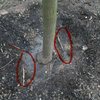
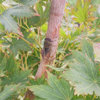
I have some sprouts or shoots or new growth (not sure what they are called) growing along the trunks or a few feet off the ground on my dying ash trees. Would these be able to be used to start new trees? How would I go about starting them to get roots and grow. Because of the EAB, my ash trees are all dying or dead, these would be great to use as replacements for them or even to plant as new trees in some of the treeless areas I have. If some kind soul could get me started in the right direction, I would appreciate it. Thank you.

Comments (8)

  • 10 years ago

    I own several white ash and feel your pain.

    Turning one into a tree will be an uphill battle unfortunately.

    How big of trunks are they on? Smaller the better.

    Can you prune the dead off

    Can you treat them FOREVER for EAB? And live with it if the treatments don't work.

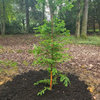
    It would be much easier to go grab a Nyssa sylvatica or Metasequoia from a nursery. I really really like the look of ash though :(

  • 10 years ago

    Maybe maybe maybe....one could take cuttings from these epicormic sprouts. But that ignores the larger-and obvious-issue-the presence of EAB or other ash-killing problem which must be going on in your quadrant.

  • 10 years ago

    why in the world would you replace trees dying due to some local bug.. with the same tree ..


    that said.. google propagation of your type of ash, using the latin name.. and see where it gets you ... an experimenting is always approved ...even if you succeed and throw out the result ...


    theres a good chance your county Ag or extension or soil conservation district office.. has fall or spring plant sales.. including trees that are good for your area.. wherever that may be ...


    and i bet they wont be selling ash ...


    ken

  • PRO
    8 years ago
    last modified: 8 years ago

    Toronado3800 Zone 6 St Louis, remind yourself who told you ash trees need to be treated against EAB, for rest of their lives? And kick them in their big ash for me! Its because species facing "Extant" and "Functional extinction", once borers finish off local "Orphaned" saplings before producing seed. That owners who patriotically protect their long lived critically endangered Ash, no longer need to full dose tree once passing "12 year stage of event". And after that stage, there is no danger from intense pressure trees faced during peak EAB populations. It does not take five years for EAB to kill a tree, only two peak years when enough borers damage seasons newest phloem layers, from top of tree to bottom of trunk. Actually untreated trees become EAB free in spring when Adults exit to mate, giving Ash time to produce all new growth ring layer over last years galleries. And when cut down, last two or three newest growth rings smallest/thinnest. Showing decline in growth.

    Since after "Four year curve of death" stage, crashing borer populations finishing off last of untreated food supply...will never have enough new trees to exponentially rebuild to damaging "Infestation" level populations, ever again. While any Borer stragglers left are attracted to still healthy looking treated trees, which act like "Big EABug Zappers. That's why by saving wild seeds, can bring locally evolved DNA back someday. Borers kill saplings at 1" DBH in stem size. Or before reaching seeding age of 10, vulnerable after age six. And it takes young White ash 20 years before seeding.

  • PRO
    8 years ago

    When removing live tree, cut stump as low as possible to ground. Stump shoots will be better attached that way. Ash stump sprouts and cuttings are like Willow, easily regenerating after tragic disaster. Allowing coppiced Ash in UK to be over 2500 years old. Ash regenerating from existing root system not directly damaged by EAB. Can regrow whole new tree, by "Singling" method. Which selects one or two of stumps best attached growing stump shoots. And "Suckers" produced by root system farther from stump, are even better regrowth candidates. Ash "Cutting" can be rooted with two or three buds in wet sand, then covered to retain moisture. Great old guy on YouTube has instructive cutting propagation videos. EAB might need to be temporarily managed for after age six. And a $5 worth's of drench each early April easier than fertilizing. New Ash should be "Pruned for apical dominancy" first 15 years.

    Here is link to my blog which will allow you to become your regions most knowledgeable on biblical in scope event. https://scottieashseed.wordpress.com/ What sucks is all those big old ash trees around oldest neighborhoods and in oldest parks, are last living connections back to 1800's era that planted them. And since related to super long lived olive, expected them to live past 180-220 until arrival of EAB. And since up until 20 years ago, humans had no success planting long lived Burr or White Oak from nursery. (Taproot problem) Anyone past 250 years in America wanting to plant longest lived urban species, not to mention coolest neon orange purple colored fall leaves. Planted American White Ash, after first nation Indians used wild White Ash for long lived trail marker trees. Along with Oak.

  • 8 years ago

    So Scottie, in your opinion where EAB was 12 years ago we can safely plant ash and expect them to live 60 years with no treatment?

  • PRO
    8 years ago
    last modified: 8 years ago

    toronado, let me be clear. After 12 years, no more FULL DOSE treatment will be required. And your State Agricultural department should advise citizens when that time has come locally. Since in some area's it might be 10, and others 14 years. After that point, sporadic low dose treatments will continue to be required, to make sure local populations of EAB are truly wiped out. But also know, presently this is only theory about how long low dose applications will still be required. Now if one planted new ash tree or no longer treated theirs after that 12 year stage, scientifically there will no longer be enough of an EAB population to critically damage unprotected trees. And healthy Ash can easily repair any damage caused by low populations of borers.

    But if EAB does have just enough untreated or no longer treated trees locally, it could take a decade or more for EAB populations to possibly reach "Infestation" levels again. By utilizing limited food supply, compared to beginning of event when borers have almost endless supply of unprotected trees to "Exponentially" build numbers with. To "Responsibly" prevent this, all local ash tree owners would need to low dose their Ash once, every four or five years for at least one decade. Since any remaining EAB locally would have no choice but to feed on remaining treated trees, which has proven to kill them off. With a list of all remaining Ash tree locations, a local municipality could assure local EAB populations are kept in check by coordinating this process. Even inexpensively contracting to have all remaining public and private trees retreated during same year, twice a decade.

    Remember, EAB is causing "Functional extinction" of its only remaining live food source. Plus we have better EAB detection traps now, which could keep an eye on local populations. Even if someone was to bring EAB back to your town. So far borers kill off all wild sapling Ash trees before they reach species seeding age. Which is 10 for Green, and age 20 for White Ash. And those few wild Ash found surviving EAB attack, cannot be utilized by borers to survive on. Also any "Lingering" ash that do survive borer attack while every tree around them dies off. Inevitably succumb to borers as well.

    And by collecting enough wild locally evolved seeds before forests completely succumbs to EAB, there is good possibility that someday in future. Conservationists can use seeds to bring back 4 or more wild Ash species. Or even possibility that nurseries can once again begin selling Ash trees that are not crossbred for resistance against borers. For example, we can again plant Elms because they have been cultivated for resistance against Dutch Elm Disease. But fact is, cultivars will never grow up to look like unique locally evolved organisms enjoyed before DED arrived to America. And scientists cannot utilize cultivars to repopulate wild forests. Plus for native Elm, they will need to be continually retreated for rest of their lives. Since DED fungus will always exist locally, by utilizing continuous supply of new trees, which are only threatened after age 25-45. For Elm, their is always hope that mother nature will evolve a cure someday against DED naturally. But Roman Empire began loosing Elms to DED way back in year 300, and European wild Elms have yet to evolve a resistance.

    We now know that EAB arrived to America way back in early 1990's, and it took them time to build to tree killing populations. The first person that began successfully treating trees against EAB, was Wayne White back in 2001. One year before Asian borers were even officially identified. Since he could see that a type of "Phloem/ bark borer were cause of tree damage, he realized we already had successful Systemic product for Bronze Birch borers. As a Michigan Arborist who had been continually retreating trees for 12 years, he was one of first able to determine that Full dose treatment was no longer needed. And that it was now possible for tree owners to treat the trees themselves by applying sporadic low dose applications.

    Also, the whole idea of importing and locally releasing Asian bugs known to feed on EAB. Was to keep borer populations in check or to eradicate what remained, only after peak event. Plus we now know there are several native bugs that kill EAB, like Smoky banded wasp. Along with Woodpeckers. So all I can say presently toronado, is stay tuned. Once borers wipe out every Ash tree in America from Canada down to Panama, it will be more difficult to reintroduce EAB locally by transporting infested firewood. (Fresno is Ash in Spanish)