Software
Houzz Logo Print
teehowe

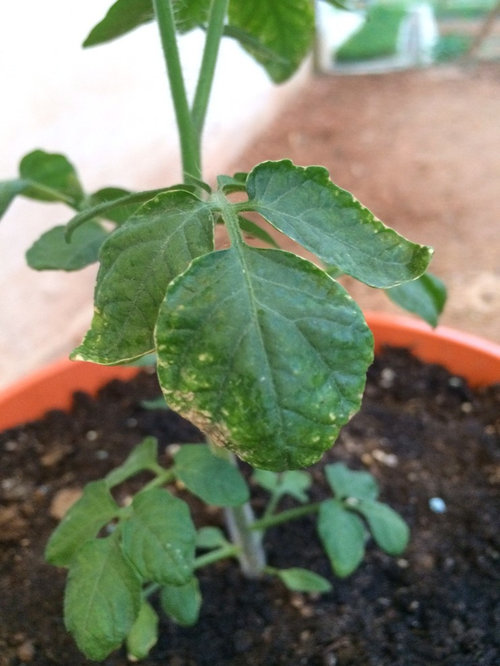
Cherry Tomato looking OK but not quite so

10 years ago
last modified: 10 years ago
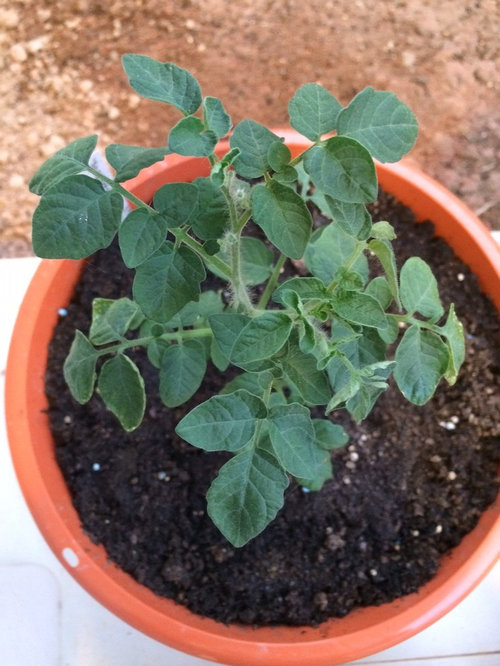
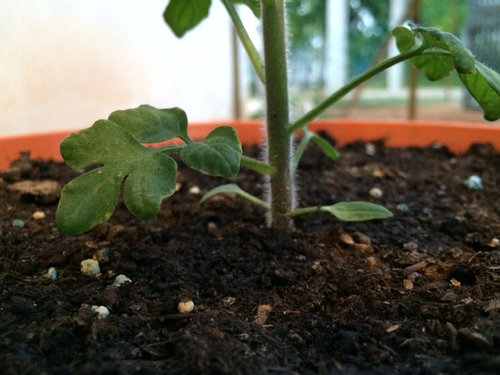
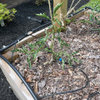
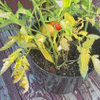
Can you guys help ponder what's up with this determinate cherry tomato I'm growing? My general potting mix recipe is

4 parts peat moss

2 parts compost

1 parts perlite

2 parts vermiculite

1 tsp phosphorous bat guano

1 tsp dolomite lime

1 tsp epsom salt

1 tbsp 8-8-8 organic fertilizer (made of fish meal, fish bonemeal, calcium sulphate, seaweed meal)

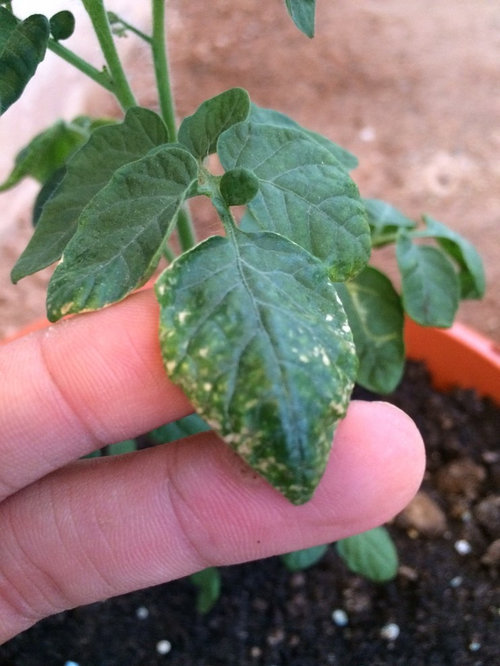
Based on my initial research, it may seem to be something of a potassium deficiency but I am not entirely sure. The leaves did show a very faint yellow at the middle leaves before becoming necrotic. I grew 2 of these simultaneously using the same recipe but the other one seems fine and the leaves are less dark in green. The growth of this tomato is not stunted though as it has grown substantially larger since last week. There are no white flies or other pests as the whiteflies are more interested in my fruiting eggplants. Thanks for your help!

Comments (5)

  • 10 years ago

    It's possible that it could be a K deficiency, however your plants do look healthy. The problem is that organic fertilisers don't work that well in containers, it requires microorganisms to break it down into usable NPK. Generally organics and container gardening don't go together as potting mixes are a 'dead' medium and so your organic fertilisers may not work very well.

  • 10 years ago

    I like to look at those particular "organic fertilizers" as being fertilizers once removed. As noted, they don't fertilize. They are *eventually* broken down by the soil microbial biome, producing NPK. But that *eventually* may be months or years. They are wonderful for the soil, but in the long term. Not the short term. Again, not well suited for container gardening, where there is no resident population of soil microbes.

  • 10 years ago

    *Slightly off topic but relates to misinformation above*

    Potting mixes are a "dead medium" if you allow them to be; a food web can be created if you foster it. It's not necessarily worth it in a container unless you're going to reuse it though, which you SURELY could. I've seen numerous examples of containers being used continuously in no-till setups with a population all their own. If you were to amend the soil with your nutrient mix (plant specific) a month or so before use, lightly moisten and loosely cover the container, you'd be surprised at how quickly the fungi and bacteria go to work. To top if off, after planting start drenching with compost and protozoa teas and you'll be cycling nutrients daily.. There are a lot more options in terms of organic container gardening than people are aware of. The key to continuous use is a LARGE container, as the more medium you have the more capacity you will have for cation exchange and root growth. When the current plant is spent simply pull, re-amend (if necessary) and replant. I actually had worms in a container of mine at one point and they were very happy, accidental of course as my mix contained EWC but never the less. .

  • 10 years ago

    This is correct, but potting mixes ARE a dead medium in the near term. Indeed you can liven them up, but that's going to be hard to do while plants are first getting established. What we're looking at here are small plants first getting established in a medium that is largely nutrient-free. The answer is application of some general purpose fertilizer. Pretty simple. If you want to stay "organic", that's going to be challenging, though, in the short term. The NPK of organic soil amendments is pretty low, though as I said, those amendments eventually result in nutrient production.

  • 10 years ago
    last modified: 10 years ago
    " potting mixes ARE a dead medium in the near term."

    That's an extremely general statement my friend, as there are plenty of living potting mixes available. Here are just a few: Light Warrior Ocean Forest Promix .. Also, the simple addition of compost livens the mix darn near immediately (but do keep in mind that composts vary greatly in terms of diversity and life).. Compost tea will also inoculate the entire medium by the time the run off ceases. What we're seeing here is most likely not a nutrient issue and more likely relates to PH, water or container size (it looks very small and should be potted up into at least a 10 gal container)..It'd be helpful to have more info in terms of container size, watering regimen etc..

    As I said in my previous comment, it's always best to let a homemade organic soil "cook" for a few weeks; breaking down dry fertilizers, lime/sulfur etc before adding the plants. The reason being is that some nutrients will be unavailable and the soil chemistry (PH, Temperature) will be unstable as the microbe population surges and begins to break everything down.

    Teehowe, if it were me I surely would NOT fertilize. Simply remove the damaged growth and just keep an eye on things to be sure that new growth remains strong. The plant has healthy coloration and isn't lacking food - IMO of course. Moving forward though it wouldn't hurt to give it a biweekly drench of hydrolyzed fish and liquid kelp.

    On a side note: The common argument concerning organic fertilizers is that they don't break down fast enough.. This is a misconception. There are many organic materials that are immediately available and even risk burn if applied too heavily, for instance:

    Bat Guano 10-3-1 (can burn) High N

    Bat Guano 3-10-1 (can burn) High P - although the P is quickly tied up and best released with mycorrhizal fungi

    Blood Meal 12-0-0 (can burn)

    Bone Meal 3-15-0 (can burn)

    Chilean Nitrate 16-0-0

    Hydrolyzed Fish 4-2-2 (can burn - but not too easily)

    Liquid Kelp 1-0-4

    Sulfate of Potash 0-0-50 - Yes, 50.. although NPK's vary, and some don't consider it organic due to the fact that it adds no structure or bulk to the soil. Very fast acting..

    There are more but those are a few just to prove the point..

Sponsored
Innovative & Creative Custom Closet Designer Servicing Franklin County