Software
Houzz Logo Print
hzdeleted_33516500

Overgrown Backyard - Rototilling multiple times vs. Solarization?

10 years ago
last modified: 10 years ago
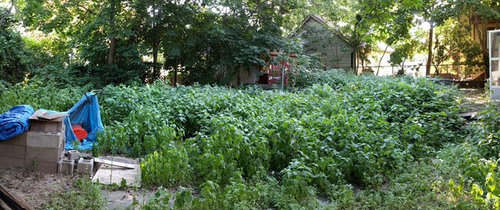
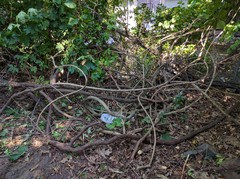
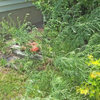
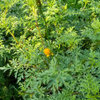
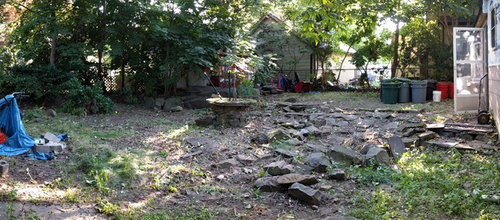
I'm trying to once and for all save my backyard from the weeds that overtake it every year. Today I went through the inital steps of pulling almost everything out by hand, trying to take as much of the roots as possible. I attached before and after pictures below. As drastic as the change looks, I've gotten this far 3 or 4 times over the past 7 years I've lived here.

I still have a lot of prep work to do (more weeds to pull, lots and lots of rocks/stone slabs to move/clear, bush/stumps to remove, etc.) but I'm researching my next steps. I read that soil solarization can be an effective option if I prep properly and give it plenty of time under plastic. I live in NJ and am starting this kind of late so I would assume I need to leave it for 8-10 weeks which basically is the rest of the summer (which I have no problem with). I also read that rototilling repeatedly, spaced 5-7 days apart, can also be an effective way to permanently kill weeds.

Ultimately, I would like to plant grass everywhere, but need to get the majority of the weeds under control first.

Any advice on which method works better or are there better options? I'd prefer to not use chemicals.

Thanks

Comments (16)

  • 10 years ago

    Have you determined which weeds are there?

    If only or mainly annuals, it should be a relatively easy job.

    If some or all are perennials, you're just chopping them up and planting more.

  • 10 years ago
    last modified: 10 years ago
    Thank you for the help. I have not, but I'll post pictures tomorrow. Most of that foliage seems to have relatively shallow root systems. There's one that has a carrot like root. (Idk if root type determines annuals or perennials...) There was a little poison ivy as well, that I've almost entirely removed, but did find at least one vine of today.

    How would I deal with perennials? Digging out the entire root?

  • 10 years ago

    Yes.

    Further, you never let them grow this tall.

    Never let them flower.

    Never let them set seed.

    Pull or hoe or herbicide while they are small, 2 inches or less.

  • 10 years ago
    last modified: 10 years ago

    What we call "weeds" are a fact of life. They are here and readily seed where we do not want them. You will never "permanently" kill the "weeds" that grow around you, although you can reduce the number by crowding them out. That however takes making the soil into a good healthy soil that will grow a strong and healthy turf. Solarizing soil can kill off those "weeds" present at the time, however, if nothing is done other than the solarizing the unwanted plant growth will return as more seeds find their way in.

    What is the pH of the soil?

    How well does that soil drain? How well does that soil retain moisture?

    How does that soil handle? what is the tilth like?

    What does the soil smell like?

    What kind of life is in that soil?

    Your state university, Rutgers, does soil testing for soil pH and major nutrients for about $20.00 per sample, a good start. Then these simple soil tests may be of some help as well. http://njaes.rutgers.edu/soiltestinglab/howto.asp

    1) Soil test for organic
    material. From that soil sample put enough of the rest to make a 4 inch level in
    a clear 1 quart jar, with a tight fitting lid. Fill that jar with water and
    replace the lid, tightly. Shake the jar vigorously and then let it stand for 24
    hours. Your soil will settle out according to soil particle size and weight.
    For example, a good loam will have about 1-3/4 inch (about 45%) of sand on the
    bottom. about 1 inch (about 25%) of silt next, about 1 inch (25%) of clay above
    that, and about 1/4 inch (about 5%) of organic matter on the top.

    2) Drainage. Dig a hole
    1 foot square and 1 foot deep and fill that with water. After that water drains
    away refill the hole with more water and time how long it takes that to drain
    away. Anything less than 2 hours and your soil drains’ too quickly and needs
    more organic matter to slow that drainage down. Anything over 6 hours and the
    soil drains too slowly and needs lots of organic matter to speed it up.

    3) Tilth. Take a handful
    of your slightly damp soil and squeeze it tightly. When the pressure is
    released the soil should hold together in that clump, but when poked with a
    finger that clump should fall apart.

    4) Smell. What does your
    soil smell like? A pleasant, rich earthy odor? Putrid, offensive, repugnant
    odor? The more organic matter in your soil the more active the soil bacteria
    will be and the nicer your soil will smell, to a point. Too much organic matter
    can be bad as well.

    5) Life. How many
    earthworms per shovel full were there? 5 or more indicates a pretty healthy soil. Fewer than 5,
    according to the Natural Resources Conservation Service, indicates a soil that
    is not healthy.

    kimmq is kimmsr

  • 10 years ago

    Thank you for all the advice. Honestly though, I can live with some weeds, I just want to get rid of the majority of embedded root systems underground to give grass a chance to grow. After that I can weed out the little stuff that pops up like Jean suggested.

    I would assume the soil is rather healthy. Years and years of dying plants, weeds, and hundreds of thousands of fallen leaves (some years the leaves on the ground were 1'+ foot deep and I wouldn't rake them at all), has to provide decent decomposing organic matter. In fact the grass patch on the middle-left of the picture grew quite easily after I just threw some seed down the last time I did this a couple years ago. There is *a lot* of life out there too.

    So my main thing is just getting the majority of roots out and/or killing the ones close to the surface, which is how I came up with, multiple passes of the rototiller separated by a few days or solarization. Any thoughts on either of those methods?

    P.S there is a section (lower left of picture and off camera) where there used to be a pool and the ground is almost entirely packed sand. I was thinking of ordering top soil for that area (6" deep).

  • 10 years ago

    Hi Tiffany, a couple questions about smothering. What exactly happens? I put down cardboard or newspaper and cover it with 4+ inches of mulch or another non-weed organic material. Then wait summer/fall/winter, and by spring the mulch will have decomposed into a fresh new layer of soil?

    I like that idea especially for the area where I said it's very sandy and was going to need new top soil anyway. Instead of cardboard or newspaper, could I use something more substantial like plywood? I've got several old pieces of plywood that are almost ready to rot away anyway from when we just finished redoing our roof. I guess until they rotted away drainage could be an issue.


    On a broader note I'm still not convinced that rototilling at least once wouldn't provide some benefit. Yes, I could chop up perennial weeds into a thousand separate plants but isn't removing/pulling many small roots easier than removing one enormous one? For instance I've got this vine plant (I'll post pictures shortly) that I was pulling a 1" diameter root out of the ground that stretched on for 15' and had smaller roots branching off 7' in other directions. Most of it I was never able to pull out of the ground. I just feel like if I could rototiller it into smaller pieces rake the majority of it out and then pull the small roots systems that are left as they sprout up it would be much easier. Thoughts?


    Thanks

  • 10 years ago

    It's not a matter of smothering.

    The key to success is excluding light.

  • 10 years ago

    If what you've got is bindweed, every teeny little piece you miss will make a new plant; most plants that grow by underground runners will do the same thing. Believe me, you don't want to deal with the resultant mess: resist the temptation to till.Put down whole sections of newspaper, cover it with wood chips so the paper won't blow away, and let it rot for a couple of seasons. Plywood has glue holding the layers together that may or may not dissolve/decompose, so I'd just get rid of it.

  • 10 years ago
    last modified: 10 years ago

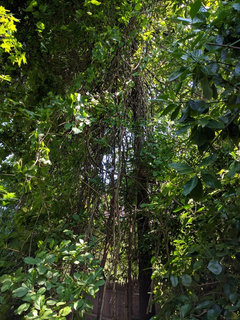
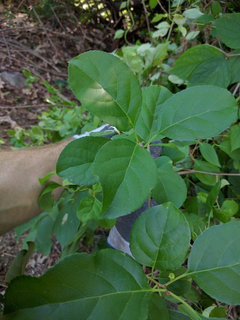
    Here are some pictures of the vine mess (I only ended up taking these pictures today, didn't get around to the rest of them).

    This thing has wrapped itself around every bush horizontally in all directions, climbed 30' up into trees (pictured), and like I said is just as bad underground...idk what it is, but it's insane!


    BTW none of the weeds I've been pulling seem to have flowers (the vine included).

  • 10 years ago

    Laying something such as newspaper or cardboard on the soil does not smother unwanted, or any other, growth but it will keep those plants from getting the sunlight they need to grow, so many will die. However, there are some plants that can be more difficult to control (bindweed) that seem to thrive in the environment created by the mulch that the paper and other material makes.

    Never assume that a soil is healthy, dig in and look closely to see what is there and what that soil may need. Know the soil.

    There is a great deal of misinformation about soil solarization and it is not to be avoided at all costs. How well solarizing may work depends on how it is done, where you are (some areas simply do not get enough sun to make it worthwhile). Solarizing soil does not kill the beneficial soil organisms, they move down and away from the heat generated. Solarizing soil can kill off some unwanted plant growth, but may encourage other unwanted plant growth. Perhaps this article may be of some help.

    http://ipm.ucanr.edu/PMG/PESTNOTES/pn74145.html

    Rototilling can be a method of controlling unwanted plant growth but it also may spread bits of roots of many of those plants that can grow into more unwanted plants. Some find that tilling the soil about every two weeks several times, just as new unwanted plant growth is starting, is one effective method of this unwanted plant growth control.

    kimmq is kimmsr

  • 10 years ago

    An effective smother blocks the light and physically prevents new growth from being able to form by the weight of it. If anything unwanted is able to creep to the edge and continue growing, the smother will fail. If unwanted growth underneath is connected to live material outside of the smother, it will fail. New growth from mature, woody material may be strong enough to come through corrugated cardboard, and the roots may take a long time to die from being smothered.

    The cardboard or paper itself weighs very little and isn't enough to block all of the light. Adding something over it to add weight and fully block the light is necessary for it to be effective, as well as remaining undisturbed (no holes poked in it) until one is sure everything under it is dead. Using some kind of organic matter for added weight and light-blocking, like mulch, leaves, compost, kitchen scraps, manure, whatever one has available, will help accomplish the smothering as well as add tilth and fertility to the soil, while also helping to improve drainage/moderate moisture level over time.

    An organic material like paper or cardboard will decompose and it's not necessary to remove it later, just dig in and start planting when you are sure nothing under is still alive. The least possible number of seeds that are already in the soil are able to sprout this way. Sheet metal, tough plastic, or something similar can also be used to smother, though it would need to be removed before using the spot, and adds nothing of value to the soil. The number of seeds that are already in the soil that would sprout after removing a non-organic smother is much higher.

    Your pics show a situation that's not ready for smothering because the woody debris would poke holes in newspaper (not strong/thick enough for your situation) or cardboard. A relatively smooth area, free of wood/rock debris hard enough to poke holes in cardboard/newspaper is the best candidate for successful smothering.


  • 10 years ago

    Hi Evan

    It looks like what you may have is bittersweet. Are the roots kind of yellow orange colored? When I moved into my current place the back of the yard was waist deep in it. What we did was pull up as much as we could just like you did, but then we mowed really regularly every inch of the yard that we could reach. Any sprouts the mower couldn't reach we cut off by hand. We would also overseed with grass seed. The first year showed a big improvement, the next year even more. By the end of the second year we were mowing more turf than weeds.

    Bittersweet is persistent stuff and there really isn't a "once and for all" solution - more of an on-going maintenance effort. It is possible to get rid of it (or at least reduce it a lot) but it takes a dedicated effort for a couple of seasons. Once the yard was mostly turf we could use smothering to make garden beds were we want them. The weeds still pop up but not so many and it is easier to manage now. If your regular lawn mower isn't up to the task, get a brush cutter. And you will need to clear the rubble but it sounds like you are planning to do that anyway. Just cut really often. Good luck with it!

  • 10 years ago
    last modified: 10 years ago

    Tiffany, thanks for the explanation. Yeah I realized today that the prep-work was probably going to be the hardest and longest part. Lots of rocks to move.

    Maisie, that's exactly what the roots look like! The stuff is crazy I actually remember clearing a similar size entanglement from the side of the house a few years ago. Even today I was pulling rocks out a good 30' from the plant and found another damn 1" orange root that I'm sure is part of it. Pulled it out a good 15' section of it that looped (not even towards the plant) underneath some stone steps and then deep down into the ground on the other end. Ended up just digging as deep as I could before clipping both sides and burying it.

    On a related note but mostly because I'm in a mood, my neighbor came out today angry that all the vines on her arbor were dead because I had cut the bittersweet that had taken over my property (and that I had cut ON my property). Oh she was not happy!

  • 9 years ago

    1 word...

    Goats!

  • 9 years ago

    Hi & welcome to GardenWeb!

    Not a personal comment at you, Sales, but your post is another odd one, as someone's very first comment here being on a discussion that last saw action a while ago.

    Yours does sound like an effective solution. :)