Software
Houzz Logo Print
kayann246

Need help with a South Facing Tree

10 years ago
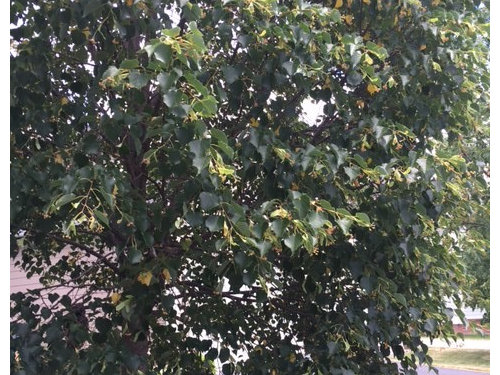
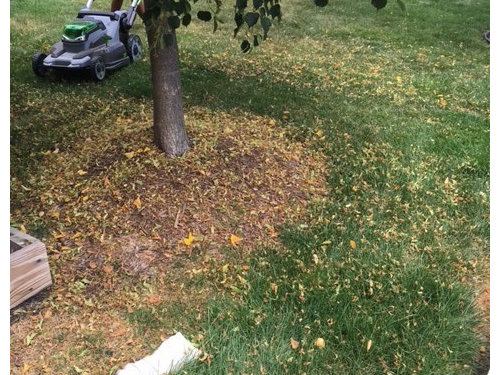
I moved into my house about a year and 6 months ago. The first summer this tree started to develop yellow leaves throughout the tree and fall all over my back year. I noticed that it happen when the weather was really hot for a few days with little or no rain. But there was other similar trees in the area that did the same thing.

I didn't think anything of it because it would stop for a few weeks and start again. Well, this late spring a few yellow leaves fell and it stopped.


Then in mid June, it happened again at a much steady rate. I researched and bought some Bayer Tree and Shrub Protect and Feed. I'm not sure if it is working because i think it takes a few weeks to work. I started to water the tree more.


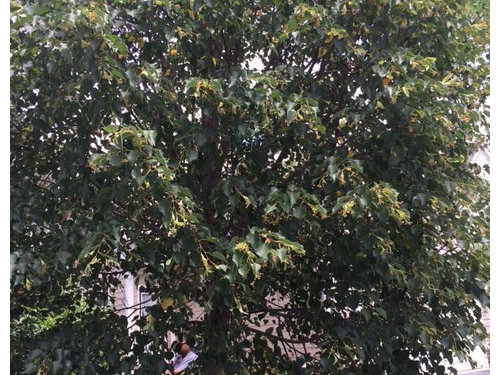
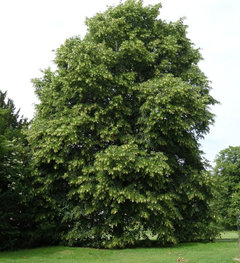
Today I went out to mow and notice that a lot more twigs and yellowed leaves have fallen. What is wrong with the tree? Can I do anything to prevent this issue? What kind of tree is it (I will post pictures)?

Comments (25)

  • 10 years ago

    Thanks! I'm confused. It doesn't have flowers. Is it normal for the tree?

  • 10 years ago
    last modified: 10 years ago

    What botanists call flowers are different from what we think of as flowers. *IF* it is a linden it will have little, inconspicuous yellow/green structures hanging that may smell nice. There would be a narrow tongue like leaf near them.

    Don't fertilize. Have you had a drought? Did you add mulch or edging or plants around the tree?

    I disagree with kentrees12. I find the bright red of severed toes contrasts with the green of grass, making them super easy to find.

  • 10 years ago

    Assuming my ID is correct, the flowers are small and inconspicuous, and dangle on stems with wing-like bracts. They are highly fragrant and they attract swarms of bees. Later in summer small, round, very hard seeds are produced, and can be a hazard if they fall on a hard surface. It can be like walking on small ball bearings. If you can, post a closeup of the foliage and dead leaves so we can make a positive ID.

  • 10 years ago

    No, I use irrigation. I added mulch last year but the yellow stuff coated the mulch after a few weeks so I had to clean it up. I was going to try to mulch again but wanted to make sure it wasn't disease or insect infested.

    Note taken- My daughter was trying to be cute. You know teenagers. I told her to wear gym shoes next time.

  • 10 years ago

    Maybe post a close up of what is yellow would help decide if its flowers or not.

    Kay Ann thanked Toronado3800 Zone 6 St Louis
  • 10 years ago
    last modified: 10 years ago

    Dry conditions can cause the interior leaves on lindens to turn yellow and fall, but it sounds like your linden is getting plenty of water. Aphids or scales can also cause stress that leads to yellowing/dropping leaves, but your tree looks reasonably healthy. Maybe provide a close up of the smaller branches.

    Be careful using the Bayer products that have systemic insecticide (imidacloprid) on lindens - may cause toxicity to bees visiting the flowers. Sounds like you applied the product after the tree flowered, so it shouldn't be an issue.

    Kay Ann thanked arbordave (SE MI)
  • 10 years ago

    I didn't start watering until after the leaves started turning yellow. Not much rain around here. I started watering about 4 days ago. After the yellow leaves drop, how can I make sure that it doesn't keep doing this every summer? I have a hosta garden beside it that is fully of yellow stuff.

    Should I only use the Bayer in spring before flowering? So this is a Linden tree for sure?

    I'll get a better close up picture in the morning.

  • 10 years ago

    Need to determine whether there is a pest problem before resorting to pesticides. If called for, imidacloprid should be applied after flowering so it isn't present in the leaves and flowers when bees are visiting the tree.

  • PRO
    10 years ago

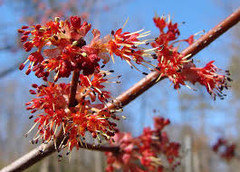
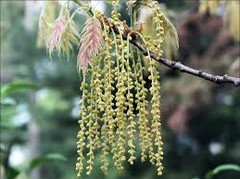
    yes, you must go up close to see the flowers, as a general rule if a tree produces seeds it must flower. with lots of trees such as linden, sweetgum, maple, oak, etc. produce seeds and have inconspicuos flowers.

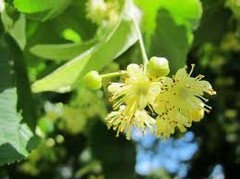
    linden flowers:

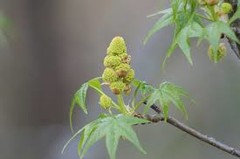
    sweetgum flowers:

    maple flowers:

    oak flowers:

    these are generic, so don't go asking me for botanical names LOL

    Kay Ann thanked Caldwell Home & Garden
  • 10 years ago

    "If called for, imidacloprid should be applied after flowering so it isn't present in the leaves and flowers when bees are visiting the tree."

    Yeah but as a practical matter, it will last until the following season, so better not to apply it at all to something visited by bees.

    Kay Ann thanked UpperBayGardener (zone 7)
  • 10 years ago
    last modified: 10 years ago

    We need more data. Take some close ups of the yellow bits. Look for flowers and photograph them if there are any. While you are at it, photograph the base of the tree...there are a lot things that can be done wrong that you can see where the tree meets the ground,.

    Fertilizer should be a last resort. Lack of nutrients is seldom the main problem suffered by trees, and fertilizer can actually worsen drought stress.

    Kay Ann thanked edlincoln
  • 10 years ago

    It is precisely episodes such as this which will see us loosing imidacloprid from the marketplace. Sheesh....sorry to rant first thing here, but why, why do we see so many completely clueless uses of strong insecticides? In fact, it was exactly the use of Bayer on lindens....in full flower....that caused the deaths of an estimated 50,000 bumble bees in Oregon that got this ban ball rolling. Come on people, it's really quite simple: Determine actual nature of problem, then seek treatment, not the other way around.

    Undoubtedly-and this makes the whole mess even worse-what OP is and was seeing are indeed the yellowish-tan flower bracts, present on every linden upon flower/seed formation. Learn your plants, learn what can ail them, and proceed with knowledge, not guesswork.

    In truth, the neonicotinoids are already goners. So much bogus press-even on public radio the other day, there was an unbelievably smug woman "explaining" how these materials are responsible for bee declines. As a long-time student of this problem, the interview just stunk. And I rarely find that to be the case on public radio. The interviewer, herself a smart woman, accepted as fact the highly unlikely scenario that it is things like imidacloprid that is doing in the bees. Davidrt.....did you mention the coming idiocracy?

  • 10 years ago
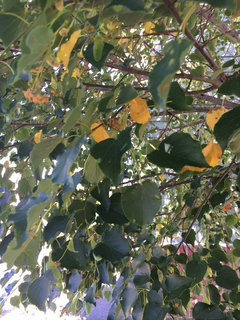
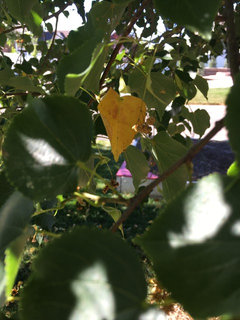
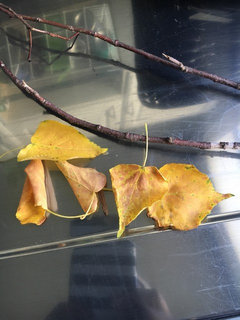
    Here are a few closer pictures. No flower buds. There are twigs that have fallen off as well. Thanks for the help and advice.
  • 10 years ago

    Well, it's not the first mistake I've made just today! Those are indeed-and obviously-leaves, not floral bracts. As to the why, we still don't know. And as such, the unwarranted use of a systemic insecticide on a flowering tree is still very much against the law (if you were a pro applicator) and very much against good sense, let alone the likelihood of our being able to keep things like neonicotinoid insecticides in our toolboxes.

    Just to recap, all tree species flower. Because some of these flowers are not showy, many non-tree-aware people don't think they have flowers. And lindens are bee magnets. So basically, using a systemic insecticide on a linden while in flower (or even prior to) is just about the worst thing one can do against pollinating insects. That's why I decry such doings. We're digging our own graves. In more ways than one.

  • 10 years ago

    Kay Alana - your top two photos clearly show faded flowers and their bracts. There are no buds because your tree has just finished blooming. Look up a few Google pictures and you will see. Your tree is definitely a Tilia (Linden) and it is absolutely normal for it to drop the dried bracts after flowering. Even here where it has rained pretty much daily all through June the Lindens are in full flower and will drop their bracts in due course. It is nothing to do with lack of water or disease and needs no action. When in flower Lindens smell wonderful. I was asked last year by an American tourist what the perfume was and pointed to the Lindens in full bloom.

    This is a Linden in a local park. Can you see that it is laden with yellow bracts? Each bract holds a cluster of small scented flowers. When the flowers fade the bracts will fall.

  • 10 years ago

    Thank you, I was concerned because there are many little twigs on the ground as well. My neighbors to the right and left of me have the same tree of the same height probably 15-20 feet from me where the trees don't have any yellowing at all. That is the reason I'm thinking something is wrong. Their trees are still very green with no yellowing.

  • 10 years ago

    As previously mentioned, it is almost certainly drought stress. Why your tree and not the others? Specific site conditions - soil type and condition, water infiltration rate versus run-off, spread of the roots, etc.

  • 10 years ago
    last modified: 10 years ago

    Kay, I need to revise my last post - davidrt and wisconsitom are correct - systemics like imidacloprid should not be applied to lindens at all, since it has been shown that detectable levels of the product(s) still exist in the flowers a year or more later.

    You said, "I didn't start watering until after the leaves started turning yellow", which would imply that your tree may earlier have experienced moisture stress, and that alone could be the cause of interior leaf yellowing & drop. Smivies has made a good point - other factors could be involved. Do your neighbors have irrigation running around their trees, so theirs may not have gotten as dry?

  • 10 years ago

    Moisture stress? Yes, there is irrigation around all the trees. So maybe it is just heat and dry. I will not be using Bayer anymore. I was told that it can be used as a preventative measure when I called the company. They also told me that I can apply it without any harm to bees or birds. But I guess companies will tell you anything to keep buying their product so that note is taken.

    So what are the steps to take to make sure that the fallen yellow leaves and twigs don't happen all summer during dry weather?

    How often should I water the tree with my irrigation system?

    The last time I watered was Saturday for 20 minutes then Monday for another 20 minutes.


  • 10 years ago

    The equivalent of an inch of rain once a week should be plenty. I can't say how long that is with your irrigation system...you can check it with an open shallow container. One long watering/wk is preferred to multiple short waterings because it allows the water to reach deeper roots (short watering benefits grass and little else).

  • 10 years ago

    One thing that I didn't see mentioned when reading through the thread . . . Do you use weed and feed on the lawn? The herbicide in the "weed" part of the W&F can create issues for some types of trees. The drought can exacerbate this.

  • 10 years ago

    Babs makes a good point. Weed and feed products, besides being the absolute least efficient way to deliver herbicide molecules to weeds, are known to occasionally result in tree damage. It's worth investigating.

    As far as what a rep from Bayer said, I can't quite square that. These people know-beyond any doubt-what the issues are with their systemic products, and it's hard for me to believe they'd be openly dishonest. This issue is broken way too far wide open for that. Weird.


  • 10 years ago
    Yes, I used it in spring.
  • 10 years ago

    I'd really like rose a close up of the base of the tree. Not especially relevant to this problem, but there are a a lot of common problems new homeowners have that can esteem by looking at the space where trunk and ground meet.