Software
Houzz Logo Print
marcguay

Lovage seed head bug/disease?

10 years ago
last modified: 10 years ago
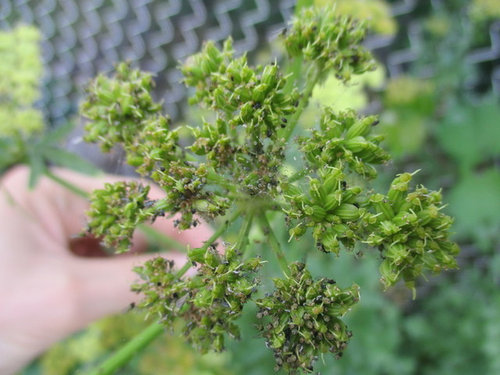
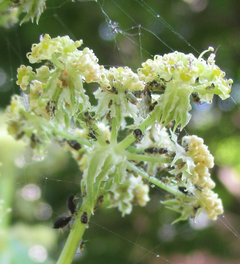
Hi folks. My lovage has a problem every year which makes the seeds un-savable (at least by me). The seed head gets all webby and seemingly moldy. The photos are current, it gets much worse as time goes on. There seem to be little flies hanging out in there. Does anyone know what causes this and if so, what the solution is?


Comments (21)

  • 10 years ago

    Aphids.

  • 10 years ago

    Perhaps spider mites, too. The 'flies' will need to be photographed in order to be properly identified. Could be winged aphids or could be the tiny wasps that parasitize the aphids, helping with their control. They are almost gnat-like in their appearance.


  • 10 years ago
    last modified: 10 years ago
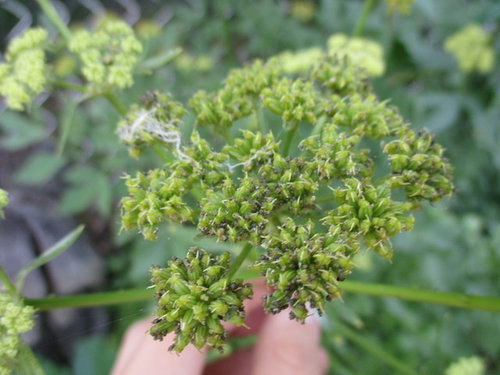
    Thanks to you both. Here's a closeup of the buggies.

  • 10 years ago

    Well I certainly see some Aphids (the fat black ones bottom left) but Aphids don't make webs and there appear to be at least 2 others creatures there.

  • 10 years ago

    Yeah it's a real horror show in there - the rest of my garden doesn't look like this! :)

  • 10 years ago

    I wonder if that wouldn't just move the bugs around, only to return? I was thinking of cutting the heads off right before the city green waste pickup and having them taken far away.

  • 10 years ago

    If you spray on a regular basis every few days, you should be able to keep the bugs away.

    marcguay thanked chervil2
  • 10 years ago

    Oh!!!!! If you do cut these off PLEASE don't put this infestation in your Green Bin!!! Put it in the Waste Bin.

  • 10 years ago

    Hi Kate,

    Why?

  • 10 years ago

    I disagree with CA Kate. Once the seed heads are cut off any pests on them will die. Any survivors (very unlikely) will be destroyed in the composting process. I wouldn't hesitate to compost them. No need to send them to landfill imo.

    However, since you don't need millions of seeds how about just clearing a few heads while still on the plant by slooshing them very thoroughly in a bowl of water, letting them dry and then bagging them in paper bags? Leave the bags on the plant until the seeds are ripe and then pick the whole seed head off.

  • 10 years ago

    That's a great idea floral - but a bit too late. I cut them all off and put them in the bin yesterday. Maybe next year if the problem returns... Thank you.

  • 10 years ago

    plant a milkweed.

    aphids love milkweed, and will leave other plants for them.

    then you will have tons of aphids on the milkweed, which is what you want. eventually a predator will come in and multiply with a large food source.


    you can spray the seedheads with water/soap and clove or tea-tree oil.

  • 10 years ago

    The top picture shows some shiny black insects that remind me of flea beetles...I'm curious...why are you saving lovage seeds? I usually cut the blossoms off before they can set seed, but then I don't really have much use for lovage in my garden, it was planted there one year and seems to thrive here.

  • 10 years ago

    Apparently what you buy as "celery salt" is actually made from lovage seeds. I thought it might be fun to try making my own, or maybe throw the seeds into some bread? Thrives like a weed here too.

  • 10 years ago

    Do you have any tips? I don't want to derail your thread into another topic, but I could use any quick advice you can offer. I've been trying for over a year now to get my lovage plant up and going. I planted it in the ground as a seedling (probably a mistake) and it's been struggling ever since. It survived summer, although the leaves burned a bit. It never got taller than about 10 cm. I thought it might do better now that it's winter here, but it's died down to nothing. I have another that's in a pot, which is doing much better, but I only bought it at the beginning of winter so I'm not sure how it's going to go in summer. Am I in the wrong zone? Am I planting it out too early?

  • 10 years ago

    I don't know much about other climate zones but where I am we have a very long winter and the lovage, and other perennials like rhubarb and sorrel, sleep through it under the snow and then come up early in the spring, each year bigger than before. Perhaps it's a matter of patience or maybe it doesn't like the heat, it definitely thrives in the cool spring temps.

  • 10 years ago

    Thanks very much! I'll keep trying. The one I have in the pot is doing pretty well; just interesting to see how it will do when summer hits.

  • 10 years ago

    Marcguay: Sorry I didn't answer you sooner... too late I see, but I couldn't disagree with another poster more. By including any pest infestation, or disease to the green bin there is the chance that these could be introduced to the compost made from the refuse.... and multiply rapidly. In a normal compost pile the heat can get extremely high and would, hopefully, kill any pathogen, but who knows what goes on with your local composting. It's always best to bag and dispose of any infestation into the waste bin.

  • 10 years ago

    The OP's problem is mainly aphids, not a spore borne disease such as tomato blight etc. I will continue to disagree with the view that aphids will cause any problem at all in either your own compost heap at home or the green waste collection. Once their food plant is cut off they will die. There is no need at all to send it to land fill - indeed my local authority will refuse to take household waste if there is any green material in it.

  • 10 years ago

    Putting insects in the bin is not going to have any effect on their population. The population is always ultimately controlled by the food web. Kill some aphids, the consequence is there's less food for predators so the predator population declines and the aphid population recovers its losses in their absence. Even if you leave the colony to multiply on the plant, you'll just get more predators for a brief period and then it's back to normal again. The result is always the same. Whether you put it in the bin or the compost, you're not actually going to have any lasting impact on insect pest populations.