

Newbie learning
Ok, so I have started reading here and have enjoyed looking over many beautiful pics people post of their C&S's... I am in love with them all !
I have recently purchased an Aloe & a couple of Jade plants, which I love dearly.
Only thing is, now I want to replace them out of their original soil they came with, but I have no idea what to replace their soil with.
Can someone steer me in the right direction on what I can use? Here is a list of things I have on hand that can probably work, but just not sure what to mix and how much of it to use:
- Coarse Perlite
- Reptile bark (from Pet store)
- Chicken grit
Of the items I have listed, please help me create a good mix for my new babies..
Your help is greatly appreciated.
Comments (74)
 10 years ago
ewwmayo-
NOT SAND!!!! I think when people say 'sand', it is very confusing... Just my opinion..
 10 years agolast modified: 10 years ago
Nope wrong again sand that has been sifted for size is still sand.
BBS stores offer builders sand in fifty pound bags for apx 2.00 per bag After sifting the yield avg is apx one gallon per 50 pound
Related Professionals
Montgomery Landscape Architects & Landscape Designers · Billings Landscape Architects & Landscape Designers · Athens Landscape Contractors · Hannibal Landscape Contractors · Ardmore Landscape Contractors · Waterloo Landscape Contractors · Barnstable Landscape Contractors · Grand Rapids Landscape Contractors · San Bernardino Landscape Contractors · Twin Falls Landscape Contractors · Dalton General Contractors · Fayetteville General Contractors · Coldwater General Contractors · Omaha General Contractors · Canton General Contractors 10 years agolast modified: 10 years ago
I use unsifted horticultural sand for germinating seeds. A layer maybe 0.5cm thick because it holds just enough water and my seeds don't fall through.
Haworthia kenzo x korizato x cymbiformis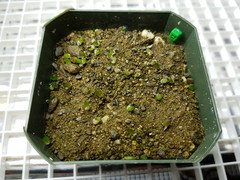
- 10 years agolast modified: 10 years ago
Looking good Kevin
IMO I think the OP may have a bit of overwhelming information it offers a-lot of information that I found to be very useful for any new succulent enthusiastic person. Personally I find this thread to be worthy of book marking , to be used as a reference VIA linking to and for outer new C&S persons.
Sandra
Original Author10 years agoExcuse my ignorance or lack of knowing.... (Nomen) what are you referring to OP mean?
 10 years ago
Original poster (the person who initially posted the thread).
I think some of the newer folks seems to be posting confusing/misleading info.
Can't see why some keep saying perlite & pumice retain water. No, the opposite, they help make things fast draining by NOT retaining water.
If they did retain water, we wouldn't be adding them to C&S mixes to increase drainage.
I feel for the newbies, some folks here are making this too darn complicated. Especially for folks who may not even have 1/2 dozen plants.
Lena
- 10 years agolast modified: 10 years ago
Lena
I think better expression may be that they hold some water+nutrients internally - which they do (some little more, some little less - depending on how porous they are). But being larger particulates, they allow for excess to drain out. And whatever is held, is slowly released to plants. Not like peat or other dense, very fine materials that get soaking wet and stay wet for a long time because they compact together. Sand doesn't (I think) hold/retain water, but it sticks together so well, forming a 'barrier' - water usually puddles on surface and takes a loooong time to drain.
 10 years ago
Sandra - It seems your thread is becoming somewhat convoluted, and yes Al would give you a straight, easy to understand answer.
However, since you are dealing with succulents, I would suggest using crushed lava rock (Scoria); if it's available. Lava rock, Repti Bark, Perlite 3:1:1 appropriately sized. With that and a handful of grit will bring a bit of weight, and proper water retention. Sometimes I will use crushed Granite as a top dressing.
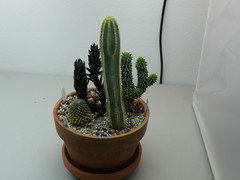
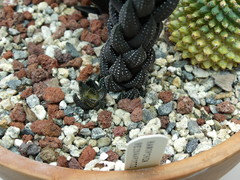
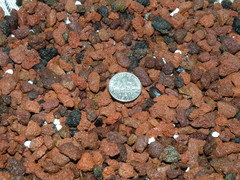
Rob
- 10 years agolast modified: 10 years ago
Quoted : Al would give you a straight, easy to understand answer.
I guess anyone can say ask this one person so why not ask Biker doc what he suggest for a mix ? I mean some of the new the folks here are usually in high compliments with posting few pics from him.
Actually I think he would suggest the same use what is in your opinion the best materail for your plants as Al would. The mix Al suggest has been modified enough from each user that leads me to think, " I have no idea why anyone would even call the mix they make Al's gritty mix when it not."
In short we are a forum where more than one opinion is and should be welcomed this is an area of where (there use to be more) multi-talented cultivators ( the more are now MIA for a reason perhaps the seemingly insisted mix suggestion known as AGM . MIA have the same and have proven better cultivating skills but have been shadowed by the commonly suggested " All you have to do is ask Al."
What I suggest is you follow along on other threads as you may get better ideas and learn what soil and soil-less substrates MIGHT work better for you and some of your plants.
Pic shows a five year in the same pot succulent ( being slightly older) with ZERO turface ZERO bark 100 % sharp crunchier rocky materiel
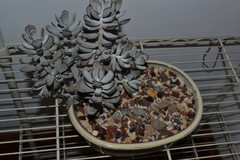
If the question is Will this same soil-less soils or mix work for you and your Jade an your Aloe. Unfortunately for some and surprisingly enough, not only is the answer is yes it would even be easier to manage. All you have to learn is how to manage them during different climatic times of the year, any succulent in a soil-less could become an easier to manage habit for many more than just the few that already manage succulents well . I seem to think more mostly shy away from soil-less soils VIA fear the facts that can also be considered just as complicated to understand ( & could also be considered over worded) from Al.
On your fact finding mission you may discover that the soil less pot will be very useful and easier to manage (at times) for a wide array of succulent species.
again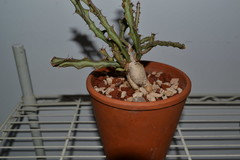 and again
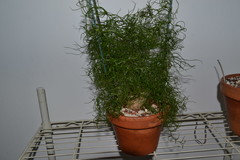
Over and over & pot after pot I use open airy sharp draining soil- less so I don't have to worry about watering
But just because a sharp soil works for some succulents and are easier to manage it doesn't and wont work for all succulents
This is where anyone of us can easily say a basic AGM becomes more complicated overwhelmingly difficult to understand The once easy to understand modifications of AGM have been in comments as long as the Al has come into play Even Al would suggest and agree to modify his basic soil for your use
A succulent in a modified bark based mix that's turface and also repti bark free because repti bark is to pricey for to little but it does well for the starter of a few plants. As stated turface breaks down to quickly I skip it's use in every pot I have. Results I don't have to re-pot as often. Re-potting is also a part of plant management that is also explained by several people in many words that could also be a bit overwhelming and more often than not, re-potting as often as suggested is unnecessary .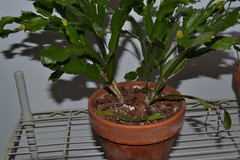
After you read the 640,000,000,000 or more words that are ( Hmmm less complicated than all the words on your thread ?) about fertilizing plants is my attempt to to make feeding plants in pots a little easier to understand you may have noted that no one ( including myself) suggested they'd be replacing your plants if you use ABC or XYZ soil/ or mix.
Basically you only need to use three of the five basic items suggested to make a costume mix. Do you need to always have all five items on hand ? No not always but as one of them items is water all you need for watering is enough water to water. All that's left to manage for anyone now is the when to water and sunning them correctly at the right times of the year. Again for the new person comes even more overwhelming complexity for these simple items we call plants.
 10 years ago
Sandra - I saw a post to a thread I'd started and keep an eye on, asking me to look at your question. I've been tied up with work and my own plants lately - trying to get the repots done, finally.
I haven't read through the whole thread, so don't know what course it's on, but for the most part cacti and succulents don't like areas of the soil to be saturated. More specifically, they would rather have their roots in a medium that holds water inside of the soil particles, on the surface of soil particles, and at the interface where soil particles touch each other ..... and not hold water in what are potentially air spaces between the soil particles. Using larger particles than commonly found in potting media (to build your soils) or 'tricks' to drain any water the soil tends to hold between soil particles is the best way to achieve that end (ask about that if you're interested), with a soil that doesn't hold water in the interparticular air spaces getting the nod, at least from me, as easiest and most appreciated by plants.
There are lots of different materials you can use to put this concept into practice. It's best to have on hand some materials that have a lot of internal porosity (Turface, calcined DE, pumice, etc.), and some that have no or very little internal porosity (various types of grit, like crushed granite or cherrystone) for the reason that mixing these ingredients in different proportions allows you to determine how much water your soil will retain.
The water that occupies a layer of saturated soil toward the bottom of the pot is called 'perched water'. It's not your plants' friend, even if it does extend watering intervals. It limits root function and can provide an environment that supports the type of organisms that wreck root health. Perched water first begins to appear in soils with particles smaller than 1/10 of an inch; so ideally, your soil would be made of a very large fraction of particles at least that size. Larger particles offer little advantage and tend to reduce the 'good kind' of water retention, so keeping your soil particles larger than 1/10" w/o including a significant fraction of material larger than 3/16" would be great.
I'm not sure how interested you are in all of this, or how deep you want to get into making soils. I'll hope what I said was helpful and just sort of wait to see if if it sparked any thoughts that led you to questions.
Al
 10 years agolast modified: 10 years ago
I, for one, found your summary helpful, Al. I've been reading all the explanations of the "hows" and "whys" of gritty mix throughout the forum. I've never felt I truly understood it well enough to make decisions regarding my own mix. Your response above appeared at the perfect time when my brain was finally ready to "get it."
Thanks!
- 10 years ago
Call it serendipity then. ;-)
Glad you 'get' the concept. It will help you keep your plants' roots happy, which is a prerequisite to a healthy plant.Some "Whitcomb-isms" from Dr
Carl Whitcomb, PhD:"If
the root system ain't happy, ain't no part of the plant happy""Roots
control the tree, the stems and branches just 'think'
[emphasis in the original] they are in charge.""The
more roots to share the load, the faster the dirty work gets done""Roots
provide the fuel for the plant engines we call leaves""Each
root tip casts a vote to decide what the top will be allowed to do""Top
growth gets all the glory, but the roots do all the dirty work"
He
also notes that "Stress can ALWAYS be measured in the root
system before symptoms appear in the top [of the plant]". I'm assuming that forest fires and lawn mowers are excluded from the list of stressors. ;-)
Al - 10 years ago
Sandra - If by chance you do look into "Dry Stall" or "Stall Dry", neither are usually found at hydro stores; but rather at "Feed Stores" (depending on where you live I suppose). There is also a big difference. "Dry Stall" is Pumice, whereas "Stall Dry" is Diatomaceous Earth (DE) with an additive for odor control (which is also safe for plants).
As far as different soil materials go... Again, depending on where you live; will determine the cost and availability of just about anything.
If you do prefer to use a wood component; such as "Repti Bark" (which is Fir bark) in your mix, you might want to contact your local Orchid Society (it would be much cheaper). You will probably want "Fine Grade" (1/8"-1/4"), although Pine bark work's well too.
Recently, I was lucky enough to find a member of my local Orchid society. He sold me a rather large quantity for a great price.
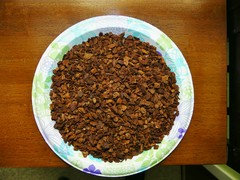
As a novice grower, cacti & succulents can be a wise choice because they are very forgiving plants. Being so drought tolerant, if in doubt, DO NOT water. In the winter time, mine have no problem going 3 weeks between waterings.
Good luck,Rob
- 10 years agolast modified: 10 years ago
nomen,
What do you mean 'wrong again'??? Haha...
I meant that when you say 'sand', well, people are going to think 'beach'! They'll think you can just get a bucket of sand from the beach, throw it in a mix with some cactus soil, and voila! You have a perfect mix! I usually don't recommend sand as a mix item simply because it can be rather confusing as to what size one should buy, as well as the common notion that any kind of sand is better than no sand (for succulents).
Please pardon my outburst- it was, after all, early in the morning...
Imontestella,
I think instead of 'newer folks', you meant to say 'palmsandsnow'. By water retaining, I meant EXACTLY what rina said. Perlite and pumice promote drainage, but they absorb water, and then release it over time.
Have a good day,
~palmsandsnow
- 10 years ago
palms...too many cups of coffee?... lol
I totally agree with you about sand - ppl run to the beach, or to a sand box. If I ever mention it, I always make point of saying 'coarse' and even recommend sifting it with kitchen sieve and using only what is left in it. Even that could be relatively small but better than unsifted. I have plants gifted to me potted in sand, and it was even harder around root ball than hydrophobic peat, almost cement-like.
- 10 years ago
No Palms, I DID mean 'newer folks' as you're not the only one who has said that & shared in making the confusion (I'm pretty deliberate in my wording).
Lena
- 10 years ago
When I think of sand as it relates to the beach or sandbox, I thing of something about the size of fine to medium ground pepper or table salt. When I think of sand as it relates to container media or hort applications, I thing of something like you see below on the left: It's #1 cherrystone and is being compared to screened Turface (what doesn't pass through aluminum insect screening), shown right. The #1 cherrystone 'sand' is about 1/4 - 1/3 the size of MannaPro poultry grit, grower size grit, or #2 cherrystone. It's about the finest 'sand' I can find a use for as an ingredient of container media. It's use would be as an addition to highly aerated soils in small volumes to increase water retention by reducing pore size, increasing the o/a surface area of soil particles, and increasing the number of contact points between soil particles. If I had a well made mix and added water retention was the goal, I would still forgo its use in favor of increasing the volume of soil particles with the most internal porosity. This is because it allows you to increase water retention w/o having to sacrifice the number or size of macropores in the medium you're experimenting with.
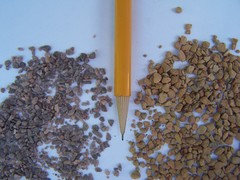
FWIW - I've been using Turface a very long time and have never had an issue with it failing structurally - even if it freezes. YMMV, but I've probably gone through at least 200 bags since I started making my own soils. I use it extensively.
Al
- 10 years agolast modified: 10 years ago
nomen,
I mean no offense, but I couldn't really understand that first paragraph for lack of punctuation. But I do seem to gather that if I could fully understand it, I would consider it an insult.
Now, we are talking about sand. If you tell some one to use sand, they will use sand. I find it useful to specify (as rina said) coarse sand. No matter what you say, I did gather that you said to sift the sand. Sifted sand could mean anything, if the size isn't specified. Ewwmayo said sand. Not BBS builder's sand. I never said once that you couldn't use that. Many on the forum know that most sand is undesirable, but if some one completely new to these 'revolutionary' soil mixes read just ewwmayo's post, they might think 'so I can just go and take a bucket of sand off the beach for no cost!' no questions asked. Not only is it simple and cheap, it makes sense. Some one might say 'Well, a desert doesn't have sifted sand!', and they are right! It makes sense to use just normal unsifted natural sand! That is the simple reason I sought to point that out. I think when we tell people to use sand, we need to explicitly state that the sand needs to be sifted to the appropriate size!
To answer your other attempt at a personal attack, nothing makes me qualified to tell what others may be thinking. Nothing! No one should even feel the need to follow my advice, heed my warnings! The reason I am on this forum is not only to seek advice, but also to advise, and quench my insatiable desire to help others succeed the way I like to succeed! I am no mind reader, but again, it makes sense to put sand in a cactus or succulent mix- a very predictable move! It is just like how everyone seems to assume the worst of a new gardener's soil whenever they come on this forum asking for help with rotting and dying plants! We are thinking for them, telling them to trash their mixes and do what we tell them to do. We act based on assumptions and our own experiences! Of course, it is almost never a bad thing, as we have the experiences of dozens of gardeners to back up our claims. But, whenever some one comes along reporting any amount of success with Miracle Gro soil, it is sad to see that they are almost instantly shunned. I am just trying to point out that I am not the only one making assumptions and trying to act for other people. We need to open our minds to the suggestions of others, even if they are 'inexperienced', and focus on helping people, not bending them to our will.
I also never said you had to use turface to succeed. I just said it is an ingredient worthy to note. I get the point. You do not need turface to grow a succulent.
I really don't know why you are targeting me with insults and accusations, and I would ask you to consider whether or not people should do things your way simply because it works for you, or because you like it that way.
(I know this post is a bit sharp, and I do feel hurt by your claims, but I do not hold anything against you)
~palmsandsnow
- 10 years agolast modified: 10 years ago
Al, I don't feel like I got much out of that latest post; could you please summarize? Thanks.
- 10 years ago
Vance, as odd as it may seem, we are still on a pretty close track with the original post.
 10 years ago
I agree you are (somewhat) but let's help Sandra out with her current ingredients or get her on track. Heck let's put our heads together and come to a conclusion to help her, if we think she needs something different. Me personally I think the ingredients she has is great compared to what she could have.
All of the insults need to stop.- 10 years ago
I have applied all my effort and considerably limited knowledge helping her find a good mix; I don't have much more to say. I think we have helped her a very good deal. I also highly doubt we could come to any sort of conclusion... At least not me and nomen.. I would gladly back out of this discussion if it would be of benefit to Sandra...
- 10 years agolast modified: 10 years ago
Just being a bit direct toward you while insisting that you be fair allowing whom ever ( including the OP) to understand what they do understand and not have you do the understanding for them. What you did was ASSUME the OP ( or another person) is thinking that sifted for size sand is the same as beach sand when it's not.
I'll repeat the only problem with BBS builders sand is it's low yield after sifting but it is very usable potting materiel that also provides the same drainage and aeration, it's also a much longer lasting grit item than other harder to find mix ingredients such as turface.
It doesn't matter to me what sand was suggested to not be used by EWWmayo when they're pic and comment shows and suggested something very close to the exact opposite.
200 bags of turface you must have some regular need to be changing turface in and out of pots a lot. Reason being it's lack of longevity, a shorter break down time than other mix items that do the same thing for a longer time.
- 10 years ago
nomen, not ignoring you, just don't have anything to say to that.
ewwmayo, I get your point, it is useful, but in it's proper form. It is quite important for the sand to be sifted to about 1/8 in. size for it to be a benefit in most container soils. It can be very useful, but it is important to emphasize the difference size can make.
Of course, I trust your seedlings are doing just fine with that coat of fine sand.
~palmsandsnow
- 10 years agolast modified: 10 years ago
nomen
(.. 200 bags of turface you must have some regular need to be changing turface in and out of pots a lot. Reason being it's lack of longevity, a shorter break down time than other mix items that do the same thing for a longer time...)
I believe you missed what Al said - I highlighted the 'key' words:
..."FWIW - I've been using Turface a very long time and have never had an issue with it failing structurally - even if it freezes. YMMV, but I've probably gone through at least 200 bags since I started making my own soils. I use it extensively"...
You know Al has lots of plants, grows bonsai - not because lack of longevity or short break-down time. I have fewer plants, most in small pots, use about 15-20% of it in a mix and have used 2.5 bags of turface so far (50lb each) - in only about 3 years.
- 10 years ago
Actually, I've never repotted a single plant that was in the gritty mix due to structural failure of the soil or any component thereof (including Turface). Soil collapse has never served as an impetus behind any repot I've undertaken, unless I purchased the plant in an inappropriate soil not of my making. Because the soil has only a 1/3 organic fraction, it simply cannot collapse like soils based on a high % of fine organic particles can and do. I have very old pines and junipers that go 5 or more years between repots - no issues with collapse of soil or its parts after that length of time.
I have trees large enough that it takes 2 men to move them about, so using 5 gallons of soil or more during a single repot is a fairly regular occurrence. That I don't choose to reuse the soil or component parts that are the end product of up to 200 repots annually helps bring us full circle to the only reason I've used well over 200 bags of Turface in my >30 years of growing stuff in pots - remediation of root congestion. I don't mind battling root congestion, which is the only reason I ever repot, but I refuse to do battle with the soils I use for control over my plants' vitality.
Al
- 10 years agolast modified: 10 years ago
A-lot of misreading happening here. For example if someone types the words sifted builders sand others assume the reader ( OP ) grabs beach sand or grabs play ground sand I am not sure how words play in ones mind and become something else that wasn't intended and not said ( until now) Understanding what someone else reads and rewording it to mean something else is putting words in someones mouth.
I don't think Al has any problem explaining himself and his re-potting information noticing he is " battling roots" to remove more than turface. In brief he doesn't need another person to explain himself to me.
30/200+ equals an avg of apx 16 bags of turface a year IMO seems to be a bit much and a waste, full circle or not Al will do what he doesn't mind doing and then comments on himself being busier than he would like to be doing the re-potting.
- 10 years agolast modified: 10 years ago
This is really not giving any advice to OP or anyone with similar questions..
nomen - you really misread/misunderstood the part of post I quoted, I don't need to 'explain' anyone but pls. pay attention to what is written. Maybe you should start new thread on questioning other peoples 'methods' rather than derailing one.
You grow some great plants, you shown many in very interesting posts, you do have some great suggestion, tips & knowledge that is worth reading - why is there need to go off the subject and to such extent as your last post...reads as 'bitterness' or 'jealousy'...just MO
edited to add: there is a photo in August blooms thread, posted by Lars that looks similar to one of your plants - maybe you can have a look at it and ID it? (I thought it may be Adromischus, but am not sure...)
- 10 years ago
nomen,
I was not misreading, it is just that you were misunderstanding my post. If anyone came on this thread and read the whole thing, then yes, they would know that sand is usable, if you purchase the correct type and sifted it to the correct size. I was responding to ewwmayo's post, not yours. Here is his post:
"At first it was a bit intimidating, but it got much easier fairly quickly. I've been using granite grit, pumice, Turface, perlite, reptibark, and sand as my main soil components. Each has a different purpose (due to different advantages and disadvantages) and not all go into every pot of mine."
Here, you can notice that he says 'sand'. That simple word could mean a whole variety of materials. There is nothing there about sifting it, there is nothing there about buying the correct type. All it says is 'sand'. I was responding to his post, nothing more, nothing less. I was not even responding to the post that you posted after me. Thanks to that post, though, you did clear up what kind of sand to use, and that you do, indeed, need to sift it.
I was merely warning people that may happen onto this thread, that you cannot use just any kind of sand. I agree that I should have made my message a little clearer, but there you are.
~palmsandsnow
- 10 years agolast modified: 10 years ago
Painting the picture ( please note the bold type)
sifted for size builders sand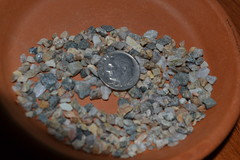
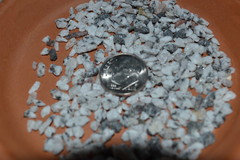
sifted poultry grit
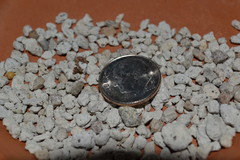
Sifted for size dry stall ( which is pumice)
Considering and knowing that some succulents can also be cultivated in 100% sifted turface and if someone where to suggest that turface would last longer in a pot than any one two or three of the pics above I would beg to differ.
As yet we have no idea if the OP is able to even find turface If not there is nothing wrong with suggesting alternatives that prove to work just as well and if not better
Any one, two or even all three items ( mixed ) can be used for pot cultivating SOME succulent . The longevity of use is much longer than a pot that containers.
Someone had assumed what someone else was asking because they ( OP) wasn't specific enough in the choice of wording of the question Had the OP been aware of specific nic pic ways of others to understand the question the OP asked he/she wouldn't need to ask the question.
Rob as soon as your done riding that coat tail you'll realize it's the same coat tail that had told you to think out side of the box - 10 years ago
nomen,
I nor anyone else on this thread (to my count), has ever suggested or even mentioned turface's longevity in relation to the other three items you posted. I would humbly stand corrected if you could only provide me clear evidence.
It is always good to have alternatives. Where I am, I cannot purchase pumice without going to certain lengths. I have never even seen builder's sand! You never know, Sandra may not be able to obtain these materials either!
"Someone had assumed what someone else was asking because they ( OP) wasn't specific enough in the choice of wording of the question Had the OP been aware of specific nic pic ways of others to understand the question the OP asked he/she wouldn't need to ask the question."
This last quote. You have a couple of 'someones' in there... I feel you were trying to be polite by not naming names, but it would be a lot easier to understand if you put in who the 'someones' actually were.
~palmsandsnow
- 10 years ago
Here in Michigan, what's sold as builder's sand isn't anything that I would use in my soils because it's all too fine - much finer than Turface fines that have passed through an insect screen. If I ordered a half yard of 'builder's sand' from a masonry supply company, it would all pass through insect screen.
When I did a quick image search it became obvious that some products labeled 'builders sand' will yield a product one might want to use after screening, and some obviously won't, and it appears according to the images that the higher % of images would garner more nays than yeahs, so I think it's a good idea to figure out a way to tell growers what they're looking for is not the material that's roughly the size of medium ground pepper.
I realize I use material that could qualify as being sand or coming from sand, but I intentionally avoid using the term for the simple reason it can create the sort of confusion and misunderstandings being dealt with here. I think that if 100 growers were chosen at random and asked what 'sand' is, they would all but maybe one be thinking of beaches and sand boxes, so qualifying the term when it must be used will always be an aid to avoiding misinterpretation.
Al
- 10 years agolast modified: 10 years ago
My apologies if I may pointing fingers and/or naming names just isn't my style.
I also noticed that there is also more than one meaning for the word BEACH
The soft sandy beaches of the Bahamas
The building complex features a lake front view with fresh water beach access.
How does one ( me) prove that granite ( Poultry grits as seen in pic) last longer longer than turface in a manner that would appease the rest of the crowd.
It's equal is me asking you ( Palmsandsnow) prove to me it don't or wont or cant.
Or I could suggest that you read a little bit into the basic principals of natural laws and physics ( specifically in the erosion area) You discover that solid granite will last longer than yours and mine age at our death added together X another 100000 or so years.
You may need to ask a few more folks how long turface lasted for them in a pot My best recollection is fewer than three years years. ( Or three growing seasons ).
You may have to repeat the same reading of basics for each item of gritty materiel you have a fact finding question for
I understand your ( palmsinsnow) concerns and why you ask My best answer is just know it's okay to adventure on your own to find the facts VS the it'll work if you do it right comments from strangers on the internet
If you want to take my word for it with out any 24-7 365 actual proof this one has been
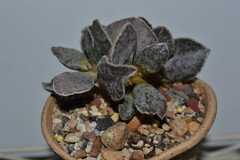
Six years in the same potting mix and pot and is by most standards over-potted
Still need more proof ?
Here is a pic
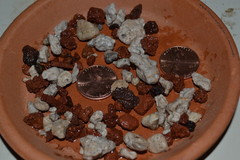
and here is the threadIn case you cant find pumice
this is the place that will (price included) ship it to you in the US and has one of the best prices I've have seen Take my word for it pound for pound pot for pot hands down ALOT less pricey than turface
This information comes from someone ( ME) who lives 15 miles away from sixty pallets of turface and has yet to buy a second bag after X amount of years in pot cultivating.
For Al How is it that more than one person (out of however many) understands the phrase " Sifted turface using whats left behind" then the same number of people all the sudden the same amount of people ( however many) dont understand ( or comprehend) what the phrase" sifted sand using whats left behind" become such a low % when 10 % of all sifters that sift and use either sifted sand or sifted turface correctly in a mix ?
- 10 years agolast modified: 10 years ago
Godamn Nomen!! We ALL get your point! Turface Sucks, and EVERYTHING YOU USE IS BETTER!!!!!!!!!!!!
What last's longer? Crushed Granite, or Nomen bitching about; how long it lasts.
" The longevity of use is much longer than a pot that containers."
What, the Hell does that mean nomad newdumb???
Also, LEARN PUNCTUATION IDIOT!!!! 400 word run on sentences; aren't exactly comprehensive.
Has anyone even noticed that "Sandra" hasn't been here for 34 posts??????????? Of coarse not!!!!!!! You're too busy being so High and F#@%ing mighty!!
I, am done w/ this thread.
Rob
P.S. Sandra, if this is your first visit to the Garden Web; I'm sorry. If you can avoid the trolls, there really are some great people here, and a wealth of knowledge.
One tip from me to you - Everything you see written by "tapla", read it!
Good luck.
- 10 years ago
nomen,
We don't need you prove that granite lasts longer than turface. Honestly, I don't think anyone on this thread has asked you to prove that, or even cares how long they last in relation to each other.
I fully recognize that beautiful plants can be grown without turface; I don't think there is any need for further discussion there.
~palmsandsnow
- 10 years ago
If there is a power outage scheduled in advance, we might prepare for it by buying a candle. If the power outage is projected to be an hour-long affair, we only need a candle that will last an hour. I can see buying a candle that might last for a couple of hours to be on the safe side, but buying one of those votive-type candles said to burn for a month would definitely be overkill.
I like Turface. Some people don't. If we all liked the same things, life would be easier, but maybe a little less fun. Anyway, I've never had a bit of issue with Turface breaking down in a soil, and I have pines and junipers that sit outdoors on the grow benches all winter long in Michigan. That's a lot of freeze/thaw cycles; still, no problems. Is crushed granite or screenings from builder's sand more durable or longer lasting than Turface MVP. Yes, of course it is; but does it have to be to serve the grower very well as part of a soil? No, it doesn't. Turface lasts well beyond long enough in soils that root congestion will demand a repot and change of soil long before any root issues arise as a result of Turface collapsing or breaking down in a medium. It just doesn't happen - at least within the limits of my experience, and I'm guessing I've probably used more Turface in container media than any of this thread's participants, by far. It might be possible that any given bag of the product could have been fired at temps too low to ensure stability, but I've never encountered that issue.
Al
- 10 years agolast modified: 10 years ago
Timing isn't everything as it also depends on the size of the room one wants to light to determine what is and what isn't over kill. Any fool can say the same about any item in mixes but it doesn't mean they are foolish.
Avoiding the answer to a question and confusing readers with some silly story about power outages means what to a plant that is cultivated in a pot
How is it that fewer people understand sifted sand than the amount of people who understand sifting truface ? Unless of course to save some time turface doesn't need to be sifted.
- 10 years ago
nomen,
Many of those on this forum were already familiar with sand before they came to discover this forum (and in turn, discover turface). There are exceptions. The only thing I think of when I think of turface, is soil, plants, and occasionally baseball fields. I had no idea what turface was before I discovered Gardenweb. On the other hand, I knew what sand was for a long time before I knew what turface was. I learned to associate sand with things other than what I might find in one of your pots, and thus, 'sand', can mean a whole variety of things to me.
When some one mentions turface as an ingredient, I think of it in a form that is suitable for plants, simply because that is the only thing I associate it with. Still, a lot of people still say 'sifted turface' as a safeguard. 'Sand', however, could mean anything!
'Sand', is very vague. Sifted sand, however, means a great deal more. Builder's sand, sifted to 1/8th inch, is very specific, but yet, as Al said, there are variations within that (different sizes of sand). I will use this quote again:
At first it was a bit intimidating, but it got much easier fairly quickly. I've been using granite grit, pumice, Turface, perlite, reptibark, and sand as my main soil components. Each has a different purpose (due to different advantages and disadvantages) and not all go into every pot of mine."
Notice again, ewwmayo says 'sand'. I try to discourage people from just saying just 'sand' when they mean 'Builder's sand, sifted to 1/8th inch', or something similar. I have no problem with people using sand in a mix as long as it is the right kind, and likewise, I have no problem with others recommending sand as long as they are specific, as to not mislead beginners!
~palmsandsnow
 10 years agolast modified: 10 years ago
Coming from western Canada, and having lived in Vancouver for 10 years ... "Beach sand" honestly for me conjures images of a gravelly consistency - very coarse grain, with small pebbles and crushed shells. In fact I brought a couple bags of it home last summer as a bed for displaying my rock/seashell/driftwood collections on ... And eyed it closely as a potting media additive, but decided against it after much reading here. :)
The sand I've seen in BBS plants I've purchased is definitely the typical fine grain advised-against-on-gardenweb sand sand... And what I imagine most people do think of when they hear/read "sand".
The "coarse sand" I've seen pics of recently here I wouldn't even call *sand* at all ... IMO it's gravel.
- 10 years agolast modified: 10 years ago
I'm not sure what the question IS? I'm just here marking time until the OP returns. There's been a lot of good information going back and forth, but I can't help but think the OP is, for more than one reason, more than a little overwhelmed,.
To be clear, Turface is very stable as an ingredient in container media - perhaps not as stable as granite, but then it doesn't have to be. Also, the role of Turface in container media is to provide water retention by way of its internal porosity w/o limiting macroporosity of the medium, different than the role of granite and the screenings from builder's sand - almost apples/oranges, but not quite.
"How is it that fewer people understand sifted sand than the amount of
people who understand sifting truface ? Unless of course to save some
time turface doesn't need to be sifted." The reasons are more than one. The main reason is that the term "builder's sand" is ambiguous and inherently in need of clarification/qualification. "Builder's sand" to me and a large fraction of others has no component large enough to serve in soils that embody the same concept as the gritty mix, so the product screened through insect screen yields only air. "Screened builders sand" could yield anything from ping pong ball size stones to whatever the screen on the small end doesn't allow to pass.Second, most conversations about screening Turface are clear in that the fraction that passes through insect screen is discarded or used in other projects and what's retained as over-screenings are used in the medium.
Third - the number of conversations that include discourse on Turface mightily outnumbers those about "builders sand". It's simply much more widely discussed.
As far as the screening part - If a person left in the dark due to someone being lax about specifics in how Turface or builders sand should be used were to mix either the Turface or the builder's sand as a notable fraction of a medium, I have no doubt the Turface would prove the better choice ........ which brings us back around to points made by me and others - that qualifying what we say limits misunderstandings.
Turface MVP can be used unscreened, but it really doesn't make sense to do so. If you're going to build a medium that supports perched water, there are many other ingredients that will provide the same limitations for less.
Al
 10 years ago
Successful mixes are different because growing conditions are different. Growing in eastern Canada indoors for most of the year in pots is different than growing in the ground in coastal Southern California. For example.
- 10 years ago
Understood as a construction crew uses paving sand to build a driveway using paving bricks if any one where to sift this form of fine sand used for construction /building sand they'd not have any usable materiel. IMO & IME I think most to all of the sifted sand seen on the forum is gravel I will often use hand piked pieces of gravel found laying around in part of a top dressing.
As well I have seen coral shells used as a top dressing and as part of a C&S mix/ soil Even though some have suggested they have been successful I don't practice the sized coral ideas of soil/mix making or use coral as a top dressing for the thought that it may have a higher salt content that could be more harmful to the plant in the pot than helpful.
My logic in few words Seeming as most of my C&S are slow growing I tend to think they would need to be in a pot for a while longer than one may have anticipated or plans on I also consider that some C&S spends it's entire life small why not use something like sifted gravel that is often called sifted sand that already last longer than a lesser lasting grit material Site unseen is what is left behind in a pot when one does repot often ( more than not) it isn't pretty Granite gravle = easier and fatser pot cleaning is all I care to add for now. - 10 years ago
Sandra if you ever come back, just use what you've got. No one is going to agree on the correct soil just as Russ said earlier. I would say use what you have in a 1-1-1 ratio and you should be fine. If you don't come back, I don't blame you...
- 10 years agolast modified: 10 years ago
People use a combination of ingredients rather than one ingredient in order to incorporate versatility into their soils. A soil made entirely of nonporous pebbles larger than .10" will hold VERY little water, so most growers in almost all applications will need something added to increase water retention. Too large of an organic component can be a problem because the soils structure can fail, which opens the door to inorganic particles with internal porosity. What you choose is up to you, as long as it gets the job done. I like Turface a LOT, even though I have access to many other materials. You don't like Turface. Again, it's not the recipe, it's the concept that matters. For what it's worth and at the risk of being repetitive, I have seen NO evidence of Turface breaking down, even in my trees that remain outdoors all winter in Michigan and go 3-5 years between repots. If I wasn't obliged to repot because of root congestion, those same trees could easily remain in the same soil with a large presence of Turface (1/3) for an indefinite period - long beyond the time that the entire bark fraction had gassed off completely.
Because there is a wide variance in what the term pumice represents, I'd be far more concerned about its stability over the long term than Turface - calcined DE as well, though both are (key phrase here) "stable enough" to be counted on to perform yeoman's work as a fraction of your media. That Turface or calcined DE or pumice or bark or scoria or haydite ....... are less durable than granite is a given, but it's also entirely a moot point so long as they're stable enough to they won't contribute to soil collapse.
Al
- 10 years agolast modified: 10 years ago
Maybe just my thinking as I would think a solid materiel like pumice would be more durable( lasting longer in it's stable form) than a less stable (softer) materiel like bark while also recognizing that softer bark would also be a better moisture provider that a solid more stable materiel and also more absorbent.
I don't think I'll have a pot long enough to compare the durability of pumice as it could be longer than a life time. I'd have to say the same about granite and it's durability time as well but also would be as you said. Moot.











ewwmayo