Software
Houzz Logo Print
lazikus

Kousa Dogwood Disease? Solution?

10 years ago

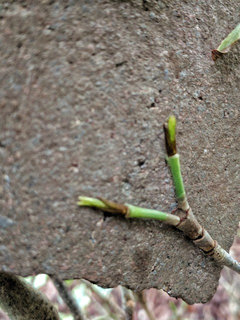
I purchased this Kousa Dogwood 'Wolf Eyes" early spring of this year. It is planted in a spot which gets morning sun and then is shaded. We are located in Virginia Beach. It had some leaf browning when I purchased it, but has worsened. Some of the young stems have died. I am now noticing that the tips of stems all seem to have a black point at the end. Any advice would be greatly appreciated?

Comments (17)

  • 10 years ago

    How about a few more details. Was it in a container or ball & burlap? How was it planted and how was it watered?

    tj

    lazikus thanked tsugajunkie z5 SE WI ♱
  • 10 years ago

    It was in a container when I purchased it. We added a little compost & soil when planting. The weather has been sporadic, but most recently extremely hot and humid! Not much rain recently. I have a spigot nearby so I have been watering on a 'regular' basis (3-4 times a wk recently).


  • 10 years ago

    How much water are you putting down 3-4 times a week? Are you checking to see if the rootball is getting thoroughly soaked and then not watering again until the soil is dry 3-4 inches down? Depending on how moist (or dry) the rootball is kept, you could be either drowning or dehydrating it.

    tj

    lazikus thanked tsugajunkie z5 SE WI ♱
  • 10 years ago

    How do you determine? Do you use a moisture meter? It always seems to be dry & a large oak is nearby. Still on the learning curve here :-) Thank you for your help!

  • 10 years ago

    Thumb in the soil is the best way to determine.

    Dogwoods can be fussy to over or underwatering and that is a special, and good looking, dogwood.

    lazikus thanked Toronado3800 Zone 6 St Louis
  • 10 years ago

    Browning of leaf tips can be a result of both too much and too little water. In this case, it is probably due to dryness. Even though you have been watering, the nearby large oak may well have extended its roots into the moister area around the dogwood and is taking most of the water. If you determine that the dogwood's root ball is dry, water with just a trickle from a hose at the base of the tree for several hours or until you're sure the root ball has been hydrated. Sometimes this is not easy. Once the peat-based planting media used in container grown plants dries out, it can be very difficult to rewet. The slow trickle method of watering does work, but may take some time.

    lazikus thanked akamainegrower
  • 10 years ago

    I have several Kousas (including Wolf Eyes) in areas underneath enormous old oaks and hickories and on a bit of a slope as well so watering to an adequate depth can be a challenge. What works for me is to take a length of old plastic landscape border and make a decent sized ring of it at the base of the plant. If buried a couple of inches this will hold some water in place long enough for it to sink in without running off.

    You can be creative and use almost anything thin and malleable- I have used landscape border, vertical window blind vanes, the tops of large plastic pots, vinyl baseboard material- anything.

    It just makes watering so much easier- I fill it up, water something else while it soaks in, fill it up again, etc. until I feel like the root balls are saturated. If the appearance is offensive I just bury everything with mulch- the ring still serves it's purpose yet is invisible. I must have 200 of these things in place right now- I had a big year of adding new plants and use this method for the first year or so at which point they pull right up and are ready for the next new addition.

    lazikus thanked cearbhaill (zone 6b Eastern Kentucky)
  • 10 years ago

    Excellent suggestions! I will work on a new watering strategy this weekend. I love this tree & would hate to loose it. Thank you everyone!

  • 10 years ago

    I think the buds are naturally a dark color on the kousa dogwood.

    lazikus thanked tlbean2004
  • 10 years ago

    The soil is considered 'Rumford Sandy Loam'. I have been guilty of loving my plants to death a time or 2 ;-). Thank you!

  • 10 years ago

    as long as the soil is not non-draining clay ... you should be all set.. once you find the facts i mention above ....


    lol on admitting you killed things with too much love ...


    ken

    lazikus thanked ken_adrian Adrian MI cold Z5
  • 10 years ago
    last modified: 10 years ago

    The common issue is chronic drying of the original root-balls due to textural differences between them and existing soils on planting sites, with amending of planting hole back-fills adding a third area of texture to the equation rather than producing an improved condition for plant establishment.

    When nursery grown plants are re-planted into soils that have a greater attraction for water than the field soils or potting media they were produced in copious watering may be required just to maintain a minimum of moisture inside inside the original root mass or ball, until enough rooting out has occurred.

    Burlapped stock that has become dried out during the time it was between the grower's field and the final planting site may have to be plunged in (clean) water before re-planting in order to get the often fine-textured, clay-like field soil to re-wet.

    Even then field soil root-balls may gradually dry out after planting due to textural differences between them and soils on final planting sites. I had a field grown Kousa dwindle over a period of years after planting and eventually fail, despite periodic soakings during dry weather. When I dug it up the original field soil root-ball was dry inside, and there had not been much rooting out into the surrounding soil.

    This watering issue is one of the reasons why bare-rooting of woody plants at planting time has started to become recommended as standard practice. Of course, plants so treated may wilt or even defoliate (unless planted when dormant, in the case of deciduous kinds) - but will probably most of the time recover and go on to develop normally.

    Planting at the preferred time (for cold hardy, burlapped or containerized stock) in fall also makes bare-rooting less traumatic appearing, and is the preferred time anyway - (other than winter in Zone 6 and below) spring is actually the worst time to plant.

    And of course since the plant shown here is a white variegated form it might be having a problem with sun burning*, that would occur whether the roots were being kept moist at all times or not. Otherwise the problem with your plant might actually be something like a fungal infestation. Maybe you can take samples to a nearby USDA Extension office and get them to tell you what appears to be happening.

    *Cappiello, Shadow, Dogwoods (2005, Timber Press, Portland/Cambridge) report that 'Wolf Eyes'

    holds up well under the searing sun of a Kentucky summer

    but then also say it

    has worked well in heavy shade

    lazikus thanked Embothrium
  • PRO
    10 years ago

    I don't see why people have so much trouble with clay, my plants do great in it.

    lazikus thanked Caldwell Home & Garden
  • 10 years ago

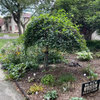
    Update: I checked the soil deeper and it was dry. I coiled a soaker hose around the base & perimeter. Gave the poor thing a good thorough watering. It poured rain later that day (of course). Also, the buds must be naturally darker on the Kousa Dogwood as tlbean2004 pointed out. (photo is a little blurry, my phone camera was having issues with focusing). Thank you again.

  • 6 years ago

    Mine is doing same thing! Clay skill recently amended with acidification to help,

  • 6 years ago

    Meant soil

Sponsored
Custom Home Works
Average rating: 4.6 out of 5 stars10 Reviews
Franklin County's Award-Winning Design, Build and Remodeling Expert