Software
Houzz Logo Print
caldwellhomegarden

Pollarding: Bad Practice?

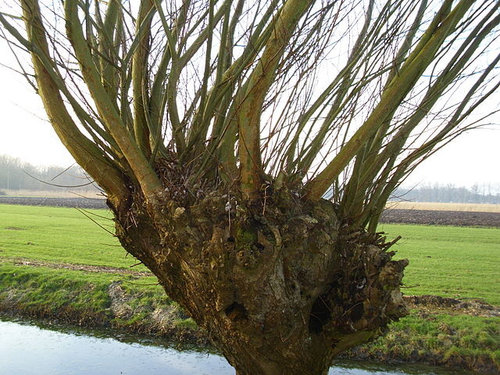
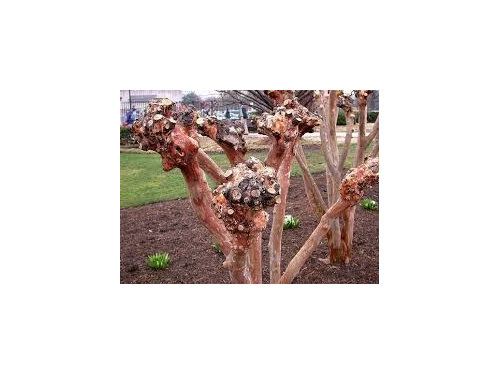
The other day someone asked me about pollarding their tree. I assumed that this was as bad as topping, since you remove 100% of the leaf bearing crown. Should I continue to warn against this or is this a safe form of pruning (for the tree)?


Comments (23)

  • 10 years ago
    last modified: 10 years ago

    It is hideous but if $ is an issue, maybe they find it cheaper than removing tree(s) unfit for the location. A neighbor of ours pollarded b/c trees completely obscured the house. For a while the shorter trees looked better but one by one they died. My guess is the multiple cut points were invitation for bugs and no telling about sanitation practices from landscape crews doing the job. Out of 8 trees flanking driveway there is only 1 left over a period of 5 yrs.

  • 10 years ago

    if its done for a reason .. either to build mud and wattle homes.. lol ... or for some other use of the canes.. for lack of a better word ...


    then i see no downside to it ...


    but if its down.. to force a hundred foot tree.. into a `15 foot space ... aka topping ... i wouldnt approve either ...


    and boy.. if i did it for exercise .. why not ... but if i had to pay money every year to have it done.. one basal cut would take care of that problem.. lol ...


    does this really come up often ???


    there really is a 'weirder the better' garden group ... so.. everything has its place ...


    ken

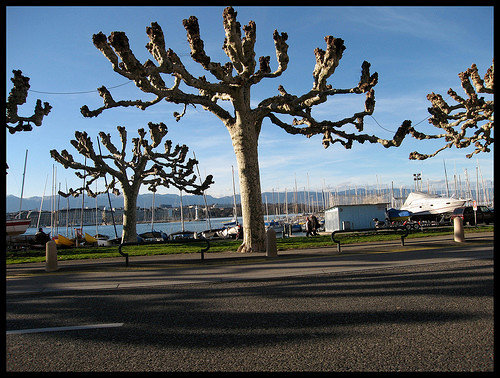
    i just dont get that marina pic.. whats that all about ... probably some million dollar condos uphill behind the camera.. trying to keep their million dollar view ...


    https://www.google.com/search?q=mud+and+wattle&biw=909&bih=745&source=lnms&tbm=isch&sa=X&ved=0ahUKEwig44HLka3OAhVHyyYKHcttAqAQ_AUIBigB&dpr=0.9

  • 10 years ago

    I don't prune trees or lop parts off of domestic animals, but hey that's just me I guess. Those poor butchered trees look like victims of torture. I would have a tree taken down before mutilating it in this way.

  • 10 years ago

    Pollarding trees, most often street trees, is a very common practice in Southern California. When done correctly (and pollarding is an old and very established tree training practice), this results in a tree that is maintained to a set size but one that produces a very dense and lush crown. Those "marina trees" that look so ugly and awkward in that photo will be filled with lush foliage at a later date.

    It must be done routinely, so once started it must be maintained annually. And it has to be a tree that is receptive to this sort of treatment and begun at a specific age. The Getty Museum and Gardens in LA has a grove of pollarded sycamores by the restaurant that are quite well known - the Getty knuckle trees.

    Mulberries are often pollarded.

  • 10 years ago

    Yeah^..I was gonna say..even though I'd not like doing it, in my setting, on the trees around here,...there is an actual valid thing with this. Plus, for those that produce items like brightly-colored willow and dogwood, etc. stems for various decorative uses, doing exactly this is the way to always have fresh young growth within reach. It sure is a different take on trees in the landscape though in say, a lot of Europe, compared to what most of us have seen here in N. America.

    I have no particular experience or knowledge of the S. Cali stuff.

    One thing it's not is as bad as topping trees. When a tree like say, a silver maple, gets topped, numerous previously-dormant adventitious buds very near the cut are released from the control of auxins in the now-removed main growing tip of that branch, so numerous shoots develop, grow rapidly, and very soon the tree is back to or nearly back to its original size, but now, where there used to be one strong branch, relatively speaking, there are now ten long, not-yet-well-attached stems and to make matters worse, since few trees can successfully close a randomly-positioned wound like that made in topping cuts, there is now a rot pocket right where all this stuff is attached. None of that is really going on with pollarding-they just keep whacking it back in the same-or nearly the same-spots, so all regrowth keeps coming from that area, then gets cut again a year later, and so on. I'm sure g-gal knows a heck of a lot more about it than I do.

  • PRO
    10 years ago

    I'm thinking about trying this. I have also seen a pollarded redbud tree (in person) at a nearby home, it is really neat looking. They don't cut it back yearly, they just kind of flat top it, leaving some of the growth keeping a full but thin canopy. I might try this with callery pear, I won't get blooms on it and it wont pose an invasive threat! finally found a good use for those........

  • 10 years ago
    last modified: 10 years ago

    In Europe, farmers pollarded their trees for branches with leaves to dry and feed their livestock during the winter. Of course hay is better, but the European countryside was crowded back then, and they did what they needed to provide for their familys. But after the industrialisation, urbanisation and emigration started, pollarding for fodder stopped. Many of those pollarded trees are still standing today, ugly but healthy and often huge. If it's done right it isn't harming the trees.

  • 10 years ago

    Pollarding is also an ancient practice for producing firewood in a completely sustainable way throughout much of Europe, Asia, and Africa. There are places in Eastern Europe and no doubt elsewhere where firewood has been harvested from the same trees for several hundred years.


  • 10 years ago

    Yes, in Rajasthan, India, I saw lots of people pollarding trees for firewood. The branches was not big, but enough for cooking. They don't have much else to burn in that desert environment.

  • 10 years ago
    last modified: 10 years ago

    Pollarded street and plaza trees do take a little getting used to. I'm familiar with the ones in Southern California; there are also some notable ones in the Bay Area, like the ones in the SF Civic Center and on the UC Berkeley campus. I never could get used to the way they look when the foliage is off, although they can look quite nice when fully leafed out. It's a look that generally only works in a very formal planting design.

    The major problem with pollarding ornamental/street trees (as opposed to the type of workaday pollarding traditionally used to generate harvestable young wood), in my opinion, is that it's the sort of highly stylized, labor-intensive practice that shouldn't be attempted unless you really have the resources and long-term commitment to do it right in the first place and subsequently maintain it correctly. (Not unlike topiary, in that regard...a practice developed to show off wealth in the form of having an army of laborers working your garden, that usually doesn't translate so well to the small suburban yard.)


    Nothing the Getty Center does with their landscape should be taken as an example of what ordinary mortals can achieve in their own gardens. They have incredibly deep pockets and a very sophisticated horticulture operation. I used to take out-of-towners around the Getty Center gardens and spend the whole time explaining that X, Y and Z tree/plant never looks that good anywhere else! By contrast, LA is absolutely packed with horrid street trees that have been mangled in some form of guerilla pruning (small business owners are frequent offenders, chopping off the street trees in front of their signage) and/or once pruned in a method that would have taken loving maintenance to keep looking good, and now a victim of an under-resourced city department that over-prunes when it manages to get to a tree at all. But don't get me started, whoops, I guess I already did.

  • 10 years ago
    last modified: 10 years ago

    Not much looks lovelier than the new spring growth of pollarded lindens, to my mind...and driving into the setting sun, along an entire road of venerable, huge and fantastically pollarded planes ranks as one of my winter highlights. And not just aesthetics - the lifespan of pollarded trees can be extended far beyond the unpruned norm. Pollarding for firewood is less used - coppicing generally requires stooling various trees back to the base on a certain yearly rotation - 7 years for hazel for example, with up to 15 years for sweet chestnut. It is only suitable for certain trees - birch for example and ash...but not used for oaks or beeches. I pollard my osiers (I grow for basketry) because I like the look and it is easier to harvest.

    I assume UK horticultural practices are still closely allied with a European tradition of tree shaping, training, pleaching, trellising, grafting...gardening styles which have evolved over centuries, particularly appropriate for smaller urban gardens as well as formal city landscapes.

    As with most subjective choices of style and taste, context is all...a formal pollarded lime allee or row of pleached hornbeams belongs as part of a specific vernacular...formal, linear, urban, geometric, ordered, settled...in short, particularly at home in an ancient college town such as mine.

    It also appeals to me as an inveterate meddler: when I discovered the possibilities of tree shaping, (apples, mainly, the poor tortured trees of my early faffing and chopping),) training and even inosculation, I had something of an epiphany.

  • PRO
    10 years ago

    is there a list of trees that can be pollarded? I would like to try this out in one of the empty spots in my yard. What about maples? acer rubrum?

  • 10 years ago
    last modified: 10 years ago

    I would not recommend it to anyone, but I would say it's not as bad as topping if started from a young age. This is because the root growth slows and adjusts each year to how much foliage is available in the crown above (there is no massive shock like topping). But when one cuts the branches off, this of course creates many open wounds which greatly increases the chance of being invaded by disease and insects. As resilient as crepe myrtles are, I've seen a few crepe myrtles eventually die from being pollarded each year at the ugly nubs.

  • 10 years ago
    last modified: 10 years ago

    I think most trees can be pollarded...and live...but in practice, beech and oak tend to not be pollarded because if this practice is discontinued for even one year, the weight of newly grown watershoots can cause the wood to break...whereas ash, plane, lime has a more flexible timber and can sustain a certain amount of neglect. But herein lies the main problem with pollarding - this requires committment on an annual basis. In a time of cuts, our local council attempted a biennial pruning of limes...with disastrous results. What had been a pleasantly shaded allee became a dangerously dark overhang of drooping heavy limeshoots in just one year. A hastily arranged summer trim had to be rapidly deployed.

    Caldwell, if you have access to some fruit trees or less important specimens, I really must urge you to have a go...if only to wonder at the regenerative properties of plantlife.Apples seem particularly amenable - I prune mine twice a year - summer spur shaping and winter chopping - timing is of essence in all pruning attempts, I think. I am a tiny bit ashamed at some of my Island of Dr Moreau plant grafting and messing experiments - only a single lollipop apple remains of some of my wilder attempts (and a few tortured box shapes)...but even so, I am embarking on yet another large scale and probably ill-advised experiment to create a living alder platform (16 trees in a quincunx pattern, inosculated manually(approach grafting), forming a long platform for potential building...after a chance discovery of medieval building methods on floodplains (such as mine).

  • 10 years ago

    Campanula, I have a book that does mention that several Q. Robur were pollarded for small limbs for fuel and use as poles, likely on older trees. This may have been rare, though.

  • 10 years ago

    Poaky1 - are you sure they weren't coppiced? Far from being rare that was the method used for producing poles and it was extremely common in the past, albeit mostly on hazel, chestnut and ash. Woodland was managed for harvest just as much as cornfields or cabbage patches. The trees are cut at ground level in coppicing. Pollarding would make harvesting difficult as it would be too high up to reach from the ground.

  • 10 years ago

    Ok, what I will do is try it out on a privet and see how it goes. Nothing to lose. If it works, I will do it annually to my forsythia (trained it into a tree form).

  • 10 years ago

    Both privet and forsythia are multi stemmed shrubs by nature. What you would be doing would be training standards and pruning them, not pollarding. Pollarding is a management technique for true trees with one single robust trunk and is begun when the trees have attained some maturity.

  • 10 years ago

    I have already trained the forsythia to one trunk, it is doing nicely. I thought of pollarding to prevent the single stem from snapping under pressure.

  • 10 years ago
    last modified: 10 years ago

    Pruning a standard Forsythia hardly merits the term 'pollarding'. More like topiary. Pollarding will not have any effect on the strength of the forsythia stem in my view. Even when trained as a standard Forsythia remains a shrub and does not develop the strength of a true tree. Can you show us a picture of your Forsythia?

  • 10 years ago

    I will try to get a picture of the forsythia. I transplanted it while in full bloom, and the leaves didn't grow to their normal size due to root loss. It has lived, and should look better next year. I have tied it with a tomato stake to force it upright. It is still young and flexible.

  • 10 years ago

    Floral, to answer you, I'll just reference Campanula's mentioning not coppicing oaks and Beech's. Not good for those types of trees with heavy wood even when smallish. As far as how to get those small limbs up in the trees for whatever use, I'm sure they had ladders. That would make one ugly tree if they could do it to oaks and Beech's. Coppicing at ground level, IF it would keep growing low and wide like that. Logan, I had a Forsythia, and over time I think it will be a full time job keeping the forsythia to 1 trunk. I guess if you are REALLY determined......