Software
Houzz Logo Print
thesucculentcity

Re-rooting a gasteria?

10 years ago
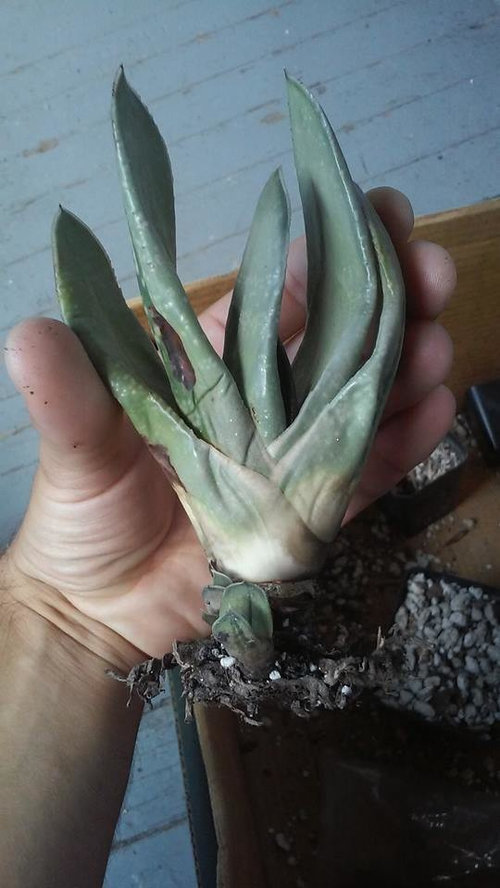
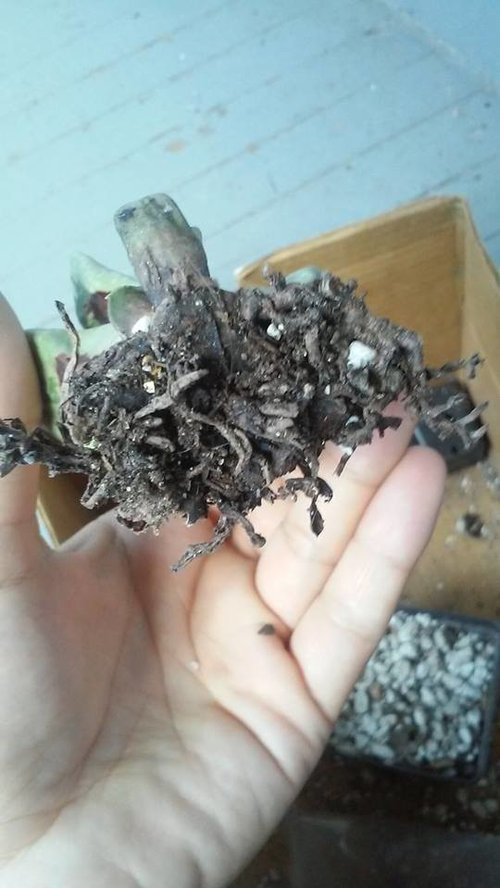
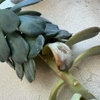
Any tips on how to reroot this?

It has never had strong roots for as long as I've owned it. It did put out a 2" pup last month, and it appears to be trying with the two little ones. I'm not seeing any viable roots though. I have peeled off a few of the leaf layers already. Is it possible to just cut the base off, dip in hormone powder, and start again or does that not work with gasteria?

Comments (24)

  • 10 years ago
    last modified: 10 years ago

    I clean it and put it back in dry soil. Clean the rootball thouroughly - sometimes there are new roots already. Spray a bit for some weeks and than water very slightly. Most of the times with succes.

    Harry

  • 10 years ago

    easy peasy. just follow the directions above. I have done it several times when the rain has come to heavy and roots have rotted.

  • 10 years ago

    Alright, I will try to reroot through watering.
    Just concerned that the lack of viable roots will cause rot. Also concerned about the general humidity right now. I do have very gritty soil, though.

  • 10 years ago
    last modified: 10 years ago

    Hi SucculentCity,

    The less daring but faster way to root gasterias and haworthias will be exactly as Harry advised. Use a very gritty substrate, no soil if possible. Use directed spray around the base of the plant, into the substrate--it is the base of the plant that you want to keep humid but not wet, in order to encourage root growth. You will have to do this for weeks, up to a couple of months sometimes.

    If you are south of the equator and having your winter, keep it above 16C. If you are north and having your summer, keep it below 25C if possible. Gasterias and haworthias tend to slow way down when it is hot.

    Pagan

  • 10 years ago

    Wanto: the roots started decomposing within a few days of me purchasing it. Not sure that I could have done anything severe enough to cause that so quickly :)
    Sometimes the nursery I grabbed things from has plants with less than healthy roots. I have about 70+ Haworthias and haven't experienced/seen such rapid decomposition. Not sure what to attribute this to. Also, the newest leaf looks like it's almost black, so I'm concerned that the between the bloom + 2" pup it produced last month, that might be the end of this mother.

    BTW, my soil is about 80% pumice, and the rest is a mix of perlite, cactus soil and a little bit of turface. I've also had really good success re-rooting echeverias in pure perlite (sifted to retain larger particle size) so I will try that out + the misting.

    Pagan: Thanks for the follow up! I'm in Chicago, IL so I am trying to get the roots healthy before the winter starts in two months.

  • 9 years ago

    I am so excited to ask a few questions regarding this topic. I have 3 long stemmed gasterias cuttings. I believe I know what to do to get them to begin to root. Spray! ( I have read only spray leaves, and then read spray the grit???) I am really inexperienced with succulent care. My gardening achilies heel is over watering regular plants. The very few cacti or succulents I ever attempted a very long time ago turned ghost buster slime in record time.

    I have sat on my laptop with searches for how many roots for gasteria cuttings, and how often to spray soil, etc. The information is always the basic cut, dry, let root, pot. I have a root.........do I pot? I have decent sun for them, but have kept them in indirect light.

    I typed up my questions, and soon realized I just had too many, and no one wants to read war and peace on these things. I will be watching all day tho, if you need information. I will respond quickly. And thank you.


  • 9 years ago

    Put it an airy mix and add warmth. They are very slow to make roots. They will eventually. Just slow compared to most succulents.

  • 9 years ago

    Gasterias are dormant in summer. So this is actually the perfect time to coax them into root growth. Spray the grit right around the base (read my post above). They'll be fine right against a window where it will be cool but bright. Spraying frequency will depend on the size of grit you are using. I have rooted leaves in 1/4-inch pumice and those had to be sprayed nearly twice a month. Basically, I just left them in the basement under lights all winter. New pups appeared the following spring, often three to 4 each rooted leaf. I only just now finally got rid of the surplus. I was not expecting all 7 leaves to take.

    Hang on---what did you mean "gasteria cuttings"? Did you mean leaves removed from the stem? If your plant is like TSC's (i.e an entire plant that has lost its roots), you will have to spray more often, say every week. Also, what kind of gasteria? If you have a hybrid of something, I take all my advise back. I have no experience with weird things like gasterialoes and what-not.

    Pagan


  • 9 years ago

    Hi, yes. It must be much easier to root leaves, as there is so little to find on actual stemmed cuttings with leaves. Looks like little palm trees. I would like to not tear them apart.


  • 9 years ago

    Yes hybrids I believe with aloe. Thanks the other info. I am going to stick a few leaves in a pot this weekend with those tips.


  • 9 years ago

    Confusing here. Sorry but Gasterias I know & grow have no 'stems'. There are leaves & pairs of leaves directly to the base (crown) of the plant into mix, no stems.

    Therefore, pls. provide a pic as I question the ID of Gasteria if it has stems.

    " 3 long stemmed gasterias cuttings."

    No Gasteria that I've ever met. Pic pls., am betting it's an Aloe hybrid.

  • 9 years ago

    Ok, I will do a little research. No tag on the plants as they were a gift.

  • 9 years ago

    Imontestella: I could just hug the heck out of you. They are aloe's. Pics tomorrow. Wow, I really got off course.

  • 9 years ago

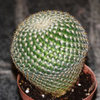
    All aloes and related have stems. If you take off enough leaves you WILL find stem. Not my plant but an example of one below


  • 7 years ago

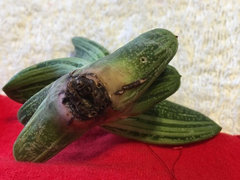
    I have read all your posts. What I am getting is to put my gasteria ON a gritty substrate, mist, put under light for warmth and it will start producing little roots. I see a couple little , LITTLE white roots, I believe. So, am I correct on what I need to do with my gasteria?


  • 7 years ago

    Teresa,


    Slightly into the soil would be better, but yes, you're on the correct path. Also reduce the urge to check on the roots for a few months, because by then it should be rooted into the soil. Mist the plant only, not the soil, and as you wrote, keep it warm and in bright indirect light.


  • 7 years ago

    I wouldn't mist the plant, it looks a bit rotten on down below from here. If you have to water, I'd water the soil around the plant, only lightly.

  • 7 years ago

    Karen, the trouble with that is, if it's as you say, watering near/on the rot is the last thing you'd want to do.


  • 7 years ago

    Jeff: Wouldn't misting it being even more rot inducing?

  • 7 years ago
    last modified: 7 years ago

    Not misting the plant only, Karen, hence my advice to doing same.


  • 7 years ago

    Thank you for your advice. I appreciate it greatly.

  • 7 years ago
    last modified: 7 years ago

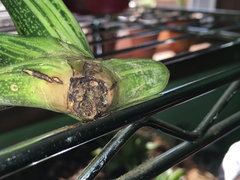
    I have something similar to what teresaraylene1960 has in the picture. Most of the roots were dark and dry and easily fell off. I got to the root base and there's a lot of dry dark stuff there so I cut off a bit off the root base until there's no more dark stuff and I plan to dry this off for a week or so before putting in gritty mix. Is this the way to go or did I just kill my plant?

  • 7 years ago

    I bought a gasteria with rotting leaves. I took it out. Cleaned off any bits of roots left. Planted it in almost 100% pumice. I believe I gave it a touch a water once in three months. The leaves slowly lost all their moisture. It did root. I started watering it conservatively, until it had two new sets of leaves. I took it out. Removed the leaves that did not recover, put it back in that 2.5". The plant was a size normally potted in 4" pot. Once it was fully rooted, I sized it up.


    I I have since made 2.5 changes;


    1. Give it a soak in a peroxide solution - the parts found below the substrate


    2a. Medium - smaller & 2 or more types of grit

    2b. Add mycorrhizal fungi


    If you dare to continue, more detail below.

    (Caution; online help might be spot or dead like rot, a simple basement dweller or an highly intelligent feller, for him good like cake, for her just another fake, or just okay for you & me.)

    After removing the dead/rot roots, I would soak it in a peroxide solution. Everyone has an opinion on how much to dilute the peroxide or for 3% not at all. As well as opinions on how long. My opinion, enough to create active bubbles. Until the activity starts to slow. Don't worry if you forget about it. --- The peroxide kills the plant killing pathogen, as well as stimulate new root growth.


    Smaller grit creates smaller holes and openings, inhibiting growth of anchor roots for a much bigger network of feeder roots. The little bit of water I do give gets trapped in small openings that these feeder roots are actively seeking out. The blend provides not only more varying openings. A small amount of various nutrients.

    Mycorrhizal have the ability to penetrate rock to make the micro-nutrients available. This
    allows succulents to live in areas low in nutrients, but high inorganic matter.


    I now use fine grade pumice, lava rock & perlite with some bark I crush into small bits. Lavagrow, the lava rock I use is packed with micro-nutrients needed for healthy roots. The bark provides some easier access macro-nutrients not found in rock.


Sponsored
Cumberland Custom Homes
Average rating: 5 out of 5 stars5 Reviews
Northern Virginia's Green Residential Builder & Renovator