Software
Houzz Logo Print
jacqueline_hinshaw

Extremely overrun by pests in organic garden

10 years ago

Background: I have kept a half acre garden in full sun since I moved to this property 2 years ago. The soil is rock and clay which I have spent last summer and this summer attempting to enrich with leaf mulch, compost and hopefully this fall with manure. I am completely organic in how I garden (no pesticides or chemical fertilizers), rotate crops faithfully and I'm admittedly a beginner. My neighbors have big, glorious, healthy gardens of course, but they all use chemical fertilizers and spray for pests. My garden however has been ravaged by pests two years in a row.

Problem: PESTS. Mexican bean beetles absolutely annihilate my bean row which is 5 rows long wise the half acre garden. I barely got a bushel of beans both years and I've tried a variety of bean types. My neighbors? Have never even seen this pest on their beans.

Squash vine borers infested every since zucchini, pumpkin, squash plant I planted. I tin foiled and covered the stem that entered the ground this year so instead they infested the branches and even burrowed into the fruit in places. Out of 30 plants, ZERO survived. I got maybe 5 zucchini and one spaghetti squash. My surviving pumpkin had a worm sticking out of it last I checked.

My potato plants were literally eaten alive by flea beetles. They ended up small and sickly and produced tiny potatoes whose cumulative weight was that of what I planted. I used certified seed potatoes each year so I could mostly rule out disease. My neighbors also had no problems with these apparently. They had big robust potato plants and lots of spuds.

Even my cabbages were riddled with flea beetles and I had them under a cover. There was a small tear in the cover on one side and the beetles piled in through the hole and feasted on the cabbages.

The ONLY row that survived the garden pests was the onion and garlic rows. I'm terrified next year they'll get onion maggots and then I'll have ZERO harvest out of a half acre garden.


I desperately need help.

Comments (13)

  • 10 years ago

    Anyone?

  • 10 years ago

    Thank you so much for the response! Not to oversimplify but should I take away that if my soil is healthier I will have fewer problems with mexican bean beetles, cucumber beetles or tomato worms as a result of healthier plants? Were there additional steps you took to prevent damage by these pests?

  • 10 years ago

    Depending on where you are, you could avoid squash vine borers by simply delaying your planting until late June or early July. By then the adults will have emerged and if you've got no suitable plants in the ground when they do then you'll miss the majority of them. Other options are to use row covers up until the plants start flowering at which point you'll
    either have to take them off or hand pollinate yourself. Or grow under row covers all season long using parthenocarpic varieties which don't require pollination. And plant squash that are in the C. moschata species as it is more resistant to squash vine borers. Biology and Management of Squash Vine Borer in Organic Farming Systems

    Flea Beetles In Home Gardens


    Mexican Bean Beetle: Organic Control Methods


    RodneyP.S. Always check for holes and tears in your row covers. :)

  • 10 years ago

    Jacqueline: to your question: it's mostly in the soil. Here's a few things that I've learned (that are mostly self-evident); 1. take your soil-test samples at the end of the growing season, and make your soil amendments in the fall. Try to add fertilizers and compost together at the same time, so they can mix and help each other. 2. get advice from your local feed-and-seed store on which fertilizers will provide the nutrients where you test low. 3. initially, concentrate on balancing the most common nutrients: calcium, phosphorus, magnesium, potassium, and nitrogen. Only when these are balanced, which might take some years, then concentrate on the trace minerals such as copper, zinc, boron, manganese and more, which are no less important than the big ones, but are less likely to be out of whack. 4. scout for pests; walk down the rows every two days or so with the sun in front of you so the pests don't take alarm at your shadow, and use your finger and thumb to eradicate what you see. Look under the leaves too for eggs. 5. read up on cover crops (green manure) and which ones build the soil. You might want to plant some in the fall; timing will depend on the chosen cover and your climate. 6. crop rotation is basic; never plant the same vegetable or a family member in the same place until four or five years have passed. This will prevent a different kind of pest - soil-borne plant diseases - from settling in. If you elect a 5-year rotation, say, then ensure that one fifth of your vegetable garden is planted with legumes - to provide nitrogen. Compost helps with nitrogen too (it's about 1%), remember that nitrogen fertilizer isn't organically approved, but any port in a storm.

    Quite a different principle is; "never step on you soil, ever". The point is that vegetable roots go deceptively deep, so they need soft soil. So there's no point in tilling your soil, only to tramp it down tight again. So the trick is to organize your garden into tilled strips 4-feet wide, say, with a path to do all your walking on between the 1 1/2 feet wide. You surely could reach 2 feet into any plot - the middle that is - from one path or the other. Now, if you have five plots, this would make crop rotation much simpler, because next year A would go to B, and the year after to C. But you will need to adjust to your ground. Realize that you will need to take soil samples from each part of the garden then mix them thoroughly before you send them to the lab. And it becomes self-evident that crop rotation means keeping records; this isn't a bad idea anyway, to discover what you're doing right and doing wrong. Regards, Peter.

  • 10 years ago

    Where in the world are you? Los Alamos, Cincinnati, Miami, Portland?

    What did a good reliable soil test say about the soil pH and nutrient levels ?

    How much organic matter is in the soil?

    What have you tried for pest control? Floating Row Covers? Target insecticides? Predatory insects? Do you have an insectary?

    The soil is the most important part of the garden and getting that into a good healthy condition will help with insect pests. A good reliable soil test for soil pH and nutrient levels is a start and these simple soil tests may be of some help as well.

    1) Soil test for organic
    material. From that soil sample put enough of the rest to make a 4 inch level in
    a clear 1 quart jar, with a tight fitting lid. Fill that jar with water and
    replace the lid, tightly. Shake the jar vigorously and then let it stand for 24
    hours. Your soil will settle out according to soil particle size and weight.
    For example, a good loam will have about 1-3/4 inch (about 45%) of sand on the
    bottom. about 1 inch (about 25%) of silt next, about 1 inch (25%) of clay above
    that, and about 1/4 inch (about 5%) of organic matter on the top.

    2) Drainage. Dig a hole
    1 foot square and 1 foot deep and fill that with water. After that water drains
    away refill the hole with more water and time how long it takes that to drain
    away. Anything less than 2 hours and your soil drains’ too quickly and needs
    more organic matter to slow that drainage down. Anything over 6 hours and the
    soil drains too slowly and needs lots of organic matter to speed it up.

    3) Tilth. Take a handful
    of your slightly damp soil and squeeze it tightly. When the pressure is
    released the soil should hold together in that clump, but when poked with a
    finger that clump should fall apart.

    4) Smell. What does your
    soil smell like? A pleasant, rich earthy odor? Putrid, offensive, repugnant
    odor? The more organic matter in your soil the more active the soil bacteria
    will be and the nicer your soil will smell, to a point. Too much organic matter
    can be bad as well.

    5) Life. How many
    earthworms per shovel full were there? 5 or more indicates a pretty healthy soil. Fewer than 5,
    according to the Natural Resources Conservation Service, indicates a soil that
    is not healthy.

    kimmq is kimmsr

  • 10 years ago

    "Depending on where you are, you could avoid squash vine borers by simply delaying your planting until late June or early July. By then the adults will have emerged and if you've got no suitable plants in the ground when they do then you'll miss the majority of them"


    Woah, that's great advice, so simple, but I've never heard it before! Will try next year! Thanks!

  • 10 years ago

    What I find effective in keeping pest under control is to have a good amount of garden space devoted to flowering herbs such as coriander, dill, parsley, winter savory, mints, thyme, oregano, marjoram etc.

    I also have green pathways primarily of white clover and alfalfa.

    These two simple techniques are usually enough to encourage beneficial bugs to hang around.

    I also don't get worried if some bad bugs start getting the upper hand. If let be the beneficials come in and balance things out.

    As far as squash vine borer if I lived in a area that they were a problem I would probably just grow solid stem varieites like butternuts.

  • 10 years ago

    Please check out hugelkultur. You are doing so well, except for your bug problems.

  • 10 years ago

    Doesn't matter when you plant squash vine borer will be there! Have you carefully used DE and neem and soap? Admittedly I can't spray much since it is a huge time consuming chore and I already have tons to do, and we don't have many bees, I don't want to kill any. I read that putting huge piles of kelp meal every ten days around your squash will deter the borer. I haven't done this either, I had to pull all my squash. And remember to kill all the larva when you pull them each has about ten in it. When you see the neon moth looking things kill them! They win some years. I agree the cover crops help and flowering herbs. Unfortunately deep mulch gives a good place for many pests to live and hide. You can try spraying with molasses or sugar as I read the bugs can't digest a high sugar content. Again I can't testify to this as I am extremely lazy with any kind of spraying. I do know all of your plants will benefit from regular doses of kelp and fish. And getting up at sunrise and hand picking bugs is a must.

  • 10 years ago

    Jacqueline,

    Peters comments are priceless. This is the same model that I use in my garden. I haven't had too many problems, so I haven't had soil tests done, but definitely would if I were having the trouble that you are. Kimm is right also, your ph could be way off, which can cause deficiencies, even when the proper nutrients are there.

    You mentioned Manure; PLEASE be very careful and research herbicide carryover. I wiped out about 100 plants and poisoned my organic garden with a truckload of great looking composted manure. The rancher told me about all of his satisfied, repeat customers and their great looking crops... I would only use it if you talk to the farmer that grew the hay, to ensure that it wasn't sprayed with broadleaf herbicide. By the way, 99% of hay is sprayed with herbicide, so be very careful. Cows fed organic hay would be the only manure that I would even consider. Never buy manure from a feed lot either.

    I've had good luck with BT spray for all caterpillars, but you must be diligent about spraying every evening.

    Encourage birds, wasps, lizards, praying mantis, and ladybugs (any beneficials) to live in and around your garden. Birdhouses and birdbaths (any water source) will help.

    I do have trouble with flea beetles, but even though they hit my taters hard, I still ended up with a large harvest. I've heard that dusting the soil with used coffee grounds frequently helps confuse them somehow. There have been a few people on here that say it helps. Keep on doing what you are doing, it takes time to build a healthy soil web.

  • 10 years ago

    This year I grew pumpkins in several spots in the garden, in different conditions. This wasn't a deliberate experiment--it was due to my running out of time in planting the summer garden. But it was informative anyway.


    Some were planted early, with the soil prepared fairly deeply, incorporating bagged organic fertilizer and a bagged compost/chicken manure blend. These shot out of the ground with nice big dark green plants and showed very little sign of insect activity until they were quite large and had quite large fruit. The vines are starting to peter out and the beetles have discovered them, but there are several fine big pumpkins.


    Some were planted early, with the same amount of fertilizer, but the fertilizer was just scratched into the ground and I just dug a little hole for the seed. No compost. No soil prep. Those grew slowly and sadly, were a much paler green, and showed substantial insect damage almost from the beginning. One is struggling to produce one sad little pumpkin, another pumpkin is softening and about to rot intot he ground, and the other three plants from this "generation" are either dead or barely visible.


    Some were planted late, in soil prepared the same way as the healthy early ones. They sprouted into a garden swarming with the bettles that started on the sick plants, but they're still enthusiastically-growing dark green plants.


    Similarly, I prepped nice lush forked, fertilized, composted beds for overwintering broccoli and cauliflower and gave them plenty of reliable water, and the seedlings that I bought are taking off faster than any such seedlings have before. I can see insect holes, but the plants seem to have a "yeah, whatever" attitude about them. Now, I should have put insect netting for them anyway, and I may regret not doing so, but so far they seem to be getting off to a good start.


    I'm now sold on giving plants what they want. I'll be experimenting to see what outside inputs they can get along without, especially in terms of water, but those pumpkins finally convinced me that it's not a matter of halfhearted conditions producing halfhearted plants--it appears that the plant needs to get "enough", or it's just going to fail.


    You mention a half-acre garden. That's a LOT of space to be trying to improve all at once. Mine is less than five thousand square feet, and less than half of it is improved to anywhere near the way I'd like it. Have you considered focusing your improvement efforts on a small portion of it, and letting the rest of it go fallow, or grow cover crops, or grow "wilder" crops that are less demanding?


    Also, what's your plant spacing? If the soil is currently poor, you might want to experiment with a much wider spacing, to give plant roots more room to forage for nutrients. Now, that didn't do the job for my pumpkins--the failed pumpkins had substantially more space than the usual recommended spacing--but it might work for some crops.


    And then I wonder about water.


    In general, I keep imagining a half acre and thinking about how VERY MUCH space that is, and thinking that something is surely spread too thin.

  • 10 years ago
    last modified: 10 years ago

    I'm returning to discuss which plants would, in my experience or from my reading, have more tolerance for a situation where resources are spread thin. I'm noting which ones are experience and which are reading. And I'm growing in Southern Oregon, in the Rogue Valley; I don't know what your conditions are.

    - Red Russian kale has never declined to grow for me. Other kale is pretty tough, too, I've just grown Red Russian the most often. Depending on your climate zone, you might be able to plant it now, too.

    - The same for chard.

    - Sunflowers and zinnias seem to have a tremendous tolerance for poor soil. You can't eat them (well, I don't eat te sunflower seeds) but they're good for making the place look happy.

    - I've read that Jerusalem artichokes grow happily and aggressivley.

    - The same for snake beans. The Survival Gardener (http://www.thesurvivalgardener.com/survival-plant-profile-snake-beans/) says that "bugs leave them alone for the most part."

    - You didn't mention tomatoes. Many varieties of indeterminate tomatoes are pretty undemanding.

    - Lettuce is demanding and whiney, but it's also small and has a small root system. So if you prep a small space--even just a few square feet--to a luxurious level, lettuce amd other salad leaf crops could be a good thing to start experimenting with.

    - You could look into various berry bushes. I have four blackcurrant bushes that I planted years ago for no reason that I can recall, and in spite of essentially zero care since planting (this year I did at least water them) they produce fruit. And with all that space, there's no harm in giving raspberries a shot. Blueberries, on the other hand, really are serious about that acid soil requirement; I've finally abandoned my denial on that point. I keep looking at things like honeyberries and huckleberries; someday I may plant them.

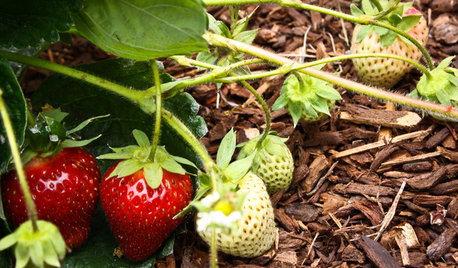
    - Strawberries? Everybody around me says that the birds eat all of theirs; they don't touch mine. And the plants themselves are pretty tough. They do want lots of water to fruit, though.

    - While you're planting flowers for morale, you could also plant some butterfly bushes.

    - So far, my Armenian cucumbers (a melon that's eaten immature) grow at blinding speed even in poor soil and with limited water. When planted in luxury they're almost frightening.

    - Fava beans have always been pretty reliable for me, whether grown lush or lean.

    Huh. I just saw an interesting piece of advice about the bean beetles, at http://extension.umd.edu/growit/insects/mexican-bean-beetle:

    "To prevent damage in gardens with high MBB populations: plant a small area with bean seeds in early spring. Overwintered adults will find and feed on these plants. When fully infested, pull plants up and stuff into plastic trash bags to destroy the pests."

    No clue whether it works; I was searching for an indicator as to whether pole beans are able to outgrow the beetles. I got no answer on that.