Software
Houzz Logo Print
elizabetheva

Cold Storage conflicting information - terrible or great?

10 years ago

We're building a house with a basement for the first time and I'm really confused by all of the conflicting information about cold storage. It is very popular and desirable in our area to include cold storage in new construction. Some people use it for food storage, but I think most people use it as an extension of the garage or attic, for utility and seasonal storage, which is what we plan to use ours for. Our house includes two cold storage areas, and when I started looking into shelving options I ran into all kinds of problems people have with cold storage rooms. Then, when we did a progress walkthrough of our house last week, they told us not to use any wood next to the concrete, and not to place items right next to the wall, to allow an inch or so between, because of possible moisture. My mom happens to be building a house right now as well, and it's higher end construction than ours. Her builder is installing wood shelving in their storage room directly to the concrete walls. We asked about this and he said the concerns are all garbage, it's perfectly fine. My in-laws custom, high end construction home also had a "cold storage"eroom, but I actually think they just called it that, because it appeared completely finished and I think it might have even been ventilated. In fact, almost everyone I know who had built a house in the last 5 years has cold storage.

But...i have pulled up many stories of people with cold storage problems online and they were told cold storage is a terrible idea, everything can mildew, it's bad to keep it unventilated but difficult to include in a properly sealed, finished basement, and to pull out all of the wood and seal it off from the house.


I'm getting nervous about storing anything there, but one of the huge reasons we are moving here is for more space for all the stuff we currently have to keep in a rented storage unit! Our basement will be unfinished when we move in, but we do have plans to finish it next year.

Why is there so much conflicting information about residential cold storage? Or maybe my question should be, if cold storage is really such a risky thing, why are all of these builders doing it?

Comments (8)

  • 10 years ago

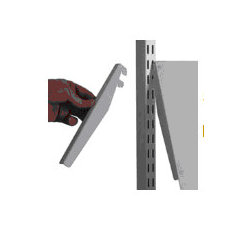
    You can buy shelving like this at many big box stores:

    EvaElizabeth thanked geoffrey_b
  • 10 years ago

    Thank you! I did find some similar utility shelving that I'll use in the cold storage areas.

    I did some more reading and I think I understand that a lot of the problems I've read about have come from the cold storage not having proper insulation/weatherstripping between the cold storage and the finished basement. I'm still a little unclear on whether there is a risk of condensation/moisture on the concrete walls of the cold storage if the basement is properly sealed, and if there is a need to insulate and ventilate the cold storage (I'm imagining similarly to a garage) without creating a huge expense. If someone can help me understand it a little better, I would appreciate it!

    When I think of what I was intending to store there, some of it is paper and cloth related (seasonal clothing, holiday decorations, file boxes of my kid's childhood art and school memorabilia, etc.) so I'm more paranoid about the idea of moisture than I would be if it was just utility type stuff. If I'm not going to be able to store those kinds of thing there, my plans for the basement will just have to shift gears to allow for more finished storage.

  • 10 years ago

    I would not store any perishable / textile items in 'cold' storage. Why?

    I'm sure you could store them in an unheated basement - say one that get's to 50 degrees in the winter (like here in Minnesota).

    I built a small closet in our basement, with a door. We store the wine, and some household chemicals in it.

    Why do you want to do this?

    EvaElizabeth thanked geoffrey_b
  • 10 years ago

    I'm not familiar with the term "cold storage" and I dont know what climate you live in but I think the issue would be warm moist air from either indoors or outside contacting the cooler concrete walls/floor and causing condensation. The problem could also be that moisture in the ground migrates through the concrete foundation but with a new house I would think that they would take some steps to minimize that.

    The way to eliminate or at least minimize that condensation is to prevent the warm humid air from contacting the cold concrete. One way would be to install 4x8 sheets of rigid foam insulation against the concrete walls. If left exposed the foam is supposed to be of a type that is fire retardant - most isn't. In the utility areas in my basement (Syracuse, NY) I just used the flamable stuff and left it exposed.

    EvaElizabeth thanked schreibdave
  • 10 years ago

    I'm frankly a little confused by the term "cold storage," is it simply an unconditioned part of the basement? In years past something like that might have been called a "root cellar" but unless you plan on storing lots of root vegetables, I frankly don't see much need for one. If it's just going to be for general storage, I'd think whatever you're storing would benefit from being in a conditioned space.

    EvaElizabeth thanked mike_kaiser_gw
  • 10 years ago

    I have since figured out the term "cold storage" implies different things to different people depending on the area of the country. Around here people throw the term around to refer to any part of a finished basement that remains unfinished with concrete walls and floor, and is used for storage. Since our climate is very dry, they are in almost every new construction house with a basement, often near the utility closet. So, when I went to research different ways to organize cold storage areas, I landed on a lot of posts regarding problems in cold storage in wet climates, particularly in older homes where they were basically used as cellars, and I was concerned. I think my concerns are alleviated because it's so dry here, and if we wanted to leave it unfinished we could preventing condensation and other problems by making sure it's treated as outside room with appropriate weather stripping, etc. between the finished/unfinished rooms.

    Most of my friends use cold storage as overflow garage storage. However, since I personally want to use it a little differently (we have very few closets in our house) and store things I want better protected than in our garage, I'll probably include it in the finishing of the basement as a large utility closet/room. It does make it more expensive, though, because it has to then be ventilated and insulated as part of the finished basement.

  • 10 years ago

    In the last 20 years I have lived in 6 newer homes. All had unfinished areas in the basement. We used all 6 as storage. All had untreated wood in contact with the concrete floors and walls. Some were ventilated some were not. None showed evidence of mold. We are in a wet climate. In a dry climate and a new house u will have no problem.

    EvaElizabeth thanked schreibdave