Software
Houzz Logo Print
usa94941

Need advice using roundup extended around live oak

10 years ago

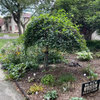
Need to kill sapling growth in flower bed around 60 yr old live oak Dont want to harm tree

Comments (22)

  • 10 years ago

    Are you too lazy to pull up weeds in the flower bed? I highly doubt it will harm the oak, but being a flower bed I would assume it would hurt the other plants there.

    usa94941 thanked Logan L Johnson
  • 10 years ago
    last modified: 10 years ago

    Roundup is not the answer, saplings come from the roots of the 60 year old parent oak, they are not coming from acorns..you will poison your live oak. Mow over or pull by hand

    usa94941 thanked joeinmo 6b-7a
  • PRO
    10 years ago

    I've never seen saplings coming up from the roots but live oak acorns sprout readily. Squirrels help disperse them. Roundup gas some real issues, especially in the root zone of a tree like that. I'd ry to figure out another solution.

    usa94941 thanked Form and Foliage
  • 10 years ago

    There are no plants in the area other than the saplings which keep coming back I want to clear it for planting. Iron plants had been there earlier

  • 10 years ago

    Umm.. just try and pull up the plants. If there are acorns dropping and sprouting, I would HOPE that those responsible for tending to the old oak, (if it is a famous and historic oak) would remove the acorns that fall in the late summer or fall. Many Live oaks drop acorns in late summer and fall. These should be picked up. As far as any sprouts, I guess it's possible that little sprouts will come up under established Live oak trees. They should be trimmed away with a weed wacker. I have used Roundup in many places around my trees mulch circles. But, some trees sprouts are joined to the trees root systems.

    usa94941 thanked poaky1
  • 10 years ago

    If they are part of the tree poisoning that part of the tree may hurt the rest.

    usa94941 thanked Toronado3800 Zone 6 St Louis
  • 10 years ago

    for me.. young trees pull out.. in spring.. the soil is fluffier ...


    go try to dig a few out .. AND FIND OUT IF THEY ARE INDEPENDENT ... or suckers ...


    else.. all you and us are doing.. id guessing ,..


    RU is a stump killer ... if you insist on going forward.. after the above info ..... snip a sprout.. put a drip of RU on it.. move on ... leaf spraying may or may not work ...


    i missed how big these things actually are ????


    ken

    usa94941 thanked ken_adrian Adrian MI cold Z5
  • 10 years ago

    Logan, please stop being disrespectful to visitors to these forums.

    usa, to answer your question, it has been proven that glyphosate herbicides, when translocated to the root systems of the target plant, are passed to non target plants via the rhizosphere. Thus, even a light misting of the RU to the leaf surfaces of the saplings can affect the roots of the mature oak. They share the rhizosphere.

    Remember, too, that Live Oak absorbing roots are very shallow.

    I agree that the most effective and efficient method of removing weeds and woody sprouts is by handpulling when they're small. If you need to catch up on older growth that is resistant to pulling, simply clip their stems to the ground whenever you have a spare minute or two. Don't use a systemic herbicide on the little stumps.

    usa94941 thanked rhizo_1 (North AL) zone 7
  • 10 years ago

    i dont know if i trust a sphere named after the person talking about it .. lol


    ken


    ps: its a joke rhiz ....

  • 10 years ago

    Lol, Ken.....I named myself after the term, so I guess you could say that I have a vested interest!

  • 10 years ago

    Important to note that "Roundup Extended Control" contains glyphosate and imazapic (= imazapyr), and the latter can persist in the soil for a year or more. This product should never be used in the root zone of desirable plants.

    usa94941 thanked arbordave (SE MI)
  • 10 years ago

    Yep the "extended control" ruled it out right at the beginning of the post.

  • 10 years ago
    last modified: 10 years ago

    I'm beginning to worry about the future of this forum.

    No one has even noticed yet that the OP (original poster - usa94941) is talking about something called roundup EXTENDED. That product is not just glyphosate. It also has imazapic, which is obviously chemically related related to imazapyr. Applying to latter to a plant root zone would be an incredibly bad idea, and any imazapyr label warns one about this. It *can* move through the roots and kill the plants, although how well it does this depends on a lot of variables. Applied only to the top of a plant, it can even more down into the roots of one, and translocate into the roots of nearby plants. As for whether imazapic causes similar problems...well I would check the product label first, but I suspect it recommends that you do not apply to the root zone of other, desired plants. (CYA seeming to be the modus operandi of American retail product vendors) Did the OP read the full label before posting here? That should be a requirement for any product related question.

    Rhizo: in many years of spraying PLAIN roundup/glyphosate near but not on other plants, including their root zones, I can safely say I've never seen it move through roots in the way you presume to warn us about. I actually think it could happen, but only if you apply a huge dose like pouring a pint of concentrate directly on a plant root zone, and/or a regular dose at some ridiculous frequency like once a day for a month. Nobody in their right mind is going to do that, and again, the label directions, if followed, would keep you from doing that. There are other agents that are far more insidious in that regard. Imazapyr, obviously, and also the esters or amines of triclopyr. (chlopyralid is even worse, fortunately it is only found in professional products, where reading the label is pretty much a legal requirement for the applicators)

    I have huge problems with tree seedings; anything will germinate in my soil including yews, spruces, and hemlocks. (meaning if even those good, desirable plants germinate, every single seed of some junk species like silver maple will germinate upon landing!) It happens on a cycle though, so unless you need your garden to look like Longwood, you really only need two applications. One in late spring/early summer, and one in late summer/early fall...to catch all of the seedlings. Why doesn't the OP just buy a gallon of a cheap, generic plain glyphosate 41% concentrate...and spray twice a year?

    usa94941 thanked UpperBayGardener (zone 7)
  • 10 years ago

    Thank you all for your responses. I had used weed eater but was hoping for more permanent solution. The tree is protected and I can only trim limbs that touch my house roof. I love this tree and would never want to lose it. Just want to make it a standout for everyone to enjoy.

  • 10 years ago

    Dave,


    If OPs read instructions or manuals, there would be very few questions

  • 10 years ago

    Actually David 28, the label said it is fine for established trees and shrubs. I still called their 800 number and the person told me it should be ok around a tree that old. I still wanted something more reassuring so I went on this forum. Your knowledge of ingredients and dangers as well as the others who have answered has convinced me to deal with this with weed eater and protect the tree. Thanks

  • 10 years ago
    last modified: 10 years ago

    usa they probably believe that the concentration of imazapic, which may well be less powerful than imazapyr, is low enough that it is unlikely to harm a mature tree or shrub. And though it's ok to trust them on that assertion, I still would be averse to it myself.

    usa94941 thanked UpperBayGardener (zone 7)
  • 10 years ago

    Doesn't the label read: kills weeds and grasses. I don't see sapling control in the instructions.

  • 10 years ago
    last modified: 10 years ago

    The fact is, biologically, imazapic, even if milder than imazapyr, is still a general protoplasmic poison for plants. OTOH a true germination inhibitor like Surflan is not. To stop seedlings appearing somewhere, I'd rather go with the category of chemical specifically tailored for that purpose. (though even Surflan can cause, I believe, growth deformities with a small subset of plants...I'm pretty sure you actually have to spray on in the plant for that to happen.)

    usa94941 thanked UpperBayGardener (zone 7)
  • 10 years ago

    If they are suckers you could use a sucker stopper. If they really are saplings, just pull them up.

    usa94941 thanked Logan L Johnson
  • 10 years ago

    Some concern that Glyphosate interferes with mycorrhizae. Also, I managed to kill three redwoods by painting a nearby stump with concentrated Glyphosate. The roots apparently 'fuse'. The only good thing is that they were planted in a spot way too hot and dry for Sempervirens so we'll cut them down and replace with Cupressus glauca cultivars. The neighbors did wonder though since I'm supposed to know what I'm doing...

    usa94941 thanked Sara Malone Zone 9b