Software
Houzz Logo Print
victoriamurph

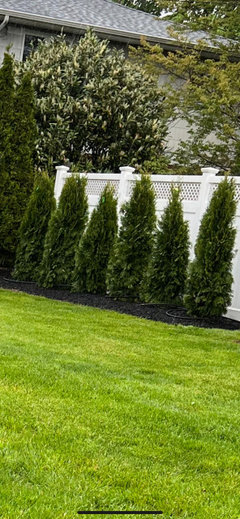
Help! Browning at bottom 20 newly planted EG arborvitae

9 years ago
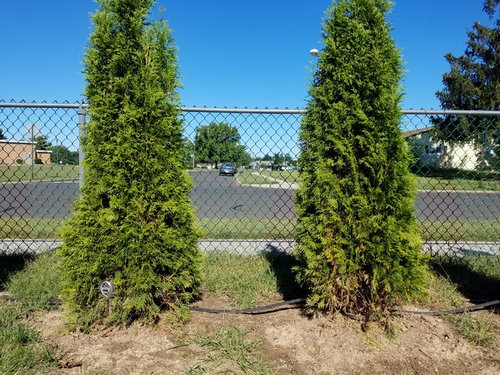
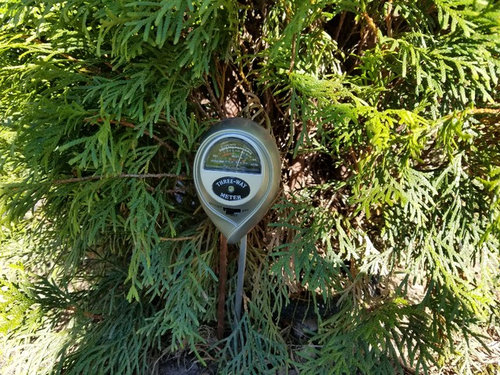
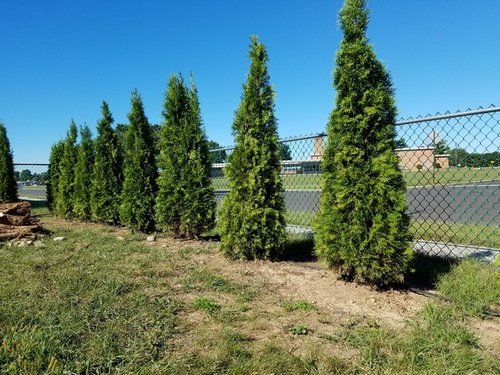
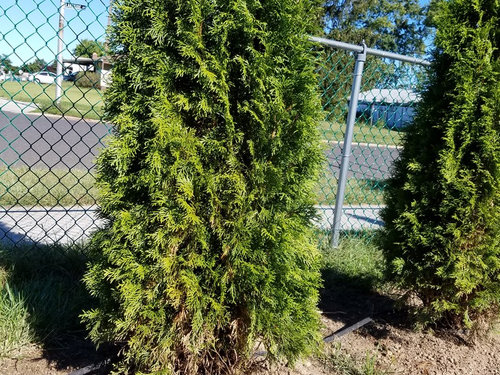
We are in SE PA. It's been very hot and dry here the last 3 weeks. We planted 20 new arborvitae 3 weeks ago..and noticing browning at bottom with loose needles..is this just then transitioning to new soil? The soil is very much like clay here, but we have mixed with compost when planted. We feel we have over watered trying to compensate for lack of rain here. Our moisture reader still reads moist to wet. Any advice to calm my paranoia! Big investment for us...don't want to lose these trees!


Comments (24)

  • 9 years ago
    last modified: 9 years ago

    "It's been very hot and dry here the last 3 weeks. We planted 20 new arborvitae 3 weeks ago..."

    Why did you pick the very worst time of year to plant your trees?

    "...we have mixed with compost when planted."

    Another BIG no-no when planting trees!

    "Big investment for us...don't want to lose these trees!"

    You've really started off on the wrong foot! About all you can do now is to keep monitoring soil moisture, both in the rootballs and in surrounding soil, and water accordingly. Here's a link for tree planting instructions that you need to read: Planting a Tree or Shrub. It's too late for some of it, but at least the after-care section is still relevant. Next time you plant trees, you really should review these instructions first!

  • 9 years ago
    We obviously didn't know that we wouldn't get any rainfall. And the nursery suggested the compost...I will read your link and gather any advice I can. thanks
  • 9 years ago

    digging.. shipping.. transporting and or.. planting damage ...


    frankly.. no conifer goes to brown in 3 weeks ... nearly physically impossible, imo ... i have had conifers that i swear were dead for months .... say winter kill ... but they did not brown until the heat of summer sucked all the life juices out of them ...


    regardless.. the rest of the plants look fine ...


    huge transplants.. have huge stresses .... they are not hungry... never feed them ...


    i would prefer ... if you got a hand trowel ... and dig down 3 to 6 inches.. into and next to the root mass planted ... AND FIND OUT WHATS GOING ON .... gizmos are nice.. but i would need more info ...


    do hit cranky brandons link ... especially the as to watering ... a deep drink.. with near drying is key ... especially when dealing with clay ...


    clay is a superior growing medium.. IF YOU PERFECT WATERING .... drainage is the issue .. have you ever perked your soil ... if not .. dig a hole ... fill it with water.. and time how long it takes to disappear ... and that tells you everything you need to know about how water moves in your soil .. and then you can water accordingly ....


    is that the old standard recycled tire weep hose.. if so.. insure that plants at the far end.. are getting the same water as those closer.. they are famous for irregular water patterns ....


    the weather should be breaking soon ... so good luck


    ken

    ps: do read all of brandons link.. if you foresee future planting ... its a great link, even though brandon wrote it .. lol ....

  • 9 years ago

    I too suspect the damage is caused by handling. That's where they're grabbed when moving them. Some branches will die and they will hardly be missed.

    Just give them plenty of water and they should be fine.

  • 9 years ago

    Dang, I take up for Ken all the time when people say he's rude and obnoxious and here he stabs me in the back. I see how it is. ..... I know you were just kidding, Ken. Or, at least I hope.

    - - - - - - - - - -

    Stressed evergreens can show damage sooner than many think. Sometimes evergreens do take a while to show problems, but I believe stress is undoubtedly the problem here.

    Vikki, you can look for broken/cracked branches (that would indicate poor handling), but I think transplant shock is much more likely.

    With trees that big, the rootball would have had to be pretty large. I wouldn't be surprised if they were potted, and, in that case, either had to have significant root manipulation at planting, or, may have a lot more problems to go in their future. If those trees were potted and the nursery didn't properly address the root bound situation at planting (which wouldn't be surprising with the lack of knowledge at some nurseries), that may be bad news in coming years.

    I hope the nursery gave you a good warranty! And, I hope you watched when the trees were being planted. Were they potted or b&b? If potted, did they fix the potbound roots?

  • 9 years ago

    do i have to call you up and set us straight.. lol ...


    these plants could have been field dug last fall or winter.. for sale this spring or summer ...


    the damage could have been done upwards of a year ago ... or not ... who knows ...


    that was my point ... ken

  • 9 years ago
    Gentlemen, thank you so much for all of your comments. We are going to look a little bit more into this today... I like the idea of digging a hole and seeing how quickly the water truly does drain here. For now we do have a soaker hose wrapping around all of the trees and have used a sprinkler as well.
    I really appreciate all your help...googling can be very overwhelming and it's nice to get some straight to the point advice. I'm hoping for the best here.
  • 9 years ago

    Usually when an Arborvitae is under stress with rootball problems the whole tree will be off color, not just a few lower branches. Sometimes major branches will show the stress first, not smaller ones on the bottom. It's too early for a lack of water to show any signs and I'm fairly sure that's not the problem. That soaker hose placement looks really good. It's almost impossible to overwater them at this time, so don't worry about that.

    Mike

  • 9 years ago

    Once you've established how moist the rootball area is, mulch those poor guys! It will help to keep the soil moist. And be generous with the mulch.

  • 9 years ago


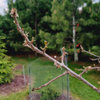
    I took this pic today at a commercial nursery in MD surely less than an hour away from the OP. This entire field was planted within the past week and drip line installed. I can't imagine a better time to plant, especially conifers like these. When I read "Why did you pick the very worst time of the year to plant your trees" I dismiss this as a scrollworthy statement which lacks merit. BTW the only problem with the OP's arbs I can see is they are much too close to the chain link.

  • 9 years ago

    Sam, planting during the hottest time of the year is pretty much universally known as very hard on nursery stock. It's the most stressful time to plant in most areas. I'm rather surprised you weren't aware of that! July or August, in Vikki's area, would have been slightly worse, but not by much. If she had waited just a month, her trees would have had much less stress. We never learned whether Vikki's trees were potted, freshly dug, or what, and that would be another factor to take into account.

    Also, you might want to check your monitor's color settings. Vikki's trees don't look too bad, but there are definitely some brown patches. Since Vikki noticed this and posted this thread, I think it's pretty safe to assume that the tree bottoms were not this way at first! A little extra observation can often go a long way.

  • 9 years ago
    Thank you again to everyone commenting...our trees were slightly burlapped when purchased. We dug down 3 to 6 inches as Ken recommended and found that the soil is moist. We are holding off on watering as we are expecting some rain the next few days. There are 2 or 3 that may have more stress than the others, as we notice browning in other areas, but other than that, I am hoping it is temporary transition stress. We will keep a close eye.
    Also, it may be hard to tell from the photos, but they are about 3 feet from the chain link fence.
    Is mulching a good idea? Especially in our area where the soil is very clay like? I have read conflicting information on that. thanks to all.
  • 9 years ago

    Did you check moisture in the rootballs? That's even more important (at least for now) than the moisture level in the backfill or surrounding soil.

    Mulching would be beneficial for a number of reasons. The lack of mulch is not the cause of issues you are immediately concerned about, but mulching is a good idea.

  • 9 years ago
    Yes, we did check moisture in the root balls..they are moist, but not sopping wet.
    Ok, will look more into the mulching for future. I do appreciate all the info you are providing. We did do a lot of research before planting, and unfortunately ran into an abnormally hot and dry September for our area.
  • 9 years ago

    "...they are moist, but not sopping wet."

    Sounds perfect. About all you can do now is wait. The good news is that we are getting into cooler (less stressful) days. The hard part is over. Things should hopefully only get better from this point on.

  • 9 years ago
    Thanks for the vote of confidence...certainly hope you're right! I'll post an update.
  • 5 years ago

    Vikki! I just planted a ton and the same thing is happening to me. How did yours turn out???

  • 4 years ago

    Hey vikki how did ur bushes hold up? i know its been 5 years but an update would help as i have similar issue

  • 4 years ago

    Hi! I'm happy to report they are alive and well!


  • 4 years ago

    Thankyou!!! they look great

  • 4 years ago


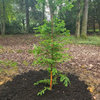
    These are mine its been 3 weeks

    vikki m thanked Inderjit Singh
  • 4 years ago

    hey vikki how far apart are your trees planted? also, did you fertilize them each year? i planted a bunch a year ago and they are starting to brown at the bottom

  • 4 years ago

    Hi! We planted them 3 feet from our chain link fence and about 3 feet apart. Mulched for first and second year, but not since. We did not ever fertilize. There are more experts here that could help with the browning... but maybe too little or not enough water? Hope they come around for you!