Software
Houzz Logo Print
latini

Make your own fertilizer?

9 years ago

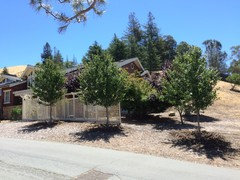
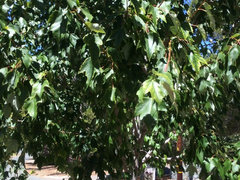
I have received some advice that my Maple Trees need a 20-10-10 fertilizer to help them along---@ 4 years, growing but chronically wilted leaves despite vigilant drip watering with 2-3' mulch. I have 14-14-14, 20-5-2 etc. I don't want to go out and buy yet another fertilizer. Anyone have a homemade idea that effects the 20-10-10? Most internet searches show making your own general fertilizer type.

Thanks!!

Comments (16)

  • 9 years ago

    Chronically wilted leaves would reflect too much/too little water. The roots, for some reason cannot take up enough to keep the leaves from wilting. Too much water allows diseases to thrive and roots to rot, and too little won't support the leaves. After watering, move some of the mulch back to the drip line of the leaves...dig down about 6-8" and see if the water is indeed wetting the root ball, or if you have some soggy rotten roots. Fertilizer won't help if the plant cannot take it up properly. Salt build up from alkaline water can prevent ferts from be absorbed. (A Tbl. of vinegar in a couple gallons of water occasional will help that). Get the watering down first, then worry about fertilizing and pH.

    -Babka

  • 9 years ago

    Babka, this has been an ongoing problem I have tried to mitigate--asked experts, adjusted watering etc. This fertilizer thing is a solution that has been suggested. I have a row of 5 maples (Red sunset) and I will do almost anything to keep from tearing them out and starting over, but they do look so far from the lush trees I was hoping for


    .

  • 9 years ago
    last modified: 9 years ago

    Chronically wilted leaves has nothing to do with fertilizer. The tree simply cannot transport enough water from the roots to the leaves to prevent wilting. It is very rare that you would need to fertilize phosphorus (P) in a perennial planting. It is unlikely that you would need to fertilize potassium (K) in a perennial planting. That leaves nitrogen (N) and nitrogen deficiencies are obvious and easy to correct.

    You said the trees were on drip irrigation. How is the drip system arranged? What type of drip system is it? How many inches of water are you putting down each week? How often are you watering and for how long? What is you soil type? Where in CA are you?

    Those maples need a lot of water and aren't really all that appropriate for much of the state.

  • 9 years ago

    I think it is water. Those roots are probably as deep as the tree is tall. If you are giving drip to the trees, it is probably not penetrating that far down in the soil. You can water and use a rebar poked in the ground to check it. The other watering item is to water at the drip line of the tree. The feeder roots go out that far and those are the ones that take up water. If you do not deep water the roots will be at the surface and make the tree unstable. One suggestion is to dig holes and put 2-3 gallon empty pots around the drip line. Fill them two or three times with water each time you water and let it penetrate below the surface. Soil has a tension and it has to get from one layer to the next to be able to go down in the soil. I would not fertilize a tree in weakened condition. The other thing of course, what is in your water. Some water sources carry boren which is hard on plants. Are these trees grown in your area normally. Maples need some moisture in the air also.

  • 9 years ago
    last modified: 9 years ago

    Those roots are probably not as deep as the trees are tall, at least not the majority of feeder roots. The majority of roots are in the top 2 feet of soil because that's where the oxygen is. The roots should extend 2-3x the diameter of the canopy. If all that area isn't being watered, you're going to have a problem.

    Deep watering is probably the most misunderstood irrigation concept. Watering deeply means applying a significant amount of water, like 1" or more per application period, infrequently to the whole root mass. It doesn't mean getting water 5 feet down in a small concentrated location. There are hardly any feeder roots 5 feet down so all that water is wasted.

  • 9 years ago

    Oh yeah. Here in Silicon Valley (Sunnyvale) we have hardpan about 15" down. When trees blow over, or when we removed a 40 year old Jap. maple the main roots only go about 18" down. We live in a former apricot orchard.
    When we removed two of those 75 yr old trees, most of the roots were in the first 18" down. Water with a drip irrigation generally goes straight down and not sideways by much, so for trees you need a whole bunch of emitters under the drip line. And that would need to be adjusted as the drip line from the foliage changes as the trees grow. I agree that the OP has a water problem, not a fertilizer problem.

    -Babka

  • 9 years ago

    That whole front strip should be a heavily mulched bed (8" arborist mulch) and irrigated, not just those tiny little wells. Those maples are going to need somewhere in the neighborhood of 75% ET0 each month during the growing season. You can find the ET0 zone map for CA in this thread. http://forums.gardenweb.com/discussions/4172542/california-et0-zone-map?n=2

  • 9 years ago
    last modified: 9 years ago

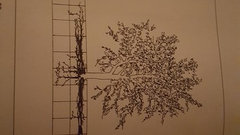
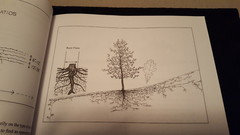
    This is how tree roots grow. This is one of many diagrams created by actually excavating the root systems of trees and mapping them.

    edit:sorry about the rotation.

  • 9 years ago

    How the roots grow depends on the species. That might be ok for a redwood but some like oaks are deep rooted.

  • 9 years ago

    Too much water can cause almost the same symptoms as too little. The consensus here is that it is not a fertilizer problem, but a water problem. Water is not reacing the leaves to create the turgor pressure to prevent wilting. Where are your drippers. OP? Not too close to the trunk, I hope. Here's another solution for watering trees. http://ccuh.ucdavis.edu/Events/drought/rotary-system-irrigation-contraption-rsic/RSIC

  • 9 years ago

    Ha, I've been making those for years with MP Rotators. Didn't know it was a thing though.

  • 9 years ago
    last modified: 9 years ago

    Here's an oak. Yes there are some sinker roots that go down to 7feet, The vast majority are still within the top two feet.

    Now don't get me wrong, different species have different growth habits, and different soil textures will cause different growth habits but when you get down to it woody perennials have much further reaching and shallower active root systems than most people envision. The fact of the matter is that a tree needs water and air to all those shallow roots during its growing season.

  • 9 years ago

    When the trees blow down you get to see all those surface roots and very few deep ones. This isn't the Midwest, folks. Those trees break limbs, ours blow over because of shallow roots. It is our lovely soil. ;-)

    -Babka

  • 9 years ago

    Some of the new leaves are showing signs of chlorosis (yellowing with green veins). That could indicate a pH-related iron and manganese deficiency.

  • 9 years ago

    Thank you all for your comments and insights. This has confounded me as I have worked very hard to try to find what works for these trees. I am just starting to learn about ETO. We have mulched around about 3 to 4 inches and we do water drip at the drip line, probably lots of wasted water. I do know that one tree especially shows chlorosis, so the fertilizer things seem to make sense to me. At first chance we get my husband and I will take an auger and dig down and figure out how we can deliver water to save these trees. My neighbor next-door has a different type of maple tree and they are older and look absolutely lush and gorgeous, but he uses the sprinkler system and he has ground cover. From the consensus here, it seems that maybe what I should be doing. Further thoughts are always welcome thank you.