Software
Houzz Logo Print
jdpyn2

Blood Orange Not Bearing

9 years ago
last modified: 9 years ago
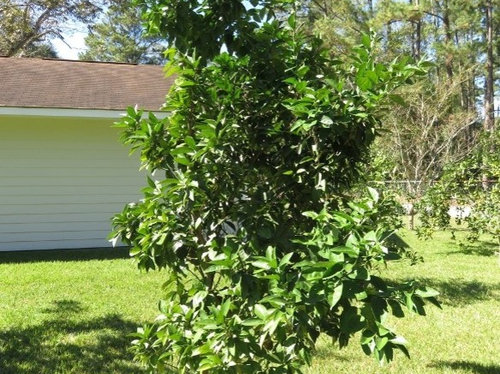
I planted a blood orange quite a few years ago. It was frozen back to near the root stock and then it came back. I am pretty sure it's growing from the graft since the leaves look like a blood orange should. It's certainly not trifoliate orange. It's been maybe five years now and it hasn't even offered to bloom. Should I be patient or is there anything I should change in my management?

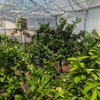
Here is the tree


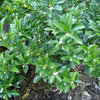
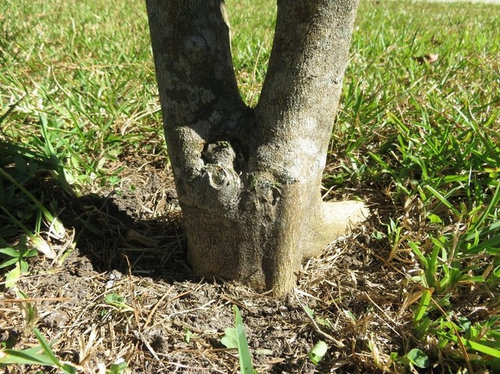
Here is the trunk at the graft

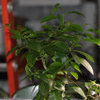
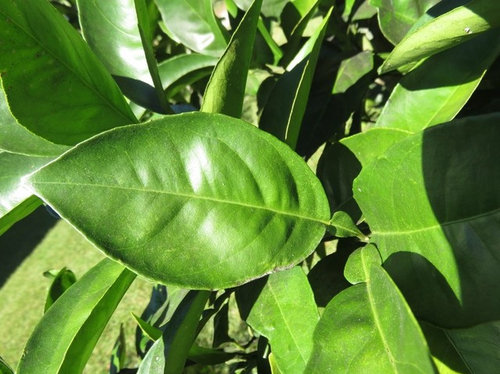
And here is a leaf

Comments (23)

  • 9 years ago

    Did it bloom before the freeze?

  • 9 years ago

    What a beautiful tree! Can't help, but will cross my fingers ;-)

    John 9a thanked Laura LaRosa (7b)
  • 9 years ago
    last modified: 9 years ago
    dnedd, yes, it had fruit on it when I planted it. That's part of why I'm impatient for it to fruit again, the one fruit I got was delish! I planted another blood orange last fall and it also bloomed this summer and bore fruit. I clipped off all but three to prioritize tree grow and a squirrel took off one of those. The leaves of the two trees look identical. I really thought the older tree would bloom this year. Think I should up my fertilizer routine since I don't kill the grass around my trees? In the past I have been reluctant to up the nitrogen too much because I understand that results in a worse problem with wax scale. I cured the wax scale issue with dormant oil so now I don't have the see-saw with those critters.

  • 9 years ago
    last modified: 9 years ago
    A side note, I think my trees grow slower than many because my soil is compact clay. I dig a really big hole and do a lot of enrichments and organic additions to help loosen it up when I plant a new tree but it's ultimately sitting in a "poorly drained" pot created by the compact clay all around the roots. I make the hole irregular and that's supposed to reduce the chance of the tree becoming root bound....roots growing around in circles inside the looser dirt the tree was planted in. The tree looks healthy and doesn't stress during dry weather so I would take that as evidence it has a decent root system. Maybe the freeze-back reset the age of the graft wood so it may take a lot longer to mature?

  • 9 years ago

    Are you certain it's not growing from the rootstock?

  • 9 years ago
    last modified: 9 years ago

    carolb, almost certain....I'm sure it's not flying dragon or trifoliate orange. Those are the common root-stocks I'm aware of. I think my tree has trifoliate root stock. I don't remember for sure but I think I pruned off a trifoliate sucker that tried to come off the base after it froze back.

  • 9 years ago

    What type of blood orange is it John? I agree that the leaves look right. I have a few blood oranges (very young) and the leaves look the same.

    John 9a thanked Laura LaRosa (7b)
  • 9 years ago

    Laura, it's a Moro... the new one I planted is too.

  • 9 years ago

    The leaves of yours look just like the leaves of my Moro, so I agree that it does not look like rootstock. I can't imagine why it would not be blooming. Has it ever bloomed? Could it have bloomed during a cold spell and have lost the blooms?

  • 9 years ago

    Laura, it had fruit on the tree when I bought it and one of those ripened. It was very good! I think it was in the ground a season or two before we had several nights down into the teens. It was covered but still froze down to a stump. I thought it was dead so I didn't even water it through the following summer....then out popped some new growth! I have watered and fertilized it for quite a few years now...and have periodically pulled grass away from it as I should but it quickly grows back. Now the root zone is probably pretty large. Unless someone offers another better suggestion, I think I'll increase my fertilizer regime (even though the leaves have always looked really nice) and brainstorm a non-glyphosate way to keep the grass back. In the meanwhile, maybe the new Moro I planted will beat this poor tree to the finish line :>)

  • 9 years ago

    Fertilize three times a year, pull back the grass, maybe install a soaker hose at the drip-line, and cover with cardboard, then bark mulch over the cardboard. I find it best to use a pitchfork to poke holes in the cardboard to allow water to travel through the layer.

    Josh

    John 9a thanked greenman28 NorCal 7b/8a
  • 9 years ago

    greenman, fist, thanks for sharing! Next, I have some questions to make sure this will work in my area. I'm in SE Texas and we get 55-60 inches of rainfall, plus my soil is compact clay. Will the addition of the cardboard and mulch reduce the minimal (my estimate) aeration my root zone gets? I think our local area has more problems with too much water and root diseases than not enough, especially during the winter and spring. Second question is do I fertilize on top of the cardboard and just let it run through the holes in the cardboard? Thanks again, just want to make sure you understand my soil conditions and see if you recommend any changes based on that.

  • 9 years ago
    last modified: 9 years ago

    The wings on the petioles look pretty big for an orange. Oranges don't have such prominent ones do they? Except maybe sour orange (which is sometimes used for rootstock)?

    Could it be it was grafted on something other than trifoliate or trifoliate hybrid....like rough lemon or shaddock? In which case, it could be a seedling and would account for delayed bloom.

    I'm not very good at ID by leaves though.

    Where do you live? And where did the plant come from? That might give us a clue.

    John 9a thanked Dave in NoVA • N. Virginia • zone 7A
  • 9 years ago

    Dave, I am in SE Texas...the plant was developed at a local wholesale facility thtat sells through local Lowes and Home Depot...and other commercial outlets. Saxxon and Sons is the producer. I think they have a bigger operation in Louisiana. I have another Moro blood orange I got from the same source recently and its leaves look identical....wing and all. If it's root stock, it's something that looks very similar to Moro blood orange. That ultimately IS what I wondered when I made my original post though...if there was another root stock that may sometimes be used with similar leaves....or if anyone knew of cases where a hard freeze would damage the graft wood so it would no longer produce blossoms. From the discussion we have had here, I think it's pretty much a sure thing that the tree is graft stock blood orange. If different fertilizer and micronutrient management and maybe a few more years doesn't do the trick, I'll have to assume the freeze rendered the tree sterile...if such a thing is possible.

  • 9 years ago

    If what you have is still 'Moro' scion, then no, a freeze would not render it sterile. There must be something else in play. Have you never seen it bloom? Could buds have been damaged by the cold?

    Is your other blood orange bearing fruit reliably?

  • 9 years ago

    I have never seen it in bloom since it froze back and I make a near-daily round through my yard after I get home from work. I give that tree a very close inspection for blossom buds. The new tree bloomed this spring but I only planted it last fall so it has barely met my soil yet :>)

  • 9 years ago

    John, the cardboard won't reduce aeration, but it will help reduce the grass for a while. Definitely poke lots of holes, though, so that water can pass through, and so that worms can migrate up and down. Over time, the cardboard and mulch will improve your clay soil.

    Josh

    John 9a thanked greenman28 NorCal 7b/8a
  • 9 years ago

    Thanks greenman. The cardboard option...and I think I have also heard of using newspapers long garden rows for the same purpose....is one of the better ones I have heard. This discussion prompted me to make a new thread to discuss the grass around the tree issue...I mentioned your cardboard method in there.

  • 9 years ago

    Also you might try fertilizing with something with more phosphorous in the ratio just once per year and preferably just before spring. Like a fertilizer intended for roses.

  • 9 years ago

    You have a beautiful tree. Let it grow and it will flower. My guess, your tree is rootstock. I have never seen a citrus tree grafted that close to the root base. It also looks like both trunks are coming out in back of the t-budded scion. The rootstock usually comes up higher in back from the ground than the the front side of the T-bud. I also question whether a blood orange is capable of growing as far north as your location.

    Get yourself another citrus tree and plant it. If I am wrong you will have 2 very nice trees instead of 1.

    6b Steve Cincinnati, Oh

  • 9 years ago

    Thanks for the post Troy. If it takes five years, I should be getting close! Maybe I can look forward to posting photos this spring of blooms all over the place :>)

  • 9 years ago

    Hi there! Maybe it is pomelo rootstock.

    John 9a thanked sunshine (zone 6a, Ontario,Canada)
Sponsored
J.Holderby - Renovations
Average rating: 5 out of 5 stars4 Reviews
Franklin County's Leading General Contractors - 2X Best of Houzz!