Software
Houzz Logo Print
mtnmermaid

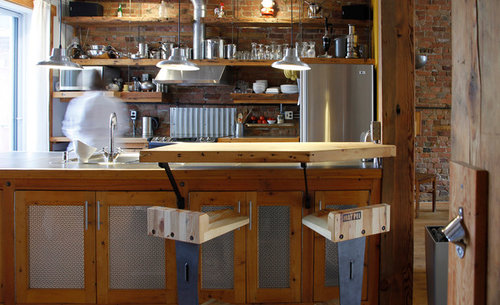
Love the stools, where did you find them?

13 years ago
Dominique & Anne-Marie · More Info

Comments (10)

  • 13 years ago
    My guess is that Mattarozzi Pelsinger builders custom made the stools as the one stool is marked "Mat Pel". They are builders in the Bay area.
  • 13 years ago
    Your home is beautiful!
  • 13 years ago
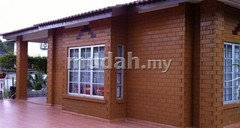
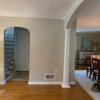
    I'm planning to buy a house from developer (not build yet) by using brick as exterior and interior which is not common in Malaysia. I'm in doubt either to buy or not, but seeing your home design which is beautiful, i guess i am ready to buy it. Here some photo from developer. Hopefully u can give some advice and comment to help me design my house. BTW, i'm planning to buy around 1000 sqf to 1200 sqf house. TQ..
  • 13 years ago
    Hi ailily,

    The apparent brick you see in our house is only where walls are shared with neighbours. You can see, from the last picture in the tour (building façade), that both side walls are adjoining, while the front and back walls are not. Over here, outdoor walls require lots of insulation because of cold weather so exposed brick on these is not practical (or very wasteful of energy). I guess energy concerns in Malaysia are quite different. With the temperature graphs I see for your area, air conditioning is probably the biggest figure on your energy bill (or maybe you are able to do without?). Brick walls in this context, at least those exposed to sun, constitute thermal mass that will eventually radiate heat inside the house (unless there is some form of insulation, or bricks have an air gap or some other similar strategy). Pale colour is one way to mitigate this effect, but I am way out of my comfort zone here (check out Montreal's latitude :) ) so take everything I say with a big grain of salt!

    Other than this, I would need to know a lot of details about you, your family, your immediate environment, resources issues in Malaysia and the like in order to formulate design ideas that work for your and have a low environmental footprint. But I am not a professional: just a home owner like you who happens to have spent lots of time reading and researching about the complex problem of "green" urban major renovation. My advice is to take lots of time to design: we took about one year and I wish we had taken 2 because we had to rush some decisions. Also, I understand you are purchasing from a developer: if you have control over the layout (rooms, windows, etc.), I suggest you hire a professional (designer, architect) to assist you with this, especially if this is your first house. We did lots of improvisation in our house, as is apparent from the result, but the fundamental layout was done by an architect and this is one of the best decisions we made. It is very hard to figure what works and what doesn't without some amount of experience and we had none. Another aspect that you may try to take into account is house orientation with respect to sun exposure. Over here, one wants to maximize solar contribution to reduce heating costs, while reducing sun exposure in the summer and maximizing overall natural light to avoid electric lighting. In your area, I guess minimizing solar heat gain is important: you'd do this with pale wall colours, window overhangs, efficient windows, low thermal mass on floors that have sun exposure, carefully located trees for shade, etc.

    Water management is also one of my pet peeves: low water-consuption fixtures (toilets, shower heads, appliances) as well as rainwater and grey water re-use were all factored in the project. We are not done with all the systems, but some items (like the cistern under the house) had to be done very early in the schedule as this is not doable after the fact.

    As you see, this topic is vast and there is no substitute for making your own research. In the end, very few people in your project will have the end result at heart more than yourself so feel free to challenge any professional recommendation you are presented if you have doubts. Or at least always try to understand the reasons for every choice that is made on your behalf. Question every choice of materials in light of their impact on the environment, their energy efficiency and the health consequences they may pose on occupants. The construction industry may have established practices that are detrimental to the environment or occupants, but is efficient for the crews (e.g.: using urethane to assemble underfloor wood structures instead of nails). At the same time, if every choice you make brings the construction crew outside their comfort zone, working with materials they never use, be prepared to supervise them very closely and tolerate the occasional less-than-optimal result.

    I hope this primer is enough to get you started! I wish you the best of luck for your project and hope you will have serious fun doing it (we did)!
  • 13 years ago
    Thank you for reply. I took some of your advises and send some QnA to the developer. Thermal insulation is not a big concern in Malaysia (as far as i can see), since we live in hot and humid weather. From my view, mostly people in Malaysia concern is the price of the house. Tight budget and low income is a big deal for Malaysian on buying house.

    The house i'v been showing you for 1000 sqft with 4700 sqft land for 150k MYR or around 50k in Canadian dollar. For time being, I am single but looking forward to have family in near future.

    The developer has their own architect or designer which can be consult, so some of issue like minimizing solar heat and etc will be raised prior buying house.

    Anyway, thank you for sharing some highlights at least give me a starting point.
  • 12 years ago
    is there any information on the unique stools?
  • 12 years ago
    I love the texture of the room
  • 12 years ago
    What is holding the stools up? They appear to be floating in air!
  • 12 years ago
    You only see the back of the metal post. The post is actually a T shape but the other piece is hidden when seen from this angle; you only see one of the anchor points through the back.