Software
Houzz Logo Print
kgeezy20

Wildlife Use

Hey guys.


Equal to my love of trees, is my love of wildlife, birds in particular, but most all wildlife. I'm actually a senior in the Forestry, Wildlife, and Fisheries science major at my university. In general, nonnative trees are frowned upon in my subject of study due mainly to the notion they support less invertebrates, therefore supporting less things on up in the food chain like birds.


Obviously I haven't done my own study on the matter, but it makes sense in theory. The native inverts would obviously prefer the native trees they have adapted to.


I know several of you have backgrounds in forestry and related subjects. Have you seen obvious preference of natives vs. nonnatives as far as wildlife goes? I would think most conifers would be good cover, if nothing else.


P.S. I have no intent to totally stop collecting nonnative trees, just trying to justify my addiction :).


Thanks,


Kyle

Comments (14)

  • 10 years ago

    Difficult topic. Here we are seeing many of our native species struggling due to less rainfall,hotter temps. Thus, are seeking replacements from non-native sources. Your best bet is to talk to locals who are knowledgeable on this subject.

    Kyle (East TN, 6b/7a) thanked Sara Malone Zone 9b
  • 10 years ago

    All kind of nuts from non-native species are consumed by wildlife in my area. Squirrels love walnuts, deers eat horse chestnut and so on. But I can see that birds eat native berries first, and non-native later on when there are no natives left. Animals are smart and adaptable, they find out what they can use.

  • 10 years ago

    Mt Ash or Rowen (Sorbus), a Native of Great Britain, is attacked by caterpillars here. They strip the leaves clean.

    My Portuguese Laurel had caterpillars in it this year.

    Rhododendrons and azaleas, most native to the Himalayas, are eaten by weevils and lace bugs.

    Apples and pears have worms and they're not natives.

    Hummingbirds make nests in my Blue China Firs where few predators can gain access.

    The argument that nothing eats exotics and therefore not good for wildlife doesn't hold water.

  • 10 years ago

    Several have mentioned caterpillars and they are indeed of major importance to nesting birds with young. They need insects at that stage, and caterpillars supply the most. So yes, there is definitely something to this notion....a great deal. For the opposite, look at something like Callerey pear, coming through the summer utterly blemish-free. And yes too-conifers may offer less food but ultra-important cover. And that's just in spring/early summer. Conifer seeds are-of course-big food items for some birds a bit later in the season.

    Kyle (East TN, 6b/7a) thanked wisconsitom
  • 10 years ago

    No one said that *nothing* eats or uses exotics, just that they are generally used less. I get what you're saying though, and that's sorta how I think about it as well.

    In some instances, exotic soft mast is less nutritional than native soft mast, such as with Japanese honeysuckle, which was recently shown to change the yellow feathers on Northern Flickers to a pinkish! It remains to be seen if that's a big deal or not, though.

  • 10 years ago

    Didn't see your response till just now, +om. I was hoping you'd chime in.

    Do you know if exotic conifer seeds are eaten regularly by granivorous birds? I would assume so.

  • 10 years ago
    last modified: 10 years ago

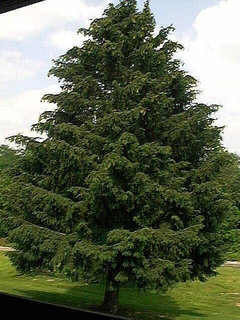
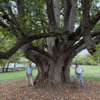
    Can't say much about this, but as a kid I used to watch the gray squirrels eating Norway maple seeds on the ground like they were candy. Also witnessed a heavily cone-laden Norway spruce attracting a mob of diverse birds for several days -- seeds dislodged by birds working on the cones, fluttering to the ground, were then picked up by mourning doves. Below is the mentioned N spruce:

    Many of the field weeds frequented by bees, wasps, butterflies, moths are exotics.

    Kyle (East TN, 6b/7a) thanked bengz6westmd
  • 10 years ago

    Norway spruce seeds are actually a very important food sourch for red squirrels where they are both native. Maybe local squirrel species eat seed from NS planted in america?

  • 10 years ago

    In previous years we have discussed the problems of another introduced invertebrate, the exotic earthworm. Kourtev, Huang & Ehrenfeld from Rutgers Univ studied the effects of invasions of Jap. Stiltgrass & Jap. Barberry to the NJ Hardwood forest. .... we observed significantly higher earthworm densities in the soil under exotic species. The worms were all European species. Soil pH, available nitrate and net potential nitrification were significantly higher in soils under the two exotic species.

    Even more troubling: Our results also suggest that even if the two exotic species were removed, the restoration of the native flora might be inhibited by the high nitrate concentrations in the soil.

    As I've gotten a little older I've become more philosophical. I know that all the "gardener" types think highly of their gardens and plant collections. The reality is when the property changes hands, the new owner is gonna do what they want and that means suit themselves. If you accept this, then really the only thing that is lasting is our natural areas, and some of us prefer to see them untainted by introduced species.

    Plant Invaders of Mid-Atlantic Natural Areas by the Nat'l Park Svce and US Fish & Wildlife is the reference that I quote regarding invasive flora. Since the OP is from Tennessee I hope there is a counterpart for his part of the country.

  • 10 years ago

    Native birds foraging in plantings at the Seattle arboretum were studied and found to prefer native species. Even within the same genera.

  • 10 years ago

    The issue is whether the natives continue to be natives...


  • 10 years ago

    It is funny, the more pest prone a tree is, in a way it is helping other species more.

    I think this issue needs looked at on a species by species level and maybe in specific locations.

    My Acer palmatums get their foliage nibbled on at about the same rate as my native Acers.

    My Metasequoias seem to be used just for cover but not eaten, except for Japanese beetles which are of Asian origin also. Spiders do like building webs in my big one and those do fairly well at catching an assortment of bugs not just the Japanese beetles.

  • 10 years ago

    I've never seen a bird nest in my non native bamboo, but judging by the bird droppings they roost there a lot. Bamboo sways too much in the wind for a nest, but is OK for an overnight stay where the birds are perfectly safe from predators.