Software
Houzz Logo Print
heruga

Why do people like yews?

10 years ago

They are highly poisonous which means you have to always handle with caution plus your pets and children and it can't even use that as an advantage towards deer, they get eaten all the time... are there any pros to having a yew in your garden? I just can't see any reason why anyone would want yew in their yard. I would just have a cephalotaxus as an alternative. So why do you have a yew?

Comments (28)

  • 10 years ago

    I love yews and have many. Their (generally) dark foliage is beautiful and they are tolerant of a wide variety of sun/shade conditions. The golden yews are gorgeous, too. Some, like 'Amersfoort' have unusual texture. All are amenable to pruning and shaping. I have two dogs, a cat, chickens, horses and sometimes cattle. None of my animals has ever shown the slightest inclination to chew on a plant, and I use care when pruning to make sure that any branches are kept far away from grazing livestock. I have never had an adverse reaction myself to pruning, planting or touching a yew. Our (now grown) children never chewed on plants, either. I understand that some dogs are more aggressive but the command 'leave it' can be taught, and is how I get my dogs to drop the particularly nasty bit of rotting gopher or opossum that they come upon. They aren't happy about it, but they do it! There are lots of plants that are toxic. If you are concerned about this, make sure that you have a comprehensive list.

  • 10 years ago
    last modified: 10 years ago

    I know that animals barely touch them but what is the point of having them in general? Is it really just their beautiful dark foliage that is appealing? Or their red berries? Why doesn't everyone plant a cephalotaxus instead? It looks the same as a yew and is very deer resistant. And yes many plants are toxic but most have their beneficial attributes. For example, lily of the valley and daffodils are highly toxic but deer avoid them. Azaleas and rhododendrons are also toxic but deer still eat them. Why do people like it? Because of their beautiful blooms in spring.

    I am not bashing on yews, in fact I plan on getting one to add to my conifer collection. I just wanted to know what, if any, good attributes yews have before getting one instead of just planting it and having it munched down by deer.

  • 10 years ago

    I love yews as well and have many. They make excellent, easily-grown dense hedging which are great reasons to plant them and as Sara Malone pointed out, they're amenable to pruning & shaping. I often prune mine throughout the seasons but especially during fall/winter as the branches are great to use in outdoor holiday decorating. I often prune them with bare hands so no extra caution taken either.

    I have a huge yew bush in my yard that is home to thousands of small bird species that love to hang out in it as it offers protection from harsh winds & predators. This bush is fairly alive with bird activity(noise is deafening!) but you can't see them until they fly out of it!

    Frankly, the 'poison' angle is a weak argument, IMO. Many plant species are poisonous or toxic in one way or another but that doesn't factor in my choice of what to plant. If I only planted non-toxic plants, there would be very little variety in my garden.

    I do understand concern if you are a parent of young children or have animals that nibble indiscriminately. You wouldn't want any of them nibbling on toxic plants but children can usually be cautioned not to eat. Frankly, I don't know any kid/adult who ate plants from the garden or the wild as a youngster. My animals(cats & dogs) never eat anything but grass or catnip in the garden.

  • 10 years ago

    millymoo did you even read my second comment? Yes being poisonous itself isn't a strong enough reason not to plant it. And I don't avoid planting something just because they are poisonous, I have several poisonous plants in my yard but all are either deer resistant or have beautiful flowers. But being poisonous and on top of that they are still eaten by deer is one of the last things I look for when choosing a plant. And its not like deer browse or nibble on them. They straight out devour it, its one of their favorite plants in their list.

    So I guess you all like yews because you can prune/shape them however you want, have beautiful dark foliage, and how they make a dense hedge? I think cephalotaxus can do the same thing... without being eaten by deer lol

  • 10 years ago

    Heruga, by the time I posted, your second post wasn't up for me to view. :)

    Dark, green(or gold) dense foliage, quick-growing, easily pruned/shaped, offers protection to birds and are tolerant to shade/sun conditions. These are reasons cited for growing yews.

    I don't have issues with deer eating anything because I don't have any where I live but clearly you do & choose to plant cephalotaxus to deter them. You might have instead offered up cephalotaxus as a good substitute for yews in areas where deer are a problem instead of asking us why we plant yews.

    Cute pic!

  • 10 years ago
    last modified: 10 years ago

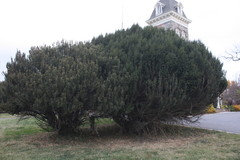
    I am also a big yew fan. For one, they are able to grow under conditions a lot of other conifers (or BLE shrubs) are unable to grow; they come in a wide range of forms, foliage textures and colors and they can be pruned at will. Or into any shape desired - as evidenced by the photo previously posted :-) And they can live to a very ripe old age - centuries - even in cultivated garden settings.

    I pay no attention to toxic or poisonous qualities of plants. In my mind, it is a non-issue, although those who have specific sensitivities to certain plants may have reasonable concerns. Yews are no more toxic than many other extremely common garden plants and far less so than ones of serious concern. And yes, I have gardened with both an assortment of pets in my garden as well as kids. I can see of no good reason NOT to grow yews!!

    ETA: I personally find yews far more attractive than Cephalotaxus - denser growing, lusher foliage - but that's just my opinion.

  • 10 years ago

    Well I guess its all up to personal preference in the end but you all gotta admit that you know you wished the poison also worked on deer as a repellant.. that would be a huge plus wouldn't it?

    Anyway, the cephalotaxus also produces similar red berries like the yew right?

  • 10 years ago
    last modified: 10 years ago

    Yews have two qualities that are very hard to find in conifers: Shade Tolerant & can regenerate growth from old wood (i.e. Can be sheared). This makes them a valuable asset for those hard to fill shade spots where an evergreen is needed. Cephalotaxus is ok if you are in z6b+, but for anyone colder, they must go with other forms of yew. It's an absolute favorite for deer, so most people use them as foundation plantings, where their size can be controlled through sheering, and deer usually won't come close to the house to eat them.

    The upright forms of plum yew tend to have a vase shape. I haven't see too many formal looking hedges that were done with plum yew, I assume it's for this reason. Where-as something like Taxus x media 'Hicksii' can make a solid wall. For those looking for a conical shaped conifer in a deep shade location Taxus cuspidata 'Capitata' is hard to beat, and I think the weeping form of Yew is exceptional Taxus baccata 'Repandens'.

    Yew's get a bad wrap, because they are often misused by homeowners who jam them right up against the foundation and shape them into green blobs. However, there are some really great forms of yew, and their attributes make them a niche in the garden. This has become especially true, given the issues with Canadian hemlock, which were generally the go-to when a conifer is needed in a shade setting.

  • 10 years ago

    Excellent answer! So if they regenerate that means (once they get established and big), deer won't be much of a problem since they will just grow back wherever it was chewed off by the deer?

  • 10 years ago

    I just can't see any reason why anyone would want yew in their yard. I would just have a cephalotaxus as an alternative. So why do you have a yew?

    Because I live in Zone 4.


  • 10 years ago

    As mentioned (more or less) plum yews are coarse textured. And there isn't nearly the same number of different kinds to choose from.

  • 10 years ago

    I like them bc they are shade tolerant, easy to grow, and produce dark dense foliage. When you are down to shade spots only, yews fit the bill.

  • 10 years ago

    Yews are easy to propagate and are found in almost every nursery. Cephalotaxus is not so common.

    I have a 'Prostata' that's over 20 ft wide and not quite 5 ft. tall. Also a 'Stricta' and a young 'Korean Gold'.

    No deer, elk, dogs, or kids have eaten any of my yews and all four are known to frequent my garden on a regular basis.

    Poisonous doesn't necessarily mean lethal. When it comes to yews, It's a non issue with me.

    Maybe I can take a few pictures between the rain showers today.

    Mike


  • 10 years ago

    Re hardiness of Cephalotaxus--I have two and both have survived winter temps of 16 below. They are fully hardy here in zone 6A.

  • 10 years ago

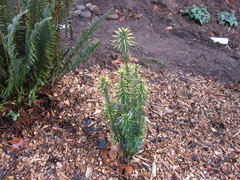
    Korean Gold Cephalotaxus. I'm in the process of landscaping this area.

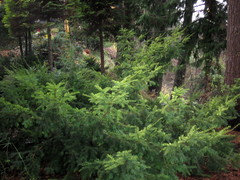
    This is a low spreading Aurea of some sort that doesn't show much yellow this time of year. Started from a cutting from a plant with no name.

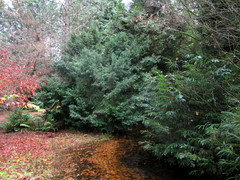
    This yew on the left has no name either. Again started from an un named plant years ago. It's an upright spreader. The plant on the right is a common Zabel Laurel that's been left to it's own devices. It's spreading out over a small pond.

    T. X media 'Brownii' I finally have one with a name! :-)


  • 10 years ago

    Looks very nice mike. Does anyone know if Japanese yews are less susceptible to deer damage than the american yew( taxus baccata)?

  • 10 years ago

    There are Taxus species native to N America but T baccata isn't one of them. That one hails from Europe.

  • 10 years ago
    last modified: 10 years ago

    The literature seems to indicate that any species of yew is susceptible to deer predation. How heavily they may favor and damage these plants depends a lot on local deer appetites and what other fodder they can access. Like Mike, the deer in my neighborhood find other plants more to their liking and tend to leave the yews alone for the most part. YMMV.

    Interestingly, yews are very toxic to just about any other wildlife and livestock (also pets), but white tailed deer in particular seem to be immune to their toxicity.

  • 10 years ago

    Cephalotaxus harringtonia on the left and Taxus cuspidata on the right. Location is Baltimore's Cylburn Park. There are cattle grates at the entrances and fencing and still deer damage is everywhere.

    Nearby there were upright yews absolutely loaded with red berries. The squirrels were ravenous. It is worth noting in some parts of the world Plum Yew fruits are made into jam. Keep in mind, separate male & female plants.

  • 10 years ago

    Oh wow I did not know a cephalotaxus can grow that wide and tall at the same time. Do you know what kind of variety that cephalotaxus is? Also is cephalotaxus and yew related at all? Something has to be explained about their very similar foliages and berries

  • 10 years ago

    My Cephalotaxus harringtonia 'Fastigiata' is rather young. I haven't pruned it. Eventually the Viburnam 'Davidii' on the right will have to go.

    This 'Prostrata' is much older. It was planted in the mid-80s and is over 20 ft across. The groundcover is a hardy Geranium that is covering part of the lower growing Cephalotaxus.

    I have no special attraction for Yews or Chinese Plum Yews. They have just caught my eye over the years.


  • 10 years ago

    "deer won't be much of a problem since they will just grow back wherever it was chewed off by the deer?"

    Here, where in general deer leave garden plants alone, the few yews I planted spent all year with almost bare branches. The needles grew little tufts, but then the deer would eat them, so it was definitely a problem. They looked downright ugly year-round. Yew and Tricyrtis are the only ornamental plants I've had seriously damaged.

    I have noticed what look to be wild yews, but they don't get taller than the snow pack, so I think the deer may trim them in winter.

    I can't grow Cephalotaxus in my zone.

  • 10 years ago

    Deer destroy taxus here. Completely destroy them.

  • 9 years ago
    last modified: 9 years ago

    I generally dislike Yews...largely because they were misused years ago so you see many horrible examples. However, I agree with sc77.

    The great uses for Yews are:
    1.) They are more shade tolerant then most popular conifers.
    2.) The fact they are one of the few conifers that regenerates from old wood means they take better to pruning then almost all other conifers. This means they are one of the few evergreen shrubs that grows well in colder climates or New England that can be pruned into formal "boxy" hedges or topiary.

    Taken together, these two facts mean you can often squeeze one in where few other confers would work...if you want some green in the winter or an evergreen privacy screen. I prefer holly for this use.

    Not overly concerned with the fact they are poisonous. I grew up in a house with a yew hedge and neither me, my siblings, or are pets were ever tempted to try to eat it.

    The problem...and the reason they get a bad rap...is they lend themselves to a formal look that is a LOT of work to maintain. Lots of people some years back put in formal yew hedges emulating a look popularized by British landed gentry with professional groundskeepers. Then after a few years they...or a subsequent owner...lost interest or didn't have the time to maintain the hedges. Thus you have lots of yew hedges that are in an ugly phase halfway between formal and natural, often with garbage inside them. Not a good look. And there are the ones that were squeezed in on the (optimistic) assumption they would be regularly pruned to keep them small.

    In cold climates or places with a lot of deer they get devoured by deer that run out of other food sources in the winter. Their ability to regenerate probably does mean they are better able to recover from occasional exploratory nibbling by curious-but-well-fed deer then most conifers would be.

  • 9 years ago

    Yews are not an option in this part of texas. I've had a cephalotaxus shrub (duke gardens) in the front yard for about ten years it's in heavy shade so it's still small. Deer have not bothered it, it doesn't need me to water but appreciates it. my guess is that a yew wouldn't have made it this long. but I think they are both ornamemtal. Cephalotaxus has a mkre tropical look. cephalotaxus is a more obscure genus, it doesn't have anywhere near the number of cultivated forms. most of us have things we dislike myself I'm not a big fan of Palm trees. sure they grow here but in time they look really out of place. and large agaves. the small ones are fine, but the larger varities with huge terminal spines why the heck do you want that? when I bought this place there was a patch of optunia in the back yard the size of a suburban. sure it flowers and those are nice but the rest of the year it's just a huge cactus. anyway I guess my point is we all have different tastes

  • 9 years ago

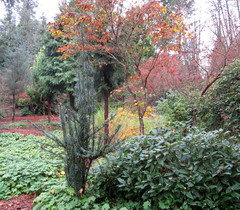
    Taxus can turn into a really nice looking conifer when they are not forced into certain shapes. If we saw more that looked like the one below, they would probably be more popular. Flaky, cinnamon/reddish bark, with the dark green needles looks pretty cool


  • 9 years ago

    "I've had a cephalotaxus shrub (duke gardens) in the front yard for about ten years it's in heavy shade so it's still small."

    Not necessarily...that cultivar is just agonizingly slow.

    Agree that for many purposes yews look better than Cephalotaxus. No problem with deer eating them here, I have 2 big ones, probably just plain T. baccata, and they self seed like crazy.

    The best Cephalotaxus in my opinion is C. fortunei, because it has the boldest texture and looks the least like a yew.