Software
Houzz Logo Print
veggiefunncz7a

Cell packs

9 years ago

I am starting my own plants for spring-only 2nd time I have done it. Starting a lot of Cole crops and will be doing tomatoes and peppers later. What are the best size cell packs to use? Last time I used the 1020 trays with the 6-cell packs that are 2 inches deep. But I noticed they have deeper pots-I saw some 5" deep. Are deeper better?

Comments (17)

  • 9 years ago
    last modified: 9 years ago

    The deep cells are only of benefit for large, woody-stem, tap root plants like tomatoes and maybe peppers. They are usually only used for growing on the transplants not for germination.

    Dave

  • 9 years ago

    Thank you Dave. Do you use 6 cell packs or the the individual square pots-like the 4 in ones?

  • 9 years ago

    Dave's method works better, especially with Cole crops that tend to lay over if they get too little light and too much heat. Regardless they need to be transplanted before the seedlings lodge into each other. For that reason I like to sink roots deeper when transplanting into cellpacks. It helps to keep plants upright, an important consideration. Two inch deep cells are adequate for the first transplant. You may need to do a second transplant if you start seeds too early before you can move outdoors.

  • 9 years ago

    I took a seed starting workshop last spring and was amazed to do something like Dave's method. The presenter had us transplant seedlings she had already started to cell packs and had us plant seeds in other pots. Last year I started pepper seeds in the cell packs but just one seed in each cell. This turned out to be a waste of starter and room when I got poor germination. (Since I was starting about a dozen varieties at three different times, I think it was the seed problem and not my technique/environment.) I did these before I took the workshop so this year I am going to start a generous pinch of seeds in each 4" square pot. Last year I transplanted to large red Solo cups (holes drilled in bottom) and will do so again. I did some transplants to the smaller size cups and while the peppers did fine, the ones in large cups did terrific but I will use the 6-packs for broccoli and cabbage.

  • 9 years ago

    Thank you all so much. This makes great sense. I started some in cell packs last weekend and noticed a few didn't germinate. It occured to me that this method wasn't working very well. But I never thought of putting lots of seed in a tray then planting up to the cell packs. Love the idea of planting them a little deeper too. Thank you all for taking the time to share. Dave, I will check out the FAQs on the Seed Forum.

  • 9 years ago

    Here's a short video demonstrating potting up from dense planting. It somewhat changed my life several years ago.


  • 9 years ago

    I've done a dense planting in cellpacks for starting a few hundred different varieties of cheaply priced seed like heirloom varieties but never for more expensive seed. For most hybrid seed I seed in either long rows (6) or cross rows (12) in open 1020 tray. Using a vibration seeder I can place seed 1/2" apart within the rows and seedling separation is less traumatic to plants. That almost always translates to faster transplant recovery.

    Furthermore, going directly from dense planting to qt. Pots, unless one has a large greenhouse, is going to hurt plant growth because you just can't get enough light to the hundreds of transplants. A preferred method would be to first transplant to individual cellpacks (I like the 48s in a 1020 tray). Even from a seeded open tray the first transplant would usually quadruple surface area under light. Intense light is usually the most underestimated need of amateur seed starters.

  • 9 years ago

    I don't raise hundreds of transplants...more like a 125. So I don't start in small cells to later transplant to larger ones. The only moving from 1 pot to another pot before planting out in the garden is tomatoes.

    I find that 3 inch square plastic pots fits well with most of my seedlings. Some things like lettuce and cockscomb get a smaller group pot....2 inch cell pack.

    I do make a very strong effort to set out broccoli and cauliflower by 27 days after sowing and have excellent results from that.

    I am retired and can take plants outdoors almost all days after they come up. I have well hardened plants to set out.

  • 9 years ago
    last modified: 9 years ago

    "Furthermore, going directly from dense planting to qt. Pots, unless one has a large greenhouse, is going to hurt plant growth because you just can't get enough light to the hundreds of transplants. A preferred method would be to first transplant to individual cellpacks (I like the 48s in a 1020 tray). Even from a seeded open tray the first transplant would usually quadruple surface area under light. Intense light is usually the most underestimated need of amateur seed starters."

    Strongly agree. I'd never recommend going from dense germination to such large pots as in that video. Not only does light become an issue but so does excess soil and water volume for the just germinated root systems.

    "The only moving from 1 pot to another pot before planting out in the garden is tomatoes."

    All vegetables can benefit from at least 1 deeper, potting up.

    Dave

  • 9 years ago

    My focus last spring was on hot pepper plants so because I had a lot of varieties with long days to maturity, I went from one seed per cell and transplanting to the big Solo cups when they had a couple of true leaves. They did very well but I would not do this with lettuce, cabbage and broccoli. Our local backyard grower transplants to tall cells. The plants are pretty small mid-May but start growing quickly when we harden off and transplant outdoors in late May. I had just enough room on my light stand shelves for just over 100 seedlings once most were in the big cups. At planting out time, my pepper plants were large and some were starting to bloom but some of the hot pepper varieties needed 90+ days to maturity and I'm in NH.

  • 9 years ago
    last modified: 9 years ago

    "All vegetables can benefit from at least 1 deeper, potting up".

    Well Dave. I do an intermediate way. My plants are very healthy, so why would I do more rumaging?

  • 9 years ago

    p.s. perhaps those of us in zone 5 and colder have to give our plants more indoor growing time because of our short season.

  • 9 years ago

    defrost49, Personally, I don't see much advantage to leggy plants. i do see disadvantage.

  • 9 years ago

    Wayne, my peppers weren't leggy.

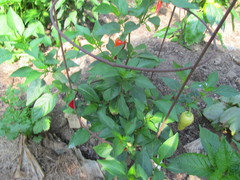
    During the seed starting workshop, we transplanted from the densely seeded small square pot to single seedling per 6-cell pack but those plants didn't spend many weeks in the cell packs before going outdoors and getting hardened off. The photo shows Sante Fe Grande (I think) at the end of July here in NH. This variety tended to be very branchy and a heavy producer. I was pleased to have some red peppers in late July. This pepper would have been transplanted from a single seed per cell to a Solo cup.


  • 9 years ago

    "Well Dave. I do an intermediate way. My plants are very healthy, so why would I do more rumaging?"

    Because maybe they'd be better? ;-)

    Seriously, it all depends on how one defines "healthy". Most go by top growth appearance forgetting that the really important stuff takes place out of sight and the foundation is getting laid for problems down the line.

    Above ground appearance can look good while below ground the roots are under-developed and highly stressed. So nutrient and water circulation is compromised, production is reduced vs, what it could be, and the plant is more susceptible to disease and pests as time passes.

    A little extra work up front can pay big dividends down the line.

    Dave

  • 9 years ago
    last modified: 9 years ago

    Dave, I also set out much younger than many. Peppers go out about May 10th.

    A lot of commercial growers tend to go from a plug to field setting.