Software
Houzz Logo Print
robert_hsiao

Wow, I did not know most fruit trees need 2 to cross pollinate...

9 years ago

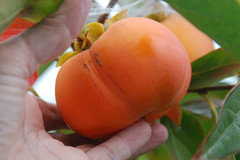
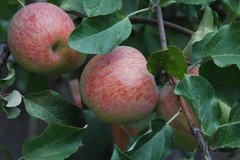
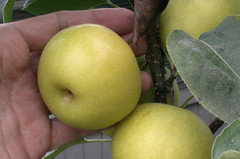
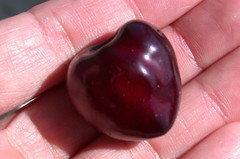
When I got into gardening 13 years ago; I thought only a few fruit trees need two. Hence in my yard I planted 2 cherry trees for that purpose, and the one each of persimmon, fuji apple, plum, pear, orange, grapefruit, and lemon.

Since then, each tree has produced lots of fruits every year. But I recently read that most of the above require two to cross-pollinate. I was surprised.

How to explain this? Does this mean there must be other fruit trees around? My immediate neighbors sure don't have fruit trees.

Comments (18)

  • 9 years ago

    Persimmon and the citrus don't need cross pollination. The apple, plum, and pear might be partially self fertile. Also bees forage over a wide area so you could be getting some pollen from trees that are as far as one mile away.

  • 9 years ago

    Most citrus are self fertile and do not require a second tree for cross pollination. Asian persimmons will produce fruit (seedless) without pollination. But most apples, pears and plums (but not all) do and they are very likely being pollinated by nearby trees. They don't need to be immediately adjacent - just close enough for the bees or other pollinators to make the trip.

  • 9 years ago

    Some plums are self fertile, but will produce bigger fruits if pollinated. My Santa Rosa does not have a nearby pollinator (although its possible a neighbor a few houses down has a plum) and I do get lots of plums, but they are small.

  • 9 years ago

    This is why there has been a lot of attention recently about the role pollinators play - now you can just begin to imagine all the work that is being done...and you didn't even know it :-)

  • 9 years ago

  • 9 years ago

  • 9 years ago

  • 9 years ago

  • 9 years ago
    last modified: 9 years ago

    I am so glad things worked out.....

    Now I am planting more. I think I will plant two of each this time. I suppose they should be next to each other?

  • 9 years ago

    They should be withing 75-100 feet of each other. Where do you live at?

  • 9 years ago
    last modified: 9 years ago

    Note that each tree needs to be a different variety for cross pollination to occur. "Two of each", as in two of the same kind (two 'Santa Rosa', two 'Shinseiki' etc.) will accomplish nothing in this regard. And that particular ones need to be matched up with one another - hence the preparation of fruit tree pollination charts, many of which can be found on the web.

  • 9 years ago

    I'm in Mendocino county. Yes I am looking into more details about this cross pollination thing... The more I look at it the more I am amazed my single tree planting worked out OK.

    Here are the rest of my planting list besides the above mentioned fruits (apple, pear, plum, cherry, citrus, persimmon), can you advise if any of the below also need 2 different varieties of same fruit:

    Avocado

    Grape

    Grapefruit

    Lychee

    Blueberry

    Kiwi

    Peach

    Starfruit

    Guava

    Mango

    Peach

  • 9 years ago

    By and large, with the exception of the kiwi, these are all self fertile so do not require cross pollination. But you will often get better cropping if you do have two different plants/clones. This is certainly the case with the blueberries - it is generally suggested for best fruit production that you have at least two different types with overlapping bloom times. And the kiwi is either a female plant (fruit bearing) or a male plant (non-fruit bearing) and you need both for fruit. There are a couple of self fertile hardy kiwi cultivars but again, better cropping even with these will come with another male/female combo

  • 9 years ago

    Beautiful fruit! (Knew you were CA with those pics). I think you will be too cold for Mango & Lychee, they will die. In San jose I can grow guava, passionfruit, certain bananas. You should add figs and pomegranates as they do great here in CA. You might like Feijoia (pineapple guava) as well.

  • 9 years ago
    last modified: 9 years ago

    Here's a list of fruit trees that don't need a different variety for pollination:

    Quince, sour cherry (the ones used for making pies), and pomegranate (although pomegranate generally sets about 50% more fruit if there's another variety around).

    Citrus (orange, lemon, etc) does not need a different variety for pollination either, in fact not having another variety around is a good thing because then the fruits will be seedless.

    Most apricot varieties do not need another variety.

    I'll just briefly mention that there has been some speculation that apple and pear may be able to pollinate each other, although I'm not sure. (in such a case, the resulting seeds would not be able to survive, a different topic that I'm not going to get into here)

  • 9 years ago
    last modified: 9 years ago

    Some cultivars may be self-fruitful or partially self-fruitful when planted alone; in other locales, they may not be. For example, ‘Bartlett’ and ‘Comice’ pears are usually self-fruitful in California, although they are considered self-sterile in the Northwest. In general, self-fruitful types include:

    • Some apples, pears, Asian pears, plums
    • Most peaches (nectarines), apricots, citrus, figs
    • All sour cherries and persimmons
    • Quince
    • Pomegranate

    In general, self-sterile or unfruitful types, whether caused by pollen compatibility, the timing of pollen shed, dioeciousness, or other problems, include:

    • Many apples
    • Sweet cherries
    • Nuts (almonds, walnuts, chestnuts, pecans, filberts, etc.)
    • Some pears, Asian pears, peaches, apricots and plums
    • Blueberries

    University of California - The Backyard Orchard - Pollination

    http://homeorchard.ucanr.edu/The_Big_Picture/Pollination/

  • 9 years ago

    Also, fruiting pears can use pollen from the ubiquitous Bradford flowering pears planted on practically every street in America. (and being one of my biggest allergy banes, is the only good thing I have to say about those #%$$@@ trees)

    Plus flowering crabapple trees will work with apples which bloom at the same time, too.

    So if your neighborhood has those growing, no need to plant 2 varieties in your yard.

    Carla in Sac