Software
Houzz Logo Print
lclark21324

Butternut tree

Are these trees ever planted as shade trees? Seems like they would be desirable.


Comments (18)

  • 9 years ago

    I like their tendency to produce an elevated dome on a single trunk. But anywhere nut trees are planted that have come into production there will be falling nuts to contend with. And if the aforementioned disease ever reaches your planting then it may be spoiled.

  • 9 years ago
    last modified: 9 years ago

    How big of a deal is butternut canker?

    I'm thinking about planting one because it seems like a great tree, especially for my situation. Cold hardy, unique (for my area), ability to possibly do well in poor, alkaline soil.

  • 9 years ago
    last modified: 9 years ago

    My Uncle had one in his yard. The squirrels loved it. It seemed like a generic tee to me at the time, but I wasn't as aware of trees back then. I've heard butternut canker is wiping the species out in parts of the country.

  • 9 years ago

    Near 100% mortality from Butternut canker. The Butternut x Heartnut cross is fairly resistant however and can be difficult to distinguish from Butternut, especially if it's a couple of open pollinated generations removed from the original cross. In southern Ontario, Butternut is now an endangered species and protected. In naturalized urban areas slated for development, DNA testing has been needed to distinguish Butternut from those that have Heartnut in their lineage.

    That all said, Butternut canker resistance acquired through Heartnut may be what is required for Butternut to continue as a species in North America. It would be my approach if I wanted it as a landscape tree...even if I was outside the current range of Butternut canker.

  • 9 years ago

    Butternuts in this area of New England are dying out.

  • 9 years ago

    I have seen some growing here. Not a particularly showy or interesting tree. If I was you in zone 4 I would go with some sort of sorbus mountain ash. I saw some large ones growing at a local theatre (I have only saw them before up in the mountains which are zones 5-6) that look really nice and provided a good deal of shade. Also, there are some maples (like acer rubrum and saccharinum) that make nice shade trees that you may want to consider.

    L Clark (zone 4 WY) thanked Logan L Johnson
  • 9 years ago
    last modified: 9 years ago

    Logan - There are a lot of great zone 4 trees that won't work for me because of my limestone soil, very high ph.

    To me a butternut would be interesting because my town is basically a monoculture of cottonwood trees. Believe it or not, but a butternut or black walnut would be a real gem here.

    I planted an oak leaf mountain ash two summers ago. Beautiful, little tree. So far so good, but I'm waiting for it to turn chloratic in the future.

  • 9 years ago
    last modified: 9 years ago

    smivies - Do you think butternut canker would be a problem way out in Wyoming? Is it known to be in Denver? Are there even any butternut trees in Denver? LOL. It sounds like a rare-ish tree, anyway.

  • 9 years ago

    Well, I didn't know about the soil. If you aren't worried about the mess it will make with nuts falling to the ground, go for it. I wish I could grow regular mountain ash, but I don't think it is a reality here in borderline zone 7/8.

  • 9 years ago
    last modified: 9 years ago

    When it comes to disease research, Juglans cinera seems to have a popularity problem when compared to Ulmus or Castanea. Has there been any success in finding a canker resistant pure Butternut?

    This tree used to be found all over WI & MN. There's even a town in WI named Butternut. I wonder if there are any Butternuts left in Butternut?

  • 9 years ago

    You could plant: Basswood (Tilia americana), Northern Catalpa (Catalpa speciosa), Kentucky Coffeetree (Gymnocladus dioica).


  • 9 years ago
    last modified: 9 years ago

    Lane, I found this link to Colorado Food Forest. Their website is lean and I don't know where they're located, but they're selling butternut, so maybe it is possible for you and me.

    Colorado Food Forest

    Gardner 365 was wonderfully helpful with educating me on northern pecans. He sent me Iowa pecan grafts and a Garnett shellbark hickory last year. I lost one of the pecans from hail damage. I'm adding a Warren 346 pecan graft and another Shellbark hickory this coming spring. If you do try butternut, let me know how it does.

  • 9 years ago

    Have you considered bur oak? Outstanding shade tree selection, ranges from Mexico into Canada, tolerates wide range of soil type & pH.

  • 9 years ago

    geographic isolation will provide a bit of a buffer. how much depends on several things, and I wouldn't like to be the one to hazard a guess as to what success might mean.

    so if I hear your correctly, the allure of the uncommon is part of what drives you...and you are stressing out over the difference between straight butternut and a buartnut (butternut x heartnut) hybrid. In Wyoming. I'm going to guess that either tree is not the most common in WY, and most people would be impressed that you know the difference.

    when in doubt, my preference is always to go for the one that is hardy, disease resistant, or whatever other factor provides the competitive advantage. you say you have sentimental criteria that governs your decision...well, that's not my business.

    if you have to choose...what's more important? edible nuts, butternuts, or a tree that's not common?

  • 9 years ago

    I'd check on how long it takes a butternut to grow to maturity. Mine is huge, but probably over 100 years old. I don't think it has any canker, but some worms spoil every single nut and the nuts are very hard to get out of their fruit and then their shell. I've picked up hundreds of fallen fruits and not once tasted a nut.

  • 9 years ago

    I have a seedling of the 'Bountiful' butternut cultivar, which has been shown by genetic analysis to be a hybrid of butternut and heartnut; I have no idea what the pollen parent of this Bountiful seedling is, as it came from an orchard with numerous grafted walnut species and cultivars. Germinated in 1998; no nuts yet, but has been producing pollen catkins for the last couple of years.

    Growing nearby are two seedling butternuts - grown from seednuts received in trade from a GW member in north Georgia(USA) about the same time period (1998). One of these presumed pure butternuts has been producing nuts for 4-5 years; the other, which froze to the ground in 2007 and re-grew, produced its first nut crop this year.

    So... in my limited experience, butternut seedlings receiving no care other than occasionally being mowed around, take longer (by 2X) to come into bearing than do black walnut seedlings managed similarly. YMMV, and fertilization may have an impact.

  • 7 years ago


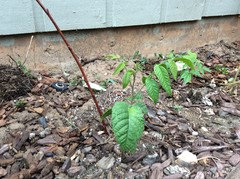
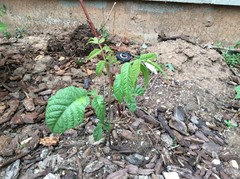
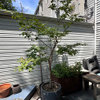
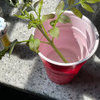
    Can anyone tell me if this is black walnut or butternut? I planted some of both, but only got one seedling and I can’t remember what I planted in this spot. Dumb, I know.