Software
Houzz Logo Print
natethecanadian

Tree varieties for zone 4

9 years ago

Hey Everyone,

I'm from an area in the Canadian prairies with a zone 4 climate. We lack the summer rainfall though as we
are semi-arid and that typically kills trees that don't get extra
watering. Just curious what varieties of red maple you have found are
the hardiest. I have watched Northwood and Red Rocket do well around
here. Northwood seems very picky though and takes a long time to
establish.

I was curious about Red Sunset, Autumn Spire and Scarlet Sentinel.

As far as other varieties, I'm considering katsura tree, newport
plum, american beech, tulip poplar, black gum, sweetgum (moraine or
chereokee) and golden rain tree. Have any experience with them?

Sweetgum is my favorite tree. I've read that chereokee sweetgum has
withstood -28f which is pretty close to the maximum cold it gets here
and moraine is supposed to be hardy to -30f. Thoughts?

Comments (63)

  • 9 years ago

    If you have a local source, rely on that. provenance may play a role, and a local, established nursery that's been selling the same thing for a while is going to have determined the local adaptability far better than relying on information from one source, plants from another, and who only knows where the original source came from.


    Ginkgo in MN can be misleading. where in MN? twin cities? inside the interstate bypass or outside? urban heat islands, source of stock material, and exactly what do you mean by growing well.


    If ginkgo survives, it can grow quite large. most likely to survive in the twin cities, a full zone warmer than the northern 2/3s of the state, or that little circle of tropical weather around duluth. If it survives the first few years, and it's not going to be a very fast growing tree.


    If you have local sources, start a conversation. steer that conversation towards issues of provenance, local adaptability, and while you always hope to ask intelligent questions, keep them open ended.


    As much as the temps, the annual rainfall may be a limiting factor. which means, depending on scale, offering a little extra...especially in the last half of summer and into the wonter, may be a consideration.

  • 9 years ago

    In the FWIW category, here's my experience and thoughts on the following trees:

    American Beech ~ It is native and grows well in the far eastern part of WI, which is z5, but struggles mightily as you move west. I planted one at the old place on a north facing slope in moderate shade. It was alive when I moved, but was extremely slow to get established. I need to get back there to see how it's doing.

    Lacebark Pine ~ I've killed two, neither of which made it through their first winter. Often touted as z4, but I have my well-earned doubts. The owner of Edelweiss Nursery in Duluth expressed the same sentiments during my last visit a couple of years ago. Try it if you must, but keep your expectations low.

    Bosnian Pine ~ I've killed two of these and now have a 3rd. I don't believe these are fully hardy in z4 and I'm not sure I'd put too much time or money into this tree. Have you considered P. cembra? ;)

    Katsura ~ This tree has now broken my heart twice. It abhors dry conditions and wouldn't seem to be a good fit for your location. It survives z5 Chicago and a gardener I know down there said he doesn't even let someone with a dry sense of humor get close to his tree. On the other hand, I encountered two healthy specimens around 20' planted along a McDonald's parking lot in Sparta, WI, which is about 75 miles straight south of me (z4b/5a). I may try this one again, but I think it is safe to say it's very marginal in a true z4.

    Sweetgum ~ I've never tried it, but I think it would be a non-starter for you. I've not seen one at the U of Minnesota Arb and am highly skeptical it exists. This is z5 at best.

    Golden Rain ~ See above.

    Blackgum ~ I'm at the northern limit of its range and have had mixed success, but the one I've got here is established and growing -- slowly! It suffered major deer trauma a few years ago, which certainly didn't help matters. There is supposedly a hardy cultivar ('Carolyn') that was developed at U of Wisconsin, but I think originated from a New Hampshire tree. Quite tough to find in retail trade, but might be worth searching out.

    Tulip Poplar ~ You're not going to find any mature, large specimens in the upper Midwest. I brought back a small seedling from a tree growing at Washington's Mt Vernon that survived a couple of years before a hard winter took it out. Yes, they can be found here and there, but they do about as well as I would in Mississippi.

    Ginkgo ~ Planting a larger specimen will improve your chances with this one. I've planted one at each property and have never experienced dieback. Just don't expect this tree to get big anytime soon.

  • 9 years ago

    When you mention zone ratings...do you know which system is being referred to?


    The Canadian or usda, or sunset...these are the most common.


    Arnold arboretum used to? still does? have their own entirely unique rating classification that put the colder zones at zone 3...but largely overlapped usda zone 4. there was one fairly significant proponent of the arnold system, but even he eventually adopted the usda system. i'm really not sure how someone could put Nyssa Sylvatica in usda z 3 and claim to be sober.

  • 9 years ago
    last modified: 9 years ago

    I have experience with red maple and beech here, both native stands. Red maple is quite thirsty and in dry years doesn't look great by the end of summer. I'd plant it where it get some shelter from wind and has access to water, both naturally (drainage ditch or low spot) and supplemental from the hose. I don't know their pH sensitivity, but my soil and water are both quite acid.

    Beech is fine here on the edge of z 4&5, but sometimes has to rebud when we have a particularly late frost and it get the tender new leaves zapped, so I think it might have issues for you.

  • 9 years ago

    "I'm interested in trying Tanyosho..."

    FWIW,
    I considered these very beautiful trees for some time, but I eventually deleted it from my list. There is conflicting information floating around on the net with regard to
    hardiness and the naming of 'dwarf' and 'very dwarf' varieties. I used http://www.planthardiness.gc.ca/index.pl?m=11&lang=en
    to find out if anyone has it in my area, turns out nobody has it. These are
    slow-growing and very-slow-growing varieties and a sizeable specimen costs K$.
    Research carefully!

  • 9 years ago
    last modified: 9 years ago

    Can't remember where I read that Moraine Sweetgum was growing at MN Landscape Arboretum, but this reference (below) says it survived -35F in MN. Can't say if it would have a chance at the OP's location.

    http://www.handynursery.com/plantlist/llist.php

    great quote from maackia on katsura: "... he doesn't even let someone with a dry sense of humor get close to his tree"

  • 9 years ago

    I really appreciate the comments. I am a little confused in what to do....honestly I'll probably just try trees that are the hardiest variety of their species. I find that I win more then lose in my climate. Ten years ago, tree nurseries in my area would have told you that you couldn't grow an Autumn Blaze maple, Deborah Maple, Sugar Maple, Norway Maple, Butternut, Walnut, Red Oak, Northern Pin Oak, Crimson Sunset Maple, Honeylocust........etc etc etc. The list goes on and on.

    I have come across all of these trees in their mature form at 30ft or 40ft at least and many of them. Most have grown through zone 3 winters. Lots of them are rated zone 4 or even zone 5 hardy. Now that they are being planted en masse, you rarely see any of them die even when we have a brutal winter. So I'm starting to think this whole hardiness based on a zone is not very accurate. I guess you just gotta try.

    As for tulip poplar, check out daves garden's link on it. Someone from Eau Claire, Wi growing it with no dieback. That gives me hope. We have almost identical winters to them.

    http://davesgarden.com/guides/pf/go/1031/


  • 9 years ago
    last modified: 9 years ago

    "...says it survived -35F in MN. Can't say if it would have a chance at the OP's location."

    If that's legitimate, I really need to look into getting one of these. It would be the type of tree I'm looking for to populate the woodland openings I've got.

    Nate, I don't mean to discourage you in trying any of these. I suspect most of us who have been pushing the zonal envelope for any length of time can offer a few trees that exceed expectations. An example would be Stuartia pseudocamellia. It's now about 15' and I've never had any dieback. Unfortunately, for every success like the Stuartia, there are multiple failures. It's all part of the experience.

  • 9 years ago
    last modified: 9 years ago

    I think you may stand a good chance of growing Pinus densiflora. I have a number of them (including 'Tanyosho', 'Golden Ghost' and species) in my garden for many years now. In the worst winter a couple of years ago (practically Zone 4 or worse), they came through without damage. Even some of my Pinus sylvestris which are supposed to be hardier suffered some damage that winter. The only caution I have is some of them seem to have an annoying tendency of having some branches died back each year.

  • 9 years ago

    Have you considered Tilia?

  • 9 years ago

    There's too many Linden in my area. I'm looking for a unique choice, not a typical one :) lol.

  • 9 years ago

    How cold has the Stuartia taken? Its a beautiful tree!

  • 9 years ago

    I am reading that the Korean version may be even hardier. Reports of a Minneapolis grower with no dieback in 15 years on davesgarden.

  • 9 years ago

    It has dipped its toes to 28 below. Somewhat protected, bot not to the extreme.

  • 9 years ago

    Not bad at all....That's similar to my location. Provenance is key to finding hardy trees. I just found someone selling an american sycamore from a seed source in its northern most native planting area in Quebec, Canada which is a zone 4a. I am buying it most definitely. That tree probably saw near -40 at least once.

  • 9 years ago
    last modified: 9 years ago

    So I guess I found an old tree trial that was done by my city a long time ago and they found that Bosnian Pine is hardy for my area....interesting. What's even crazier is that it passed trials in a town in zone 2a in my province. Provenance can be a crazzy thing.

  • 9 years ago

    Amur maple. Small, great fall color, almost guaranteed to do well as long as it is not a desert. Downsides - kinda breaks apart as it gets old.

  • 9 years ago

    It's heavily planted...nice tree but I'm a little done with it.

  • 9 years ago

    This (to me) is the most interesting thread I've read in a long time! Thanks, guys

  • 9 years ago

    Nate, Maacika - Unrelated question - do tilia leaf out early or late compared to other trees in your areas?

  • 9 years ago

    Typically falls right in the middle of the pack. Earliest leafing is mayday, columnar crabapple, chokecherry which leaf out in early or mid April. Silver and Red Maples start to flower at the end of March but don't leaf out till late April.

    Latest to leaf out is my green ash which show up in early or mid may and they are the first to go in late september. Same with other crabapples.

    My crimson sunset maple was putting out flowers in mid march last year because of the extremely warm March and I was terrified. A cold morning burnt them back down but in early april they came out again and looked great. Leaves were out by end of April.

    Lane, tell us a little about the trees you have in your area. Where are you located? I am probably directly north of you, just a few hours drive east of the rocky mountains in Canada. Crazy how we have a similar climate and I'm probably 800 miles north of you!

  • 9 years ago

    Nate, I live in Laramie. We have a bi-culture (is this a word?) of cottonwood and blue spruce. Other trees occurring from time to time include green ash, Siberian elm, ponderosa pine, bristlecone pine, sub alpine fir, q aspen, some type of willow, crabapple, chokecherry. In the last 5-10 years there's been an increase in species planted, but it's still not great.


    I bought my first house with a yard two summers ago. The house was a foreclosure and was vacant for four years. The house and yard on .4 acres was in bad shape. There were 12-15 dead quaking aspens, one very healthy Ohio buckeye that had been topped after a tornado 8 years prior, and two beautiful betula pendula darlenicas (I'm shocked these are alive because they are said to need a lot of water) and a couple Canada red cherries that are in good shape. I lucked out in the fact that I got a yard that had a great diversity of species.


    I have crappy, rocky alkaline soil so that limits things further for me. I am pretty novice and I rushed out and bought a bunch of trees without doing much research or self-education. I planted a northern pin oak, a northern red oak, a bur oak, a gamble oak, an oak-leaf mountain ash and three bigtooth maples. All are alive and doing well, but I anticipate the pin oak will bite the dust sooner rather than later.


    I've only got room for two more big trees so I have to choose wisely. I'm leaning towards an American linden and some type of elm, probably a Princeton American elm.


    I love Ohio buckeye and bigtoth maples. There is one large spcimine of each in my town and I wish I had both in my yard. I would recommend these for you.


  • 9 years ago
    last modified: 9 years ago

    Ohio buckeyes are beginning to become more popular around here. They have great fall color. There is one down the road from me.

    Big tooth maple is almost like a sugar maple from what I've read. I have never seen it grown where I live. Sugar maples are more common. It looks like something I would like though. No nurseries carry it around here.

  • 9 years ago
    last modified: 9 years ago

    Northern pin oak are nice fall color trees. Why are you worried about yours? They are very hardy. Just because of the soil type? They don't mind alkaline soil. Only regular pin oaks hate alkaline.

  • 9 years ago
    last modified: 9 years ago

    Yeah, I'm worried about the soil ph for the northern pin. I didn't know that the northern pin has a tolerance to high ph soil. Good to know. I've been told northern red oaks do, too.

    Bigtooth maple are fantastic little trees. Brilliant fall color. They are slow-growing though.

  • 9 years ago
    last modified: 9 years ago

    I've been impressed with the several Ohio Buckeyes I've seen in the Twin Cities. I think they do better up here than in Ohio. It looks like OSU will have to change their name. ;)

    Nate, I take it you have been planting trees for a long time. What are some of the more interesting trees you've seen in your part of Alberta? How much space do you have?

    I think you could have a really nice mix of trees. There's a very cold hardy native Cotinus that does business as 'Cotton Candy'. It originates somewhere on the NW Minnesota prairie. It is now at its 3rd and final home, so I haven't done it any favors. It's on the west edge of woodland, and seems to love the six or so hours of western sun it gets. It established after 2-3 years and has grown rapidly after that.

    Crataegus could make for a nice tree. They're slow, but very picturesque. Maybe Russian Hawthorn in honor of our new best friend. ;)

    Syringa pekinensis might do well. Does anyone know which Pekin Lilac has the most ornamental bark? Corylus colurna?

  • 9 years ago
    last modified: 9 years ago

    Copper Curls is supposed to be the best.

    I'm scratching my head as to how you've killed multiple Bosnian pine and Katsura but have a Stewartia in zone 4!

    I couldn't get that thing to grow in zone 5. I've yet to actually see one around here except a member on this forum.

    parrotia and Nyssa won't go for me either yet I could grow multiple cultivars of acer palmatum

    The tulip tree I planted is protected from west and north winds. Survived that nasty 2013 winter with no dieback. It's growth rate is incredible and is 25' after 6 years. It was 6' when I planted it.

    northern pin oak can handle neutral to slightly alkaline but will struggle when you get around 7.3ish. The native red oak around here are alkaline tolerant....7.5ish

  • 9 years ago

    Best bark on a Pekin lilac...no question, copper curls.


    Ohio buckeye performs more reliably in fargo, ND than honeylocust...or sugar maple, red maple, or Norway maple.

  • 9 years ago

    "I'm scratching my head as to how you've killed multiple Bosnian pine and Katsura but have a Stewartia in zone 4"

    Yeah, that's a bit of a head scratcher. Some sites list Bosnian Pine as z6. That seems about right. ;)

    Copper Curls is the unanimous choice. Thanks.

  • 9 years ago

    If you guys want to be even more confused, the same nursery in my area that said Bosnian Pines were flawless, couldn't keep a silver maple alive lol.

  • 9 years ago

    We need to have a tree reading iniative. They're just not following the script.

  • 9 years ago

    Haha. Provenance my friend. gets you every time.

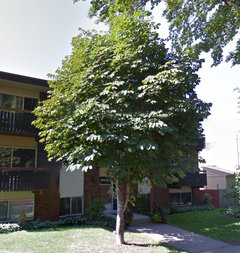
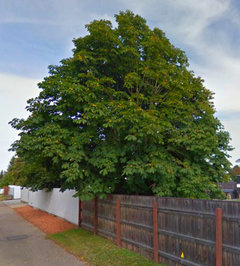
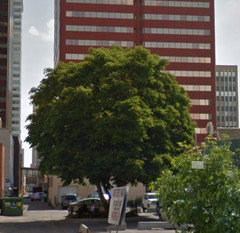
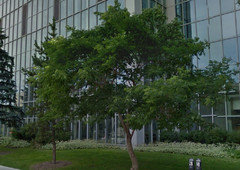
    Unique trees where I live are amur cork trees, ginkgo and there are actually lots of mature horse chestnuts including and big 100yr old one downtown. I found a huge deborah norway maple as well which was cool. Like 50ft by 50ft. I'll post and pic tomorrow of the horse chestnut and cork. ginkgos are small for their age. Growing like 2 inches per year!

  • 9 years ago

    Do the cork trees show any evidence of being invasive? I know it is a problem in some parts of the US, but maybe your conditions will keep it in check. I have seen some nice specimens over the years (Arnold, Morton, MN Landscape Arb) and the branching of this tree can be mighty impressive. The cultivar 'Eye Stopper' supposedly has nice yellow/gold fall color and produces very little fruit. I've yet to see it offered in the retail nursery trade, but JF Schmidt has it in production, so maybe it will become more available.

    Provenance could explain my hits and misses. The Stewartia came from Edelweiss Nursery, Duluth, MN, and the proprietor was a noted collector/propagator of unusual plants. Maybe I lucked out and obtained a very cold hardy Stewartia. I'll try to get a picture of it in its winter wear.

  • 9 years ago

    I'd really like to see a pic of the horse chestnut. I've been trying to get a common horse chestnut, but no nurseries carry them. I checked all along the Front Range. nothing.

  • 9 years ago
    last modified: 9 years ago

    " ... which Pekin Lilac has the most ornamental bark?" China Snow may be just as good as Copper Curls. Another hardy option for ornamental bark would be Amur Chokecherry - Klondike, Goldrush or Goldspur (all from Jeffries Nurseries).

  • 9 years ago

    Have you found the quality of Amur chokecherry bark to go down significantly around the age of 15?

    Eye Stopper is awesome and does have consistent bright yellow fall color. Not sure if it's the original but the one at longer necker in Madison blows away the other cultivars.

    china snow is probably just as good and likely couldnt tell the difference.

    if you can find the damn thing sugar flake maple is a good one for bark interest. Of course not as nice as paperbark.

  • 9 years ago

    Amur chokecherries dont last very long and some varieties frost crack but they are nice when they are taken care of well. I don't think they like drought.

  • 9 years ago
    last modified: 9 years ago


  • 9 years ago
    last modified: 9 years ago

    three different horsechestnuts

  • 9 years ago


  • 9 years ago

    two corks

  • 9 years ago
    last modified: 9 years ago

    So I have a huge database I've created of 36 different species and over 300 pictures in my city that I am trying to sell to the tree nurseries in town. It includes lots of the types they sell and it shows how big they get in our city, their fall color and proof for those that don't believe that sugar maples or any other variety grows here. I know for a fact that people will buy the tree they want, the second that they see another picture of one in the city that is mature and beautiful. Seems as hard as pulling teeth to sell this thing though so far. None of them seem to care for a tool that all of their employees could carry around with an ipad. Not to mention, none of their employees know enough about trees. I'm just trying to give them an edge to sell more varieties of trees. What do you guys think? Does a picture sell a thousand trees? Lol

    Biggest deal is I'm trying to help them sell trees that people are skeptical about their hardiness, which is alot of varieties around here. And take away from the fact that alot of people get no attention in the nursery when the employees are attempting to explain in their best words what the trees might look like later in life.....which of course most of them never even know. And because of climate is very unique, typically trees max out at shorter heights than those little cards that come with the trees. And fall color is different than other places.

  • 9 years ago
    last modified: 9 years ago

    Might I add, my city has the largest number of remaining mature american elm trees in North America. DED has not hit the city at all. Hasn't made it across the great plains. Fingers crossed.

  • 9 years ago
    last modified: 9 years ago

    I think that it was mentioned earlier in this thread that provenance of the seed may be important. Around here, most retail nurseries don't grow their own woody plants, they purchase from wholesalers. I don't know if winter hardy sugar maples are readily available in commerce in your area, for instance, or even if anyone has selected any sugar maples specifically for hardiness. Since the nurseries are businesses, if they can't get trees that they can be sure will survive what your climate throws at them, I can understand their hesitation to try something that may end up losing them money.

    Nice elms!

  • 9 years ago

    Similar
    here, local retail nurseries buy from non-local growers that grow the plants in warmer climates. The best local retail nurseries have on-site yards to
    acclimatize the plants. Those acclimatized plants are probably the safest in terms of winter
    hardiness and other local growing conditions. Only a small fraction of the plants on sale are acclimatized, though.

    There is another source of 'proven' plants, unsold plants for at least a season. Those plants are sometimes overwintered with the pots in the ground, thereby undergoing kind of inadvertent acclimatization. I believe the survivors are safe buys, too.

  • 9 years ago

    whaas says:

    *********

    northern pin oak can handle neutral to slightly alkaline but will
    struggle when you get around 7.3ish. The native red oak around here are
    alkaline tolerant....7.5ish

    *********


    Some good info. I do notice northern red oak is more common in the limestone areas of the west MD Cumberland Valley than other oaks, except chinkapin oak, which is a limestone specialist.

  • 9 years ago

    Nice horse chestnut pictures.


    Nate - do you live in Calgary?

  • 9 years ago

    No I used to live in Edmonton. That's where the pics are from. I now live in a small town not too far away.

    A Manitoba nursery has created lots of different hardy sugar maples for our climate. The nurseries all sell them. I don't think that's the problem because they know they grow fine. They have even been using them in their fields to grow them bigger.

  • 9 years ago

    If the nurseries were worried about the hardiness of the trees they sell, then they wouldn't be offering warranties on them and they wouldn't be selling so many of them.

  • 9 years ago

    Quite a warm up this week.....a park near my town was 62f (16c) today and 54f (12c) yesterday. Supposed to be another two more days of 54f.... Winters sure seem to be getting nicer and nicer in these parts.