Software
Houzz Logo Print
conny_e

Lechuza Pon

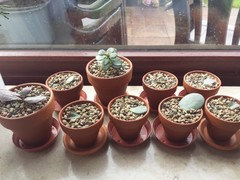
In the last couple of weeks I've repotted a lot of my succulents (haworthias, mesembs) with pure Lechuza Pon. Yes, I succumbed: I was fed up with perlite, too expensive C&S soil and making my own mixes. Plus it's a lot heavier, making the pots a lot more stable which is a big bonus when you have cats running around the house.

Much to my surprise all the repotted plants are really starting to look a lot better, even though most of them haven't been watered yet since.

Have any of you here experience with the product? Just wondering how good it will be (remain) in the long run...

Comments (121)

  • 9 years ago

    No, that is far from brilliant marketing. But not ordering the tubs is a decision by the retailer? We here are lucky that Holland Park garden centre stocks all sizes.

  • 9 years ago

    I have a question about Lechuza Pon. On the packaging it says that it is ideal for indoor use, but if I were to leave my plants outside for Spring/Summer with this substrate, would it still be okay?

    Also, once the fertilizer is used up/gone, is it okay to not fertilize and let the plants grow naturally ?

  • 9 years ago

    I would think that in the summer, during longer periods of dry weather, the plants need more additional watering than plants in organix mix, and that it could even burn the roots if the plants are in the sun. It also depends on the type of plant. I keep all mine indoors.

    After 6 months the fertilizer is supposed to be used up (you can tell when the little yellow balls don't show anymore). Again, depending on the type of plant, it will need additional fertiliser then to promote more prolific growth and- if applicable- flowering.

  • 9 years ago
    last modified: 9 years ago

    Shiki

    I do not have LechuzaPon, but grow all succulents in similar - very gritty, inorganic mix (grit+perlite+turface). Plants are taken outdoors in Spring and stay there until late Fall (they are still outdoors).

    On occasion, I added some slow release fert when making the mix, but usually either don't have any or forget to. I do not fertilize them, they may get some fert IF they need to be watered by me (most often they get water from rain), and IF I happen to have fert solution left from watering vegetable garden. That happens quite seldom, maybe couple of/few times while they are outdoors. I use collected rain water. I am not against fertilizers, and can see that ppl using it regularly get much bigger plant much faster - but grow mine closer to the way you describe.

  • 9 years ago

    No problem with Lechuza Pon outdoors. I have a potful of Kalanchoes that has been outside all summer. Same for aloes. I also have small cacti and other succulents outside in LP. The plants are all doing fine, it works like any other gritty mix: you have to find out your watering schedule for your situation. I have not fertilized these plants this year. Next year I will give some half strength fertilizer every month or so.

  • 9 years ago

    Works fine for me outdoors all summer long. I don't give much credit to the fertilizer it contains (very minimal) and just carry out my normal routine.

  • 9 years ago

    Sorry, I have another question, I am thinking of buying the Lechuza Pon this coming week and was wondering is it a bad time to repot plants in this substrate that has fertilizer in it just before Autumn ? Or should I wait until early Spring to switch to this substrate? I am planning on repotting Jade plants (crassula ovata).

  • 9 years ago

    Should be fine. As you water less, there will be less fertilizer available. If you don't trust it, just search out some of the apricot colour pieces and dispose of them. They are the fertilizer pellets. Easy to find.

  • 9 years ago
    last modified: 9 years ago

    And, if you are keeping your jades indoor where it is warm and in good light/perhaps under lights, they will just keep growing.

  • 9 years ago

    I have just purchased a bit pot of LP, amazingly available in UK. I have recently been using gritty mix and I dont think this is going to work out any more expensive that the gritty mix components. Will give it a try and we shall see how the plants like it.

  • 9 years ago

    And so much easier... ;-)

  • 9 years ago

    Good luck! I'm having great results with Lechuza Pon. For me I will still use gritty mix for most my plants but LP is just right for others.

    I think using LP only would probably be enough for most succulent growers.

  • 9 years ago

    Elizabeth

    LechuzaPon substrate should be available to you, it is used a lot in Europe. IIRC, it originates in Germany...

  • 9 years ago
    last modified: 9 years ago

    I have been using straight Lechuza Pon this year for all my succulents, outdoors for summer, with good success.

    I have still had rotting with heavy rains this summer--I guess that would happen with any substrate though.

    i am also trying out the whole LP system with their self watering pots for my tropical houseplants. Lots of success with my humidity loving plants. My rex begonias seem to go downhill as soon as I plant them in the self watering pots. I don't understand it because the canes are happy.

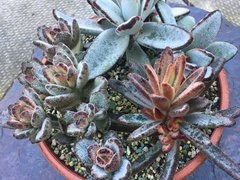
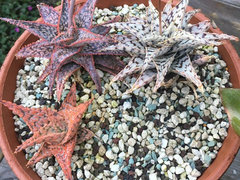
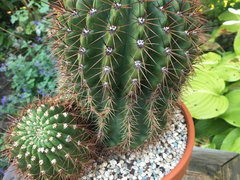
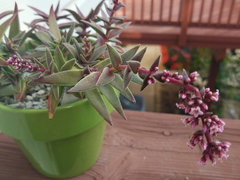
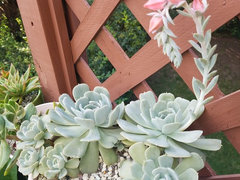
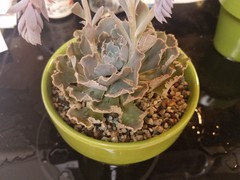
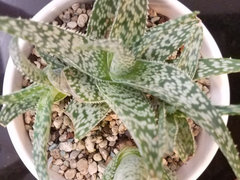
    Pictures of some of my succulents in LP:

  • 9 years ago

    Regarding their pricing: maybe I'm wrong, but I believe its primarily a product used in commercial settings as part of a system. Some of their pots are pretty big. I have one of their small pots with the pon and a wick that I should give a try in Spring.


    I remember seeing an article in an industry magazine that detailed 5 or 6 similar systems including lechuza pon. Think of how nice it is for service people to do a little grooming, check water level and go.

  • 9 years ago
    last modified: 9 years ago

    Thanks for everyone's advice on this substrate. I have finally bought the 25L tub of Lechuza Pon ( ~22€ ) and have repotted nearly all of my jade plants. Much easier and cleaner than messing around with soil.

    The cuttings that I am propagating seems to like it, as I have noticed more new roots rooting after planting it in this substrate 2 days ago. I have also switched to terracotta pots, as many have told me to get rid of the double potting in pretty cache pots.

    Shame about the weather at the moment, as we have rain everyday for the past week and this coming week too. I wonder when's the best time to prune plants for a tighter, bushier growth?

  • 9 years ago

    Unless you have good artificial light for the winter, I would wait to prune in the spring.

  • 9 years ago

    I just received the 25LT Pons and it smells funny. Like mold.

    There was no moisture. The rocks were dry.


    Has anyone notice a smell with their Pons?


  • 9 years ago

    No, definitely not a mold smell.

    Strange too the grit was dry.

  • 9 years ago
    last modified: 9 years ago

    No smell here either. Maybe a very old container; moldy when still moist, but dried up later?

  • 9 years ago

    Mine has no smell, but when I water my plants, then I do notice a (earthy?) smell when the Lechuza Pon is wet. I only bought this less than a week ago.

  • 9 years ago

    @ConnyNL

    The grit that came with the pot looks wet, I can see moisture beading in the plastic package.

    The grit that is in the 25LT is dry, and smells weird.

  • 9 years ago

    I called Lechuza and they said they'd investigate. I wonder if I washed it thoroughly would all the nutrients be washed away too? There's a definite smell that reminds me of damp basements and closets.

  • 9 years ago

    Nana, I've bought both 25L tubs and 12L bags. The grit was/is always damp in both types of packaging and I've never smelled a funny smell (have used/opened about 12 packing units by now).

  • 9 years ago

    I have a 25L tub and it smells fine, nothing unusual. There was some condensation when I first opened the bucket and I let it air out for some time. Occasionally I open it up let any other moisture escape.

  • 9 years ago

    Ok Lechuza US was extremely unhelpful.

    Did not contact me or return my emails.

    After half an hour wait on the phone I finally reached an operator who put me on hold again to ask someone else's advice! After alot of hemming and hawing, I was told to air the grits out and do not wash since it will even smell stronger.

    I am disgusted with this company's customer service. Will be leaving a negative review to warn other consumers.

    My instinct tells me to wash the grits thoroughly and let them dry to get rid of the mildew. But I guess that will wash away any added fertilizer.

    Does anyone have advice?

  • 9 years ago

    Who did you buy it from? I would return it, but I don't know what return policies are like in your country.

  • 9 years ago

    I bought it from Lechuza US in New Jersey.

    Pon maybe isn't selling well in the US and the supply just sit in a warehouse getting moldy. Yuck.

    I don't want to ship 50lbs of rocks, it's heavy and I can't carry it down a flight of stairs.
    They need to have better customer service, someone who's a subject matter expert. The people I talked to are just phone operators at the parent company, Playmobile.

  • 9 years ago

    Hm, that indeed makes it difficult to return. Great shame you're having such a bad experience, my plants thrive in it.

  • 9 years ago

    @ewwmayo

    Thanks, I will do that. Should I use soap? I was going to use hydro peroxide.

    I didn't see any fuzz on the top layer but it smells very moldy. It is a huge tub, I had to wash it thoroughly and transferred the grit to another container.

  • 9 years ago

    @connyNL

    I know, I'm so very disappointed because I was hoping to re pot my plants immediately. Now I will have to wash and wait for it to dry.

  • 9 years ago

    Nana, as Kevin advised: dry it in thin layers, as otherwise it will take what seems like forever.

  • 9 years ago

    Maybe peroxide but I wouldn't use soap. Soap residue not good for plants.

    For the peroxide I'd expect you need a concentration high enough to kill mould.

  • 9 years ago

    I agree that soap is a no go. I wonder if the odor is concentrated in a closed container and there isn't much in there. Its worth remembering that fungus and mold are pretty much everywhere and only flourishes under the right conditions. Maybe after a single good stir and rinse in its tub, it'll be ok.


    Maybe i'm doing things wrong, but when i'm mixing things up, its often damp because I might rinse some ingredient before putting it in or something.

  • 9 years ago

    I will get some 3% hydro peroxide this weekend and start washing. Will have to dry it on my window sill since I live in an apartment, but maybe a fan and temps in the 90s will do the job. Thanks everyone for the support! Can't wait to re pot my plants!

  • 9 years ago
    last modified: 9 years ago

    I am using the Lechuza system--the pons and the SW pots on some of my houseplants (none of my succulents are in the SW pots). The top layer of pons gets white fuzzies on it in the SW pots--mold I think. Has anyone had rhis problem and knows why it is happening and if there is a fix?

  • 9 years ago

    I only noticed mold/white fuzz on the end of the stems when I'm trying to propagate new plants. Not sure if its due to moisture or water. I've only noticed this on 3 cuttings

  • 9 years ago

    I think it must be due to moisture--it does not happen on all the plants in the SW pots, just some of them. I wish I knew how to stop it from happening. Maybe I am not leaving enough of a dry period.

  • 9 years ago

    my ferns developed the fuzzies at the base of the plants and alsoon the top soil (not pons). I think it was too humid in the bathroom. Once I moved it to a dryer locAtion the mold stopped.

  • 9 years ago

    The plants with the most mold are on a windowsill in the kitchen, so I do not think it is too humid. I guess I will see if winter changes things.

  • 9 years ago
    last modified: 9 years ago

    If you get mould then it's not enough airflow or too much water / watering too often.

    In my loft, I run an air circulation fan 24/7 to ensure to mold doesn't grow on my succulents and seedlings (particularly vulnerable).

  • 9 years ago
    last modified: 9 years ago

    i'm still trying to figure out how often to water mine in this substrate. Should I just purely wait on the leafs to start shrivelling? I'm mainly growing Crassula Ovata/Jade plants.

  • 9 years ago

    The mold is not on my succulents because those are not in the self-watering Lechuza pots. I have those in regular pots with drainage holes. The mold is only showing up on some of the tropical plants I grow in the self watering pots. The water is always in the reservoir of these pots, so it can't be a watering issue. The plants I have in them are thriving, so I do want to keep using the system. Actually, I am just thinking now that it is only the smallest pots/plants that have mold--the mini Deltinis.

    Shiki, I almost never water my succulents outside in the LP.

  • 9 years ago

    @ewwmayo

    I agree. Air circulation prevents gnats too I think. I had a horrible gnat infestation and the only 2 plants that were safe were facing the AC.

  • 9 years ago
    last modified: 9 years ago

    Shiki - Yes, water based on plant response. The soil may just look 'dry' or it actually be dry, but that doesn't necessarily mean the plant needs more water.

    Makes sense right? Water when the plant needs it. The soil is merely a way to deliver water and nutrients.

  • 9 years ago

    I bought one of those water meters that you stick into the soil. It seems reliable.

  • 6 years ago

    If PON substrate is always dry when do we know when the plant needs water? With regular soil we could check

  • 6 years ago

    PON is not always dry, it gets wet when you water it.

  • 5 years ago
    last modified: 5 years ago

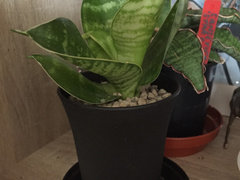
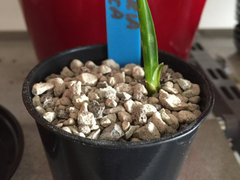
    I have been using pon for a couple of months now and there is definitely an improvement in all my plants. I do not use the watering systems as I only have succulents but I fill a normal pot with the pon give it a good watering and leave. You can find a watering schedule that works or, in my case, water when the leaves are starting to dry up or wrinkle. My Sansevierias absolutely love it although some of the softer leaved Echeverias take a little longer to adjust but once settled are very happy. No more pests, moulds or root rotting. I am surprised there is no info whatsoever on using this substrate without "their own" brand of watering system or any other watering system which I think is just a marketing ploy, of which I spent many, many hours of trawling the internet to find this measly information out!! The only other bit of information regarding the substrate out there is that it can be mixed with compost like pumice which is why I decided to try it on its own and I'm glad I did. Re earlier comments: I am not surprised that retailers' staff do not know how to help consumers as just look at some of the staff that are hired in customer services these days. Very little training & companies do not want to pay extra for those knowledgeable in certain fields. A friend of mine who is a student is a customer service handler for a well known paint retailer and she was told any queries regarding the paint take the info off the paint tins/tubs. AND if the query is about coverage tell the customer to use a test pot first!!! Unfortunately this is the world we live in now. *SIGH*


    One of my Sansevieria plants & a cutting, both in Pon.

0