Software
Houzz Logo Print
heruga

Cryptomeria Yoshino question

9 years ago

Two main questions. It says that their ultimate height is 50 ft. So how many years would it take to reach that height? I know they are fast growers so in like 10 years maybe?

And how do you keep their branches so short and make the whole tree look Slender like this 35 ft one

Comments (33)

  • 9 years ago

    What I see planted out here that I take to be 'Yoshino' based on nursery stock I have encountered is narrow, pointed and dense - the thin- and tufted looking ones you are showing here may be something else. And not what I would consider to be attractive examples - how they are growing is presumably due to adverse site conditions. The scattered, uneven browning they are also displaying would tend to support this.

  • 9 years ago

    Well theres a label under the tree stating its a Yoshino. I do not want a very wide one but want a very thin and tall one. Would those characteristics describe that of a Yoshino? You said narrow and pointed, does that mean the overall tree would look thin if you look from far away? When I visited Japan last december I saw a mountain full of cryptomerias. And they were all super tall and had very short branches and not dense at all. You can see the bark of the tree all the way up to the top. I want something like that. And do you know how long it generally takes for the tree to reach 50 ft?

  • 9 years ago

    'Yoshino' is typically described as a "dense, columnar form with fast growth" and the size is typically stated at 30-40' tall and 20-30' wide, so not a particularly narrow selection at maturity.

    Also, there is really no relationship between species trees growing wild in their native environment and a named cultivar grown under garden conditions. I wouldn't even expect the species to look the same in a US garden as it does growing in the wild in Japan. You are trying to compare apples and oranges.

  • 9 years ago

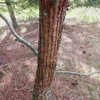
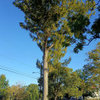
    This is what I kept seeing in Japan. 75% of the trunk is exposed. How do branches not grow on the bottom? I'm pretty sure its not related to any human activity either.. why would they cut off branches for every single trees.

  • 9 years ago

    Anyway, what cultivar is that first pic I posted then?

  • 9 years ago
    last modified: 9 years ago

    It just happens; you don't need to worry about your trees looking like this under normal circumstances. Unless you also plant a forest of them.

  • 9 years ago

    Ok I guess the overcrowding of trees prevents branches from growing. Btw, do you have a guess as to how big a Yoshino would be in 70 years? You said 50 ft in 40 years so I hope its under 70 feet. Or are there any other cryptomeria cultivars that look just like Yoshino but more dwarf?

  • 9 years ago
    last modified: 9 years ago

    Main unique feature of 'Yoshino' is supposed to be that it doesn't discolor in winter. So the ones you asked about do not conform in that respect. Otherwise searching images (link below) does actually reveal multiple individuals (farther along than the nursery sized or comparatively recently planted ones I see here) that do show a more open and tufted habit, in the manner of Sierra redwoods that are starting to move into the coning phase.

    Regarding the appearance produced on Japanese plantations the last picture shows a crowded stand where each specimen does not have enough light to retain lower branches or spread more widely. Any other thick planting or abundant natural sprouting of tall growing conifer species will develop similar individual shapes.

    http://www.bing.com/images/search?q=cryptomeria+yoshino&qpvt=cryptomeria+yoshino&qpvt=cryptomeria+yoshino&qpvt=cryptomeria+yoshino&FORM=IGRE

  • 9 years ago
    last modified: 9 years ago

    Alright I guess I will try a rein's dense jade instead. It looks the same as Yoshino and smaller. I hope this cultivar doesn't reach 40 ft so I can actually use a reachable ladder and start pruning long branches!

  • 9 years ago

    I have a straight species that is just over 60 ft and almost 40 years old that I planted in the early 80s. It's not a very attractive tree because it's usually showing a lot of dead growth. On the left behind the red Japanese maple. Not a good picture, but the best I could find right now.

    Perhaps C. j. 'Black Dragon' might be a better choice for what you are attempting. It's growth is much slower than the species.
    By cutting off the longer branches you will make the trunk larger in proportion to the height, commonly done in bonsai and Niwaki pruning. Here's a few I've done with Cryptomeria japonica 'Jin Dai', making it look like an old growth tree. 'Jin Dai' grows even slower yet. This one is about 30 years old and has never been topped.


  • 9 years ago

    If what you are looking for is an exposed trunk, scotch pine might be worth a look.


    For reasons explained above, a single tree is never going to have a top only and a bare trunk. even the picture you showed...there was something that happened that took down the outside, exposing the closely grown forest, and the bare trunks.


    I'm north of you in connecticut, and I have yoshin planted as 6 footers four years ago. they are now 10'. rein's dense jade planted as 4' at the same time, i'd call them 5' now.


    I also have some, I think they are yoshino, planted about 20 years ago. i'd call them 40' tall, in the 15' wide range.


    In our winters, cryptomeria bronzes. every single one. they winter fine, the green summertime foliage just becomes a bronze color, and returns to green when the new growth emerges. maps say we're z6, but yeah...we're z5.

  • 9 years ago

    USDA zones are based on averages and not absolutes.

  • 9 years ago
    last modified: 9 years ago

    "It's not a very attractive tree because it's usually showing a lot of dead growth."

    They come from a place with monsoon summers and highly reliable rainfall; even in the "rainfall evenly distributed" eastern US, they only develop well on high quality sites and soils. So...mine so far looks fine...various public gardens in the Delaware Valley - fine; but I know of several in the immediate area (Harford, Cecil, New Castle counties) that looked terrible for years and were removed. Not a tree to use as a "gas station plant"!

    Older ones in SE Virginia tends to look a little better, on average, than the DC or Baltimore areas...I suspect the open, sandy soils, high water tables and slightly higher and more reliable summer rainfall helps. I've seen some really spectacular ones in Norfolk and VA Beach. (but they are by no means common)

    The winter color change is highly cultivar dependent. My 'Yoshino' has never turned even a little brown, even in the polar winters; 'Radicans' and 'Rasen' varies depending on the winter severity that year, 'Araucarioides' almost seems random, and 'Elegans' always turns a deep purplish brown. That cultivar even changes color in places with astonishingly mild winters and little variance between summer and winter, like coastal Northern California.

  • 9 years ago
    last modified: 9 years ago

    Cunninghamia and Sawara also often display "dead brown junk" in this area of dry summers and often nitrogen deficient soils (on developed sites), where many may also water and fertilize turf areas while skipping adjacent tree and shrub plantings.

    That are often not even kept mulched.

    When I first saw China fir in the high precipitation and volcanic soil of the Hawaiian cloud forest I had to stare at it for awhile to be sure that is what it was, it was so dark, dense and lush.

  • 9 years ago
    last modified: 9 years ago

    Yep Cunninghamia has this problem even more, on the very best soils in the eastern US, they will look pretty full with minimal dead branchlets, but we just don't have the rainfall for it generally.

    Embo, would you mind sharing where I can see plants like that in Hawaii? I've heard of Proteas being grown, commercially, in the mountains but was not aware of any public gardens at altitude. In the right area, one could probably have an amazing garden of SW Chinese things like Luculia, tender Rhododendrons, etc.

  • 9 years ago

    Yes, Cunninghamia in the VA State Arb have alot of interior/lower browning, made worse by the persistence of the dead stuff.

  • 9 years ago

    My Cryptomeria is planted in good deep soil with plenty of moisture and drainage throughout the summer and winter. It's three feet above the winter water table on a slope.

    Here's a streetside view of a ratty looking Cunninghamia on the island of Kauai on Kokee Rd. above Waimea Canyon. Sequoia sempervirens are there also but I can't make them out very well in the streetside views. I know of a few in private gardens just down the road that are much better looking.

    https://www.google.com/maps/@22.1304425,-159.6549495,3a,75y,315.45h,117.42t/data=!3m6!1e1!3m4!1sCMOsjNKLnx9LAv-c6vEyiQ!2e0!7i13312!8i6656?hl=en

  • 9 years ago
    last modified: 9 years ago

    I saw them growing here and there in the forest near roads in a residential area. As though naturalized.

    "Plenty of moisture" here is not the same as in a cloud forest, unless copious irrigation that matches the same amounts and distribution patterns of precipitation is being employed. Except in those areas that are drier than usual for most of the country it rains buckets throughout the growing season in China. During a talk I saw last year about a plant collecting trip there in which the director of the Rhododendron Species Botanical Garden participated he said it was the first time he had been there when it did not rain the entire time he was there. And he had been there multiple times by then.

  • 9 years ago
    last modified: 9 years ago

    I tend to side with embo on this one. Your dewpoints in the PNW are low in summer. These type plants must evapotranspire more moisture than they would in China or the Himalayas. Larry Stanley told me the reason he thought his Abies spectabilis looked ratty was that the PNW was just too dry in summer, no matter how much you water it.

    Of course, different clones of a species might have slightly differing requirements!

  • 9 years ago

    waynedanielson, is the reins dense jade similar in appearance to that of a Yoshino? Basically what I'm looking for is a cryptomeria that looks just like yoshino or the species but more dwarf. I currently have a black dragon in my yard that I planted last spring and the shape looks unique and cool but not what I'm looking for when it comes to a cryptomeria.

  • 9 years ago
    last modified: 9 years ago

    Abies spectabilis is an east Himalayan species resembling A. delavayi and coming from a similar climate with predictable weather patterns including quite sodden summers. Like various other plant species from the same general environment it is so used to seasonal consistency that it will be damaged if any frost occurs after its new growth starts in spring. As might happen fairly often in Britain for instance.

    Frank Kingdon-Ward walked for days through dead rhododendrons on one Chinese trip because for once the monsoon didn't come to that particular area and this was so unusual that they all just up and died, due to them having no ingrained tolerance for it.

    Is 'Reins Dense Jade' similar in appearance to 'Yoshino'?

    That one doesn't look natural either. Off the top of my head I can't think of any dwarf or slow growing Tsugi cultivars that do.

  • 9 years ago

    Look distinctly different. best advice, grow it in half shade, find something that will do what you desire (ie, different species), or accept that landscape trees and forest or plantation trees are entirely different creatures.

  • 9 years ago
    last modified: 9 years ago

    BTW the Hawaiian location posted is actually in something of a rain shadow:

    Being along the red-orange and orange squiggles on the 10 o'clock position of the island. A clue to that was that when I zoomed out, there's an observatory just a few miles away! They wouldn't put those in the rainier parts LOL.

  • 9 years ago

    Elsewhere Hawaii has a rain forest and a desert 1 mile away from each other.

  • 9 years ago
    last modified: 9 years ago

    "Frank Kingdon-Ward walked for days through dead rhododendrons on one
    Chinese trip because for once the monsoon didn't come to that particular
    area and this was so unusual that they all just up and died, due to
    them having no ingrained tolerance for it."
    You've mentioned that before, do you know where that is documented? Not that I don't believe you, I would just find it interesting to know the specific area. Obviously over the broad core of the Himalayas (their front ranges, anyhow) and SW Chinese mountains it's well nigh impossible for monsoon to just not arrive at all...can't happen given the way the atmosphere and upper level winds work. But it can be late, and from looking at Indian weather maps over the years (which of course do not cover China) the overall shape of the "blob" can vary especially over lower elevation areas. The farther from that core area, and the farther you go from ocean water, period, the more variability. Which for example might explain why the more inland but still mountaineous Larix mastersiana grows happily here even during dry spells, while the related Larix griffithiana probably wouldn't.

    As you point out, when it doesn't arrive, the plants just die. Unlike our eastern native rhododendrons, they have no inbuilt tolerance to a degree of drought.

  • 9 years ago

    The streetside view of the Cunninghamias on Kokee Rd. is a lot different than I remember it the last time I was up there. Hurricane Iniki trashed the whole island since then. It looks like there's only about a 1/4 of the trees left in that strip between the road and park.

    I believe the 'observatory' you saw, David, supports the test facilities at Barking Sands Pacific Missile Range Facility. The radar dome sure looks like an observatory though.

    I have another, smaller species Cryptomeria that doesn't look too bad this time of year. Just to the left of the Cunninghamia.


  • 9 years ago
    last modified: 9 years ago

    Nope, it was the "Kokee Park Geophysical Observatory" - but now that you mention it I further googled...it appears to be a radio telescope LOL.

    Anyhow it's all kind of a moot point; I suppose Cunninghamias etc. could look almost flawless in some perfect situations in the PNW, but the fact is I've seen many pics of them looking haggard there just as they do in most parts of the east coast. Maybe even in less favorable northern parts of China they could, too. Big picture is the really want that cloudy, constantly rainy summer they get in the core of their native range.

  • 9 years ago
    last modified: 9 years ago

    The Kingdon-Ward anecdote was probably in Cox, The Larger Rhododendrons. I no longer have a copy here.

    I would say both examples of each species in the last photo have gaps with dead foliage showing. The Tsugi has them all through the canopy.

  • 9 years ago

    Sigh is there anyway I can keep a Yoshino under 30 feet over the time of 50 years?

  • 9 years ago

    Not without annual reduction of the new growth being maintained throughout the entire time. (Bonsai growers prune both the tops and the roots every year to keep their subjects miniaturized).

  • 9 years ago

    I'm willing to do that. Don't want any Giants by my house. So they aren't top sensitive to pruning? I know some trees are best left to grow naturally and will suffer it their natural size is shortened

  • 9 years ago

    Independent garden center near here has tubbed 'Gracilis' for sale pruned like Mike's and maybe 10 ft. tall so you might want to try that one for the effect you are trying to create.