Software
Houzz Logo Print
lisa_newport

Last year's cucumber issues. How to avoid ?

9 years ago
last modified: 9 years ago

Last year I had a lot of issues with my cucumbers. From aphids to pollination issues.

My cucumbers were being attacked by these aphids and spider mites so I would wash them off but I don't think I was ever able to stay ahead of the game. Later I tried to use diatomaceous earth earth on JUST the leaves and stems and I *think* that helped. I was worried about any pollinators being killed by this stuff but I'm not sure I even saw any and I only managed to get a few cukes. I think those I did, at least one or two was because I tried to hand pollinate.

I'm thinking about buying lady bugs this year if I start to see them. Will that work? If not then what could work that won't kill pollinators as well?


Also how can I attract more pollinators? I can try and hand pollinate but I really would like to have more pollinators do the work for me instead.


Thank You in advance!

Comments (17)

  • 9 years ago
    last modified: 9 years ago

    One answer for both of your issues, the pests and the lack of pollinators, is to make your yard bug friendly. Limit the use of pesticides, whether they be organic or not, and plant flowers that both attract and give habitat to pollinators and predators (wasps, lacewings, ladybugs, and many others).

    There will be times when you need to intervene and use pesticides. In the case of aphids and spider mites, if blasting them off with water isn't helping (you gotta be diligent) then a spray of insecticidal soap should be the strongest thing needed. Just don't spray any pollinators directly and you'll be fine.

    Rodney

  • 9 years ago

    Sunflowers bring in pollinators, tomatoes have a natural insecticide that kills aphids, just plant some near them, marigolds work too.

  • 9 years ago

    Sunflowers bring in pollinators,

    Aren't sunflowers allelopaths?

  • 9 years ago

    Planting flowers that bring in the good bugs. I let lettuce bolt for that reason.

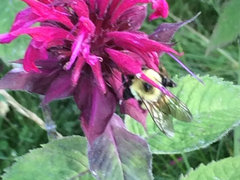
    Beebalm is another great pollinator attractor

  • 9 years ago

    Thanks everyone! I was reading about bringing in pollinators and it looks like I have some more planting to do. I had my tomatoes near my cukes last year and that didn't help LOL.

    I also bought a mason bee house, maybe it will help? I really appreciate all the help.

  • 9 years ago

    @Lucille I had bees constantly on my sunflowers

  • 9 years ago

    Lucille's point was that sunflowers, like walnut tress etc. are allelopathic. They produce biochemicals that stunt adjacent plant growth. Has nothing to do with bees, just that there are many flowers one can plant to attract bees that are NOT allelopathic to other plants.. ;-)

    Dave


    https://en.wikipedia.org/wiki/Allelopathy

  • 9 years ago

    Cool, good piece of info to know, thank you.

  • 9 years ago

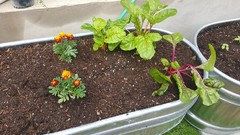
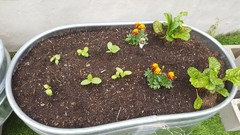
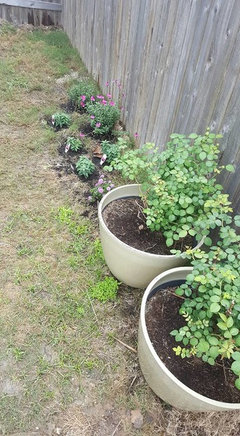
    Thought I would share. I planted some salvia autumn, bee balm, lantana and marigolds. I also moved some potted rose bushes over for good measure.

    I also bought a mason bee house. How am I doing here?

    Anything else I can do to attract pollinators to my cucumbers when they are ready?


  • 9 years ago
    last modified: 9 years ago

    Allelopathic annuals are fairly east to manage. If sunflowers are a concern, just plant them a few feet from other plants. To pollinators like wasps and bees, a small distance is not a problem. Another advantage I found with sunflowers was that stink bugs generally preferred them over tomatoes. Since it's the seeds I harvest from sunflower - vs. the tomato fruits - it was a win/win. Inspecting the sunflowers to eradicate the stink bugs was immeasurably easier than trying to find them on tomatoes.

  • 9 years ago

    Another option is to try a parthenocarpic variety like Diva, but it's not exactly tough standing up to insects. Arkansas Little Leaf is an OP pickler, a resilient old inter-species cross that resists bacterial wilt and other diseases, but it requires repeat visits from pollinating insects.

    To address pollination, the companion plant you want is borage -- a clump at each end of your cucumber planting. The borage blooms in sync with cucumbers planted at the same time, and attracts so many buzz pollinators that I think cucumber beetles are deterred, too, due to crowded air space.

  • 9 years ago

    My experience has always been that if you plant it..pollinators will find it! I live in a rural area, though, and maybe just naturally have more bugs?? I have never done anything special, although I do grow organically. I think the problem with the cukes has got more to do with sickly plants than it does not attracting pollinators.

    As for aphids and spider mites...a good spray of plain water should really get rid of most of them, but you have to be out there every day spraying until they're gone. One other thing that hasn't been mentioned is covering your plants until they start blooming. This will help them get bigger/stronger before you remove the cover so they are more resistant to bad bugs, and by the time bugs attack, the ratio of plant material to insects will be much more favorable to the plants.

  • 9 years ago

    Thanks for the suggestion. I have heard a LOT about Borage. I tried to start some by seed and failed. I'll have to see if any garden area has any. I'll also try and cover them up. Great suggestion and Thank You.

    As for types of cukes. Husband is WAY picky about food and Japanese cukes are thinned skin and do not have a lot of seeds vs. American cukes so trying other varieties a risk. I love certain salad that uses cukes and if it wasn't for these, I would be the only one who would eat the salad which sucks for me.


  • 9 years ago
    last modified: 9 years ago

    A cuke breeder once told me that there was a tradeoff between the bitter and non-bitter genes and spider mites. In other words, the same gene that allows fruits to become bitter under stress deters feeding by spider mites. If you only grow varieties that lack the bitter gene, you will probably have spider mites.

    When I have had to fight spider mites, I found that covering the plants with a cotton sheet for a day after spraying insecticidal soap made it more effective. The mites don't like shade.

  • 9 years ago

    I am a novice gardener so my experience is limited but here are my thoughts:


    If you like the sunflower idea you can grow them in containers by themselves or in the same container as the cucumbers because I don't think sunflowers are allelopathic to cucumbers as it is often recommended as a companion plant..


    Last year I had a lemon cucumber and sunflower plant in the same container, actually I don't recall it being that great with pollinators and it attracted ants which bugged me but I don't think they harmed the plants. One mistake I did make was sprinkling diatomaceous earth on the plants to deal with the ants and that may have inhibited/repelled the pollinators, although I think at the time most of my plants were male. If I had to do it all over again I would let the ants be or sprinkle the DE less liberally to avoid the blossoming cucumber plant.


    I think that you have a good selection of flowers, I think the salvia should work really well. I am a marigold fan but have read that they attract spider mites which I don't know if that's a good thing or bad thing. It's a good thing if they serve as a trap crop but a bad thing if they attract the spider mites to neighboring plants. If it's the bad thing scenario then I would still have them in the garden but not near the cucumbers.


    I bought a penta flower plant on clearance at Lowe's and it was a great pollinator, I brought it indoors for the winter and hope it will serve me well this upcoming season. I also bought a snapdragon which bloomed so-so last fall but it is doing beautifully now. My plan is to plant bee balm, borage, lavender, tansy, dill, alyssum, anise hyssop, basil, more salvia, more nasturtiums, et. al. for the pollinators (and other reasons) and I also hope to acquire an African Blue Basil plant. Now that I write this, it seems like overkill, and it is, but another thing to take into consideration is bloom times, some plants are not going to produce blooms for the duration of the growing season.


    The other thing to take into consideration is the timing of watering plants and treating plants with insecticides, all things considered, my conclusion is that it is best to water in the morning before the pollinators show up and do insecticide treatments, organic or otherwise, in the evening. I guess if you are using water to blast the aphids and mites off the plants that that could be done morning or evening but my understanding is that it's best for the plants to not be too wet during the time the pollinators visit.


    I have a question for you, I see that you live in zone 8b, what state are you in because I am curious if you had powdery mildew issues. I was very diligent with spraying my plants a homemade concoction containing baking soda and did not have a problem, but then I got lax, the plant got powdery mildew and that is what ultimately killed my lone cucumber plant.

  • 9 years ago

    I'm not interested in growing Sunflowers so no concerns here with them. I planted Borage this weekend around the cukes and I have nasturtiums growing near by as well.

    I plan on adding more flowering plants soon to the mix. I happen to be in Austin, TX and I haven't seen powdery mildew. I really hope that's not in the works because I would really like to get a hang of growing these cukes again. Back when I lived in another area of town I had an abundance of cukes. I would like to have that problem again.