

Most Expensive Gritty Mix On Earth
Hello all!
I'm trying to build my first ever batch of Al's gritty mix, and at the rate I'm gong this stuff is going to be right up there with printer ink and saffron in terms of price!
After struggling with Home Depot orchid bark (too large, blender didn't do a great job on it), I just paid $25 for a 24 QT bag of Repti-Bark at Petco in the hopes that it would be correctly pre-sized. After screening it through 1/4" hardware cloth and 1/8 insect screen, I have less than a gallon ziplock bag full of ideal "pine bark fines". At least twice as expensive as buying straight from a fancypants bonsai supply store.
Considering that pine bark is supposed to function in Al's gritty mix as a "cheap filler" (having the average water retention of Turface and granite), I'm feeling pretty ridiculous.
I also just saw that Repti-Bark is 30% off online, ($17) which brings the nonsense level of this undertaking up an additional notch.
I at least want to try to process the remaining material so it can be used. I'm planning to try running over with my car to crush it down...should this be effective? I don't own any kind of chipper.
Can anyone help me steer my way out of this absurdity tunnel? I'm thinking of abandoning the pine bark all together since it's absurdly expensive/labor intensive, and I can probably do without the slight acidification that Al cites as the other reason to include it.
P.S. I'm based in South Florida (Broward County - Oakland Park area) ...I don't know how to update this info in my profile.
Comments (47)
 9 years ago
You might want to checkout local orchid nurseries or the Ft. Lauterdale Orchid Society for sources of seedling orchid bark. Shouldn't be too hard to find down there. Plenty of bark chips being made in Georgia.
Related Professionals
Panama City Landscape Architects & Landscape Designers · Toms River Landscape Architects & Landscape Designers · Dayton Landscape Architects & Landscape Designers · Bloomington Landscape Architects & Landscape Designers · Brooklyn Landscape Architects & Landscape Designers · Albany Landscape Contractors · Baltimore Landscape Contractors · Orange County Landscape Contractors · Florence Home Builders · Jacksonville Home Builders · Kissimmee Home Builders · Columbia Home Builders · Saint Joseph Home Builders · Clarksdale Home Builders · Riverside Home Builders 9 years ago
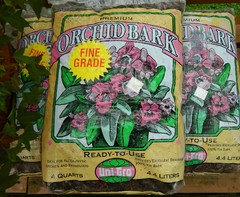
I've recently been using this product.
As Nil said, if you can find an orchid nursery, you should be in luck.
 9 years agolast modified: 9 years ago
Don't worry, reptibark is even more expensive here in Canada and that's not even including the cost of a blender or the back pain.
My tip is that I don't buy bark anymore for gritty mix after going to great lengths for little gain.
 9 years ago
For me the gritty mix is too gritty for the heat we have in Florida. You may be going to GREAT lengths for something that works better in cooler climates.
Melochia Tomentosa
Original Author9 years agoThanks so much for the feedback, guys! I really appreciate the product suggestions, I'll definitely look into those for my next batch. I've processed all my Reptibark and generated enough mix to repot all my plants with some in reserve. I'm watering everything with a 1/4tsp/gal Foliage Pro solution as needed.
Results have been interesting! Laura, I think the mix may work better for me because my outdoor space is a screened second floor porch behind a tree that only gets about 4 hrs of full sun a day (if that). (In fact, I've recently added a CFL grow light to keep my new succulents/bonsai happier).
OUTCOME:Spathyphilum/peace lily: After about a week in gritty mix with daily soaking, I think it's firmly on the road to recovery. It wilted a bit at first, bc I wasn't watering it enough for such a recent transplant. Until it's further along, I'll continue watering daily. No new leaf growth yet, but I think the roots are very reduced/damaged and the plant is focusing on repairing things below the soil.
Moonglow Echeveria: I managed to over water it, which I didn't think was possible in gritty mix! Now I'm just hoping it's not too far gone. It was so beautiful! D:
Bonsai (melochia tomentosa/pyramid bush): Since I brought it home leaves have been getting larger and it has stopped flowering, suggesting too little sun. Added 60W CFL 5500K grow light right overhead to supplement (2 days ago) + re-potted into gritty mix. Watering once a day on average with 1/4 foliage pro. Gets yellow leaves, still not flowering. Vigorous growth of new leaves though... mysterious. 9 years ago
Ewwwmayo...
What are you doing instead of the bark?
"Don't worry, reptibark is even more expensive here in Canada and that's not even including the cost of a blender or the back pain.My tip is that I don't buy bark anymore for gritty mix after going to great lengths for little gain."
- 9 years agolast modified: 9 years ago
Turface, granite, pumice. Perlite in some cases. There are many options other than bark. All depends what is locally available.
And yes, even just Turface and granite works. Lately I got my hands on lava rock and zeolite and trying that out for some plants.
- 9 years ago
Hi Josh,
Any pictures of the FINE GRADE Orchid Bark? I'm looking around for some in MA / NH but no luck so far. I just emailed the local Orchid Supply place. Waiting to hear back.
"I've recently been using this product.As Nil said, if you can find an orchid nursery, you should be in luck."
- 9 years ago
Yeah, I'll post some pics of the raw bark once I'm back home.
Josh
 9 years agolast modified: 9 years ago
I started making my own gritty mix for my Hoyas and succulents last year and it has made a world of difference! I bought various sized screens that fit on 5 gallon buckets and I have been using fine black lava, pumice, Turface MVP (which I found on the SUPER cheap at an irrigation supply store, $13 for a 50lb bag) and bark... The bark has been the most expensive, by far, and I use a slightly higher ratio for my Hoya mix... so I'm interested to hear y'alls feedback!
I even went out and bought my first orchid, due to the copious amounts of left over coarse bark I have. Ha!
Also, I had been using decomposed granite, you can find it anywhere down here very cheap... but it seems too heavy for my taste, and its a pain to rinse! It does look beautiful in the mix though.
Before and After: my Hoya pubicalyx had been doing NOTHING for a couple of years. The right picture shows the growth in the gritty mix after a little less than a year.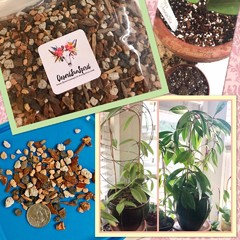
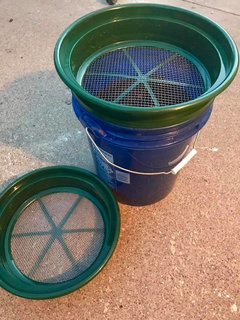
Melochia Tomentosa
Original Author9 years agolast modified: 9 years agoPostpunkgirl those screens look great! I considered that set, but some of the Amazon reviews discouraged me and I wound up McGyvering my own instead. If you don't screen too much at once, the weight limitations aren't a big deal though, so I don't know what I was worried about...
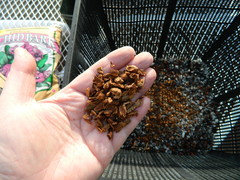
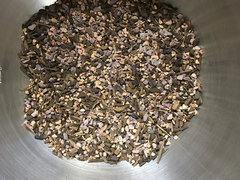
Your mix looks great! Here are some pics of the finished product I was able to produce...
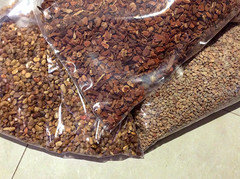
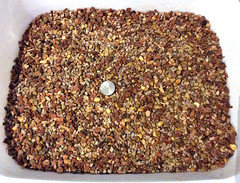

Fortunately I've found a good cheap source for Turface and pre-screened pool filter gravel, bc now I want to do 15 gallons of tomatoes :D Blenderizing ReptiBark for that will be a nightmare, so I'm going to do my darndest to find an orchid nursery as suggested. :)
Melochia Tomentosa
Original Author9 years agoGreenman28, can you post a pic of the fine grade orchid bark with a nickle for scale?
- 9 years agolast modified: 9 years ago
Melochia, your particle size looks awesome too! What all do you use in your mix... do I see river pebbles, or is that the pool gravel? I was also 'McGyvering' my own screens, using wire mesh and a bucket... The new screens are SOOOO much easier, faster, and they are stackable! I really mostly utilize the 1/8 inch and 1/4 inch... but I also purchased 1/12 inch that is good for trapping small particles that I can't bare to waist. I use the smallest particles for babies and plants with delicate roots.
Melochia Tomentosa
Original Author9 years agolast modified: 9 years agoUm, so, I'm kind of embarrassed to admit it, but that's aquarium gravel....aaand the little medium sized bag cost $17. I GOT IMPATIENT, OKAY? XD lol. So my gritty mix really IS probably the most expensive on earth. D: But next time I'll be getting the pool filter stuff, which should be very similar. I figure these pebbles are a good sub for granite in terms of water retention (basically none), and I'm a huge fan of the pre-screened size. They look nice too!
So my gritty mix is:
1pt-pine bark / 1pt-gravel / 1pt Turface MVP --- (all screened to between 1/4"-1/8")...as close to the original recipe as I could get!
I made my screens from plastic tubs and hardware cloth, assembled with zip ties! They also stack, which feels very fancy and efficient :D I did 1/4 and 1/8 for the gritty mix, but I might make a smaller one, as you say. I have heard it said that seedlings in particular need good aeration, so Al cautions against going too small with the particle size, but I have the same impulse as you do and I also want to find a use for the smaller material!
- 9 years ago
HAHAHA... my very first mix had the same! I found it on clearance at a pet store, and it felt so rewarding to have so much on the cheap... and I would totally use it again at the clearance price! My jades seemed to ADORE it... and the particle size is pretty perfect.
 9 years ago
Do check out any landscaping or irrigation supply stores in your area. John Deere and Ewings are chains that are said to carry bark, cherry stone, and/or Turface.
As for me, I'm all excited about finding perfectly sized cherry stone, bark, and calcined clay that's supposed to be equivalent to Turface (I'll confirm that claim soon) at a local farm supply store for extremely reasonable prices.
Melochia Tomentosa
Original Author9 years agolast modified: 9 years agoLitterbuggy, lucky you finding all three ingredients in one place! I just learned that the sand company I was going to buy Turface and perfect-sized gravel from closes at 4 every day, has no weekend hours, and is 40 mins from me (too far to make the run on a lunch break). I went up north to a landscaping supplier instead just now and scored two 50 lb bags for $12 each. This evening I'll pick up chicken grit from a feed store. I've found an orchid supply place that sells screened pine bark, but it ain't cheap (9$ for 1/4 cubic foot).
That leads me to my next question, which is really for Al (@tapla) or someone who knows his position on the matter: if pine bark is not available, is it best to forgo a third ingredient entirely (since bark has the average properties of turface and granite), or should I look for a substitute with SOME water retention capacity...pumice, etc? (Full details: I'm going to be mixing 16 gallons of gritty mix to grow sungold tomatoes in on my patio.)
THANKS!!! :D
Melochia Tomentosa
Original Author9 years ago*Gasp* That looks exquisite!! Too bad I can't even find it online, let alone in a local store :*( What do you pay for it per bag?
- 9 years agolast modified: 9 years ago
Melochia - You can customize and substitute mix in a multitude of ways.
You can swap out the grit for lava rock. Pumice or perlite can be used instead of bark. Other baked clays can be used instead of Turface.
These are just are a few examples. In fact, I would recommend customizing the ratios for the different plants you grow. This is how you can maximize your soil mix in performance, cost, and availability.
 9 years ago
You might check with Roberts Flower Supply. (Hope my attempt at a link worked.). They carry media supplies commonly used in the orchid hobby.
 9 years ago
There are many orchid websites. I'll give a link to one I use for orchid bark.
I don't know how much you need and with shipping, it could get expensive, but check it out.
I don't know where you live, but you might want to Google your local Orchid Society and attend a meeting (its free). They usually have vendors selling bark and other orchid supplies. Just go to a meeting and pick up what you need.
That is usually the least expensive way.
Jane
- 9 years ago
Just to brag about my good luck:

Almost all of the bark is usable, which seems pretty incredible compared to just about anything else I've seen, and there's just enough fines to make it usable for 5:1:1 I need to use on some smaller pots. A fair amount (but pretty small volume) of the turface is under 1/8", and a lot of the cherrystone is too big compared to the bark and turface, but even that might be usable if I get a little less picky over time.
It's all thanks to the guy at ace hardware who recommended Steve Regan's farm supply, where the burly sales guys didn't bat an eye when I fussed over particle size because I couldn't see the stuff until after I bought it and they hauled it from the warehouse to my car.
Melochia Tomentosa
Original Author9 years agolast modified: 9 years agoThat's amazing litterbuggy! Lucky duck! :o
Al et all, can I just grab some pine mulch (the largish shredded stuff) from Home depot and call it a day? Could I just plant in that? Should I add anything to it? Would peat moss be better? (no idea where to get peat moss).
I can probably scrape together enough Turface/gravel alone to fill my container if I get more lenient about particle size on the turface... would that be best?
My sprouts just came up this morning! Experimentally, I planted three seeds each in Turface, Turface fines, and horrible Miracle Gro "cactus" mix that holds onto water like it's never going to rain again. Got pop ups in all three cups!
- 9 years ago
To add on to Jane's comment about orchid societies ....
I suggest googling for orchid societies in your state (and if you live close to the border, check the os's of the neighboring state. If they have a website or FB a presence, they will typically post info regarding area orchid shows. Some of said info usually tells which vendors will be attending. If a supply vendor-- like the one I linked previously -- is attending a show, you ask to have your order brought to the show for pick-up thereby avoiding shipping fees. (At least the vendors I've worked with will do this.)
- 9 years ago
Melochia, I forget---what are you planting? A while bunch of plants?
Bark alone does not a gritty mix make. ;) The ideal bark's water retention may be the average of granite and Turface, but that doesn't mean it will behave like a mixture of all three.
Ultimately the important thing is to understand what the ingredient does. Bark provides structure, aeration, and slow moisture retention. Turface soaks up moisture quickly and releases it slowly, and grit provides aeration and very short term water retention in the film of water it holds immediately after watering. Peat doesn't have a place in gritty mix will obviously clog up the gritty mix by reducing aeration and slowing drainage, which negates the whole point of the mix. So unless you have unusual growing conditions, I'd stick to the formula, and just substitute similar materials if you can't get the ones the recipe calls for.
Before substituting ingredients, think about the purpose of each ingredient. Bark provides structure and some water retention (remember the water runs through too fast to really saturated it). Turface soaks up water quickly and holds it inside pores that fine roots can access. Grit holds a film of water for a short time after watering. Both Turface and grit keep the bark pieces from stacking up. And all three provide aeration, fast drainage, and durability.
Purple who can't find bark often use just turface and grit, adjusting the amounts to suit their water retention needs. For turface, Pumice or similar volcanic rock usually have bigger pores but are said to work well. And perlite behaves much like grit, only holding water in its surface texture.
The good news is that you'll find pumice and perlite for reasonable prices at every garden center, hardware store, nursery, and superstore in the known universe.
Of course you can also go with 5:1:1 mix (bark:peat:perlite). It might not be absolutely perfect, but I've had great success with cuttings and recovering plants.
Melochia Tomentosa
Original Author9 years agolast modified: 9 years agoThanks litterbuggy,
I spent a couple of weeks reading up on Al's posts, so I do have an appreciation for the function of each ingredient in gritty mix! The reason I'm asking about alternatives is that Al himself suggested above that growing tomatoes in 16 gallons of gritty mix was overkill. I'm wondering what the next best option is. If I do wind up making a gritty mix facsimile, I don't want to use perlite in it because of how easily it breaks down. I would love to get a hold of pumice, but I haven't seen anything for sale in a garden store that was the right size. Can you suggest a product, or would I need to process it to get it down to 1/4-1/8"? Achieving optimal pine bark is wildly expensive and time consuming, so that's why I'm asking about alternatives, at least for this application.
- 9 years agolast modified: 9 years ago
litterbuggy
..."The good news is that you'll find pumice and perlite for reasonable prices at every garden center, hardware store, nursery, and superstore in the known universe"...
Not really, not pumice - at least not in Ontario, Canada ( = unknown universe...haha). Perlite doesn't seem to be a problem. And I often wonder about US, as many ppl post that they can't find either in stores? - do not know about that as I never shopped in US :)
- 9 years ago
I assumed perlite would last the 3 year lifespan of the bark, but I could be wrong. Not sure about pumice, I just remember seeing some at the giant version of a local grocery chain that seemed the right size when I felt it through the bag.
I don't think anyone has mentioned it, but try hydroponics stores too. I'm a little surprised that there isn't an irrigation, landscaping, agricultural, or even a John Deere operation closer to you in Ft. Lauderdale, but I guess it's a pretty sprawling place.
- 9 years agolast modified: 9 years ago
Rina, I see it all over the place here in SLC, so of course I assumed it's available everywhere. Maybe it helps that SLC is the biggest and most metropolitan city (such as it is) in the state, and that there's a lot of agriculture in northern Utah. I'm sure someone will say that Provo is bigger, but like I said, I live in my own private Idaho... Or Utah, that is.
Hmm, I think my blood sugar is getting low.
Melochia Tomentosa
Original Author9 years agolast modified: 9 years agoWell, I can crush perlite into powder just by squeezing it with my fingers, which isn't true of Turface or granite. Those materials are heavy, so I'm not confident perlite would hold up very well over time covered by 70+ lbs of rocks, etc. and getting jabbed with a dowel every couple of days. If I'm spending upwards of $50 to construct this potting mix, I want it to last the maximum time and don't want to dilute it with less durable materials. ;) Really wish I could find affordable small grade pumice locally.
So, the question remains....what should I do about these tomatoes?? : /
- 9 years ago
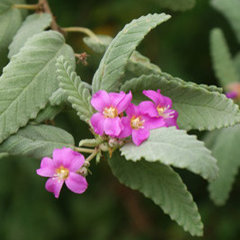
So, the question remains....what should I do about these tomatoes?? : /
EXPERIMENT! :-D Afterall, Al's recipe is not written in stone (or Turface as the case may be...). You could try leaving out the pumice/perlite all together. You may very well find it necessary to adjust the ratio of ingredients in any event to suit your conditions. Don't be afraid to try something different. You may find it beneficial to utilize some other organic component, for example. Just keep track of what alterations you do make so as to help you hone in on what will be best for you.
Btw, Growstone ("foamed" recycled glass) will serve as a perlite replacement but likely will be harder to find. It is heavier than perlite but also a lot stronger. Hydroponic stores may carry it and I know some orchid supply vendors do as well. Not sure how it stacks up pricewise to perlite or pumice.
- 9 years agolast modified: 9 years ago
Are you growing tomatoes as perennials? - growing tomatoes for a season doesn't really require such expensive mix (as what you originally described).
I grow quite a few tomatoes & peppers in pots, in my location they go on compost heap when too cold outside. I add perlite and grit and even bark - if I have it, otherwise do not worry about it - to potting soil and they grow and bear very well. Perlite and grit are least expensive, and available to me. I use gritty mix of grit, perlite and some turface for all my succulents; and 5.1.1 mix for tender plants that I have to overwinter indoors - but there is hardly enough space and definitely not for tomatoes...And I definitely agree that filling up 16gal pots for tomatoes with gritty is overkill.
Melochia Tomentosa
Original Author9 years agoThanks Rina! Just to make sure I understand - you recommend potting soil? Any particular type? Is adding perlite a waste of time (re: Al's posts it basically just displaces soil and doesn't alter the drainage properties that much)
- 9 years agolast modified: 9 years ago
I mentioned that I always add perlite; bark if I have any, just do not try to make perfect 511. I buy perlite in large bags. I do believe that it helps drainage (do not remember Al saying it doesn't). I even toss in some grit. Do not measure, just use what I have. Bark is more difficult to find, it is always huge chunks, much bigger than 2". So if I find any of decent size, I use most of it for perennials I have.
I do not buy much bagged soil and there are probably different brands available to you. I repot seedlings few times (into bigger pots) before final potting; and use all mix they were in because that is mixed better (in small pots, I use more of grit and perlite so it would be bit closer to gritty). It's not much and is nice and loose and very well draining, but I use it all even if it falls away from the roots. I get a bag or two of Fafard soil, that's all. I have used even some triple mix when in pinch, but would not recommend garden soil to others (not good for containers IMO - but works for short time). When I used it, I made it 'better' by using only little of it, adding lots of bark and perlite and grit. These vegetable plants are potted for only about 6mo, so as long as there is good drainage, I do not worry that much. I would grow them in good 511 if it was easy to get bark...I usually do not toss soil at the end of every season and reuse it by mixing with the new batch next spring.
I pay much more attention to a mix for perennials, try to make good 511 and gritty for succulents.
- 9 years ago
I'm not sure if it was interpretation on Al's post, but perlite is a very helpful soil mix ingredient to have around.
If you add a small amount it's essentially useless, but in larger amounts it is quite effective.
Melochia Tomentosa
Original Author9 years agolast modified: 9 years agoHi Rina/Ewwmayo,
Here's Al's latest re-telling of the pudding/perlite concept from last month...
"Imagine a jar full of pudding or fine sand. In your mind's eye, start adding perlite to either. Does 1 perlite particle make a difference in drainage or aeration, the properties you would be seeking to improve with the addition of perlite? Of course not. 100 pieces? No. 1,000? No. There is a level at which perlite starts to make a notable difference in the properties mentioned (aeration/drainage). It's called the threshold level and it's established at the point when there is no longer enough sand or pudding to fill all the air spaces between the perlite particles. Even in the mind's eye you can see that it takes a very large fraction of coarse material and a small fraction of fine material to make a notable difference in drainage/aeration in most cases. That's why you can't effectively amend soils based on fine particles by adding even a pretty healthy measure of pine bark or perlite.If you end up having 75% pine bark and the rest of the 25% fraction comprised of equal measures of peat or potting soil + perlite, you're not amending the peat or potting soil with bark - you're amending the fraction that's larger by far with the ingredients that in combination make up the lesser volume of 25%
If you start with a gallon of Miracle-Gro potting soil and add 1 gallon of pine bark and/or perlite to it, have we created notably better aeration or drainage? No. Even at 2 gallons of bark and perlite there is still enough potting soil to fill all the large air spaces between the coarse material - so little gain. At 3 gallons of bark and/or perlite, when there is not enough fine material in the gallon of potting soil to fill the spaces between the large particles, we start to make notable headway. This is why you can use 3 ingredients that when mixed together CAN make an extremely productive, root-friendly medium, and mix them in such a way that the end product is almost unusable."
- Al
The takeaway for me is that if perlite is roughly the same size as the other particles in your medium it will function well, but adding it to a fine medium like potting soil or peat is ineffective. Am I interpreting correctly?
- 9 years ago
If you want to eliminate perched water, then uniform particle size is best.
I don't think the problem lies with the perlite. And I don't think it's fair to say you can't make an effective mix with soil and perlite.
My perspective is that perlite is not a soil amendment. It is a primary component of the mix itself.
In my opinion, water holding and aeration in a soil mix is just the beginning consideration, albeit a major one. This is the minimum starting point.
- 9 years agolast modified: 9 years ago
You may have misunderstand pudding (fine sand) analogy
..."There is a level at which perlite starts to make a notable difference in the properties mentioned (aeration/drainage). It's called the threshold level and it's established at the point when there is no longer enough sand or pudding to fill all the air spaces between the perlite particles"...
If using fine soil, it is same as using pudding :) or fine sand. So it is huge amount of bigger particles you'll need for them to be able to improve drainage. That is why I often say that adding just a handful of perlite (pumice, grit and so on) to a soil doesn't do anything and do not even bother...it will just fall in-between the small amount of coarser particles...Your last statement is on the right track.
Melochia Tomentosa
Original Author9 years agolast modified: 9 years agoRina, that's exactly what I understand Al to be saying. (Everything I posted was a quote from his article except for my statement at the end). I was revisiting the concept in response to ewwmayo's recommendation to add perlite to potting soil (which is a fine particle medium). If mayo is using mostly perlite and very little soil, then the perlite is functioning as a fast-draining well-aerated medium, but the potting soil is only serving to clog up the air spaces in that medium (according both to my understanding and to what you just posted). So I'm not sure why it's a good idea.
Of course, theory and practice can sometimes differ. I started tomato seedlings in turface, turface fines, and potting soil, and am seeing little to no difference in the in the plants with these three mediums. The sprouts in "deadly" moisture-retentive potting soil are growing just fine. So maybe plants find a way to thrive even if we're not following the textbook...
- 9 years ago
Not absolutely sure, but I doubt that ewwmayo is using any soil. His gritty mix is very similar to mine - mostly grit, perlite, some turface and I believe he uses some pumice which I do not have. For some plants, little bark. Customized, and he has done some serious testing. We are talking gritty-type mix here. For growing succulents. Double check his post from April 27th - he suggests customizing.
I would think that mix of turface+turface fines+potting soil isn't necessary for any plants (too water retaining); unless I misunderstood what you mean and maybe you tested growing plants in all of these separately rather than mixed? Even pure turface is too water retaining in my experience - maybe yours is different. I start many vegetable seed too, and do not worry about making special mix. I already mentioned what I add, but it isn't any special, exactly measured mix. Whatever I have at the time, without going mad :) These are all short lived plants - about 6mo - so there isn't need to go crazy for special mix with expensive ingredients - as reptibark would be.
Different for perennial plants - but I already said that :)
- 9 years agolast modified: 9 years ago
Edit: deleted not very helpful post.
Rina - Thanks. =) Not much 'soil' going on here, pretty much all of it is in my flower beds.
- 9 years agolast modified: 9 years ago
I spoke way too soon! I'm finally making some mix and am sad to report that the bark below the top inch or two of the bag is useless for gritty mix:
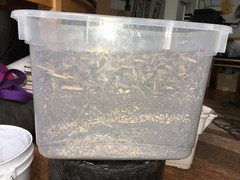
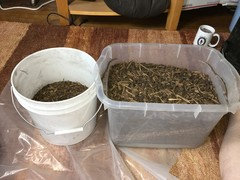
That's about 1.5 gallons of 1/8"-1/4" bark next to a combination of about three gallons of sub-1/8" and one gallon of over-1/4" bark (not counting the half gallon of turface fines that was already in the bin). That's about the yield I got from my old bag of fir bark. At this rate I'll run out of bark before I repot the plants I want in gritty mix, so the search for bark continues. The #2 cherrystone is as good as you'd expect a pre-screened product should be, but although the 'turface' (an off-brand calcined clay) is better than the bark it's about half usable and half too fine, so I'll go for the recommended brand name stuff next time I need a bag.
Okay, enough from me; it's time to wash off some of this dust!









Melochia TomentosaOriginal Author