Software
Houzz Logo Print
rhamel1888

Succulent Growing Medium Clarification

Like I stated in my Spring Repot post, I think people spend too much time fussing over what they grow in. But made me think. Some here grow their plants in pure Perlite or Turface. How do such mixes provide any nutrition? I like to buy regular pottung mix and just add lots of Perlite and/or Orchid Bark. Potting mix is bound to have much more nutritional value to my plants

Comments (29)

  • 9 years ago

    I don't fertilize at all, so it poses no problem to use a low nutrient mix.

  • 9 years ago
    last modified: 9 years ago

    Turface can actually hold quite a bit of nutrients, but perlite cannot.

    Regular potting mix usually has fertilizer added to it. So it's not necessarily the 'soil' enabling the plants to grow more in regular potting mix but rather the fertilizer instead.

    Personally, I fuss a lot over my soil mixes and am quite picky about them. [Results have been good[(https://www.houzz.com/discussions/succulents-before-and-after-6-months-dsvw-vd~3545786), but I put a lot of effort other aspects of growing too.

    Each grower has their own style.

  • 9 years ago

    I will say im not growing any mesebs or Haws(other than the attenuata) so maybe my cheap formula wouldnt work for them?

  • 9 years ago

    The potting mix I get typically has at least some soil, which does have nutritional value(my current bag of mix is Miracle Grow, which I hate but grabbed in an emergency). Im a somewhat lazy fertilizer too, I just have a preference to the soil itself being nutritionally viable(but this could be my outdoor gardening senses speaking.) I fertilize my potted plants about 5 times a year. For my outdoor garden im constantly fussing over the soil. I spend all day turning the conpost pile, stealing bags of discarded lawn clippings and adding organic fertilizers to my beds(just got done digging bone meal into a future flower bed)

  • 9 years ago

    People use a mix that fits the plants and their growing conditions. I keep my succulents in my very bright bedroom window, and outside during the summer. I add lots of Perlite because I (and assume you in Ontario as well) recieve periods of drenching rain in the summer, so they must drain quickly. Im a renegade in the Orchid community, I add some potting mix to the Orchid bark for my Phalaenopsis, and they seem to love it.

  • 9 years ago

    The fertilizer in miracle gro won't last for very long, so you probably do have to end up adding fertilizer if the plant remains in that soil longer than six months.

    I just use cocopeat in place of peat. Or, I order a bag of soil from Hirt's because I love their mix, and I cut it heavily with coarse perlite.

    Sometimes I fuss over soil, sometimes I don't. It depends on the plant and how much I like it:).

    the other day, I just dropped a huge arrowhead plant into a mix of cocopeat and perlite. I just couldn't be bothered, and they can grow in anything anyway.

    i don't have a problem with peat really. But that miracle gro is just too darn peaty for me. If I have to use peat, I like it in a really well blended mix like the one I buy. Or I will take the time to make a nice bark, perlite, peat, cocopeat mix myself.

    i don't know that your plants are getting the best nutrition from miracle gro as you stated above. but that doesn't mean they aren't doing fine.

    Rhamel (aka teengardener1888) thanked Lauren (Zone 9a)
  • 9 years ago

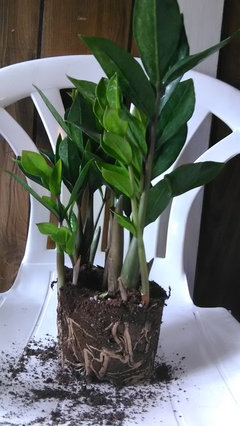
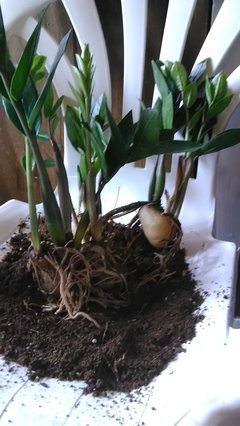
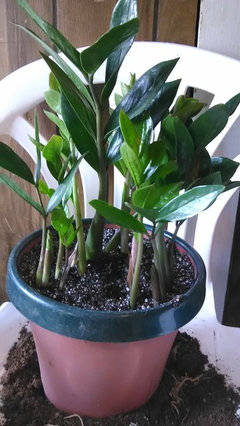
    I brought a ZZ plant overwinter that was growing in pure peat that takes ages to drain. Just repotted yesterday

    My camera is crappy. It makes the peat and the new substrate I put the plant in look darker than they actually are.

  • 9 years ago

    The M. Grow was an emergency, I tend to avoid it. I try to avoid those chemicals when possible. I believe in good old organic material. Im going to start baking my compost and use it in the place of any pre made mix, and I have plenty of Perlite and Orchid Bark to make different combinations for various plants.

  • 9 years ago

    I tried out orchard mix when I was getting frustrated with mixing miracle gro and perlite. And I put a few regular tropical in it. The difference was amazing.

    But because I wanted the bark pieces to be a bit smaller, I just decided to make the 511 mix myself. And fast forward to now, I just sort of ran out of uses for peat. Also, because in the interim, I found cocopeat, which I just like much better.

    I think once I saw how much better the plants grew in non peat mixtures, I found it hard to go back to peat. And the roots looked so much healthier. But every now and then, I wish I could just mix up some peat potting mix and throw the damn plant in it and move on:).

    if I may: the miracle gro perlite works better when you sift it first and get out all of the small pieces and dust. But, then, you may not want to do that because you will be left with about half of the bag. Or, you could start the mix with perlite and add the soil last. That way you'll get a more porous mix.

    if you already know this, I apologize for presuming.

  • 9 years ago

    I did sift, was dissapointed by waste. As you said half the bag gone. I wont buy it again, I should order coarse perlite online if I cant find any local.

  • 9 years ago

    Rhamel, just wondering: why do you want to bake compost?

    Lauren, coco peat holds as much water as peat and actually if saturated, will compact more. It could contain too much salt (lots of it is washed in sea water - too salty for plants). For any concerned about carbon footprint, it travels to US from far lands...I am not saying not to use it (I had some too), just check the label.

    Rhamel (aka teengardener1888) thanked rina_Ontario,Canada 5a
  • 9 years ago
    last modified: 9 years ago

    Rina: I bought pretreated high pith coco coir. The salt has been flushed.

    Also, it maintains aeration in a way that peat doesn't, despite holding lots of water.

    I've planted tropicals in nothing but that mix, no perlite, nothing, saturated them with water, and they've been absolutely fine. It's almost impossible to compact. And I've rooted succulents in it with no problem.

    but I went to the hydroponics store and asked specifically for a user friendly bag as opposed to those awful blocks. This stuff was ridiculously expensive, but it is worth it because it is pretreated.

    So, I'd choose it over peat any day. It doesn't cling to the roots and it's super easy to rewet.

    also, I live in the desert. Many people here use coco as the substrate for their succulents because of the heat.

    I think that it gets a bad rap on the board because people make that one to one comparison about how much water it holds compared to peat without considering how much aeration it allows as well. I think it's really good for the overwaterer as well precisely because of this.

    i just bought a sans planted in pure cocopeat the other week. Watered it, no problem.

    eta: this is what I use.

    Rhamel (aka teengardener1888) thanked Lauren (Zone 9a)
  • 9 years ago

    Sorry Rina I should of elaborated

    The Compost is heated up to kill bugs and bacteria

  • 9 years ago

    Rhamel,

    i got my coarse grade perlite from the hydroponics store. Maybe yours has it too?


  • 9 years ago

    I just went by your city as it is posted here, and found this place. They have super coarse perlite, which sounds awesome!

    Rhamel (aka teengardener1888) thanked Lauren (Zone 9a)
  • 9 years ago
    last modified: 9 years ago

    Rhamel

    I only use compost in the garden, not in pots. I make as much as I can. I also rake all the leaves, even from my neighbours yard (they love it!), chop them up and let them compost.

    It is recommended to pasteurize soil/compost for seed starting. Young seedlings are sensitive to any pathogens in the soil. I am not sure if, by baking it, all the 'good' stuff in it wouldn't be killed too - very good to use for plants in the garden...My question should have been: what is your reason for making compost?

  • 9 years ago

    Rina,

    To use as part of my potting mix for my plants

    Lauren

    Thank you, I didnt think they had it. Awesome ill go tomorrow

  • 9 years ago

    Pasteurize is a better term. I still haven't figured out quite how.

  • 9 years ago

    I haven't really figured out a good way to sterilize soil either. The microwaving method makes my microwave smell funny (don't tell my wife) and I doubt it even gets remotely hot enough to kill anything.

    Certainly not putting soil in my oven - if that starts to smell strange then I'm in big trouble!

    Rhamel (aka teengardener1888) thanked ewwmayo
  • 9 years ago
    last modified: 9 years ago

    Maybe I should sauté,grill or fry it?

  • 9 years ago

    Olive oil? =)

    Rhamel (aka teengardener1888) thanked ewwmayo
  • 9 years ago

    Lauren

    I am not against the coco peat, do not know enough about it just few 'warnings' (like high salt content in some). I have used it and found it OK too, but only once so I don't have enough experience with it.

    There was a study done about growing in coco peat. I read it but can't find the article now...in comparison, the results were not 'fantastic'.

  • 9 years ago

    Rina: there is a learning curve with the high pith that I have. But I've literally never killed a plant in it, even when I was learning how to water it correctly.

    Again, I think that it's pretty popular in these parts because of the heat. But just wanted to point out re your comment that the aeration is significantly higher than with peat. That is a major difference, so I just wanted to note it.

    also, it is phenomenal for rooting cuttings of any kind. Even better than my perlite, and that's saying something.

  • 9 years ago
    last modified: 9 years ago

    I found the study I read (from USU Crop Physiology Laboratory - tried to post link but having problems, will try again)...here is the summary:

    SUMMARY

    These studies show that coconut coir should be used with great caution. Although the Sri Lanka brands performed better than the Mexican brands, no brand performed consistently better than sphagnum peat. Some species tolerate coir better than others. The addition of calcium sulfate to the media did not have a consistently beneficial effect on growth and in some cases it reduced growth. The best growth in coir media occurred in the Grow Coir® brand. We are continuing these studies to determine the underlying causes of poor plant growth in coir.

    ...data indicate that high concentrations of phenolic compounds in fresh coir are at least partly responsible for the growth reductions observed in other studies. Several studies at the USU Crop Physiology Laboratory indicated that monocots grown in coconut coir were extremely chlorotic and stunted. The objective of this study was to see if there are differences among plant species and types of coconut coir compared to growth in sphagnum peat moss.

  • 9 years ago
    last modified: 9 years ago

    Yes, I've seen this, somewhere on the forum perhaps?

    but I do believe this is an agricultural study for assessing coir in raising crops. Vastly different conditions from my own.

    also, this is why I took the time to visit with the hydroponics people at the store and go over my options. Again, I have pretreated high pith coco coir. They mention that "fresh core" is being used. I can say for sure that nothing I've grown in coco coir has been chlorotic or stunted.

    So, I am not sure what else I can say....I wouldn't use this particular study to assess the suitability of coir for growing houseplants. They are using a different type of coir to raise different types of plants in a radically different climate.

  • 9 years ago
    last modified: 9 years ago

    Lauren

    I am not trying to convince you of anything, perhaps just to be aware - but you are much more aware than me :) - sorry if I sounded too forceful. There are 2 sides to a coin, and there could be difference in growing crops and growing houseplants. It was also mentione that further studies are needed. As I said, I used coco coir myself and quite liked it, but do not have much experience with it using it only once.

    It is true that some species tolerate it much better than other (just as different kinds of soils and mixes). And the growing conditions - temps and so on, have influence too. To me, any controlled study is to be considered. I do not know if there was one specifically for houseplants. Should you find one, pls. post a link or a citation. Coco peat is, from what I read, quite good for hydroponics. But that's different way of growing plants.

    In either case, I am glad you have phenomenal results with it. I won't go crazy about finding it and am too cheep to spend tons of $$$ (I would, actually, spend them rather on pumice that isn't cheep around here either) - but that is only my personal choice and opinion.

  • 9 years ago
    last modified: 9 years ago

    I understand, Rina. As you know, I am always grateful for your advice. It's just that I really do like this stuff, and I spent a lot of time researching it before investing in the bag I have now.

    for me, it is a go to when all else fails. And I think people write it off on the board for various reasons, most of which are not actually problems if you get the right kind or know how to use it.

    I actually put it away for a while because I was working with soilless mixes. But it turned out to be an ideal substitute for peat in 511 mixes or gritty mixes that need just a smidge of soil. But then you use turface for that, which I just don't like using for some reason.

    also, I am totally skeptical of scientific studies, particularly those performed by universities. Often these results are skewed by outside funding, which some schools, particularly those in what we call "developing countries," must rely on to subsidize their research. This is not to say I don't trust them. I just regard them with a healthy dose of skepticism.

    Ive come across a few studies or discussions of coco coir for houseplants and gardening in my research. And, as I said, I spent a lot of time discussing its uses and potential problems with the hydroponic store people here. They are very well informed and helpful, and they helped me to select the most appropriate type for my needs.

    at the very least, I would say that as an amendment it is tremendously useful and certainly better than your average peat mix. But I could imagine that the watering learning curve could turn people away from it unless they have far too much time on their hands as I do:).

    i think the original issue at the center of discussion was peat alternatives. In my area, coco coir is used extensively in potted succulents and tropicals. And I was initially interested in it because I bought a plant here that was potted in it, and I really loved it. So it does seem to be a suitable alternative for peat in many cases.

    Rhamel (aka teengardener1888) thanked Lauren (Zone 9a)
  • 9 years ago

    In the mixed can add a bit of slow released osmocote fertilizer.