Software
Houzz Logo Print
vesfl

Can this lilac be saved? Lilac blight?

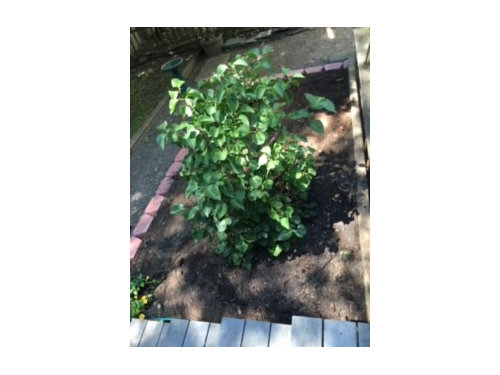
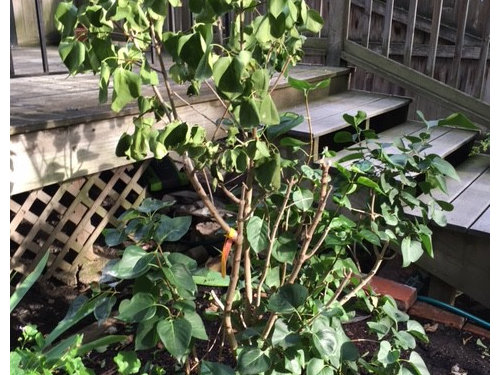
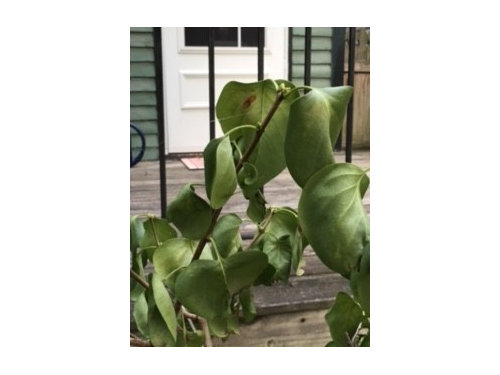
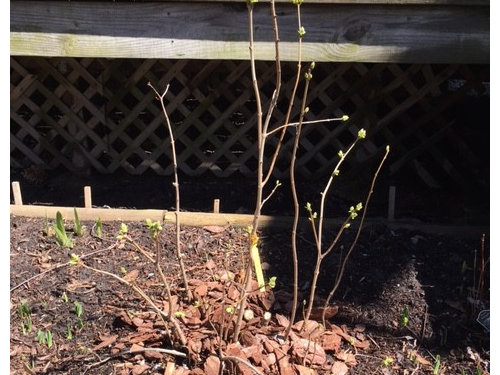
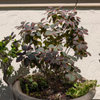
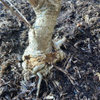
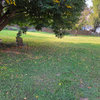
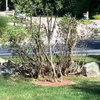
In early June last year we planted a common lilac 'President Grevy' and it looked terrific, getting full sun for about 5-6 hours. I liked it so much that we decided to invest in a larger shrub rather a smaller version, pruned it after watching some really helpful video instructions on Youtube, and planted it in a newly raised bed as in the first photo. Then, in early August, it started to wilt progressively as in the next 2 photos. One by one, the leaves would wilt and turn completely brown. We searched online and it looked like it was getting a lilac blight (wilt), so we applied a copper fungicide that we read to be the only effective treatment against this kind of fungus, also removed the main infected stems which were by then completely brown, all of which substantially reduced the plant size. The second photo shows it after we had cut the most infected stems, but, as you can see, others then continued to wilt as well. Even after applying the copper fungicide twice, the leaves on two more stems also wilted and browned. After removing all infected stems, all that was left were suckers and a couple of smaller original stems. The last photo shows how it looks now. Could you please help with any of these questions:

1. Does it look to you like a lilac blight or something else?

2. If it's a lilac blight/wilt, is there anything preventative we can do now before the plant leaves out?

Sadly I don't expect blooms this year, but this is my first lilac that reminded me of my childhood that it means so much to me to save it. The local nursery was willing to reimburse me if I bring it back, but I really want to do everything possible to save it. I've learned so much from reading this forum, but I can't find more info on this kind of problem and I hope you can help me with your wisdom and experience. Thank you!

Early June 2016:

August '16:

April '17:

Comments (10)

  • 9 years ago

    Accept the nursery's offer to replace it. No point in beating yourself up over a plant that can be easily replaced.

    One possible reason why it started to wilt in August could have been lack of sufficient water to its as yet underdeveloped root system.

    Try to figure out what happened, and proceed forward with a new, healthy shrub.

    vesfl (zone 5b/6a, Western NY) thanked Jean
  • 9 years ago
    last modified: 9 years ago

    Thank you. The offer was last August when this happened. Meanwhile I accepted a risk to treat it and don't know if the nursery would still do it. Although we watered our plants regularly, there was indeed an unexpected drought in our area last summer...

  • 9 years ago

    please see link on proper planting ... which includes planting in april .. not june ... the plant had little time.. to settle in before summer heat and drought ... watering should be deep and infrequent.. with near drying in between such ... insert finger to 3 inches.. and find out when it needs water ... no spraying the leaves ..


    i never water my 15 year old Ls .. and in severe heat and drought.. they droop every afternoon .. and recover every night ...


    presume your stock comes disease free .. i have grown Ls for 4 decades.. and never did anything to them other than water them the first year ...


    do not spray it .. do not cut stuff off it ... on some level.. i fear you may have tried to love it to death ...


    these are what i call .. run it over with the truck plants .... they simply shouldnt be problematic ... but for a large plant.. improperly planted ...


    good luck ..


    ken

    https://sites.google.com/site/tnarboretum/Home/planting-a-tree-or-shrub

    vesfl (zone 5b/6a, Western NY) thanked ken_adrian Adrian MI cold Z5
  • 9 years ago

    Thank you so much, ken_adrian. I truly hope it's our mismanaged watering issue than blight. We definitely violated your rule of thumb and alas watered it frequently but not thoroughly. The lesson learned...

    The link for planting shrubs is most helpful, esp. for an eternal novice like myself :-) It says not to amend the soil too much, but we did it because the soil is a very hard clay and neglected for at least a couple of decades by the previous owners, so we don't have much choice but to amend it.

    I have to say though that, when digging one of our raised beds for a new plant, I noticed dry patches from peat moss. We added peat moss and thoroughly mixed it into the planting soil because it's recommended for clay, but these dry patches are troubling and might have also formed around the root of our lilac. I don't think we'll use it again and instead search for some substitute.

  • 9 years ago

    reread the planting link on how to deal with clay.. it has nothing to do with adding peat moss ....


    anyway.... Ls set their buds the fall before.. and most likely .. that was everything you cut off... because you panicked ... hence my comment that i would not have cut stuff off ....


    ken


  • 9 years ago

    "When planting in clay or wet soils, roughen the edges of the planting hole with the tip or edge of your spade to reduce the interface/boundary often formed by compacted/glazed soil resulting from the digging tools pressing against the sides of the hole."

    Yes, we did it, so it sounds the planting was done right.

    A couple of stems that we didn't cut off are not budding at all. They look dry and dead. One of them can be seen on the last photo, no leaf buds, which makes me concerned that it was some fungal disease such as blight, but surely my mishandled watering had to be the problem as well.

  • 9 years ago
    last modified: 9 years ago

    ken_adrian, if you carefully read the OP's comment, peat moss was mentioned as an additional concern unrelated to your linked document. I also use peat moss for my clay soil. Now I wonder about the proper application to avoid the dry patches that the OP mentions.

    vesfl, in my zone 8b/9a I can't grow lilacs and I can’t help you on this one. All the same, one would think if the branches that you cut off last year looked dead, then you did the right thing. were they dead?

    vesfl (zone 5b/6a, Western NY) thanked JBP (zone 8b/9a)
  • 9 years ago

    Thank you, JBP. Yup, they looked dry and dead. Some were so brittle that they easily could have been snapped off. I consulted a few sources before deciding to cut them off and they all recommend removing the infected stems such as:

    http://learningstore.uwex.edu/assets/pdfs/A2538.pdf

    The leaves & stems looked exactly the same as the pictures showing lilac blight so I erred on the side of caution and followed their advice. The only two ones I didn't cut off still look dead now and my concern is that they carry the fungus. Now would be the time to reapply the copper fungicide according to this and a couple of other sources *if* it was the blight, hence my inquiry to the forum.

  • 9 years ago
    last modified: 9 years ago

    mad_gallica, I live in Western NY. It recently changed into the official zone 6a, but we locals still consider it 5b. Many thanks for your helpful comment about peat moss.