Software
Houzz Logo Print
mcrose_gw

Adding compost when planting

9 years ago
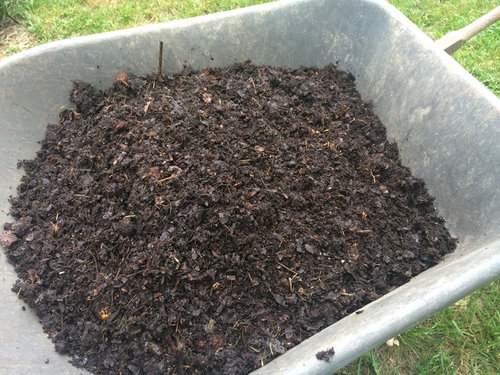
My seedlings are tall and ready for planting, and the weather is perfect in northern Virginia. I have a bunch of well-rotted compost from my bin that I want to add to the heavy clay, but I want to make sure I do it right.


The first ones I planted were cucumbers - I dug a pretty deep/wide hole, threw in a shovelful of compost and a sprinkling of organic Garden Tone, and then added the seedling and filled the rest of the hole with the clay.


Is that a good approach? Or should I mix the clay and compost a little better?

Comments (11)

  • 9 years ago

    Gosh, if your soil is heavy clay, I'd want to loosen up the soil in the whole bed by digging the compost in. If the soil was good quality, then sure, just throw a shovelful of compost in the hole. But what I'm hearing is that once the roots get out of the compost in the hole, they're going to hit heavy clay?

    The issue here is heavy clay.

  • 9 years ago

    I tilled it in the fall, so it's not as heavy as it was. Unfortunately the compost wasn't ready then so I couldn't dig it in. I don't really have time carefully work compost in over the whole bed - I need to get these veggies in soon. So I was hoping a shovel of compost in each hole would be good enough. Maybe not? Should I mix the clay and compost in each hole?


  • 9 years ago

    Is there a risk of putting in too much?

  • 9 years ago
    last modified: 9 years ago

    When I plant out a seedling in a 4-inch pot, I just throw in a handful of compost. I guess you'd rather not have a seedling just sitting in a shovelful of pure compost. So if you want to put a shovelful of compost in the hole, might be wise to stir that compost in with the shovel.

  • 9 years ago

    Compost in a hole is just going to give the plant an artificial soil structure environment to grow in briefly and then get stressed. Remember compost isn't a fertilizer for the plant, compost is an amendment for the soil.

    Plant them in what they have to adapt to and grow in and then use the compost to side dress all the plants by mixing it into the top 2" of the soil around the plants. That way the soil itself throughout the garden bed gets the benefits.

    Dave

  • 9 years ago

    I'm with Dave. I'd use the compost as a top dressing. Definitely not in the planting holes. In fact I'd have put the compost down a while before planting and plant through it. That way it will already have started to be incorporated into the soil be the worms and the weather. Plus the work is broken down into smaller units. 1. Spread the compost. 2. Plant the plants.

  • 9 years ago

    Is there a risk of putting in too much?'

    In the whole bed, tilled in? No. Unless you are tilling in a couple feet of it. Compost is NOT fertilizer. It is organic matter to make the soil texture, drainage and aeration better for most plants.

    In a transplanting hole? Yes, especially if there is clay soil around it. You end up with a clay "pot" full of compost and the roots tend to stay in the compost. Mix some (maybe 1/4 compost, 3/4 native dirt) into the fill dirt, dig wide holes. And spread as much compost as you have left over as a mulch (top dressing just means spread a layer of stuff) on the top, the soil critters will take care of the mixing.

    If you want the lazy way to break up the clay, plant Okra. The roots go 6+ feet down and it grows in anything. In the fall, slice the plant off at ground level and leave the roots to rot.

    Actually, with as many of your plants as possible, don't pull them when you are removing them, slice them off and leave the lovely organic matter of the roots to rot and improve the clay.

  • 9 years ago
    last modified: 9 years ago

    The advantage of putting some compost in the planting holes is that, when mixed with soil there, it makes a medium that can allow the very young and fragile roots to develop more effectively. Of course, the assumption has to be that once they develop effectively, there is somewhere for them to grow, and that the soil around the hole is permeable to mature roots. I gather that the soil around the holes is not "heavy clay", after all, so it will indeed support mature roots.

    My main point was that you don't want seedlings sitting in pure compost.

    If you throw all the compost on top, the young roots don't develop as well, and especially in soil with a lot of clay, the compost will not really get incorporated in the soil bed at all on the time scale of the gardening season. As the compost slowly degrades, some nutrients will leach down into the soil below, but that's about it.

    But again, the missed opportunity is just to dig the unfinished compost into the bed in the fall. Could still just dig the finished compost into the bed before planting.

  • 9 years ago

    Since you don't have a lot of time, I would dig big holes, toss in the compost and plant. The seedlings will appreciate it and, as they grow, they can root down into the clay which will give them some stability. There's nothing wrong with clay and nothing wrong with pure compost either! Veggies grow really well in my compost bin and roses love clay soil :)


    When we created a new raised bed, we had easy access to free aged cow manure. That's all we used, about 6" thick, and everything (peppers, eggplant, spuds, garlic) grows really well. The soil underneath is clay.

    In the fall, you can work in your amendments for next season.


    Linda

  • PRO
    9 years ago
    last modified: 9 years ago

    Down here in Georgia, we also got the red clay you're talking about. I just loosen up the clay so that it is not dense, mix about 80% clay, 20% compost. Then, I'd add just about a cup or so of compost right where I want my sprouts to be. Also, right before the planting season, in March/April, I start saving up the coffee left over in my coffee filters and then once the planting season starts, I'll have at least 4-5 pounds of free ground coffee I can incorporate into my soil as a fertilizer.

    Water well in the beginning and add the green Miracle Grow beads for the first week or two. This has worked well for me every year, so I've stuck with that.