Software
Houzz Logo Print
bluubiird

New Zone, Dry Soil?

Hello out there,

I've been interested in succulents pretty solidly for around 2 years now, but not necessarily what I'd consider to be good with them. I'm trying to learn more (I spent today looking up and writing down the dormant times and light preferences for all my identifiable succulents) but I've run into a bit of a problem.

I just recently (within the last 3 weeks) moved from the Foothills of California (zone 9b) to Northern Nevada (zone 7a) and I've noticed that the soil in my succulent pots (all small terracotta pots with saucers and succulent soil) is dry every day vs my former once a week/bi-weekly. If I lift the pots and check the soil at the bottoms through the drainage holes, it's dry as well.

Most of the plants are newly purchased, but one in particular I've had for around 11 months now. I really don't want to lose this one, as I lost 3 to under watering in a hot area a few years back. I had assumed back then that they would be safe outside in Redding, CA where temps are frequently around 100 F in the summer. After just a few short days I had lost them to lack of water and sun scorched leaves. At the same time, just a few months later I lost more to over watering (once a week) in the same area but the plants were now indoors in a sunny window.

While Nevada isn't that hot (yet) I'm very concerned that the soil is drying too fast, but I'm also concerned that watering so frequently will kill them as well. Tomorrow I intend to purchase a small syringe because I've heard watering directly to the root ball is better, plus I have a few echeveria that I don't want to cause rot in by watering from above.

I'm looking for some advice on how I might need to adjust how I care for them. Should I let the soil dry out and water them once a week? Or is every other day/few days going to be okay given the area I'm in?

Comments (24)

  • 9 years ago

    I guess in 9B Cali, you have a lot more humidity than 7A Nevada? You could try a gritty mix, it would be safer watering frequently with that growing medium as opposed to something with peat.

  • 9 years ago

    I would not bother with the syringe, you need to give your plants a good soaking when you do water them.

  • 9 years ago

    You write you have them in "succulent soil". Is that a commercial mix you bought at a nursery or BBS? If so, you should mix it with at least 60% sifted perlite, or even better, make a gritty mix. Just google the term here, and you will find all the information you need and more ;-).

  • 9 years ago

    Any chance you could post a couple photos?

    Syringes can be free if you ask nicely at a pharmacy (without sharp end). Or if you buy children's medicine.

  • 9 years ago

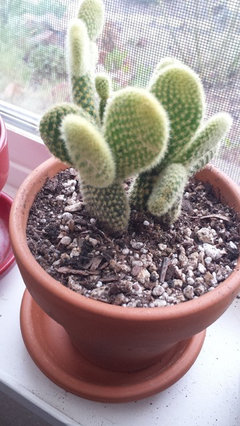
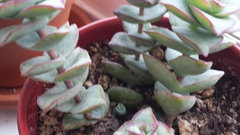
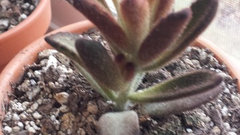
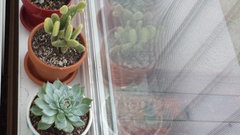
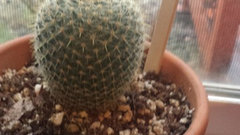
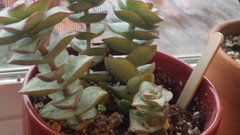
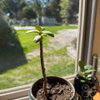
    The soil I used is a commercial one - it's a blend of Canadian sphagnum peat moss, perlite, compost, and pumice though it doesn't say what percentages the blend is. I'll look into making my own mix in case that is the problem. Here's some photos of a them, they were last watered on the 4th.


  • 9 years ago

    Are your succulents kept indoors at the window only?

  • 9 years ago

    Yes, these particular ones have been indoors only since I bought them. The lighter colored echeveria has only ever been indoors for the 11 months I've had it. The window they're in gets sun from roughly 6a to 6p.

  • 9 years ago

    I am a bit skeptical that your pots are dying out completely every day indoors at the window. Can you check in the middle with a skewer? The top doesn't matter, what does is the middle/bottom of the pot.

    Your plants don't look that dry or stressed. I think even a pot of pure grit that size would take a couple days to dry out there. The sign of watering really is not when the soil is dry but when the plant needs water.

  • 9 years ago

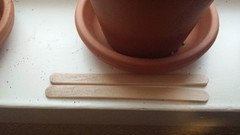
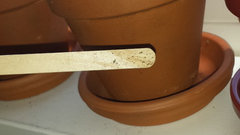
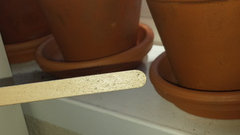
    I used popsicle sticks because that's the best I had. Here's two photos of where I tested at, and then the sticks afterwards. Should I test closer to the plants? I'm afraid to damage any roots. All the pots have turned out the same with this test so far.

  • 9 years ago

    Just to clarify, you water completely today so water is coming out the bottom. And then tomorrow you test with the popsicle stick, left for a few minutes all the way in, and it comes out dry?

  • 9 years ago

    Alright I'll post back tomorrow with the results then.

  • 9 years ago

    Not that I don't believe you, but I think I'm just missing something here. =)

  • 9 years ago
    last modified: 9 years ago

    I think I've written this before, but, yes, plants in the window like that in the desert can dry out in one day. It is otherworldly, but it is true.

    There are some cacti and succulents that cannot cope with the southern window spot even though anywhere else they would be fine.

    the dryness of the desert and the lack of overhead protection is pervasive and penetrating at every level: skin, hair, clothing, plants, food, everything. Your body actually adjusts to it.

    This is one the things that makes using peat and perlite combos so frustrating. The mix dries out so fast that you have to water constantly. But you water constantly and mix breaks down. And the plant, in the meantime, survives but never really thrives.

    So, I would offer the following suggestions to accompany those already made here: move the plants back. Even in October, they can get sunburn. You can slowly transition them to the window spot. Typically, they drop leaves and produce new ones that are rougher and readier for the sun.

    also, rethink what you know about geographical locations and plants. In the desert, north is east, and south is "are you out of your damn mind? I'm a plant not a pot of cement!" West is south. And east is pretty much okay for most things. Also, south a few feet from a window is "I am literally going to die in about 7 minutes."

    my friend told me, and it's prove true: it is always hotter than you think it is. This is why people come here for one day, take a walk on a hiking trail and die two hours later.

  • 9 years ago

    So beautiful.

    I have similar pics I took from the plane for my mom, who just doesn't get the whole desert thing. She saw the pics and was like, "it looks like the moon!" Lol

    my first visit here was for the campus interview in February. Everything was lovely, no problems (except I got dehydrated the second day. Then, when I came for good in August, my body went into shock. Everything dried up and weird things happened, my skin started peeling, it was horrible. Then, the it guy who came to connect my computer said that it takes about a month of living here for you to start to feel the effects. Then about six months for you to adjust.

    I'm an east coast gal. I never, ever would have imagined how different this side of the country could be. Now, whenever I leave, even the slightest bit of humidity shuts me down.

    I never hike, but I should. It's so wonderful that you have spent time exploring these parts. Truly beautiful out here.

  • 9 years ago

    A question about the Popsicle stick test, how long are you leaving the stick in the soil? ( Apologies if I've missed this information)). If you pull it out immediately, it will be dry unless you have just watered. I suggest you leave the sticks in permanently so they have more time to absorb any moisture. Just pull them out to check, and reinsert, until you have your watering figured out.

  • 9 years ago
    last modified: 9 years ago

    The temperature/climate of the house can really affect how fast pots dry out inside by windows, speaking from personal experience.

  • 9 years ago

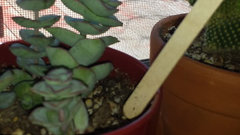
    Here's the results of the second popsicle test, the sticks were left in for close to 5 minutes this time. They still come out dry. I will be leaving the sticks in permanently, I was planning on adding a little identification flags anyway and I can make it work with this. Also I know the flash looks terrible, but I'm trying to get this up before I leave for work and the sun makes everything in that window a silhouette.

    I have them in a North-Eastern(more north though) window. Our house only has North-Eastern and South-Western facing windows in it. So I guess they're in more of an Eastern window by desert geography. I'll see if I can find a way to move them back from a window a bit, but until I find something for them to sit on I'll just keep a close eye on them.


  • 9 years ago

    If your soil has a lot of peat, it may not really be absorbing the water. Instead the water will flow around the dry soil mass and out the water holes, without penetrating the soil. Is this a possibility? Try soaking your pot in a bowl of water for an hour or two and then see how long it takes to dry out..

  • 9 years ago

    Soaking will definitely eliminate the hydrophobicity, if any, while also encouraging root growth.

    If the mix doesn't hold enough water, change a couple pots to different ratio or ingredients to suit.

    What I find helpful for new mixes or areas is fill a pot sized clear plastic cup (free at McDonald's) with some holes punched in the bottom. You can put it with your plants and see roughly how the mix absorbs water when watering and also how well it dries top to bottom with color change over the days or maybe hours in your case.

    I do soil moisture holding tests and measurements and the cup method just gives me a visual representation of what I expect to happen. Easier and less intrusive than dumping pots and stick methods.

    Not saying sticks and dumping pots is not helpful, but I've done enough of that for my entire collection so many times that I can skip the mess. =)

  • 9 years ago

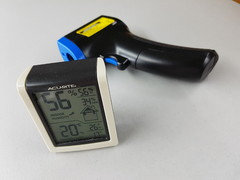
    And if you are looking for a more 'higher tech' or quantitative method but not into soil testing, you may opt for a max/min thermometer, max/min hygrometer, infrared temperature gun (for leaf and surface temperatures). Cheap at your local hardware store - here are today's actual ambient temperature readings:

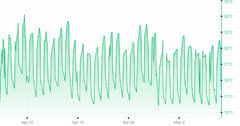
    And if you really want to get specific about growing conditions, you may try a data logger. Here are my leaf surface temperatures for the past month:

    And then the moisture readings in the soil (what you are probably more interested in):

    As you can see... I am a bad grower and delayed watering by 6 days in April which wasn't so good for my succulents. Things get busy.

  • 9 years ago

    I think Breton has the answer. Peat goes hydrophobic and then you have a dry brick that won't get wet when you water. I've had peat bricks that needed to be soaked overnight in order to wet enough to be removed from the roots.

  • 9 years ago

    There are a variety of factors which may have contributed to your plant die off.


    The lack of humidity is undoubtedly an issue. Your plants may be able to adapt to such outside, but it would take time. During that time, they might need watering more frequently and sheltered from direct sun particularly during the afternoon.


    With the plants you lost after placing outside in CA ---- did you take the time to harden them off? From what you said in your OP, I got the impression that you did not. In which case, it is not surprising that they got fried. If the plants were originally indoors or grown in a greenhouse with shade cloth, they would not be used to full, unfilter direct midday sun. Setting them out in full sun without hardening them off would be comparable to taking a fair skinned person who has spent the winter indoors and taking them on a 5hr midday desert hike in shorts and a tank top with no sunscreen. At best they will likely have severe sunburn/"sun poisoning " (likely requiring hospitalization).


    Media containing peat is avoided by many cacti/succ growers. It tends to hold too much water too long but, perversely, when completely dried out is hydrophobic and is incredibly difficult to quickly remoisten. Sphagnum is also generally avoided by cacti/succ growers due to water retention and how quickly it can break down. (Although, in your low humidity circumstances, perhaps it could have its place.)


    When you repotted, did you remove the old soil? Many commercial BBS suppliers do use mixes with a high % of peat. BUT their conditions and watering practices are, in all likelihood, radically different than yours. IF they were using such a media, and IF you did not remove it before potting the plants up, then there is yet another issue. It is completely possible that the peat "ball" around the roots completely dried out becoming hydrophobic. A light watering would moisten the exterior new soil but but not the peat ball where the roots actually were.


    If you did remove the old soil, did you give the plants time to grow new roots before giving them full sun outside? (Goes for CA and NV.) Removal of old soil inevitably causes damage to the fine roothairs which are responsible for water uptake. It takes a little time to grow new ones. During such a time, the plants would need to be coddled a bit (no hot direct sun, for example).

  • 9 years ago

    What Paul said. And also, seriously, don't put any plants outside. Even in shade, they won't be able to handle it yet.

    It is best to grow succulents outside in the desert from babyhood or even seed. Or, purchase them from a nursery that raised them outside. A cactus raised indoors could fry outside in partial shade here. I had two that I put out about two years back. Since then, they have fried, rejuvenated, and regrown into hardier cacti. But it definitely got worse before it got better.