Software
Houzz Logo Print
bibbus

install vapor barrier on dirt crawlspace with camel crickets?

9 years ago

I have lots of camel crickets under my crawlspace. It is mostly dirt with a couple of feet of space in between the ground and the house. All the heat and air ducts are in the crawl space as well. They appear to be well insulated. The crickets get into my house and I mentioned it to a man who was doing some work in my home. He suggested a vapor barrier that would make it less inviting to the camel crickets (less moisture) and would lower my heat cost in the winter. IS this a good idea?

Comments (6)

  • 9 years ago

    Thanks Worthy, what is involved with complete sealing and conditioning. The crawl space has several openings around the house for, I assume, cross ventilation. There are little handles on the grates. Its an old house, LOL.

  • 9 years ago
    last modified: 9 years ago

    For construction details, see the link above and this one from Martin Holladay of Green Building Advisor.

    As noted by Holladay, there is evidence that vented crawls work OK in dry Western climates and the cool moist climate of the Pacific Northwest. I was assuming you're not located in those locales.

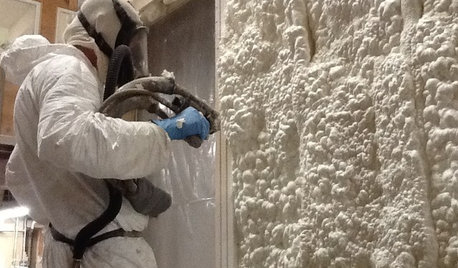
    Essentially, vents should be closed and sealed, the floor sealed in heavy plastic and sealed to walls insulated in moisture-proof insulation (not the ceiling of the crawl) and ideally an exhaust fan installed and a passive air grille installed between the living area and the crawl.

    Details will vary depending on the depth of the crawl. There are many specialist companies on the East Coast US, and especially the Southeast where crawls seem especially popular. I've personally come across crawls in New York, Ohio and southern Ontario, so I guess they're present just about everywhere.

  • 9 years ago

    Yes I'm in East TN and its already 90 here. Sorry I wasn't paying attention and didn't notice the link. I will sure study this. Thank you so much!

  • 9 years ago

    Wow, those pictures on the second article were eye opening. My crawl space is not big enough for anyone but a small person who is not claustrophobic to maneuver there. The heat/AC ducts are all through it and they are insulated. I wish the authors of both articles had given more information on the cost, benefits and payback to such an obviously expensive endeavor. How long would it take to pay for itself do you think? I've lived in this house for 16 years and expect to live about that much longer in it. The part of the house with a crawlspace is about 1200 sq feet with brick "columns" I think. I have only peered into it and that was years ago.

  • 9 years ago

    Since the payback is mostly in terms of better air quality and less potential damage to the living area from the extra humidity brought into the home, it's impossible to quantify the savings.

    If your crawl is starting to resemble the "before" pics, the eventual buyer will likely take it into account. It's amazing what you get used to living with until some tactless visitor comes in and says, "Eww. What's that mouldy odour I'm smelling?"

    Holladay lays out in detail the measures to take. None require any special technical skill. Other than running in adequate lighting perhaps. And relative youth and flexibility!