Software
Houzz Logo Print
skiingchance

Advice on rigid foam installation

9 years ago

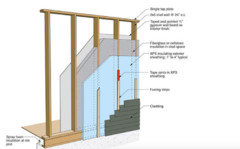
I'm looking for some advice on some of the details for our home. I'm going to install 2 inches of xps around the outside of our home. I will then install a rain screen by ripping down 3/4 plywood. The windows will be innies. The trim for around the windows has been figured out already. Then hardi lap siding will be installed on the outside. My water resistant barrier will be the house wrap behind the rigid foam.

I live in eastern WA in a desert. We average about 8-9 inches of water a year, so not very wet. I was going to use Tyvek Housewrap but am thinking of upgrading to Tyvek Drainwrap. It is literally twice the cost and I'm not sure my area is wet enough to justify it? However is does allow any water the gets behind the foam to get out. The walls will be allowed to dry to the inside.

My second question is securing the 3/4 plywood rain screen. I'm looking for 4 1/2 inch screws and the selection is limited. I'm curious what other people have used?

I am the builder/general on this project. Wrapping the house in rigid foam is something the many people don't do in my area so I'm having trouble finding advice. My wife and I will be installing the foam and rain screen as well.

Comments (13)

  • 9 years ago

    Skip the drainwrap as it is pretty useless, especially under the rigid foam. I installed shiplap foam and taped the seams.


    You can get 4.5" deck screws here:http://www.fastenersuperstore.com/products/deck-screws?pid=5985


    Chance thanked ksc36
  • 9 years ago

    Careful using foam makes your windloads go off the charts due to filling voids on the walls. Was going to do the same but won't be. Use open cell foam. Use your Google Fu and do some hard digging, this is problematic.

  • 9 years ago

    Have you looked into ICF? I personally really believe in ICF.

  • PRO
    9 years ago
    last modified: 9 years ago

    BSC advises a gap or drainable housewrap between foam and wood sheathings. Matt Risinger has a good video on how effective drainable housewraps can be with foam sheathing and potentially siding. I think if housewrap isn't drainable in these applications, it might be useless, and better to rely on taped foam sheathing. The newest acrylic tapes are much more durable than the older stuff.

    I wouldn't worry about drying as long as the vapor profile stays open to the inside (and homeowners keep humidity normal). Tyvek wraps have very high permeability, some say too high for many applications.

    The riskiest areas are usually windows depending on exposure. Window installation and integration with the weather barriers get trickier with innies.

    Chance thanked Springtime Builders
  • 9 years ago
    last modified: 9 years ago

    I'm not clear on the wall section. Best I can make out from your description from inside to outside--3/4" ply, housewrap, foam, Hardie?

    Unless you're in a high wind zone, no wood sheathing may be required at all, just appropriate bracing. And though Building Science Corp. shows housewrap behind foam, they also show it on the exterior side, which is where I've put it in conjunction with brick paper and a one-inch gap followed by masonry veneer walls. Furring strips can be used to create the drainage layer.

    Building Science Corp.


    But in a literal desert, east of the Cascades I take it, I might be inclined as noted above, to use high quality tape with t&g XPS and the all-important gap.


    Chance thanked worthy
  • 9 years ago

    Thanks for all the responses. My original wall detail goes as 2x6 with R21 fiberglass batt --> osb --> housewrap with windows installed normally, becomes water barrier --> 2 inches rigid foam taped with Tyvek homewrap tape --> 1x4 rainscreen --> Hardie Lap Siding. The outside of the windows will be detailed out and be innies. Like I said there will be no plastic/vaper retarder on the inside. This will allow the wall to dry to the inside. I have the rainscreen on the outside of the foam as well.

    Reading Springtime Builders link it looks like regular housewrap is fine for my installation.

    I know that tape has come a long ways but I'm still hesitant to not install the house wrap as the WRB. I still may not use the housewrap but I'm undecided.

    Another question, i've seen both 1x4's used and 3/4 plywood ripped down for the furring strips. The plywood us definitely cheaper but wonder people thoughts on it?

  • 9 years ago

    I suspect the plywood is stronger and holds screws better?

  • PRO
    9 years ago

    Tyvek drain wrap or stucco wrap looks like regular tyvek in pictures but it's different. It has wrinkles which facilitates drainage and drying. I think both links talk about the importance of choosing drainable housewrap over regular housewrap in this application.

  • 9 years ago
    last modified: 9 years ago

    i've seen both 1x4's used and 3/4 plywood ripped down for the furring strips.

    No difference in this application. Use whichever is cheapest and fastest. If you're using ply, get the lowest grade, C or D, as appearance is of no concern.

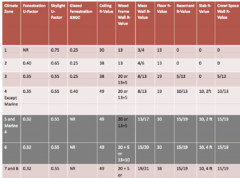
    Your walls far exceed even the 2015 IECC equivalent that has been adopted as mandatory in Washington state. Your are in Climate Zone 5.

  • 9 years ago

    You might want to contact your local ICF dealers and see if they can recommend a local contractor. Everything I've read over the years, you might be able to hire them for maybe 2wks(pay them only for 2 wks work) to help you erect and fill the ICF with concrete. Then finish everything else yourself. IMO....you would end up with a superior house. I do not work for ICF.....just believe in them.

  • PRO
    9 years ago
    last modified: 9 years ago

    I think OPs proposed wall will perform better than majority of ICF and will be cheaper and faster. Agree with worthy it doesn't matter about furring. We usually use 3/8 gap for our rainscreen and exterior rated soffit material makes good rippers. We also use coravent sv3 for tops and bottoms for insect resistance while permitting airflow. Well done for the good research and building above code minimum.

  • 9 years ago

    Yep Worthy we are zone 5, that's why I went with two inches for R10. That put me above the recommended to keep condensation away from the inside of the rigid foam.

    I looked at ICF but decided it wasn't worth it for what I had to pay. We also looked at spray foam but the cost was high. I will still have a tight home with the rigid insulation but can do almost all of the work associated with it myself saving the labor cost.

Sponsored
AIS Renovations
Average rating: 4.5 out of 5 stars15 Reviews
Custom Craftsmanship & Construction Solutions in Franklin County, Ohio