Software
Houzz Logo Print
pakersuga_z5b_z9a

Conifer seedlings trials 2017

After last year's success with germinating gathered seeds of Metasequoia, Blue Ice Arizona Cypress, Glauca Cunninghamia, and a lone surviving Taiwania and Cryotomeria, I set out with a new batch of seeds this year. These were mostly bought online but I've been pleasantly surprised by my luck (perhaps too much luck for some species, once you see how thick the seedlings germinated). Most aren't hardy at my northern summer home, and some are still only marginal at the winter home. But it's a fun mental break even if I have no where to put them all in the end. Most were soaked then stratified as needed using the paper towel and baggie method.


Calocedrus decurrens


Sequoiadendron giganteum on left. A decent germination rate and no problems with damping off so far. I did soak them in Captan. Plants on the right are purple prairie clover.


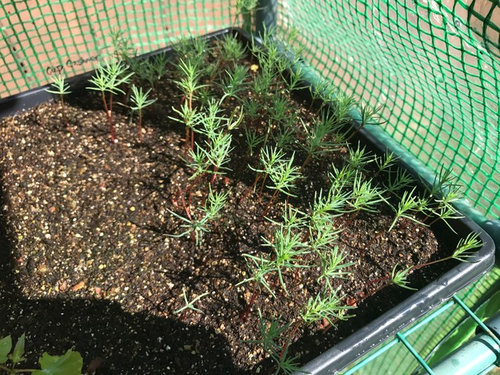
Cupressus cashmeriana (allegedly). The seeds are from Sheffields, though the whole cashmeriana/torulosa/tortulosa/darjeelinghensis complex is so muddled, and people mislabel the species all the time so I'm not sure what they are in reality. High germination rate, though.


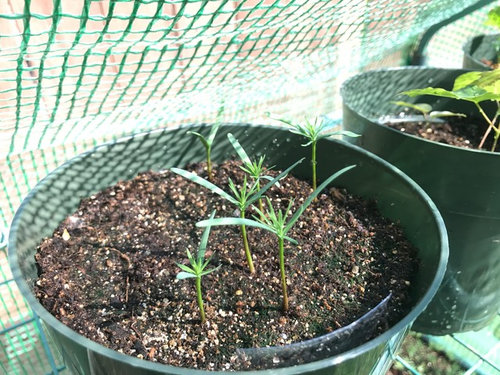
First Taiwania seedlings emerged from soil this week. Hoping for better luck than last year, when I had very low germ rates and even lower emergence and one-month survival.

Comments (3)

  • 9 years ago

    Fascinating post. Thanks. Would you mind sharing what preparation you had to go through for some of these? Did you stratify, soak, cold soak or anything like that for these?

  • 9 years ago

    It varied from species to species. Generally, I'll use Dirr's Manual of Woody Landscape plants for the more common species. For rarer species, I've either found information from the seed supplier (if bought) or looked for multiple references online (if gathered or unsure). The trick is to try and find the same advice for stratification listed from multiple sources to get any confidence in whether the advice is good or not.

    I start all my seeds off by a 24 hour soak in regular water. My last batches, I've added a small amount of Captan powder (maybe 1/16 tsp in a small tupperware container of water) to try to limit fungal growth. It hasn't seemed to have a negative effect on germination rates, and I've not had too big of problems with damping off.


    Next, I've mainly stuck to the paper towel method of germination/stratify. After 24 hours of the seeds soaking, I get a paper towel, wet it thoroughly and wring the excess out, put the seeds in as close as a single layer as possible, then fold up the paper and put it in a plastic zip baggie with the name and date on it. These go straight into the fridge for whatever stratification time needed (30-90 days usually). When the stratification time is over, I pull them out and just leave them somewhere in the house I won't forget about them and they won't get in full sun (that bakes the baggie). Check after 2-3 days, and then every so often for signs of germination. For seeds that don't need stratifying, the seeds go into the paper towel baggies, then immediately just left out in the house. Note: I generally stagger the soaking of the seeds according to stratification length, so I do the 90 day stratifiers a month before the 60 day, two months before the 30 day, etc. This way, I can deal with them all germinating together and during the right time of spring.


    So after I see germination, I move them to growing flats. I generally just get the big flats and fill it with sterile seed germinating potting mix. I find these easier to work with than the individual cells, because they don't dry out as fast and you aren't wasting 40-80% of your cells on seeds that never come up. Plant the little germinating seeds very shallow (for most conifers, at least), and keep things damp. They're in morning sun and afternoon shade now. A little leggier than I'd want, but I'd rather not scorch them with too much sun at a young age. I let them grow to about 3-5 inches before transplanting them to larger pots or a growing bed. Enough time to get decent roots on them.

  • 9 years ago

    Here's what I remember from stratification specifics I did. It helps to periodically check the longer stratifiers in the fridge, because some will start to germinate in the fridge.


    Sequoiadendron: 30 days cold stratify. Prone to damping off (I had some fungal growth on seeds, but didn't have a problem yet with germination or post germination.


    Calocedrus: I think I only did 30 days cold, but they might've started to germinate in the fridge. I remember being pretty sure they weren't viable because I had some mold growth on several seeds and was surprised to see root growth on others as I was about to chuck out the moldy seeds. About 30% of the seeds that showed some root initiation actually came up. I've found a few times that I have lower success with various seed species if I put them in soil immediately after the stratification or shortly after I see the first signs of root development. They oddly seem to transplant better if they have a decent amount of root growth in the paper towel.


    Cupressus cashmeriana: 30 days cold stratify. High germination rate, quickly after taken out of fridge.


    Taiwania: no cold stratify, but the temp has to be above 75 F to germinate. I've had best luck when the temp was 78-82 in part of my house where the baggie was left. I've had poorer luck with direct planting into potting soil after soaking, even if the soil is well above 75 degrees.